
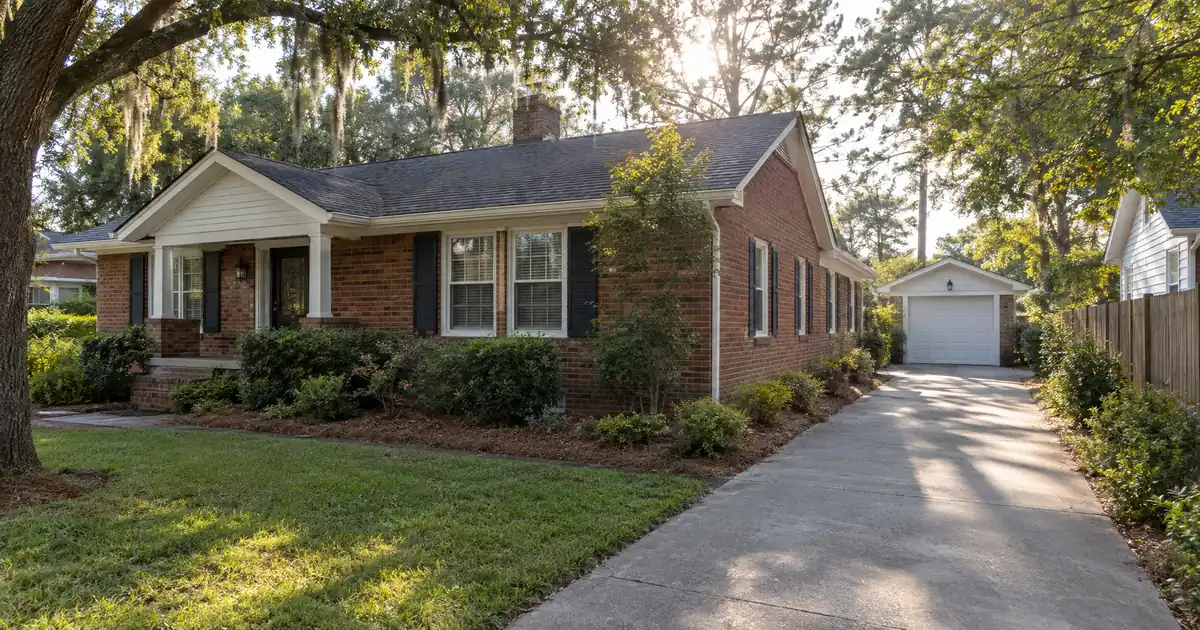
A cash-out refinance on a Valdosta single-family rental runs into a coverage problem before it runs into an equity problem. In ZIP 31602, Prop-Metrics shows a median home price near $212,000 and a 3BR median rent of $1,420. At the 75% LTV ceiling, with full taxes and insurance in the monthly obligation, that pairing lands only slightly above 1.0x. Equity is rarely the constraint here. Coverage is. Terms vary by lender guidelines, property type, leverage, credit profile, and full file review.
That tension shapes everything below. For an investor who already owns, the question isn’t whether Valdosta rents can support a loan. The question is how much of the equity can come out before coverage thins to the point where a lender’s review gets difficult. Lendmire, a DSCR-focused mortgage broker, arranges these loans through its investor lending network, and this piece works through that math for the neighborhoods and property types the research supports.
DSCR Cash-Out Calculator
Run the cash-out numbers in Valdosta, GA
Rate source: Freddie Mac 30-yr average via FRED® — Federal Reserve Bank of St. Louis · effective Sep 24, 2026
Prefilled with starting assumptions — enter your property’s value, balance, taxes, and insurance for a more accurate picture.
Program parameters update from Lendmire’s centralized guideline source. Taxes and insurance are editable estimates.
As of Sep 24, 2026 · General Freddie Mac market benchmark, not a Lendmire loan offer. Property value, balance, taxes, and insurance are editable estimates. Maximum loan-to-value varies by lender, program, property type, and seasoning. Not a Loan Estimate, approval, or commitment to lend. Program availability and eligibility are subject to lender guidelines, credit approval, property review, and underwriting.
The Short Version:
A DSCR cash-out refinance in Valdosta, Georgia fits investors who own workforce single-family homes or small multifamily and want equity for the next purchase. It is underwritten primarily on the property’s rental income measured against its full monthly obligation, and a 3BR renting near the Prop-Metrics ZIP 31602 median of $1,420 sits close to the 1.0x line at maximum leverage.
- Cash-out is capped at 75% LTV, with about 6 months of seasoning from title recording.
- Median-priced 3BRs model near 1.1x at the cap, including taxes and insurance.
- Duplexes with two in-place rents give noticeably more cushion than single-family.
- Moody Air Force Base and Valdosta State anchor demand, but the economy is concentrated.
- Very small loan balances in the lowest-priced ZIP may not clear lender minimums.
- Exact terms depend on the lender’s guidelines, property type, leverage, and a full review of the borrower’s file.
Valdosta Market Snapshot
A quick read on the Valdosta investor landscape — figures come from the cited sources below. Confirm current property-level numbers before underwriting.
| Metric | Detail |
|---|---|
| Typical rents | ~$1,082 (Repit ZIP 31601) |
| University enrollment | Graduate enrollment >3,000 (fall 2024) (VSU Strategic Enrollment Plan) |
| Employment | $395M and 3,691 jobs (Georgia Trend) |
How the Cash-Out Math Works Here
Valdosta cash-out math is a three-way squeeze among appraised value, rent used for lender review, and the 75% LTV ceiling. Equity above that ceiling stays in the property. Rent that can’t cover the full monthly obligation (principal, interest, taxes, insurance, and any HOA dues) at the new balance limits how much comes out. Every figure here varies by lender and program — guidelines, property type, leverage, and credit profile all apply.
The mechanics matter more than the headline. Coverage is monthly rent divided by the full monthly obligation. Most standard DSCR programs are built around a 1.00x benchmark. Some lenders may look at lower scenarios, but those usually mean lower leverage, stronger credit, or more reserves. Typical guidance for cash-out is a 75% LTV ceiling, about 6 months of seasoning, reserves around 6 months of obligation. Pricing and available terms vary by lender, borrower profile, property type, and full underwriting review. Eligibility varies by borrower, property, and lender guidelines, and the available equity is never a guaranteed figure.
Here is what that looks like on modeled inputs. These are illustrations, not market data, and every band includes taxes and insurance.
| Scenario | Value basis | Monthly rent | Coverage at 75% LTV |
|---|---|---|---|
| 3BR house, ZIP 31602 | $212,000 median | $1,420 | about 1.1x |
| 3BR house, ZIP 31605 | $251,000 median | $1,710 | about 1.1x |
| Low-value house, ZIP 31601 | $120,000 estimate | $1,082 | about 1.5x |
| Duplex, modeled | $280,000 assumed | $2,400 in place | about 1.4x |
The 31602 and 31605 figures use Prop-Metrics price and rent data, which are directional and small-sample. The 31601 row uses Repit estimates, and the duplex price is purely an assumption. The takeaway: pulling the maximum 75% on a median-priced single-family house works on paper, but there’s little margin for a vacancy month or a rent that comes in under the aggregator number.
Two Anchors, Both Concentrated
Valdosta’s rental demand rests on Moody Air Force Base and Valdosta State University, and the base matters more. Georgia Trend quotes UGA Selig Center economist Jeffrey Humphreys saying the metro depends heavily on federal jobs because of Moody, with Valdosta State second only to the base as an economic driver. The Georgia Department of Transportation puts the base at nearly 5,500 military and civilian personnel, with an economic impact near $450 million. (The City’s top-employer list shows a much larger Moody figure carrying an asterisk, so treat any single headcount loosely.)
The honest counterpoint is that Georgia Trend’s earlier analysis flags low industrial diversity, which it calls a riskier business environment. A base realignment, a deployment shift, or a federal hiring freeze would hit rental demand faster than a typical diversified metro would feel a single employer’s trouble. For a cash-out borrower, that argues against stretching leverage to the cap on every property.
The rest of the demand base is more conventional. Census Bureau QuickFacts shows 55,252 residents, a median age of 28.9, and a median household income of $45,925. Data USA lists retail trade (3,894 workers), health care and social assistance (3,224), and accommodation and food services (2,879) as the largest resident sectors. South Georgia Medical Center employs about 2,700 per the City of Valdosta’s top-employer list, which also shows Lowe’s Distribution Center at 942. Those are mid-wage, steady-tenant jobs. They support $1,000-to-$1,400 rents. They don’t support luxury ones.
Soft Student Housing, Real Student Demand
Valdosta State is a smaller tailwind than older figures imply. A market source reports 7,199 undergraduates in the most recent fall, and the university’s own Strategic Enrollment Plan says undergraduate enrollment has declined sharply over the past decade, while the Graduate School passed 3,000 students. Growth is leaning online and graduate, and those students rent differently than eighteen-year-olds who need a bedroom near campus.
For a cash-out thesis, that means underwriting a campus-adjacent house on a long-term workforce rent rather than a per-bedroom student premium. Investors who bought near campus on the old 12,000-student story should look at what the appraiser’s rent schedule actually supports before counting on a cash-out.
Where the Equity Pulls Best
Central and East Valdosta (31602)
ZIP 31602 is the most data-rich submarket and the clearest cash-out candidate. Momentum Realty’s scorecard shows a typical value of $211,213, up roughly 6.5% a year over five years, with a gross yield around 7.27%. That five-year climb is what makes equity extraction plausible for owners who bought earlier.
Here’s the catch. Prop-Metrics shows median days on market at 58, up 34% from last year, and Momentum’s one-year projection is only 2.8%. Appreciation that built the equity may not keep refilling it. An investor planning to stack another cash-out on a high after-repair value should be cautious, because sales are slowing.
Rental stock here fits the product. Prop-Metrics reports 2BR and 3BR units at 46.1% and 38.3% of rentals, and RentCafe shows 58% of Valdosta residents rent, with 37% of rentals single-family and 55% in small complexes under 50 units. An appraiser pulling rent comps for a 3BR house or small building has plenty to work with.
North Valdosta, Hahira, and Bemiss (31605)
The north side carries higher values and higher rents, with a 31605 median price of $251,000 and a 3BR rent of $1,710. Demand follows the Moody corridor, and PCS Pay It Forward describes Bemiss as the closest to the base and Hahira, about 12 minutes north, as a sought-after area for base-connected households. Employment ties like these are a durable basis for long-term leases.
The risk here is new supply. Crown Group built a 68-unit complex, a 44-unit complex, and 32 duplex-style villas in this corridor, and Apartments.com lists the Mac Rd community at $1,510 to $2,100 for one to three bedrooms. Older houses and duplexes compete with that product. Underwrite a concession and vacancy reserve rather than the top of the rent range, and treat the $1,710 3BR figure as a ceiling rather than a base case.
The Low-Value Band (31601)
Repit estimates ZIP 31601 values near $120,000 and rent near $1,082, about 0.9% rent-to-value, and it says the market doesn’t meet the traditional 1% rule. A Redfin-reported sale in the same ZIP closed under $80,000. Coverage looks strong on paper at roughly 1.5x.
Skip assuming it’s simple. Small balances can fall short of lender minimums, and fixed closing costs eat a large share of modest proceeds. Smaller balances route through select lenders in the network rather than standard programs, which changes the menu of options. A cash-out that nets very little after costs usually isn’t worth doing.
Downtown and the VSU–SGMC Corridor
Older housing near the Valdosta Commercial Historic District and the North Patterson Street corridor suits duplex and small-multifamily product, and the corridor pairs student demand with hospital-worker demand. The research found no reliable rent or price data for these pockets. The sensible approach is to rely on in-place leases and a lender-ordered rent schedule rather than aggregator numbers.
Duplexes Are Where the Cushion Is
Consider an investor holding a ranch-style 3BR/2BA duplex in the Perimeter Place area of 31602 (the listing is on the MLS), with both units occupied at $1,200 and an agent-claimed $1,500 market potential. Underwrite on the $1,200 leases, since the $1,500 is a listing claim. At a modeled value and 75% LTV, two in-place rents model near 1.4x including taxes and insurance, a visible step up from 1.1x on a single house. Final terms depend on lender guidelines, property type, leverage, and the borrower’s complete credit picture.
The same logic applies at median rents. Two 3BR units at the $1,420 Prop-Metrics median gross about twice a single house’s rent, while duplex prices run higher but not double. That is arithmetic from the cited rents, not a sourced duplex rent. It still points the same direction: for a borrower choosing what to cash out against, the duplex usually gives the stronger coverage.
Triplex and fourplex inventory is likely thin, and the research found no data to confirm otherwise. Treat 2-4 unit availability beyond duplexes as something to verify.
Working DSCR brokers see a recurring pattern in small, military-and-university markets like this one: the file looks fine on the aggregator rent and gets tight on the appraiser’s rent schedule. The stronger files usually pull in-place leases, lease dates, and a conservative comp set before the application goes to the lender. Borrowers who ask for the full 75% on a single-family house often end up taking a lower LTV once the schedule comes back, which can be the right call for coverage anyway.
The Appreciation Mismatch
The citywide price picture is mixed, and the sources measure different things. Zillow shows home values rising over the past year, while Redfin shows a median sale price that has slipped year over year. Zillow’s index tracks values across the housing stock, and Redfin’s median reflects what actually sold, which can skew with the mix of homes. Neither is wrong.
For a cash-out borrower, the appraiser’s comparable sales are what count. Flat-to-modest appreciation means the equity you already have is worth more than the equity you expect to build. It also argues for keeping some cushion under the 75% ceiling.
What to Do With the Proceeds
The proceeds only help if the next deal clears. Pulling equity to buy another duplex or workforce house in 31602, where coverage works at current pricing, is a coherent plan. Pulling it to chase a thinner market is a different decision and worth stress-testing first. A borrower who needs the maximum cash out of a single-family house at 1.1x coverage might be better served by a lower LTV or a different asset. Conventional financing can carry a lower cost for an investor with a high traditional employment income and only one or two financed properties, so the conventional-vs-DSCR tradeoffs are worth reading first. DSCR typically becomes the practical path for LLC-held rentals (subject to lender program eligibility), self-employed investors, or portfolios past conventional financed-property limits.
Investors who want to see how Lendmire’s DSCR cash-out refinance works in detail, or compare it against other refi programs, can start there, and the guide “What Is a DSCR Loan” covers the underlying ratio. For state-level context, see these DSCR loan options for Georgia investors.
When the file is ready, investors can talk through the numbers or call 828-256-2183. Review details are subject to lender overlays, credit approval, and property review.
DSCR vs. conventional financing
There are two common ways to finance an investment property in Valdosta, GA, and they qualify you differently — here’s how investors weigh them.
Why investors choose it
- Qualifies on the property’s rental income — no personal tax returns, W-2s, or pay stubs needed to document income.
- No personal debt-to-income ceiling to clear, so existing mortgages and obligations don’t cap your borrowing the same way.
- Can be closed in an LLC, keeping the property inside a business entity.
- Built for scaling — not held to the limit on number of financed properties that conventional financing applies.
- Underwriting centers on the deal: generally qualifies when the rent covers the payment, a 1.00x coverage ratio being a common baseline (confirmed in underwriting).
- Designed specifically for investment property, including long-term and, where the program allows, short-term rentals.
Where it’s strong
- Often the lowest ongoing financing cost for a buyer who fully qualifies on personal income — a fit for a first property or a cost-first purchase.
Trade-offs for investors
- Requires full personal income documentation and must fit within a debt-to-income limit — salary, existing debts, and other mortgages all count.
- Typically held in your personal name rather than a business entity.
- Caps how many financed properties you can carry, which can become a ceiling as a portfolio grows.
- Evaluates you as a borrower as much as the property, which usually means more paperwork.
How investors usually choose: a first or single property often optimizes for the lowest financing cost; portfolio builders often optimize for leverage, vesting in an LLC, and scaling past conventional caps. The right answer depends on your goals, the property, and current guidelines — both paths run through select lenders in Lendmire’s wholesale network, with eligibility and terms confirmed in underwriting.
Frequently Asked Questions
How do you qualify for a DSCR cash-out refinance in Valdosta?
Qualification centers on the property’s rent against its full monthly obligation, with a typical 1.00x benchmark. Most files also look at credit (620 is a typical floor), about 6 months of reserves, and roughly 6 months of ownership measured from title recording. LTV is capped at 75% on cash-out. Exact eligibility depends on lender guidelines, the appraisal, and the borrower’s profile.
What are the requirements for an investment property loan in Valdosta, Georgia?
Expect a rent schedule or lease, an appraisal, reserves, and a credit review. Property type matters: manufactured homes, log homes, and barndominiums fall outside these programs. Standard programs run up to $3,000,000, while smaller balances, common in lower-priced ZIPs like 31601, go through select lenders in the network.
Does Valdosta State’s enrollment decline make campus-area rentals a poor cash-out candidate?
Not necessarily, but it changes how to underwrite them. Undergraduate numbers have fallen over the past decade while graduate enrollment passed 3,000, so campus-adjacent houses are better underwritten on workforce rents than student premiums. Hospital staff from South Georgia Medical Center, a couple of miles from campus, add a second tenant pool, but check actual comps before assuming a rent.
Is a duplex or a single-family house the better asset to cash out against in Valdosta?
A duplex typically gives more coverage cushion, because two rents sit against one building’s obligation. Single-family houses at median rents model near 1.1x at the 75% cap, while a duplex with in-place rents can model meaningfully higher. The tradeoff is limited duplex inventory and less certainty about resale demand.
Valdosta Against Its Neighbors
Compared with a larger university-and-capital market like Tallahassee, where equity gains are more likely to come from price momentum than from yield, Valdosta favors the investor who needs coverage and in-place rents over a growth story. For now, the math here works best on duplexes, not single houses at the leverage ceiling.
For current guidelines and terms, see Lendmire’s DSCR loan programs page.
About Lendmire
Lendmire is a DSCR-focused mortgage brokerage, NMLS# 2371349, placing investor loans across 41 markets, including Washington, D.C. DSCR eligibility is generally reviewed by the lender on a property’s rental income rather than personal income documentation, which fits LLC-held rentals, self-employed investors, and portfolios scaling past conventional financed-property limits. The brokerage has been recognized as a top-ranked workplace in 2026 and as a 2025 Scotsman Guide Top Mortgage Workplace.
Get Started
Ready to find the right loan for you?
In about 30 seconds you can review financing options available for your investment property. No commitment required.
Informational only. Not a Loan Estimate, approval, or commitment to lend. Program availability and eligibility are subject to lender guidelines, credit approval, property review, and underwriting.
References
1. Prop-Metrics
2. Repit
3. Valdosta State University Strategic Enrollment Plan
4. Georgia Trend, Prospects for Valdosta
5. Prop-Metrics
6. Georgia DOT, Valdosta Regional Airport economic impact
7. Georgia Trend’s earlier analysis
10. South Georgia Medical Center
11. City of Valdosta, Top 20 Employers
12. Momentum Realty’s scorecard
13. RentCafe
15. Crown Group
16. Apartments.com
17. Valdosta Commercial Historic District
18. Zillow
19. Redfin
20. Scotsman Guide — Top Workplaces 2026
21. a 2025 Scotsman Guide Top Mortgage Workplace
This article is part of Lendmire’s investment property cash-out refinance program — full qualification details, guidelines, and scenarios live on the program page.
Related reading: Cash Out Refinance Investment Property in Valdosta GA · DSCR Cash Out Refinance in Macon, Georgia: The 2026 DSCR Financing Guide to Vineville Rentals · Cash Out Refinance Investment Property in Mcdonough, Georgia: Will Rents Cover the New Loan Payment?
Guides: Investment Property Cash-Out Refinance in Valdosta, GA · Investment Property Cash-Out Refinance in Georgia
Brandon Miller
Founder & CEO, Mortgage Loan Originator, Lendmire LLC
- Mortgage Loan Originator · NMLS# 1129696 · Verify on NMLS Consumer Access
- North Carolina Real Estate Broker · License# 343312 · Verify on NCREC
- North Carolina Insurance Producer · License# 19053198 · Property, Casualty, Life, Health · Verify on NAIC SBS
- Lendmire LLC · Firm NMLS# 2371349 · Verify firm licensure
Disclosures. The information presented in this article is general market commentary, not financial, legal, or tax advice. Lendmire is a mortgage brokerage (NMLS# 2371349) — not a direct lender or depository institution — and loan placement is subject to lender underwriting. Nothing in this content represents a commitment to lend. Loan terms, pricing, and program availability vary based on borrower qualifications, property characteristics, and state of subject property, and are subject to change at any time. Lendmire complies with Equal Housing Opportunity requirements. Consumer access: nmlsconsumeraccess.org.