
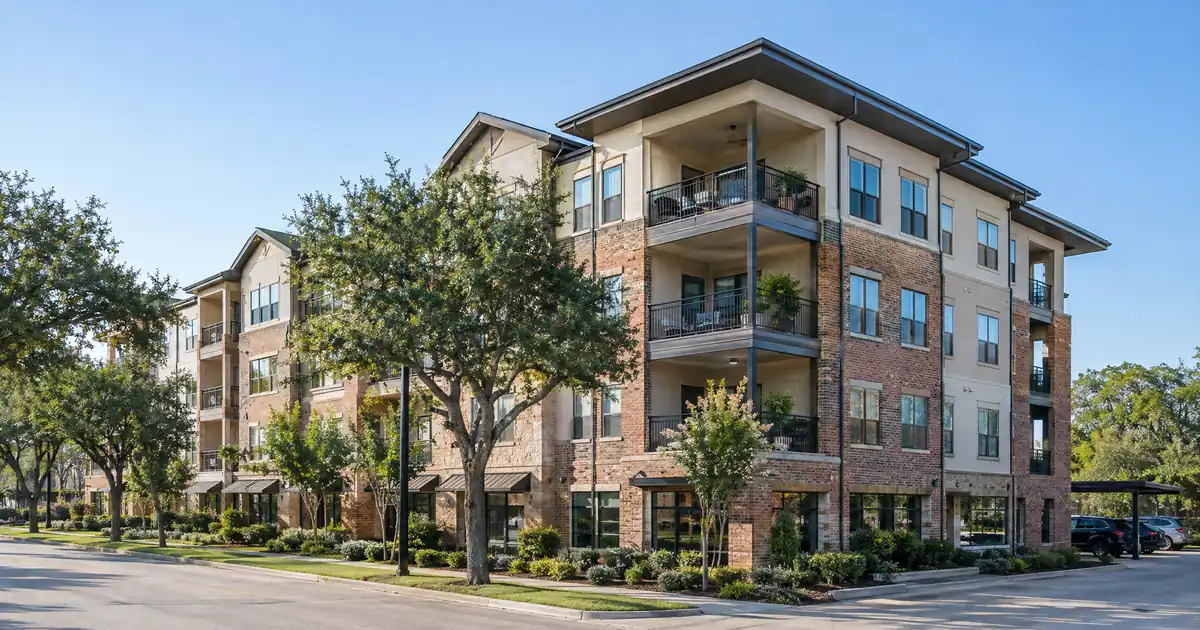
If you own a rental in Waxahachie worth $350,000 or more and you’re planning to pull equity out of it, the question isn’t whether a lender will look at the file. It’s whether the rent covers the new, larger obligation once taxes and insurance are in the picture. In this market, at the full cap, often it doesn’t.
Lendmire (NMLS# 2371349) helps arrange DSCR financing for Waxahachie, Texas investors as part of a broader non-QM footprint reaching 41 markets, including D.C. This piece covers the refinance side only: how much equity a Waxahachie rental realistically holds, which submarkets clear coverage, and where the supply pipeline could work against an appraisal.
DSCR Cash-Out Calculator
Run the cash-out numbers in Waxahachie, TX
Rate source: Freddie Mac 30-yr average via FRED® — Federal Reserve Bank of St. Louis · effective Sep 24, 2026
Prefilled with starting assumptions — enter your property’s value, balance, taxes, and insurance for a more accurate picture.
Program parameters update from Lendmire’s centralized guideline source. Taxes and insurance are editable estimates.
As of Sep 24, 2026 · General Freddie Mac market benchmark, not a Lendmire loan offer. Property value, balance, taxes, and insurance are editable estimates. Maximum loan-to-value varies by lender, program, property type, and seasoning. Not a Loan Estimate, approval, or commitment to lend. Program availability and eligibility are subject to lender guidelines, credit approval, property review, and underwriting.
TL;DR: A DSCR cash-out refinance on a Waxahachie, Texas rental is underwritten primarily on the property’s rental income measured against its full monthly obligation, so the file depends on appraised value, a 75 percent loan-to-value ceiling and rent used for lender review lining up, which at a Redfin median sale price near $365,000 often pushes investors to borrow below the cap.
- Cash-out LTV tops out at 75 percent, with about six months of ownership typically expected first.
- Modeled coverage at full leverage sits near 1.0 on Saddlebrook-type homes and in the high-0.8s at the median price.
- A 13,270-home development could cap rents and cloud refinance appraisals.
- Small multi-unit stock is thin: one multi-family unit for sale against 66 home sales.
Waxahachie Market Snapshot
A quick read on the Waxahachie investor landscape — figures come from the cited sources below. Confirm current property-level numbers before underwriting.
| Metric | Detail |
|---|---|
| Home prices | ~$350K (1 sale) (Redfin) |
| Typical rents | $2,277 (Pax Realty Waxahachie Market) |
| University enrollment | 2,012 students (Nelson University) |
What Equity Do You Actually Hold Here?
Less than the long-run charts suggest. Redfin puts the median sale price at $365,000, down 5.2 percent year over year, at about $171 per square foot. Zillow’s typical-value series, which uses a different methodology, lands slightly higher at $373,008 per Real Estate Price Map, and that source shows values up 148.8 percent since 2009. Long-run gains are large. The recent trend is flat to soft.
That split matters for a cash-out. Proceeds come from equity already captured, not from appreciation you’re hoping for. An investor who bought several years ago and sits on a big paper gain may still have room under the 75 percent ceiling. An investor who bought recently near the top of the local range could find the appraisal comes in flat or below the purchase price, leaving little to extract. Underwriting at 65 to 70 percent of current value, rather than the full 75, is a sensible stress test before ordering anything.
Seasoning is the other gate. Most programs look for about six months of ownership measured from title recording, so a property bought and renovated last quarter isn’t a candidate yet. How the cash-out works in more detail is worth a read if you’re still inside that window.
Three Submarkets, Three Different Answers
The Saddlebrook-type product is the strongest candidate for clearing coverage. Broker data from Pax Realty shows Saddlebrook Estates with a $313,740 median and 18 days on market. Dove Hollow sits at $413,990 and Myrtle Creek at $515,027, with Myrtle Creek taking 115 days to sell. Texas Ally describes the newer northern and eastern subdivisions as newer construction with pools, playgrounds and HOA amenities. Borrowers should budget for any HOA dues in the obligation.
Rentometer shows 3-bedroom house rents around $2,200 to $2,300, so the same rent is being set against very different price points. Against Saddlebrook prices, that’s roughly 0.7 percent monthly rent-to-price. Against Myrtle Creek, it’s about 0.44 percent. One caveat: those are city-level rents applied to submarket prices, not measured submarket rents.
Myrtle Creek and the Bells Chapel Road corridor skew toward acreage. That’s a fine place to own, and a difficult place to cover debt from a single house rent.
Downtown and the Victorian districts are a different story. Redfin’s rental table shows a $1,495 median rent downtown against $1,599 citywide, while downtown listings have run roughly $295,000 to $349,000 for 3 to 4 bedroom homes. The rent-to-price ratio there is weaker than in the newer subdivisions. Downtown fits an appreciation or lifestyle hold better than a high-leverage DSCR pull. Pulling equity out of a downtown property to buy a Saddlebrook-type rental is a defensible move. Pulling it out to buy more downtown is the harder case.
The Coverage Math (Modeled, Not Quoted)
Coverage is monthly rent divided by the full monthly obligation: principal, interest, taxes, insurance and any HOA dues. What DSCR qualification actually looks like is covered elsewhere. Here, the inputs below are modeled assumptions, not sourced market facts: a $2,200 rent, a 30-year structure, and taxes and insurance included at Texas-typical levels. Ratios are rounded down.
| Scenario (price) | At 75% LTV | At 60% LTV |
|---|---|---|
| Saddlebrook-type ($313,740) | Low-1.0s | Above 1.15 |
| Citywide median ($365,000) | High-0.8s | Around 1.05 |
| Dove Hollow ($413,990) | High-0.7s | Low-0.9s |
| Myrtle Creek ($515,027) | Low-0.6s | About 0.75 |
The lesson is uncomfortable. At the city median, a full 75 percent cash-out lands below the 1.00 benchmark most standard programs are built around. Dropping to 60 percent puts the same house back near 1.05.
If your number lands under 1.00, there are structures a lender may review: a sub-1.00 program, an interest-only period, or simply a lower LTV. Each trades something. A sub-1.00 structure usually means less leverage and stronger credit, and interest-only lowers the obligation without lowering the balance. Whether any of it fits depends on lender guidelines, credit approval, reserves and property review. Reserves are typically around six months of the full obligation, and pricing and available terms vary by lender, borrower profile, property type, and full underwriting review.
Here’s the genuine toss-up. Reducing leverage to clear 1.00 shrinks your proceeds. Holding leverage high and accepting a sub-1.00 structure keeps proceeds larger but carries a thinner cushion in a market where asking rents aren’t moving up much. An investor whose next purchase needs every dollar may prefer the second route. An investor who can wait should probably prefer the first.
Where Most Investors Get It Wrong Here
They underwrite to one rent. Sources disagree by about $500 a month. Zumper reports $2,100 in asking rent, up 8 percent year over year. Pax’s sample of 304 closed leases shows a $2,277 median. City-Data reports $1,714 median gross rent, which blends every unit type and every vintage.
For a refinance, the number that matters is the lease or appraiser’s market rent on your specific home. Underwriting to a blended city average, in either direction, produces a wrong answer. A 3-bedroom in a newer subdivision and a small older house near the square are different products.
The Supply Question Nobody Can Fully Answer
Resale landlords here compete with builder inventory, and that’s the main risk to a refinance appraisal. A planned community on 3,170 acres will bring 13,270 homes over multiple years, with about 1,400 of them multi-family. Pax reports new construction at 39.4 percent of sales, with a median of $454,399 against $375,000 for resale. RentCafe shows average apartment rent down 1.78 percent to $1,546.
Builder incentives can hold appraisals down on comparable resale homes. They can also cap rent growth. Nobody knows yet how fast absorption will run or how the larger pipeline changes pricing. That’s uncertainty worth sizing, not dismissing. If you’re planning a pull in the next year, waiting for stronger comps might cost you nothing, or it might cost you a window. The flip point is seasoning: once you’re past six months and the appraisal supports your LTV, the case for waiting is weaker.
Duplexes: Better Gross Rent, Thinner Comps
A duplex can lift gross rent by about 50 percent over a single house. Rentometer shows about $1,723 for a 2-bedroom unit and $2,223 for a 3-bedroom, so two 2-bedroom units out-earn one 3-bedroom house by a wide margin. The catch is price. Redfin recorded just one multi-family unit for sale in the prior month, and Apartments.com lists 13 duplexes for rent. No sourced duplex sale prices turned up.
So the rent-stacking argument is real on paper, but the purchase price side can’t be verified, and appraisal comps will be scarce. Anyone holding a duplex already has an unusual asset here. Anyone planning to buy one with refinance proceeds should expect sourcing friction.
Tenant Demand: Hospital, Campuses and the Commute
Demand rests on several anchors rather than one employer. The city’s top-employers page points to healthcare, education, logistics and advanced manufacturing, naming Cardinal IG, Owens Corning Fiberglass and UNIVAR. Baylor Scott & White Medical Center – Waxahachie has 134 beds and a Level IV Trauma Center, and the system’s local clinics serve more than 93,000 patients a year. Navarro College reports over 9,200 undergraduates across all campuses, and Nelson University enrolls roughly 1,400 to 2,000 students depending on the source.
The city’s population is roughly 50,000 per Wikipedia’s 2025 estimate of 50,504, up from 41,140 in the 2020 Census. The Dallas commute runs 45 to 60 minutes, so many residents work in the DFW job base. That gives the rental pool two sources of tenants: local anchors and regional commuters.
There’s also the local history. A federal decision to site the Superconducting Super Collider in Ellis County led to a planned 54-mile ring, roughly 14 miles of tunnel and about $2 billion spent before Congress ended it. Few comparable DFW suburbs carry a boom-and-bust memory like that, and it’s a useful reminder that county-seat markets can change direction on a policy decision.
What the Desk Tends to See
On files from exurban markets like this one, the common friction point is a gap between the rent the borrower expects and the appraiser’s market rent. The cleaner files from a documentation standpoint usually carry a signed lease, a current tax and insurance statement, and a realistic read on HOA dues. Lendmire’s deal desk sees the same pattern in growing suburbs where builder inventory competes with resale: borrowers who model two leverage levels before applying tend to have fewer surprises than borrowers who model only the maximum.
Where the Proceeds Go, and When Conventional Wins
Cash-out proceeds work best when they fund a purchase in a submarket that clears coverage on its own. Recycling equity into a Saddlebrook-type rental is straightforward. Pushing it into acreage or higher-priced product where the number won’t reach 1.00 is a different decision, one worth testing before committing.
The conventional-vs-DSCR tradeoffs also matter here. If you hold one or two financed rentals personally and have strong traditional employment income, conventional cash-out financing may cost less and handle a low-coverage property more gracefully. DSCR tends to win when the property is held in an LLC (subject to lender program eligibility), when the portfolio is growing, or when traditional personal-income documentation doesn’t show the income cleanly. For the broader process, the refinance pathway for investor properties is the place to start, and Lendmire’s Texas DSCR platform covers state-level details. To run the numbers with Lendmire at different leverage levels, call 828-256-2183. Investors should also verify current local rental rules, taxes and insurance with qualified local professionals.
Frequently Asked Questions
How much can I pull out of a Waxahachie rental?
The ceiling is 75 percent of appraised value, less the existing balance, but the real limit is usually coverage rather than LTV. At the citywide median, modeled coverage falls below 1.00 at full leverage, so many investors borrow closer to 60 to 65 percent. Eligibility depends on rent, reserves, credit and lender guidelines.
DSCR vs. conventional financing
Two common ways to finance an investment property in Waxahachie, TX. They qualify you differently — here’s how investors weigh them.
Why investors choose it
- Qualifies on the property’s rental income — no personal tax returns, W-2s, or pay stubs needed to document income.
- No personal debt-to-income ceiling to clear, so existing mortgages and obligations don’t cap your borrowing the same way.
- Can be closed in an LLC, keeping the property inside a business entity.
- Built for scaling — not held to the limit on number of financed properties that conventional financing applies.
- Underwriting centers on the deal: generally qualifies when the rent covers the payment, a 1.00x coverage ratio being a common baseline (confirmed in underwriting).
- Designed specifically for investment property, including long-term and, where the program allows, short-term rentals.
Where it’s strong
- Often the lowest ongoing financing cost for a buyer who fully qualifies on personal income — a fit for a first property or a cost-first purchase.
Trade-offs for investors
- Requires full personal income documentation and must fit within a debt-to-income limit — salary, existing debts, and other mortgages all count.
- Typically held in your personal name rather than a business entity.
- Caps how many financed properties you can carry, which can become a ceiling as a portfolio grows.
- Evaluates you as a borrower as much as the property, which usually means more paperwork.
How investors usually choose: a first or single property often optimizes for the lowest financing cost; portfolio builders often optimize for leverage, vesting in an LLC, and scaling past conventional caps. The right answer depends on your goals, the property, and current guidelines — both paths run through select lenders in Lendmire’s wholesale network, with eligibility and terms confirmed in underwriting.
Do I have to wait six months after buying?
Generally, yes. Most programs look for about six months of ownership measured from title recording before a cash-out is considered. Some files can work differently depending on the lender, but that’s the working benchmark.
Will new construction hurt my refinance appraisal?
It can, depending on the property. New builds make up a large share of local sales at a higher median than resale, and a large master-planned community is coming. That can support higher comps or dilute them, depending on the product. Resale homes in the mid-priced range compete directly with builder inventory.
Is a duplex in Waxahachie a better DSCR play than a single-family house?
On gross rent, yes. On price and comps, the data isn’t there. Only one multi-family unit was listed for sale against 66 home sales, and no duplex sale prices turned up. Coverage depends on the purchase price, and that’s hard to verify in this market.
Can I cash out on a barndominium or manufactured home on acreage?
No. Manufactured homes, log homes and barndominiums fall outside these DSCR programs. Acreage-oriented areas near Bells Chapel Road also tend to have weak rent-to-price ratios for long-term rentals.
What the Next Two Years Probably Look Like
Prices are flat to slightly negative, rents are soft, and the largest pipeline in the area’s history is only starting. The most likely read for the next 6 to 24 months is that coverage stays tight at the median price and that investors with low-basis, lower-priced homes hold the clearest refinance positions. If builder incentives keep new-construction comps elevated, appraisals on resale homes could hold up better than feared. If they don’t, leverage near the 75 percent cap gets harder to justify. Either way, the investors best placed are the ones whose equity was captured at the lower end of Waxahachie’s price range.
About Lendmire
Lendmire (NMLS# 2371349) is a mortgage brokerage built around DSCR investor lending, with programs available in 41 markets, including Washington, D.C. DSCR lenders commonly evaluate rental-income coverage instead of personal income paperwork, a practical fit for LLC-owned and multi-property investors. Terms vary by lender, property, leverage and program. The brokerage was recognized by Scotsman Guide in 2025 and named a 2026 Scotsman Guide Top Mortgage Workplace, as covered in the Top Workplace press announcement.
Get Started
Ready to find the right loan for you?
In about 30 seconds you can review financing options available for your investment property. No commitment required.
Informational only. Not a Loan Estimate, approval, or commitment to lend. Program availability and eligibility are subject to lender guidelines, credit approval, property review, and underwriting.
References
1. Redfin: Waxahachie housing market
2. Dallas News: Over 13,000 homes coming to city south of Dallas
3. Redfin — Waxahachie New Homes
4. Redfin
5. Pax Realty: Waxahachie market data
8. Texas Ally
10. City-Data
11. RentCafe
12. waxahachietx.gov — Top Employers
13. Baylor Scott & White Health: Waxahachie
14. Navarro College
15. Wikipedia: Waxahachie, Texas
16. North Texas Market Insider: Waxahachie
18. a 2026 Scotsman Guide Top Mortgage Workplace
19. the Top Workplace press announcement
This article is part of Lendmire’s investment property cash-out refinance program — full qualification details, guidelines, and scenarios live on the program page.
Related reading: Cash Out Refinance Investment Property Waxahachie Texas · Cash Out Refinance Investment Property in Lufkin, Texas: A 2026 DSCR Guide to Loop 287 Rentals · DSCR Cash Out Refinance in Desoto, Texas: The 2026 DSCR Financing Guide to Pleasant Run Road
Guides: Investment Property Cash-Out Refinance in Waxahachie, TX · Investment Property Cash-Out Refinance in Texas
Brandon Miller
Founder & CEO, Mortgage Loan Originator, Lendmire LLC
- Mortgage Loan Originator · NMLS# 1129696 · Verify on NMLS Consumer Access
- North Carolina Real Estate Broker · License# 343312 · Verify on NCREC
- North Carolina Insurance Producer · License# 19053198 · Property, Casualty, Life, Health · Verify on NAIC SBS
- Lendmire LLC · Firm NMLS# 2371349 · Verify firm licensure
Important disclosures. Lendmire (NMLS# 2371349) is a licensed mortgage brokerage. Lendmire is not a direct lender, depository institution, or financial advisor. All loan inquiries are subject to lender underwriting; this article does not constitute a commitment to lend. Rates, terms, and program guidelines are subject to change without notice and vary by borrower profile, property type, and state. Information in this article is general in nature and is not financial, legal, or tax advice. Equal Housing Opportunity. NMLS Consumer Access: nmlsconsumeraccess.org.