
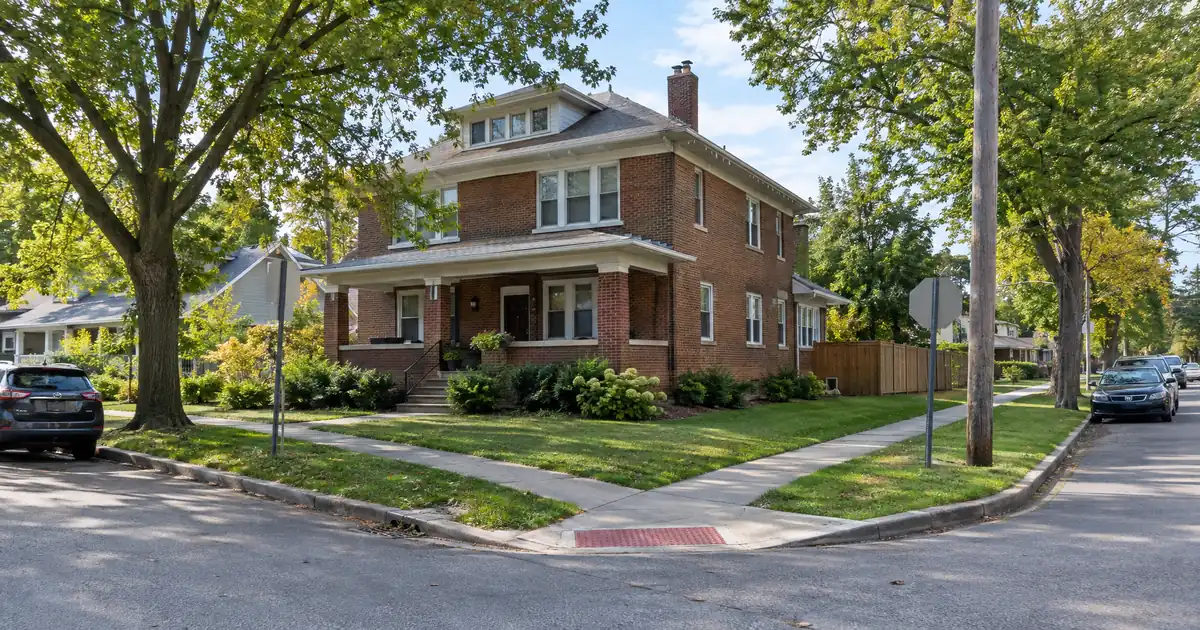
Picture an investor holding a three-bedroom rental in Annehurst, bought at $340,000 (a modeled assumption) and now appraising well above that. The tenant pays near-market rent, and a second target is already on the radar. The question is not whether the equity exists. It is how much of it a DSCR cash-out refinance in Westerville, Ohio can actually release once rent has to cover the new debt in full.
DSCR Cash-Out Calculator
Run the cash-out numbers in Westerville, OH
Rate source: Freddie Mac 30-yr average via FRED® — Federal Reserve Bank of St. Louis · effective Sep 24, 2026
Prefilled with starting assumptions — enter your property’s value, balance, taxes, and insurance for a more accurate picture.
Program parameters update from Lendmire’s centralized guideline source. Taxes and insurance are editable estimates.
As of Sep 24, 2026 · General Freddie Mac market benchmark, not a Lendmire loan offer. Property value, balance, taxes, and insurance are editable estimates. Maximum loan-to-value varies by lender, program, property type, and seasoning. Not a Loan Estimate, approval, or commitment to lend. Program availability and eligibility are subject to lender guidelines, credit approval, property review, and underwriting.
The Quick Read:
A DSCR cash-out refinance in Westerville, Ohio is underwritten primarily on the property’s rental income measured against its full monthly obligation, so the process runs from a title-recorded ownership check to an appraisal, a coverage test at the lender’s leverage cap, and a reserves review before proceeds are directed toward the next acquisition.
- Average rental house lists near $2,233, per RL Property Management, citing RentCafe data. Zillow puts the typical home value at $411,803, up 1.7 percent.
- At 75 percent leverage and average rent, modeled coverage lands near 0.8, so leverage choice drives proceeds.
- Vertiv’s headquarters expansion adds 210 local jobs, per the Westerville Area Chamber of Commerce.
- Cash-out seasoning runs about six months from title recording.
Westerville Market Snapshot
A quick read on the Westerville investor landscape — figures come from the cited sources below. Confirm current property-level numbers before underwriting.
| Metric | Detail |
|---|---|
| Home prices | $452K median list (Movoto) |
| Typical rents | $1,364 median gross (Luxe Home Team Uptown blog) |
| University enrollment | About 3,100 students (City of Westerville) |
| Population | 38,645 population (Census Reporter) |
| Employment | 210 local jobs (westervillechamber.com — Westerville Area Chamber) |
The Number That Decides This Market
In Westerville, rent coverage is the binding constraint on a cash-out, not the 75 percent loan-to-value ceiling. At that ceiling, an average-rent house models near 0.8 coverage once taxes and insurance are included. Proceeds are set by how much leverage the rent can carry.
Run the numbers on a typical house. The inputs below are modeled assumptions, not sourced market facts: the Zillow value of $411,803, RL Property Management’s average rental house at about $2,233 a month, and full PITIA (principal, interest, taxes and insurance) at standard 30-year terms with Ohio-average tax and insurance loads.
| Cash-out LTV | Modeled coverage | Read |
|---|---|---|
| 75 percent | About 0.8 | Below the 1.00 benchmark |
| 65 percent | Low 0.9s | Still short |
| 55 percent | Around 1.0 | Clears at the baseline |
The coverage figures are rounded down and include taxes and insurance. They also show why the research on gross yield matters. RL Property Management puts Westerville’s gross yield at 6.5 to 6.6 percent. Columbus Prime Realty puts it at roughly 4.6 to 5.35 percent before expenses. A lender’s coverage test will tend to land nearer the lower band. Test every deal there.
Most standard programs are built around a 1.00 coverage baseline, because at that level rent covers the full payment. Some lenders review lower-coverage files with compensating factors, lower leverage, different pricing or more reserves. All of that is subject to lender guidelines, credit profile and property review. Where a house sits below 1.00 at the leverage you want, the paths to put in front of a lender are a lower LTV, a sub-1.00 program, an interest-only structure, or a rent case supported by recent leasing. A lender decides which of them fits. The guide “What Is a DSCR Loan” covers how the ratio is calculated.
Appreciation-Led, Not Cash-Flow-Led
Westerville builds equity through price, not through spread. That helps a refinance and hurts a purchase. Rising values widen the equity pool, while rents have to carry a heavier debt load on any new acquisition at current prices.
The price data disagrees, and it should be presented that way. Zillow shows a typical value of $411,803, up 1.7 percent over the year. Movoto shows a median list price of $452,000, down 3 percent. Local agent reports from Julie & Company show a monthly median of $492,278, up 7.0 percent, though the same agent cautions that percent changes look dramatic when sample sizes are small. Call the market flat to modestly up, and base cash-out projections on the index figure rather than a single month’s median.
The tight supply does help appraisals. The same agent reports one month of housing supply and an average of 14 days on market, with homes selling for just over 101 percent of original list price in an earlier report. Recent comps should be available to an appraiser. (That is also why buying below market here is hard.) Equity in Westerville tends to come from time held, not from a discounted entry, which fits a refinance strategy better than a flip.
Here’s the catch. A seasoned owner who bought several years ago may hold plenty of equity on paper and still find the rent only supports a modest loan. The appraisal is not the bottleneck. Coverage is.
Where the Seasoned Equity Sits
The Westar and Polaris corridor, the Schrock and Cleveland Avenue stretch, and the Uptown area are the submarkets where rent and tenant demand line up most credibly for a cash-out. No source gave neighborhood-level prices or rents, so these profiles run on tenant base and housing stock.
Westar and Polaris corridor. This is the newer-stock side of the city. The Westar Business District already houses Vertiv, DHL Supply Chain and Marzetti, and the adjacent 88-acre East of Africa Road development is a $30-plus million city investment, per the Westerville Area Chamber of Commerce. Its housing is newer, and renters here are largely professionals tied to those employers. Newer stock usually means a cleaner appraisal and lighter capital needs. An investor holding here is the most likely to see rent support the loan.
Schrock Road, Cleveland Avenue and Huber Village. Older stock with fast access to I-270, per Apartments.com. Tenants commute to Columbus, Easton and Polaris, and Vertiv facilities and Mount Carmel St. Ann’s sit along or near the Cleveland Avenue corridor. This is the most plausible home of lower entry prices in the city, though no price data confirms it. Older stock raises the odds of a repair-driven appraisal condition, so a seasoned owner here should budget for it.
Uptown and Otterbein. Uptown is the civic and business core, with a historic district of 57 contributing structures. The City of Westerville reports that Otterbein enrolls about 3,100 students, including adult and graduate students. That adds a modest, steady layer of rental demand, especially from graduate students and faculty. Older homes here may carry higher maintenance costs, and a local agent blog notes that Westerville is not a renter-heavy market. Treat Uptown as a steady holding, not a high-yield one.
Annehurst, Huber Ridge and the east side. Established neighborhoods with generous lots and tree-lined streets make up the family-rental core. Lender marketing claims that East Westerville toward Alum Creek Drive prices 10 to 15 percent below homes near Uptown. That claim carries no supporting data, so verify it against your own comps.
Highland Lakes and Medallion Estates, where luxury homes top $1.5 million, are low-yield for coverage math. Skip them.
What the Employment Base Protects
Westerville’s rental demand rests on a corporate headquarters, a logistics and food cluster, and a hospital campus. Together they favor long-term, employed tenants over transient ones, which supports the rent line a refinance depends on.
Vertiv is headquartered in Westerville. The Chamber reports plans to hire over 700 additional employees in Ohio, including 210 at the Westerville global headquarters. The Chamber also names DHL Supply Chain, The Marzetti Co. and Central Ohio Primary Care Physicians among top employers, though no local headcounts surfaced. On healthcare, Mount Carmel Health System reports more than 10,000 employees and 1,600 physicians system-wide, with St. Ann’s on South Cleveland Avenue. That figure is system-wide, not Westerville-only. A healthcare-worker tenant pool near Cooper Road and the Maxtown area is plausible, but unquantified.
The population is small. Census Bureau QuickFacts shows 38,645 residents across 12.6 square miles, with a median age of 40.7. Point2Homes cites median household income of $109,404 and median renter household income of $59,760. Anchor employers support rent. Population is not the growth story, though.
Single-Family Rules, Duplexes Are Scarce
Single-family homes are the core rental product, and multi-unit stock is thin. A cash-out on a small multifamily here means sparse comps and appraisal risk, while a single-family hold has a deeper comp pool.
RL Property Management reports a 74 percent homeownership rate, and estimates put renters at roughly one in four households. Other local estimates run lower, near 22 percent. Census-based figures quoted by Luxe Home Team put median gross rent at $1,364 and owner-occupancy at 72.5 percent. The gap between that $1,364 median and the roughly $2,200 single-family average shows what a house commands over an apartment. Rent.com lists the average one-bedroom at $1,416.
Duplexes and fourplexes exist but turn up only occasionally, mostly near Uptown. Homes.com shows a 12-month multifamily median of $415,000, down 1 percent, with 27 days on market. Multi-unit income stacking is likely stronger in adjacent Columbus submarkets, though that is not verified here.
The thin renter pool cuts two ways. Lease-up risk from oversupply looks low, since no sourced oversupply concern turned up for any submarket. But the pool is selective, so condition matters more than in renter-heavy markets.
DSCR files in markets like this one typically come in with strong equity and modest rent coverage. The deals that move forward usually pair a conservative LTV with a lease already in place and a clean property condition report. The ones that stall are often high-appraisal files where the borrower assumed the 75 percent ceiling was the working number. Running coverage first, then choosing leverage, tends to prevent that.
From Seasoning to the Next Deal
The mechanics are short. Ownership of about six months, measured from title recording, opens the cash-out door. Equity available depends on rent used for lender review, PITIA, reserves and the 75 percent ceiling, so proceeds are not a guaranteed figure.
A few program parameters matter most here, all subject to lender guidelines and varying by borrower, property and loan scenario:
- Cash-out LTV tops out at 75 percent. The 80 percent purchase figure does not apply.
- Credit tiers on most files run through 620, 660, 680 and 700, with 620 as the floor.
- Reserves typically run about six months of PITIA, rising to about nine months above $1,500,000.
- Loan amounts go up to $3,000,000 on standard programs, with smaller balances routed through select lenders.
Two things set the cash-out apart from a purchase in Westerville. First, a 1.00 baseline is common, but lower leverage can offset thin coverage, so the proceeds shrink as the rent test tightens. Second, an LLC-titled property is reviewed per lender program requirements, so confirm entity eligibility before ordering an appraisal.
For redeployment, proceeds can fund the down payment on the next acquisition. Westerville’s tight supply argues for looking at adjacent submarkets for that next purchase, where entry pricing and rent coverage may line up better. Lendmire’s refi programs outline the structures, and the guide “The Refi Options” walks through the sequence. Investors comparing paths can read the guide “Where DSCR and Conventional Diverge”. Ohio-wide context sits on the page for DSCR loan options for Ohio investors. To talk through a specific Westerville file, call 828-256-2183.
DSCR vs. conventional financing
There are two common ways to finance an investment property in Westerville, OH, and they qualify you differently — here’s how investors weigh them.
Why investors choose it
- Qualifies on the property’s rental income — no personal tax returns, W-2s, or pay stubs needed to document income.
- No personal debt-to-income ceiling to clear, so existing mortgages and obligations don’t cap your borrowing the same way.
- Can be closed in an LLC, keeping the property inside a business entity.
- Built for scaling — not held to the limit on number of financed properties that conventional financing applies.
- Underwriting centers on the deal: generally qualifies when the rent covers the payment, a 1.00x coverage ratio being a common baseline (confirmed in underwriting).
- Designed specifically for investment property, including long-term and, where the program allows, short-term rentals.
Where it’s strong
- Often the lowest ongoing financing cost for a buyer who fully qualifies on personal income — a fit for a first property or a cost-first purchase.
Trade-offs for investors
- Requires full personal income documentation and must fit within a debt-to-income limit — salary, existing debts, and other mortgages all count.
- Typically held in your personal name rather than a business entity.
- Caps how many financed properties you can carry, which can become a ceiling as a portfolio grows.
- Evaluates you as a borrower as much as the property, which usually means more paperwork.
How investors usually choose: a first or single property often optimizes for the lowest financing cost; portfolio builders often optimize for leverage, vesting in an LLC, and scaling past conventional caps. The right answer depends on your goals, the property, and current guidelines — both paths run through select lenders in Lendmire’s wholesale network, with eligibility and terms confirmed in underwriting.
Verify current local rental rules, taxes and insurance with qualified local professionals before committing to any refinance.
Frequently Asked Questions
How do you qualify for a DSCR loan in Westerville, Ohio?
The property’s rent has to cover its full obligation, with 1.00 as the common baseline, and credit generally needs to clear a 620 floor. Lenders also review reserves, typically about six months of PITIA, and the property itself. For an average Westerville rental house, coverage is the hurdle, so leverage is often set below the ceiling. Qualification is subject to lender guidelines and credit approval.
What are the requirements for a cash-out refinance on an investment property in Westerville, Ohio?
Expect about six months of ownership from title recording, a 75 percent maximum LTV, a coverage test on rent used for lender review and reserves. Pricing and available terms vary by lender, borrower profile, property type, and full underwriting review. The appraisal and lease documentation then set the final figure. Equity available is not a guaranteed amount.
Does Westerville’s high homeownership rate hurt a cash-out refinance?
Not directly. The 74 percent ownership rate means thin rental supply, which limits oversupply risk but shrinks the tenant pool. The refinance turns on appraisal, rent and coverage, not tenure mix. For a single-family hold, tight supply and quick sales help the comp picture.
Why does a duplex near Uptown carry more appraisal risk than a house?
Comps are sparse. Multi-unit stock is thin in a single-family-dominated city, so an appraiser has fewer sales to anchor value. Building in a margin on the valuation, and a lower leverage target, is the cautious approach.
The Choice in Front of a Westerville Holder
Consider the two routes open to an investor sitting on seasoned equity here. The first is to refinance at a lower LTV that clears 1.00 coverage. That keeps the loan on solid footing, but it leaves some equity tied up in the house. The second is to push toward the 75 percent ceiling through a sub-1.00 structure. That releases more capital for the next purchase, but the file leans on compensating factors and the rent has less room to absorb a soft stretch. In a city where Vertiv’s headquarters is growing and homes sell within weeks, neither answer is obvious.
For current guidelines and terms, see Lendmire’s DSCR loan programs page.
About Lendmire
A non-QM mortgage broker (NMLS# 2371349), Lendmire arranges DSCR financing for real estate investors in 41 markets — 40 states plus Washington, D.C. Because deals are underwritten primarily on property cash flow rather than personal income documentation, the structure suits self-employed buyers and entity-owned portfolios. Lendmire places loans through wholesale investor lenders; it is not a direct lender. The firm was recognized by Scotsman Guide as a 2026 Top Workplace and is also a 2025 Scotsman Guide Top Mortgage Workplace, per the 2026 industry recognition release.
Get Started
Ready to find the right loan for you?
In about 30 seconds you can review financing options available for your investment property. No commitment required.
Informational only. Not a Loan Estimate, approval, or commitment to lend. Program availability and eligibility are subject to lender guidelines, credit approval, property review, and underwriting.
References
1. RL Property Management: Westerville rental guide
2. Zillow Home Values: Westerville
3. Westerville Area Chamber of Commerce
4. Movoto
6. City of Westerville: Colleges and Universities
10. Apartments.com
11. Mount Carmel Health System
12. Census Reporter: Westerville, OH profile
13. Point2Homes
14. Rent.com
15. Homes.com
16. recognized by Scotsman Guide as a 2026 Top Workplace
17. a 2025 Scotsman Guide Top Mortgage Workplace
18. EIN Presswire — Lendmire Recognized as a 2026 Top Workplace by Scotsman Guide
This article is part of Lendmire’s investment property cash-out refinance program — full qualification details, guidelines, and scenarios live on the program page.
Related reading: Cash Out Refinance Investment Property in Westerville, Ohio: Can My Rent Cover the New Loan? · DSCR Cash Out Refinance in Brunswick, Ohio: Duplex Equity on the Pearl Road Corridor · Cash Out Refinance Investment Property in Marion, Ohio: What Qualifying Takes on Marion Rents
Guides: Investment Property Cash-Out Refinance in Ohio
Brandon Miller
Founder & CEO, Mortgage Loan Originator, Lendmire LLC
- Mortgage Loan Originator · NMLS# 1129696 · Verify on NMLS Consumer Access
- North Carolina Real Estate Broker · License# 343312 · Verify on NCREC
- North Carolina Insurance Producer · License# 19053198 · Property, Casualty, Life, Health · Verify on NAIC SBS
- Lendmire LLC · Firm NMLS# 2371349 · Verify firm licensure
Disclosures. The information presented in this article is general market commentary, not financial, legal, or tax advice. Lendmire is a mortgage brokerage (NMLS# 2371349) — not a direct lender or depository institution — and loan placement is subject to lender underwriting. Nothing in this content represents a commitment to lend. Loan terms, pricing, and program availability vary based on borrower qualifications, property characteristics, and state of subject property, and are subject to change at any time. Lendmire complies with Equal Housing Opportunity requirements. Consumer access: nmlsconsumeraccess.org.