
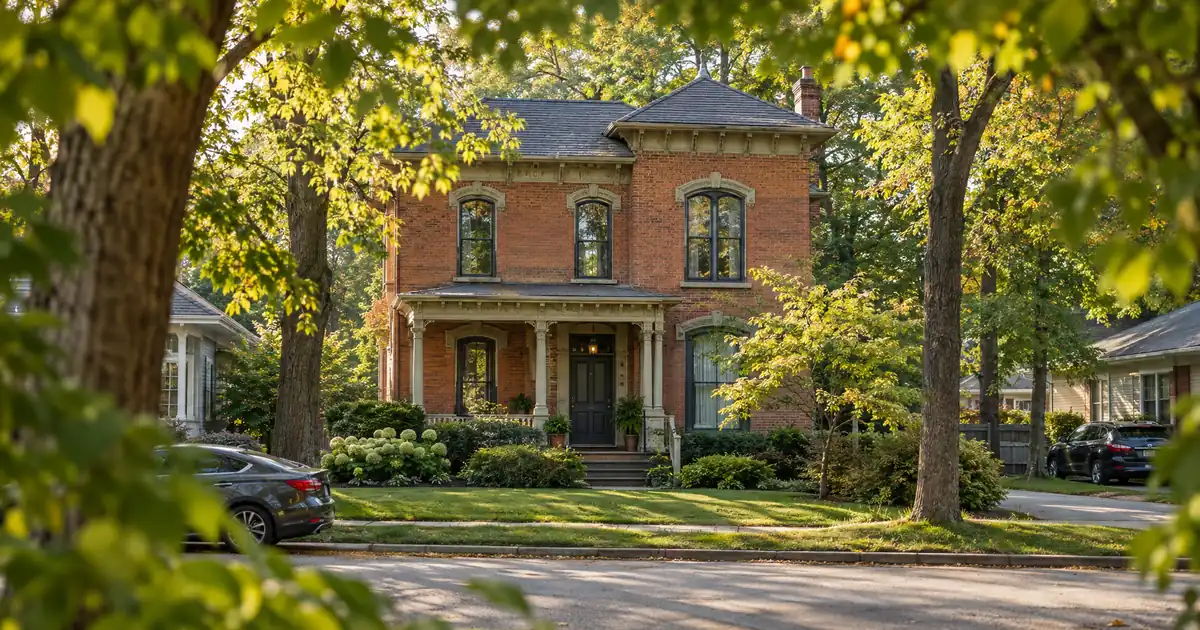
Assessed values within a half-mile of Grand Junction Plaza climbed 96% over the study window, against 51% farther out, per the Landscape Performance Series. Westfield rewards owners who bought near the city’s new public investment. But assessed value isn’t appraised value, and it certainly isn’t rent. A DSCR cash-out refinance here lives or dies on the gap between what the house is worth and what a tenant pays to live in it. Lendmire (NMLS# 2371349) helps arrange DSCR financing for Westfield, Indiana investors through wholesale and investor-lending channels across 41 markets, including Washington, D.C.
TL;DR: A DSCR cash-out refinance in Westfield, Indiana fits investors who already own a rented townhome or newer single-family house with real equity. It is underwritten primarily on the property’s rental income measured against its full monthly obligation, so appraised value, the leverage ceiling, and rent-to-value decide how much capital the file can release.
DSCR Cash-Out Calculator
Run the cash-out numbers in Westfield, IN
Rate source: Freddie Mac 30-yr average via FRED® — Federal Reserve Bank of St. Louis · effective Sep 24, 2026
Prefilled with starting assumptions — enter your property’s value, balance, taxes, and insurance for a more accurate picture.
Program parameters update from Lendmire’s centralized guideline source. Taxes and insurance are editable estimates.
As of Sep 24, 2026 · General Freddie Mac market benchmark, not a Lendmire loan offer. Property value, balance, taxes, and insurance are editable estimates. Maximum loan-to-value varies by lender, program, property type, and seasoning. Not a Loan Estimate, approval, or commitment to lend. Program availability and eligibility are subject to lender guidelines, credit approval, property review, and underwriting.
- Townhomes and newer single-family rentals fit best. Small multifamily is scarce.
- Cash-out tops out at 75% LTV, with roughly 6 months of seasoning from title recording.
- Appreciation sources disagree widely, so the appraisal is the swing factor.
- Advertised concessions at new apartment communities can drag net effective rents below asking rents.
- Minimum coverage is 1.00 on most programs, with about 6 months of PITIA in reserves.
Westfield Market Snapshot
A quick read on the Westfield investor landscape — figures come from the cited sources below. Confirm current property-level numbers before underwriting.
| Metric | Detail |
|---|---|
| Recent appreciation | County +4.2% (Everything Hamilton County blog) |
| Employment | 50 jobs (Current in Westfield, Aptiv lab) |
| Vacancy | 8.0% rental (2020) (Wikipedia, Westfield, Indiana) |
What the Assessed-Value Jump Does and Doesn’t Prove
Westfield is an appreciation-led market, not a cash-flow market. The Census Bureau counted 46,410 residents at the last decennial count, and a more recent city special census put the figure at 64,407 (verify the current number on Census QuickFacts). That growth is the reason equity exists here at all.
Grand Park explains much of the pull. It drew 1.3 million visitors and 5.5 million individual visits in a recent year, ranking as the 16th most visited arena, convention center, or sports complex in the country, per Inside INdiana Business. The city put roughly $85 million of public money into it. The Colts hold training camp there, and an IndyCar team is building its headquarters on the campus. That’s a demand anchor few cities this size can match.
Here’s the catch for a refinance. Cash-out proceeds come from appraised value gains, not from spread. A flat appraisal can erase the deal, and no amount of neighborhood enthusiasm changes that. So underwrite the refinance as if the appraiser is skeptical.
Why Westfield Rentals Run Thin Against Value
Westfield’s rent-to-value ratio is the tightest part of the story. Zillow’s typical home value runs $433,537, up 0.7% year over year. Its average value for the wider Eagletown-Westfield area is higher at $478,849, up 3.0%, reflecting a different methodology. This article uses the higher average for modeling.
Rents don’t keep pace. RentHop shows 3-bedrooms at $1,900. Rentometer, which blends all property types, puts 3-bedrooms at $2,339. RentCafe’s average of $1,678 covers only buildings with 50 or more units, and it puts renter-occupied households at just 21% of the total. Those sources use different samples, so treat them as a range, not one number.
Then there’s supply. Rent.com listings show 2 months free at The Carlyle at Chatham Hills and 3 months free at Redwood Westfield. Trulia lists specials at Flats at Spring Mill Station, Wheelhouse on the Monon, Tempo at Grand Park, and Carlyle. Advertised concessions are a supply signal, not a measured vacancy rate. But those new communities compete for the same tenants as a small investor’s townhome. Underwrite to net effective rent. Expect the appraiser’s rent survey to reflect the softness.
Housing stock compounds the problem. NeighborhoodScout shows single-family detached homes at 79.12% of units, large apartment complexes at 9.30%, and row houses and attached homes at 5.56%, with only a few duplexes. Skip the fourplex hunt. The product that exists is the product you own.
The Coverage Math at Full Leverage
At full leverage, most Westfield long-term rentals land below 1.00 once taxes and insurance are counted. Coverage is monthly rent divided by the full monthly obligation: principal, interest, taxes, insurance, and any HOA dues.
Run the numbers on a modeled scenario. Assume a $480,000 townhome or newer single-family rental, close to Zillow’s average value, with a modeled rent of $2,339, the top of the sourced 3-bedroom range. At 75% LTV, modeled coverage including taxes and insurance lands in the low-0.8 range. Rent has to be far higher, or leverage lower, to clear the benchmark. At the more conservative $1,900 rent, it’s worse. Leverage down in the mid-50s percent brings the same modeled file to roughly 1.0. These are illustrative assumptions, not sourced market figures. Final terms depend on lender guidelines, property type, leverage, and the borrower’s complete credit picture.
That’s a sub-1.00 result at the leverage most investors expect. Several structures may apply, and a lender would review each one. Some programs consider sub-1.00 files with reduced leverage, stronger credit, and more reserves. Interest-only structuring can change the payment component. A lower-basis property changes the ratio directly. None of these is guaranteed. Eligibility depends on lender guidelines, credit approval, and property review.
DSCR files in markets like this one typically look like one of two things. Either the borrower bought well below current value and the cash-out request is modest relative to the appraisal, or the borrower is asking for maximum proceeds on a property whose rent doesn’t carry them. The first file goes through clean. The second gets re-scoped, usually toward lower leverage or a different property. Brokers who see this pattern often run the coverage number before the appraisal is ordered, not after.
Standard programs are built around a 1.00 coverage benchmark because rent covers the payment at that level. Some lenders will review lower or no-ratio scenarios, but those typically require more cash equity, lower leverage, or stronger compensating factors. The guide “What Is a DSCR Loan” covers the mechanics, and the guide “Where DSCR and Conventional Diverge” versus a conventional refinance explain why an investor with several financed properties often lands on DSCR.
Where the Cash-Out Files Actually Work
Countryside and Westgate come first. Homes.com describes these as more affordable HOA communities, with 3-bedroom townhomes listed for rent in Westgate. They are probably the most workforce-friendly submarket in the city, but no price or rent data by community turned up, so the coverage math has to be run property by property. The logic holds anyway: a lower basis against a similar rent range improves coverage, and cash-out leverage comes down less. If a Westfield file is going to clear 1.00 without a big equity hold-back, it looks like this.
Downtown Westfield and Grand Junction carry the appreciation story. Main and Union Streets offer walkable dining, and The Union at Grand Junction is a new apartment community nearby. Demand comes from young professionals and empty-nesters. The 96% assessed-value jump is real. So are the concessions from new communities. Owners who bought early here have equity, but coverage is thin, so cash-out proceeds are limited by rent, not by the 75% cap.
The Grand Park District, near 191st Street, is tournament-adjacent rental territory. Tempo at Grand Park is new, and the ECR headquarters and planned mixed-use development point to future demand. But it’s a supply-heavy pocket right now, and Tempo is one of the communities advertising specials. It’s a hold for appreciation, not a cash-flow play.
Chatham Hills, Bridgewater, and Wood Wind are golf communities with mostly owner-occupied homes and institutional build-to-rent product. This is a high-end area. Skip it for coverage. The Carlyle at Chatham Hills has been advertising two months free, which tells you what small investors compete against.
The US 31 and 146th Street corridor, and the 161st and 169th Street corridors, offer newer communities, big-box retail, and access to Carmel’s business area. The Aptiv engineering lab at the Westfield Business Centre, announced with 50 jobs at about $80,000 average salary, sits off Oak Ridge Road, per Current in Westfield. That’s a small but high-wage signal. These corridors have the right infrastructure and the wrong price basis.
The health district near 196th Street and US 31 is worth watching. Community Health Network has its medical office building open, and WTHR reports a planned 100-bed inpatient tower at an estimated $335 million. Riverview Health Westfield Hospital is already operating. No rental data turned up for the surrounding blocks. Employment there is promising, but the numbers aren’t in yet.
Employment Anchors Behind the Tenant Pool
Westfield’s own employment base is real but modest. The city targets advanced manufacturing, technology, and the business of sports, and IMMI, AgReliant, Automatic Pool Covers, and Thieneman Construction are headquartered there. Aptiv, Bastian Solutions, and Gordon Food Service have made investments. The school district is the largest verifiable employer. Headcounts aren’t reliably sourced for the private firms, so they’re best treated as qualitative signals.
The larger employers, such as CNO Financial and Roche Diagnostics, sit mostly in Carmel and Fishers. Many Westfield tenants commute. That’s normal for a bedroom-anchored submarket, and it supports steady demand for 2- and 3-bedroom homes. Point2Homes shows 2-bedrooms as the largest rental share at 49%, and 37% of apartment rentals were built in the 2010s. It’s a newer stock, so competition is modern, and renovated older townhomes have to hold their own.
What the Lender Will Ask For
The plumbing matters more than the strategy on a cash-out. Expect this file list:
- Seasoning. About 6 months of ownership, measured from title recording. Buying and refinancing on a schedule requires recorded title first.
- Lease and rent evidence. A current lease or an appraiser’s rent schedule. In Westfield, the appraiser’s number will reflect concessions and new-build competition.
- Insurance and payoff. A current insurance declaration and a payoff statement. Insurance is a moving line in coverage, so pull a fresh quote before the file goes out.
- HOA documents. Most Westfield subdivisions have HOAs. Get the governing documents early, since HOA dues sit in the obligation and rules on renting can affect the file.
- Entity documents. If the property sits in an LLC, the lender reviews those documents, subject to lender program eligibility.
- Reserves and credit. About 6 months of PITIA in reserves, and a credit floor of 620. Better tiers at 660, 680, and 700 typically improve terms.
Program details change, so confirm current parameters and verify local rental rules, HOA restrictions, taxes, and insurance with qualified local professionals. Unlike lenders whose overlays push HOA-governed and attached product out early, the non-QM channels Lendmire works with generally review townhomes on the property’s rent. Each file still goes through lender review.
Which Appreciation Number Is Real?
The sources disagree, and the appraiser will pick one. Zillow shows +0.7% for the typical value and +3.0% for the average. Roots Realty, citing Redfin, shows a median sale price around $497,000, up 9.3%, at about 99% of list. Agent-reported figures put Westfield at +6.3%, against +4.2% for Hamilton County. Redfin’s median swings with the mix of new-construction sales, so a headline gain can overstate what an existing home has done.
The better signal is Redfin’s monthly snapshot. Homes sold after 69 days on market versus 43 a year earlier, 77 homes sold versus 106, and price per square foot rose only 0.3% to $192. New construction in Chatham Hills and Serenade pushes the median up while leaving buyers room to negotiate. Appraisers use comparable sales, so model cash-out on per-square-foot comps, not the median.
Consider an investor with a Westfield townhome whose payoff balance sits at 60% of appraised value. That leaves 15 percentage points before the 75% ceiling, and the coverage math will likely bind before the ceiling does. A 5% appraisal shortfall eats a quarter of that room. This one’s a toss-up for many owners: the equity is real, but the cash you can extract depends on which comps the appraiser picks. Proceeds are never a guaranteed figure. They depend on rent used for lender review, PITIA, reserves, and the ceiling.
For the mechanics of pulling equity out, see Lendmire’s DSCR cash-out refinance page and the rate-and-term and cash-out refi details. Investors comparing structures can also review DSCR loan options for Indiana investors. To run a specific property, talk through the file or call 828-256-2183.
Frequently Asked Questions
How do you qualify for a DSCR loan in Westfield, Indiana?
Qualification centers on the property’s rent measured against its full monthly obligation, with 1.00 the common benchmark. Pricing and available terms vary by lender, borrower profile, property type, and full underwriting review. In Westfield, coverage is the hard part, because value is high against rent, so many files need lower leverage or a lower-basis property. Approval is subject to lender guidelines and property review.
DSCR vs. conventional financing
Two common ways to finance an investment property in Westfield, IN. They qualify you differently — here’s how investors weigh them.
Why investors choose it
- Qualifies on the property’s rental income — no personal tax returns, W-2s, or pay stubs needed to document income.
- No personal debt-to-income ceiling to clear, so existing mortgages and obligations don’t cap your borrowing the same way.
- Can be closed in an LLC, keeping the property inside a business entity.
- Built for scaling — not held to the limit on number of financed properties that conventional financing applies.
- Underwriting centers on the deal: generally qualifies when the rent covers the payment, a 1.00x coverage ratio being a common baseline (confirmed in underwriting).
- Designed specifically for investment property, including long-term and, where the program allows, short-term rentals.
Where it’s strong
- Often the lowest ongoing financing cost for a buyer who fully qualifies on personal income — a fit for a first property or a cost-first purchase.
Trade-offs for investors
- Requires full personal income documentation and must fit within a debt-to-income limit — salary, existing debts, and other mortgages all count.
- Typically held in your personal name rather than a business entity.
- Caps how many financed properties you can carry, which can become a ceiling as a portfolio grows.
- Evaluates you as a borrower as much as the property, which usually means more paperwork.
How investors usually choose: a first or single property often optimizes for the lowest financing cost; portfolio builders often optimize for leverage, vesting in an LLC, and scaling past conventional caps. The right answer depends on your goals, the property, and current guidelines — both paths run through select lenders in Lendmire’s wholesale network, with eligibility and terms confirmed in underwriting.
What are the requirements for a cash-out refinance on an investment property in Westfield, Indiana?
Expect about 6 months of seasoning from title recording, a maximum of 75% LTV, and coverage that clears the lender’s minimum. You’ll need a lease or rent schedule, insurance, a payoff statement, HOA documents where they apply, and entity documents for an LLC. The appraisal drives the cash figure, and program details should be confirmed at the time of the request. These specifics are subject to lender guidelines and a full review of property, leverage, and credit.
Why does a Westfield rental often need lower leverage to clear 1.00?
Because Westfield’s home values are high against its rents. Zillow puts average value near $478,849, while 3-bedroom rents in the sourced range run about $1,900 to $2,339. At full leverage, modeled coverage including taxes and insurance lands well below 1.00. Cutting leverage, choosing a lower-basis townhome, or considering a sub-1.00 program are the usual paths.
How do conflicting appreciation numbers affect a Westfield cash-out?
The appraiser’s comps decide the proceeds, not the headline gain. Reported figures run from under 1% to over 9%, and new-construction sales inflate medians. Price per square foot rose only 0.3% in one Redfin snapshot. Model on per-square-foot comps and leave cushion, since a flat appraisal can shrink the available equity.
What property types work best for DSCR cash-out in Westfield?
Townhomes, attached homes, and newer single-family rentals in the more affordable HOA communities tend to work best. Lendmire arranges DSCR investor loans, with cash-out capped at 75% LTV. Duplexes and fourplexes are scarce here, so the product mix is mostly single-family and attached.
Where the Asymmetry Sits
Westfield’s premium is paid on the way in, so the opportunity sits in the lower-basis attached product. Countryside and Westgate townhomes, where 3-bedroom units are listed for rent, are the closest thing to an underpriced rental against fundamentals in a city where the median sale price sits near $500,000. Investors who hold those with real seasoning, and who can point to net effective rent above the concession-heavy new communities, will likely see the best cash-out coverage in the city. The new-build apartments and golf-community luxury product will not.
For current guidelines and terms, see Lendmire’s DSCR loan programs page.
About Lendmire
Lendmire (NMLS# 2371349) is a DSCR-focused mortgage broker that helps arrange investor financing across 41 markets, including Washington, D.C., through wholesale and investor-lending channels. DSCR eligibility is generally reviewed by the lender on the property’s rental income rather than personal income documentation, subject to lender guidelines. That works for self-employed investors, LLC operators, and portfolios above four financed properties. Scotsman Guide named Lendmire a Top Mortgage Workplace in both 2025 and 2026.
Get Started
Ready to find the right loan for you?
In about 30 seconds you can review financing options available for your investment property. No commitment required.
Informational only. Not a Loan Estimate, approval, or commitment to lend. Program availability and eligibility are subject to lender guidelines, credit approval, property review, and underwriting.
References
1. Landscape Performance Series, Grand Junction Park and Plaza
2. Everything Hamilton County blog
4. Wikipedia, Westfield, Indiana
5. U.S. Census Bureau QuickFacts, Westfield city
6. Inside INdiana Business, Grand Park financials
7. Zillow Home Values, Westfield
8. Zillow — Home Values Eagletown Westfield
9. RentHop — Average Rent IN Westfield
10. Rentometer — Average Rent IN Westfield
11. 2 months free at The Carlyle at Chatham Hills and 3 months free at Redwood Westfield
12. specials at Flats at Spring Mill Station, Wheelhouse on the Monon, Tempo at Grand Park, and Carlyle
14. Homes.com — Westfield Neighborhood Homes for Rent
16. WTHR
17. Riverview Health Westfield Hospital
18. Point2Homes
19. Roots Realty
20. Redfin, Westfield housing market
21. 2025
22. 2026
This article is part of Lendmire’s investment property cash-out refinance program — full qualification details, guidelines, and scenarios live on the program page.
Related reading: Cash Out Refinance on Westfield IN Investment Property · DSCR Cash Out Refinance in Lafayette, Indiana · Cash Out Refinance Investment Property Noblesville Indiana
Guides: Investment Property Cash-Out Refinance in Westfield, IN · Investment Property Cash-Out Refinance in Indiana
Brandon Miller
Founder & CEO, Mortgage Loan Originator, Lendmire LLC
- Mortgage Loan Originator · NMLS# 1129696 · Verify on NMLS Consumer Access
- North Carolina Real Estate Broker · License# 343312 · Verify on NCREC
- North Carolina Insurance Producer · License# 19053198 · Property, Casualty, Life, Health · Verify on NAIC SBS
- Lendmire LLC · Firm NMLS# 2371349 · Verify firm licensure
Compliance and disclosures. Lendmire (NMLS# 2371349) is a licensed mortgage broker and is not a direct lender, depository institution, financial advisor, or tax professional. Content in this article is general market analysis and educational information — not financial, legal, or tax advice for any specific situation. Lendmire does not guarantee loan approval; every transaction is subject to underwriting by the funding lender. Mortgage pricing and loan program guidelines are subject to change at any time without notice and vary by borrower characteristics, property type, and state regulations. Lendmire complies with Equal Housing Opportunity. Licensure verification: NMLS Consumer Access.