
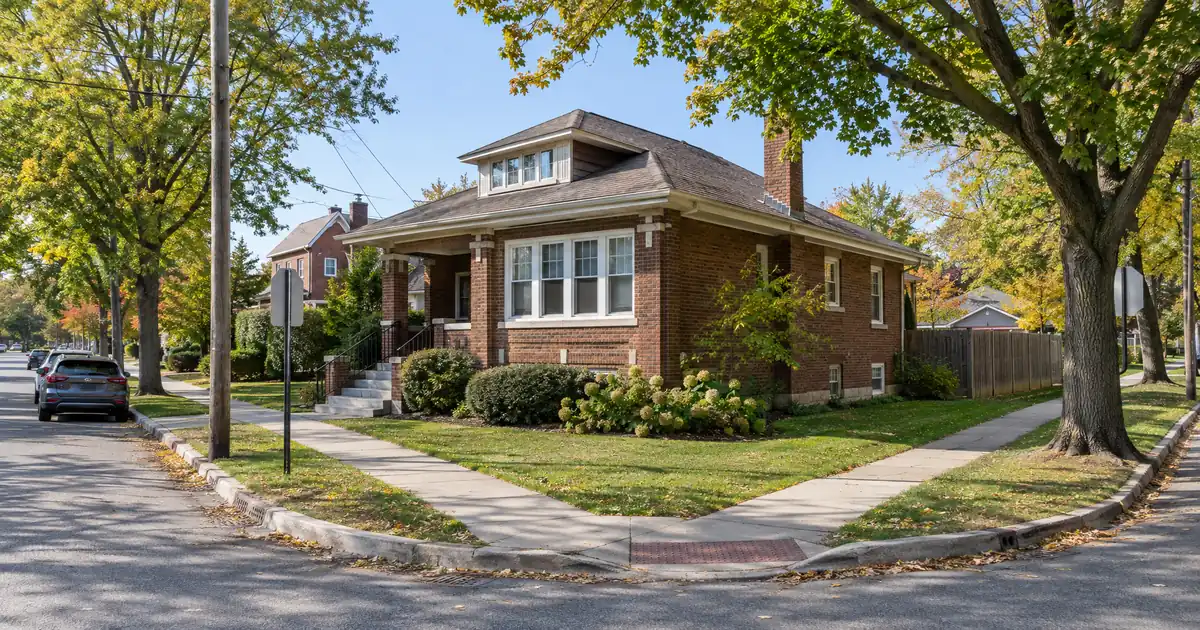
Picture an investor holding a single-family rental purchased in Scottdale two years ago for roughly $410,000. The property has since traded up toward the neighborhood’s current median of $464,902, and rent has kept pace — Scottdale currently averages $3,809 a month, a figure NeighborhoodScout puts higher than 97.6 percent of neighborhoods statewide. The investor isn’t looking to sell. The investor wants the appreciation converted into a down payment on the next deal, without touching the lease or disturbing the tenant.
That’s the cash-out refinance question in Wheaton, Illinois: whose equity is actually extractable, and whose is just paper.
DSCR Cash-Out Calculator
Run the cash-out numbers in Wheaton, IL
Rate source: Freddie Mac 30-yr average via FRED® — Federal Reserve Bank of St. Louis · effective Sep 17, 2026
Prefilled with starting assumptions — enter your property’s value, balance, taxes, and insurance for a more accurate picture.
Program parameters update from Lendmire’s centralized guideline source. Taxes and insurance are editable estimates.
As of Sep 17, 2026 · General Freddie Mac market benchmark, not a Lendmire loan offer. Property value, balance, taxes, and insurance are editable estimates. Maximum loan-to-value varies by lender, program, property type, and seasoning. Not a Loan Estimate, approval, or commitment to lend. Program availability and eligibility are subject to lender guidelines, credit approval, property review, and underwriting.
The Quick Read: A DSCR cash-out refinance on a Wheaton investment property is underwritten mainly on the home’s market rent measured against its full monthly obligation, not the owner’s personal income — letting an investor who already holds equity convert it into capital for the next deal, subject to seasoning and coverage requirements.
- Scottdale rents average $3,809 a month against a $464,902 median price — the tightest rent-to-value math in the city (NeighborhoodScout).
- Illinois DSCR cash-out refinances cap near 70 percent loan-to-value, tighter than the 75 percent ceiling used elsewhere.
- Six months of title-seasoning applies before cash-out proceeds can be drawn.
- Downtown Wheaton home prices fell 14.9 percent year over year while average rent held near $2,132 (RentCafe).
- Wheaton’s citywide 73 percent owner-occupied base thins the rental-comp pool appraisers can draw from.
Wheaton Market Snapshot
A quick read on the Wheaton investor landscape — figures come from the cited sources below. Confirm current property-level numbers before underwriting.
| Metric | Detail |
|---|---|
| Home prices | $565,000 median sale price (Redfin – Wheaton, IL housing) |
| Typical rents | $2,098 avg (RentCafe – Wheaton average rent) |
| University enrollment | Total enrollment 2,874 (Data USA – Wheaton College) |
| Population | 53,557 population (Census Reporter) |
| Employment | 19,500 employees (PRNewswire) |
Scottdale’s Rent-to-Price Math Wins the Cash-Out Race
Scottdale clears the coverage test more comfortably than any other Wheaton submarket, and the reason is arithmetic, not sentiment. A monthly rent-to-price ratio near 0.82 percent — $3,809 against $464,902 — outruns Downtown Wheaton’s roughly 0.71 percent ratio ($2,132 against a $300,000 average price in the Center submarket). On a DSCR cash-out refinance, that spread matters more than it sounds. Every basis point of rent-to-price ratio is room between the coverage floor and the ceiling a lender will let an owner pull.
Investor-facing research on Wheaton flags Scottdale specifically for its steady tenant base of Chicago commuters and its ongoing infrastructure investment — a durable-demand argument that pairs with the rent-to-value data rather than standing alone. Modeled against a full monthly obligation that bakes in principal, interest, Illinois property tax load, and insurance, a Scottdale refinance at the state’s 70 percent cash-out ceiling lands in the low-1.1x to mid-1.1x coverage range on current rent figures — comfortably above the 1.00 minimum DSCR floor most programs are built around, with room to spare for a rent dip. That’s not true everywhere in this city, which is the point.
None of this guarantees a specific coverage number on a specific file — credit tier, reserves, and the appraisal all move the outcome, and qualification runs subject to lender guidelines and program terms. But the math starts from a stronger position here than in most of Wheaton’s other pockets, and that’s what separates a submarket worth targeting for cash-out from one worth avoiding.
Center: Priced Like a Discount, Renting Like a Premium
Downtown Wheaton is the odd one in this data set: prices fell while rent held. The Center submarket’s average sale price dropped 14.9 percent year over year to roughly $300,000, even as median price per square foot rose 3.6 percent — a split that reads like a market correcting a prior run-up rather than one in genuine decline. Rent, meanwhile, never moved down. Average rent in the Downtown Wheaton submarket sits at $2,132, with two-bedroom units ranging from $1,745 to $3,731, per RentCafe.
That combination — a lower cost basis against a rent that didn’t retreat — is exactly the setup a cash-out investor wants to have bought into. An owner who purchased in the Center a year or two ago, before the pullback fully showed up in the comps, may find the appraisal reflects a value the seller-side market hasn’t fully priced. The seasoning clock is the gating factor here: Illinois DSCR cash-out programs generally require around six months of ownership measured from title recording before proceeds can be drawn, so a very recent Center purchase may need to wait out the calendar before this math is available.
Coverage-wise, a $300,000 basis against $2,132 in average rent produces a tighter ratio than Scottdale — modeled coverage on a cash-out draw at Illinois’s 70 percent ceiling lands closer to the 1.00 floor than comfortably above it, depending on the specific unit’s rent and the borrower’s reserve position. That’s not disqualifying. It’s a reminder that Downtown Wheaton is a cash-flow-marginal, appreciation-favorable market, not a slam-dunk on both fronts simultaneously.
North Wheaton: Fast Comps, Thin Renter Pool
North Wheaton sells quickly and appraises defensibly, but the rental-comp bench is short. Homes here receive five offers on average and close in around 39.5 days, with a median sale price of $409,000 — down 16.1 percent year over year even as price per square foot rose 14.4 percent, a pattern similar to the Center’s correction. Citywide, though, 73 percent of Wheaton households are owner-occupied against 27 percent renter-occupied, per RentCafe — and that imbalance is sharper in a neighborhood like North Wheaton, which reads as more family-owner than rental-heavy.
The practical effect: an appraiser working a North Wheaton cash-out file has fewer rental comps to lean on than in a renter-dense submarket, which can slow the appraisal process or push valuation toward conservatism. The fast-selling comp set (39.5-day average) helps on the sale-price side of the appraisal; it does less for the rent-comp side. Investors holding North Wheaton rentals for cash-out purposes should expect the appraiser’s rent schedule to draw from a wider geographic radius than they might in Scottdale or Downtown Wheaton.
Wheaton College Area and Northeast Wheaton: Equity That’s Hard to Cash Out
These two submarkets show the largest headline appreciation in the city and the weakest DSCR cash-out case — a genuine tension worth naming plainly. The Wheaton College Area posted a 94.0 percent year-over-year jump in average sale price to roughly $844,000, with price per square foot up 37.6 percent. Northeast Wheaton posted an even sharper 95.9 percent increase to a median near $966,000 — though that figure likely reflects small-sample volatility in a submarket with limited annual transaction volume, and it deserves fresh comps before anyone underwrites against it.
The problem for a cash-out investor: rents in these price tiers don’t move at anywhere near the same pace as the sale price. A $844,000 basis needs substantial monthly rent to clear a 1.00 DSCR floor at a 70 percent cash-out LTV, and premium single-family stock in a college-adjacent, faculty-and-residential neighborhood rarely commands rent proportional to an $844,000 purchase price. The equity is real. Extracting it through rental-income-based financing is the hard part. These specifics are subject to lender guidelines and a full review of property, leverage, and credit.
Worth flagging separately: Wheaton College houses 91 percent of its students in college-owned or -affiliated housing, according to Data USA, which lists total enrollment at 2,874. Investors coming from a typical college-town playbook — expecting a deep off-campus student-rental pool near a campus of this size — will find that pool doesn’t really exist here. That’s a structural difference from a market like Champaign-Urbana, and it means the College Area’s investment case rests on appreciation and eventual resale, not on renting to students.
Illinois’s 70 Percent Ceiling
Most DSCR cash-out programs cap loan-to-value at 75 percent. Illinois is an exception. A geographic underwriting overlay brings the Illinois cash-out ceiling down to roughly 70 percent, meaning Wheaton investors should model their available equity against that tighter number rather than the national figure quoted in general DSCR marketing. The gap between 70 and 75 percent doesn’t sound large. Applied against a $464,902 or $844,000 basis, it’s the difference between a refinance that clears coverage comfortably and one that doesn’t.
Seasoning runs about six months from title recording before a cash-out draw is available, and the DSCR floor most programs are built around sits at 1.00 — meaning the rent used for lender review needs to at least match the full monthly obligation, including taxes and insurance, at whatever LTV the file lands on. Credit tiers commonly used across the DSCR network run from a 620 floor up through 660, 680, and 700, with reserve requirements generally landing around six months of PITIA (closer to nine months above the $3 million loan-amount range). None of these are guarantees; they’re the parameters a file gets measured against, and the exact terms on any given loan depend on the borrower’s credit profile, the property, and lender review. Reviewing how DSCR cash-out works in practice before ordering an appraisal saves a round trip.
What Actually Rents in Wheaton
The city’s rental stock skews smaller than most investors assume walking in. Large apartment complexes with more than 50 units make up 26 percent of Wheaton’s rental inventory; small-scale complexes under 50 units account for 64 percent; single-family rentals make up the remaining 10 percent. That distribution — heavily weighted toward small multifamily — points toward duplex, triplex, and fourplex acquisitions as a structurally sound property type for this city, particularly near the Downtown corridor where C-4 zoning explicitly permits conversion of a single-family structure into a two-unit building or a mixed residential-commercial layout. That zoning flexibility is a real income-stacking lever for an owner willing to add a second unit, not a theoretical one.
Tenant demand in Wheaton doesn’t run on a single engine. Northwestern Medicine’s Central DuPage Hospital in neighboring Winfield operates 390 beds and hosts more than 1,200 physicians across 89 specialties, per Northwestern Medicine’s own facility page — a shift-based nursing and clinical-staff workforce that rents on a different rhythm than an academic calendar. Separately, the Wheaton Metra station ranked 19th busiest of 236 non-downtown stations systemwide, with an average of 1,618 weekday boardings recorded, according to the station’s Metra ridership data. The Ogilvie commute runs 45 to 60 minutes — longer than closer-in suburbs like Elmhurst or Glen Ellyn — and that extra ride time is arguably why Wheaton’s price per square foot trades below those closer suburbs, which is exactly the gap a cash-flow investor wants to buy into.
Deal desks working files from small-metro Chicago suburbs like this one tend to see a common pattern: the cleanest files come from owners who pulled a fresh rent schedule before ordering the appraisal, rather than relying on a lease signed a year or two earlier in a market where two-bedroom rents rose nearly 23 percent year over year. In a market moving this fast on the rent side, a stale lease can understate what the property actually qualifies for.
Frequently Asked Questions
How do you qualify for a DSCR cash-out refinance in Wheaton, Illinois?
Qualification centers on the property’s rent measured against its full monthly obligation rather than the owner’s traditional employment income. In Wheaton, that means pulling current market rent for the specific submarket — Scottdale, Downtown Wheaton, and North Wheaton all price differently — and comparing it against principal, interest, tax, and insurance at the requested loan amount. Credit tier, reserves, and six months of ownership seasoning also factor into eligibility, subject to lender guidelines.
What are the requirements for a cash-out refinance on an investment property in Wheaton?
Most programs in the network look for around six months of ownership seasoning from title recording, a DSCR at or near 1.00 on rent used for lender review, and reserves generally around six months of PITIA. Illinois carries a geographic overlay that caps cash-out loan-to-value near 70 percent rather than the 75 percent ceiling used in some other states, so Wheaton investors should model equity against that lower figure.
DSCR vs. conventional financing
Two common ways to finance an investment property in Wheaton, IL. They qualify you differently — here’s how investors weigh them.
Why investors choose it
- Qualifies on the property’s rental income — no personal tax returns, W-2s, or pay stubs needed to document income.
- No personal debt-to-income ceiling to clear, so existing mortgages and obligations don’t cap your borrowing the same way.
- Can be closed in an LLC, keeping the property inside a business entity.
- Built for scaling — not held to the limit on number of financed properties that conventional financing applies.
- Underwriting centers on the deal: generally qualifies when the rent covers the payment, a 1.00x coverage ratio being a common baseline (confirmed in underwriting).
- Designed specifically for investment property, including long-term and, where the program allows, short-term rentals.
Where it’s strong
- Often the lowest ongoing financing cost for a buyer who fully qualifies on personal income — a fit for a first property or a cost-first purchase.
Trade-offs for investors
- Requires full personal income documentation and must fit within a debt-to-income limit — salary, existing debts, and other mortgages all count.
- Typically held in your personal name rather than a business entity.
- Caps how many financed properties you can carry, which can become a ceiling as a portfolio grows.
- Evaluates you as a borrower as much as the property, which usually means more paperwork.
How investors usually choose: a first or single property often optimizes for the lowest financing cost; portfolio builders often optimize for leverage, vesting in an LLC, and scaling past conventional caps. The right answer depends on your goals, the property, and current guidelines — both paths run through select lenders in Lendmire’s wholesale network, with eligibility and terms confirmed in underwriting.
Why is the Illinois cash-out LTV lower than in other states?
Illinois DSCR cash-out programs carry a state-specific underwriting overlay that caps loan-to-value near 70 percent, compared to a 75 percent ceiling elsewhere in the network’s footprint. It’s a lender-set geographic adjustment, not a reflection of Wheaton specifically, but it directly changes how much equity is extractable from any Wheaton property regardless of submarket.
Does Wheaton College create a student-rental market worth targeting?
Not in the way a typical college town does. Ninety-one percent of Wheaton College’s roughly 2,874 students live in college-owned or -affiliated housing, so the off-campus rental pool investors might expect near a campus this size mostly doesn’t exist. Wheaton College Area properties trade on appreciation and family-buyer demand, not on student leases.
Can Lendmire help arrange DSCR financing for an investment property in Wheaton?
Yes. Details on Lendmire’s Illinois DSCR platform outline the state-specific parameters in more depth. LLC-titled ownership is workable on many of these files, subject to program eligibility.
Where the Mispricing Actually Sits
Downtown Wheaton is the neighborhood the appreciation data hasn’t caught up to yet. Prices in the Center fell 14.9 percent year over year while rent held near $2,132 and two-bedroom units citywide climbed nearly 23 percent — a divergence that, if it persists, means Downtown’s rent-to-price ratio keeps improving even without a single dollar of price recovery. Combine that with C-4 zoning that already permits a second unit on some parcels, and the underpriced trade in Wheaton right now isn’t the trophy address near Cantigny Park or the Chicago Golf Club — it’s a small multifamily property a few blocks off the Metra platform in the Center, bought at a discount the market hasn’t fully repriced.
This article was published by Lendmire Research.
For current guidelines and terms, see Lendmire’s DSCR loan programs page.
About Lendmire
A DSCR-focused mortgage broker, Lendmire (NMLS# 2371349) places investor financing across 41 markets — 40 states plus Washington, D.C. — with DSCR eligibility generally reviewed by the lender on property cash flow instead of tax returns, subject to lender guidelines. Scotsman Guide named Lendmire a Top Mortgage Workplace in 2025 and 2026.
Scotsman Guide’s Top Mortgage Workplace list for 2025 documents Lendmire’s recognition.
Get Started
Ready to find the right loan for you?
In about 30 seconds you can review financing options available for your investment property. No commitment required.
Informational only. Not a Loan Estimate, approval, or commitment to lend. Program availability and eligibility are subject to lender guidelines, credit approval, property review, and underwriting.
References
2. RentCafe
3. Redfin – Wheaton, IL housing
4. RentCafe
5. Data USA
7. PRNewswire
10. Northwestern Medicine’s Central DuPage Hospital
11. Northwestern Medicine’s own facility page
12. a 2026 Scotsman Guide Top Mortgage Workplace
13. Scotsman Guide 2025 Top Mortgage Workplace
This article is part of Lendmire’s investment property cash-out refinance program — full qualification details, guidelines, and scenarios live on the program page.
Related reading: Cash Out Refinance Investment Property in Wheaton, Illinois: An Uneven Run-Up · DSCR Cash Out Refinance for Rock Island Rentals · DSCR Cash Out Refinance for Normal, Illinois Rentals
Guides: Investment Property Cash-Out Refinance in Wheaton, IL · Investment Property Cash-Out Refinance in Illinois
Brandon Miller
Founder & CEO, Mortgage Loan Originator, Lendmire LLC
- Mortgage Loan Originator · NMLS# 1129696 · Verify on NMLS Consumer Access
- North Carolina Real Estate Broker · License# 343312 · Verify on NCREC
- North Carolina Insurance Producer · License# 19053198 · Property, Casualty, Life, Health · Verify on NAIC SBS
- Lendmire LLC · Firm NMLS# 2371349 · Verify firm licensure
Compliance and disclosures. Lendmire (NMLS# 2371349) is a licensed mortgage broker and is not a direct lender, depository institution, financial advisor, or tax professional. Content in this article is general market analysis and educational information — not financial, legal, or tax advice for any specific situation. Lendmire does not guarantee loan approval; every transaction is subject to underwriting by the funding lender. Mortgage pricing and loan program guidelines are subject to change at any time without notice and vary by borrower characteristics, property type, and state regulations. Lendmire complies with Equal Housing Opportunity. Licensure verification: NMLS Consumer Access.