
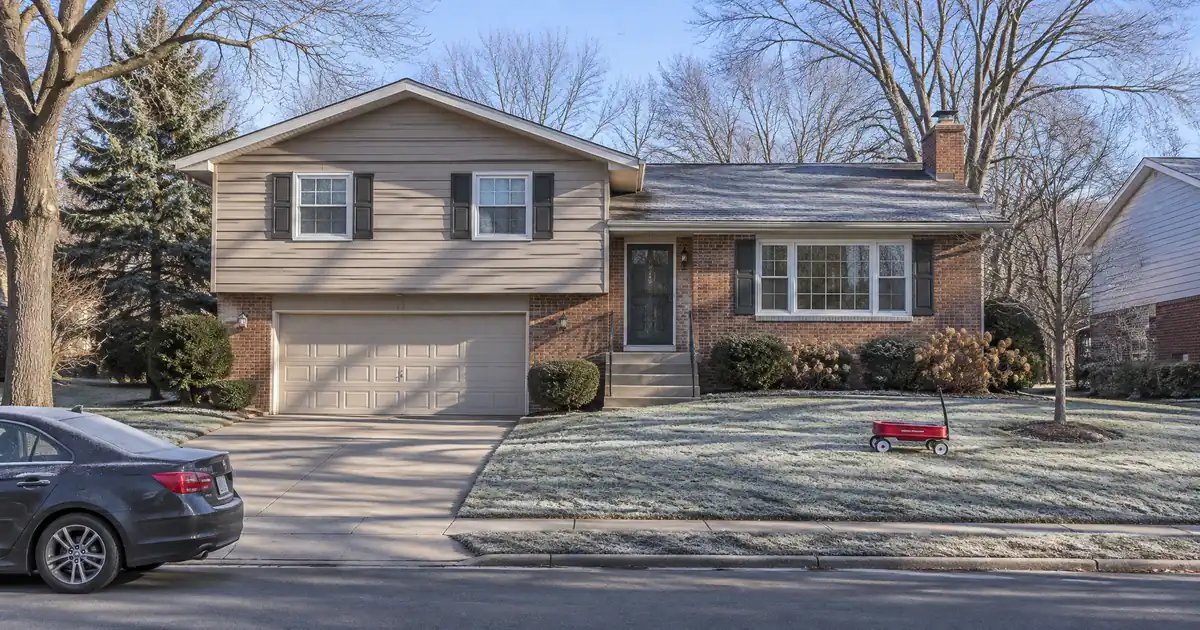
The Quick Read: A DSCR HELOC is a line of credit on a rental you already own, qualified on the property’s rent instead of your personal income, and the cash it produces becomes the down payment on your next rental, which a separate loan then finances. The line never buys the house directly. Lendmire is a mortgage broker that works with a network of wholesale lenders, and which lender fits depends on your file.
- The line sits on a rental you already own, as a standalone second lien behind your first mortgage or as a first lien if the rental has no mortgage.
- The rent qualifies the line: the minimum coverage ratio is 1.10x on a stress payment across the whole credit limit, subject to underwriting.
- Your new purchase is financed by a different loan, and that purchase lender decides whether borrowed funds can be used.
- Leverage, credit tiers, valuation and seasoning all shape what a line can reach, so the ceilings below matter more than any headline.
What a DSCR HELOC Actually Is
The term covers two different things, and mixing them up causes most of the confusion.
The first meaning is a bank HELOC on a home or rental you own, used to fund a down payment on another property. BiggerPockets members call it a main tool for buying more properties, and the same thread cautions that a fully borrowed purchase leaves you with no equity in the new property. That kind of bank line underwrites you: your credit, your income and your debt-to-income ratio.
The second meaning is the DSCR HELOC, a revolving line on a rental you own, qualified on the rental’s income instead. Across Lendmire’s wholesale network it is written one of two ways:
- Standalone second lien behind the first mortgage you keep.
- Standalone first lien on a rental that has no mortgage.
It is never a line on your own home, never a third lien, and never closed together with a purchase. The rent drives lender review, so there is no traditional personal-income documentation, W-2s or personal income calculation, subject to lender guidelines. The line can stay in your LLC’s name, subject to program terms.
Because the line must sit on property you already own, it cannot fund a house you have not bought. You open it, draw on it, and then use the cash toward the next deal.
Key Terms Defined
DSCR (debt service coverage ratio): the property’s gross monthly rent divided by the monthly payment the lender tests it against.
HELOC: a revolving line of credit secured by real estate, drawn in pieces rather than paid out in one lump sum.
Second lien: a loan that sits behind the first mortgage and gets paid second if the property is ever sold to satisfy debts.
CLTV (combined loan-to-value): the first mortgage balance plus the new line, divided by the property’s value.
LTV (loan-to-value): one loan divided by value, used when the line is the only lien.
Draw period: the stretch when you can borrow from the line and pay interest only on what you have drawn.
Seasoning: the waiting period between buying or refinancing a property and opening a new loan against it.
How Underwriting Treats the Line, Step by Step
Step 1: The collateral. The lender looks at one rental you own. It must be a one-to-four-unit, non-owner-occupied property with a lease in place. A two-to-four-unit building may have at most one vacant unit.
Step 2: The coverage test. The lender divides gross monthly rent by a qualifying payment. That payment is a fully amortizing principal-and-interest payment on the entire credit limit, at the start rate plus 2 percentage points. It is a stress payment, built to test the property well above its day-to-day cost. Taxes and insurance are not part of it.
Rent is the lesser of the appraisal’s market rent and the lease, unless three months of receipts support a lease above market. The minimum coverage is 1.10x.
On a second lien, confirm on the file how the lender treats the first-mortgage payment in its coverage calculation. Do not assume it either way.
Step 3: The leverage test. The lender adds your existing liens to the new line and compares the total to value. The sizing logic is simple: value times the leverage ceiling, minus what you already owe, capped at the program’s maximum line.
Step 4: Credit. The lender reviews the credit report itself. There is no 30-day mortgage late in the last 12 months. At least 48 months must have passed since a bankruptcy, foreclosure, short sale or deed-in-lieu.
Step 5: Valuation. A full interior appraisal always works. Lines up to $400,000 can instead use an automated valuation with a confidence score of 85 or better, plus a property inspection report. Lines above $400,000 take a full interior appraisal. Appraisal waivers are not accepted.
The Leverage Tiers
These figures are ceilings, not offers, and they apply through select programs, subject to underwriting.
| Position | Credit score | Maximum leverage on an investment property | Line size |
|---|---|---|---|
| Second lien | 720 or better | 70% CLTV | $50,000 to $500,000 |
| First lien | 740 or better | 75% LTV | Up to $500,000 |
| First lien | 700 to 739 | 70% LTV | Up to $500,000 |
| First lien, larger line | 720 or better | 65% LTV | Above $500,000, to $1,000,000 |
Below a 720 score there is no second-lien tier. A borrower who keeps a first mortgage can only take a second lien, because a first lien exists only on a rental with no mortgage. A declining-market flag lowers the ceiling by 5 points, and Philadelphia lines carry a ceiling 10 points lower.
The Draw Rules and the Seasoning Clock
A line works differently from a loan. The draw period runs 5 years, interest-only on the drawn balance. A 25-year fully amortizing repayment period follows, for a 30-year maturity. The rate is variable.
At least 80% of the line must be drawn at closing, and the closing draw is never less than $50,000. On the smallest lines, that means the whole line comes out at closing. Later draws are at least $5,000 each. This is a funding tool for a specific purchase, not a standby reserve.
Seasoning is the rule that surprises owners. A rental bought or refinanced inside the last 6 months is not eligible (that clock runs from the last note date to the new note date), and the owner must have held title for 6 months (settlement date to note date).
No reserves or cash to close are required on the line. Each borrower can hold at most 5 loans or $2,500,000 with the program.
The Sequence: Opening the Line to Closing the Purchase
The order matters more than any single term.
1. Check eligibility on the rental you own. Confirm the property type, the lien position, title and seasoning before anything else.
2. Open and close the line on its own. It closes separately from any purchase.
3. Ask the purchase lender about borrowed funds before you draw. Get the answer in writing. The line is only useful if the lender financing the new house accepts it.
4. Draw, and keep a clean money trail. The purchase lender will want statements showing the draw landing in your account and then moving to title or escrow.
5. Close the purchase with a separate DSCR loan. That loan is reviewed primarily on property-level rental income covering the payment, subject to lender guidelines.
The line’s payment is not part of the new property’s monthly obligation, so it does not show up in the new loan’s coverage ratio. It still hits your real cash flow every month.
A Worked Example in Ratios
Say you own a rental with a first mortgage at about half its value, and your credit score is above 720. The second-lien ceiling is 70% CLTV, so the line has room up to about another 20% of value. That room has to clear the $50,000 minimum line, so the property’s value needs to be large enough to support it.
Now run the rent test. The rent is measured against a stress payment on the whole limit, not the drawn balance. Assume it covers that payment at roughly 1.2x. That clears the 1.10x minimum with a thin cushion. If rent dipped about 10%, the ratio would fall to roughly 1.08x, below the minimum.
The new house has its own test. Its rent has to cover its own monthly obligation to the purchase lender. Two separate properties, two separate coverage tests, and the lender on each side checks only its own.
The illustration is simplified, and the lender’s own calculation governs.
Where the General Rule Breaks
Borrowed funds face several separate tests. A purchase lender may accept borrowed money for the down payment and closing costs but exclude it from reserves. A line can cover your down payment without covering your cushion. Some lenders also want a minimum amount of your own money in the deal or cap the borrowed share.
Your first mortgage has to allow it. The documents on the first loan must permit a second lien. Some second-lien programs exclude certain first mortgages, including non-QM ones.
Title and LLCs. Many bank lines require individual or revocable trust title. This program lets the rental stay in your LLC, subject to program terms. The members sign as guarantors, and a title holder who is not a borrower signs a non-borrowing owner acknowledgment.
Property type. Single-family, PUD, townhome, two-to-four-unit and condominium properties are eligible, along with lots up to 10 acres. Rural-designated property, row homes, condotels, leaseholds, land trusts, age-restricted communities, mixed-use property and anything listed for sale in the prior 2 months fall outside the program.
Borrower type. U.S. citizens, permanent residents, and non-permanent residents with a Social Security number are eligible. Foreign nationals and ITIN borrowers are not.
House hackers. A line on the home where you live is a different, owner-occupied product. This one is for rentals.
Why Many Banks Say No (and What That Means)
DSCR loans are designed for non-owner-occupied investment properties. Because they are business-purpose investor loans, they are reviewed differently from a standard owner-occupied mortgage. Credit extended primarily for a business purpose is generally exempt from Regulation Z under the CFPB‘s published exam procedures, so a bank that declines rental lines is following its own policy, not a legal ban.
Where lines are offered on rentals, credit unions and community banks often keep them on their own books, sometimes with a renewal or a reappraisal built in. Those lines usually underwrite your personal income, not the rent.
Comparing the Routes
| Route | What gets underwritten | Typical fit |
|---|---|---|
| Rental HELOC at a bank or credit union | Your income and debt-to-income | W-2 earners with strong personal files |
| DSCR HELOC (this article) | The rental’s rent against a stress payment | Keeping a low-cost first mortgage in place |
| DSCR cash-out refinance | Rent, with the first lien replaced | LLC or ineligible-property cases |
| Bank HELOC on your own home | Your income, owner-occupied | Not an investment-property product |
Lendmire’s piece Top Bank Statement HELOC Providers for Buying Another Rental House covers the personal-income-alternative route.
What DSCR HELOC Lenders Look For (and How to Find the Right Fit)
Lendmire does not rank or name lenders. The lender that fits depends on the file: the property type, credit profile, leverage need and title structure all shift which program works. A broker’s job is to match the scenario to the program across several wholesale lenders instead of sending you to one.
Before you apply, run this checklist:
- Is the rental one to four units, non-owner-occupied, with a lease in place?
- Does the property clear both six-month clocks?
- Is your credit score at least 720 for a second lien, or 700 for a first lien?
- Does your current first mortgage allow a second lien?
- Does the property sit outside the excluded types?
- Is your state on the list? The program is available in 15 of Lendmire’s 16 licensed states, every licensed state except Tennessee: Alabama, California, Colorado, Florida, Georgia, Indiana, Michigan, Montana, New Mexico, North Carolina, Ohio, Pennsylvania, Texas, Virginia and Washington.
- Has the purchase lender confirmed in writing that it accepts borrowed funds?
- Can you cover both payments if the new rental sits vacant for a stretch?
Which Structure Fits Your Situation
| Your situation | Likely route |
|---|---|
| Rental with a first mortgage you want to keep, 720+ credit | Second-lien DSCR HELOC |
| Rental owned free and clear, 700+ credit | First-lien DSCR HELOC |
| Rental held in an LLC | The line can stay in the LLC; confirm program terms |
| Credit below the tier, or first mortgage bars a second lien | A DSCR cash-out refinance or another route |
| Foreign national or ITIN borrower | Not eligible on this program |
Risks and a Stress Test
Stacking debt is the real danger. A borrowed down payment leaves you financing close to the entire purchase price. That strains cash flow and reserves, and a downturn hits both loans at once.
A DSCR purchase loan alone is secured only by the new property. The line puts a lien on a second property you already own. If the new rental underperforms, your original rental is on the hook.
The line’s variable payment moves with the market, and the repayment period brings fully amortizing payments. Stress-test three things before you commit: a vacancy gap on the new property, a dip in rent on the collateral property, and a rise in the line’s payment.
A coverage ratio of 1.00x does not mean profit. It means rent covers the tested payment, not that you net cash after repairs, vacancy and the line.
Common Myths
A HELOC does not mean zero money down. The line is borrowed cash, and the DSCR purchase loan still requires a down payment. It also does not erase leverage caps, credit floors or reserve rules on the purchase.
The line’s payment does not lower the new property’s coverage ratio. That ratio compares the new property’s rent to its own payment. The line affects personal cash flow instead.
You cannot open the line on the house you are about to buy. The collateral has to be a property you already own.
Frequently Asked Questions
How soon after buying a rental can I open a DSCR HELOC on it?
Two six-month clocks apply: the line is not available on a rental bought or refinanced in the last 6 months (last note date to new note date), and title must have been held for 6 months (settlement date to note date). Your file is reviewed individually, and eligibility is subject to underwriting.
Does the HELOC payment count against my new DSCR loan?
Not in the coverage ratio itself. That ratio reads the new property’s rent against its own payment. The line’s payment still reduces your real cash flow, so both need to work.
Can the line sit in my LLC?
Yes, vesting in an LLC is allowed for investment property, subject to program terms. The members sign as guarantors, and the borrowers on the line need not be the borrowers on your first mortgage.
What if my rent does not cover the stress payment?
A thin ratio can sometimes be improved with a lower line, a lower leverage request or documented rent support, such as three months of receipts supporting a lease above market. Qualification stays subject to lender guidelines, credit approval and property review. A DSCR cash-out refinance is another route.
Is the program offered everywhere Lendmire operates?
It is offered in 15 of Lendmire’s 16 licensed states, every licensed state except Tennessee. The full list appears in the checklist above. Lendmire’s complete DSCR loans guide covers the broader loan family.
Next Step
If you are considering a home equity line on a rental property and want to see how the numbers work, Lendmire can help you compare DSCR HELOC options based on the property, the rent, the equity available, credit profile, combined leverage, and your goals. Reach the team at 828-256-2183.
Rent-qualified lines work best for owners who already hold equity and a clean first mortgage, and the next purchase only pencils when both properties can carry themselves.
About Lendmire
As a mortgage broker (NMLS# 2371349), Lendmire helps landlords and real estate investors open DSCR home equity lines of credit on their rentals — lines qualified on the property’s rent, never on the owner’s own home — through wholesale lenders in 15 of Lendmire’s 16 licensed states (every licensed state except Tennessee). Lendmire is never the lender; line amounts, ceilings and terms are set by the lender under its guidelines. Scotsman Guide named Lendmire a Top Mortgage Workplace in both 2025 and 2026.
Get Started
Ready to find the right loan for you?
See your offer in seconds. No credit pull, no obligation.
Informational only. Not a Loan Estimate, approval, or commitment to lend. Program availability and eligibility are subject to lender guidelines, credit approval, property review, and underwriting.
References
1. BiggerPockets – Is using a HELOC for down payment of rental property
2. CFPB
3. BiggerPockets – HELOC on investment property
This article is part of Lendmire’s DSCR HELOC program — full qualification details, guidelines, and scenarios live on the program page.
Related reading: Can You Get a DSCR HELOC for Buying Another Rental House? · Best DSCR HELOC Program for Buying Another Rental House · Banks That Offer a DSCR HELOC for Buying Another Rental House · Top DSCR HELOC Providers for Buying Another Rental House · How Much Can You Borrow on a DSCR HELOC for Buying Another Rental House?
Brandon Miller
Founder & CEO, Mortgage Loan Originator, Lendmire LLC
- Mortgage Loan Originator · NMLS# 1129696 · Verify on NMLS Consumer Access
- North Carolina Real Estate Broker · License# 343312 · Verify on NCREC
- North Carolina Insurance Producer · License# 19053198 · Property, Casualty, Life, Health · Verify on NAIC SBS
- Lendmire LLC · Firm NMLS# 2371349 · Verify firm licensure
Required disclosures. Lendmire (NMLS# 2371349) operates as a licensed mortgage broker, not a direct lender or depository. The discussion in this article is general in nature and should not be relied upon as financial, legal, or tax advice — every investment scenario is unique and should be reviewed by a qualified professional. Any loan inquiry is subject to lender underwriting, and this article is not a commitment to lend or a guarantee of approval. Mortgage rates, loan terms, and program guidelines vary by borrower, property, and state, and may change without notice. Equal Housing Opportunity. Verify licensure at NMLS Consumer Access.