
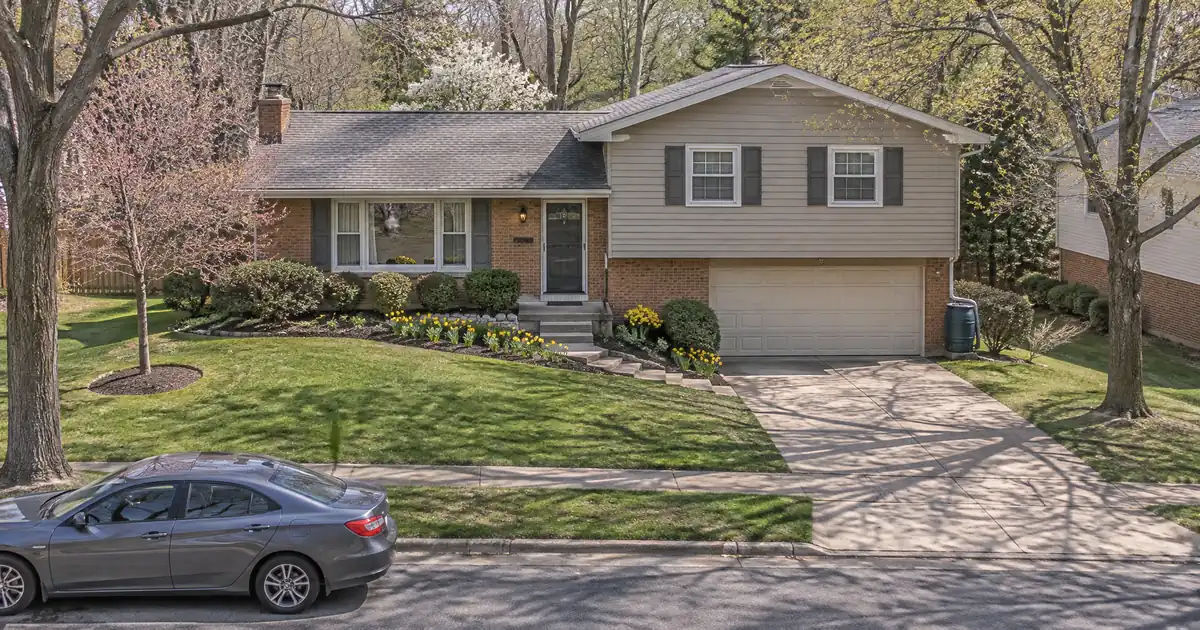
The Quick Read: A low appraisal usually shrinks a DSCR HELOC rather than ending the file, because the line is sized off appraised value and the combined debt on the rental, not off what you paid. A HELOC has no purchase price of its own. The appraisal still has to leave enough room under the leverage cap for the line you want, subject to underwriting.
- A DSCR HELOC is a standalone second lien behind the first mortgage you keep, or a standalone first lien on a rental with no mortgage. It is never closed together with a purchase.
- On a second lien, combined loan-to-value (CLTV) tops out at 70% at a 720 credit score or better, on lines of $50,000 to $500,000, through select programs.
- The rent qualifies the line at a minimum 1.10x coverage on a stress payment over the whole credit limit, so no tax returns, W-2s, pay stubs or debt-to-income ratio are required.
- A value miss shrinks the line. It does not usually hurt coverage, because a smaller line means a smaller payment.
- A rental you just bought has to season before it qualifies, so a brand-new purchase has to wait.
Does a HELOC Even Use the Purchase Price?
No. A HELOC is sized on current appraised value, and the purchase price never enters the math. That surprises people, because “below the purchase price” is how most investors first meet a low appraisal.
Two situations hide inside that phrase. The first is a purchase-money DSCR loan where the appraisal misses the contract price. On those loans the lender sizes the loan off the lower of price or appraised value, as RealCostIQ’s appraisal gap guide explains. Each dollar of shortfall lands on your cash or on the seller’s price. A HELOC cannot fix that, since it is never written together with a purchase.
The second situation is the one this article is about. You bought a rental recently, expected the appraisal to confirm the price, and now want a line against the equity. The report came in light. Now the question is how much room is left under the leverage cap.
On a purchase loan, a high appraisal does not raise the loan, because the lower number governs. On a HELOC, a high appraisal can raise the ceiling, because value is the base. Same report, opposite effect.
Key Terms Defined
DSCR (debt service coverage ratio): gross monthly rent divided by the qualifying payment. It tells the lender whether the rental covers its own debt.
CLTV (combined loan-to-value): the first mortgage balance plus the new line, divided by the property’s value. Second liens are measured this way.
LTV (loan-to-value): the loan divided by value. A first lien is measured this way.
Appraisal gap: the shortfall between a contract price and a lower appraised value on a purchase.
Reconsideration of value (ROV): a formal request that asks the lender to review an appraisal using corrected facts or better comparable sales.
Seasoning: the waiting period a lender wants after you buy or refinance before it will lend against the property again.
Is It the Value, the Rent, or Both?
Diagnose the miss first, because value and rent fail in different ways. A full appraisal for a rental usually carries both a value conclusion and a market rent conclusion. The rent figure comes from the Form 1007 rent schedule.
| What missed | What it changes | Typical symptom |
|---|---|---|
| Value only | Line size shrinks | Cap leaves less room above the first mortgage |
| Rent only | Coverage drops | Ratio lands under 1.10x |
| Both | Line and coverage | Smaller line, and the ratio may still be thin |
Rent is the lesser of the appraisal’s market rent and the lease, unless three months of receipts support a lease above market. So a low market rent conclusion can pull the rent used for lender review down even when your lease is strong.
Here is the useful part. The qualifying payment is built on the entire credit limit at a stressed start rate. Shrink the line and the qualifying payment shrinks with it. A value miss alone rarely worsens coverage. The leverage cap is what bites. A lower price helps coverage only if it also shrinks the loan.
How a Low Value Shrinks the Line
The line equals the CLTV cap times value, minus the first mortgage balance. That is the whole formula.
Run the numbers on a rental you expected to appraise at $500,000. At the 70% second-lien cap, combined debt can reach $350,000. Take your first mortgage balance out of that and the remainder is the room for the line. Now say the appraisal lands 5% light, at $475,000. The same cap supports $332,500 of combined debt, which is $17,500 less. The first mortgage did not move, so that entire $17,500 comes out of the line. These figures are illustrative, and the lender’s own calculation governs.
Notice how hard a small miss hits a thin-equity file. The first mortgage balance is fixed. All of the shrinkage lands on the one number you control, the line. If the first balance already sits near the cap, a modest miss can push the available line under the $50,000 minimum. At that point the second lien does not work at all.
Before you apply, model your property at three values: the number you expect, 5% under it, and 10% under it. If the line still clears $50,000 at the lowest case, you have a file. If not, wait or restructure.
What Valuation Type Does the File Use?
Lines up to $400,000 use an automated valuation with a confidence score of 85 or better, paired with a property inspection report, or a full interior appraisal. Lines above $400,000 take a full interior appraisal on Form 1004 (single-family), 1073 (condominium) or 1025 (two-to-four-unit income property). Appraisal waivers are not accepted.
This matters when value comes in low. An automated valuation runs on public records and comparable sales. It cannot see a renovated kitchen or a finished basement. If you improved the property, a full interior appraisal gives the appraiser a chance to account for the work, though the improvement may support a higher value only depending on comps and underwriter review.
Many people assume a rental HELOC means several appraisals. NerdWallet’s overview of HELOCs on investment property notes that multiple appraisals may be required with bank-style lenders. That describes personal-income investment HELOCs. Lendmire’s DSCR HELOC lane uses the valuation paths above.
Recently Bought? Read This Before You Apply
Two six-month clocks apply. A rental bought or refinanced inside the last 6 months is not eligible, counted from the last note date to the new note date, and the owner must have held title for 6 months, counted from settlement date to note date.
So if you closed on the rental last month and the appraisal on your purchase came in low, a DSCR HELOC is not your next move. Use the waiting time well. Collect leases and three months of rent receipts, because receipts can support a lease above market rent. Let any renovation finish so the value reflects the work. Then order the valuation once the clock has run.
Other eligibility lines matter for recent buyers too. A property listed for sale in the prior 2 months is out. So is rural-designated property, a condotel, a row home or a leasehold. A declining-market flag lowers the ceiling by 5 points. Hazard insurance must cover both liens.
What Are Your Options After a Low Result?
You have four paths. Pick by what the report actually showed.
Resize. Take a smaller line. If the room still clears $50,000, the second lien often works at a smaller size, since coverage tests the smaller payment.
Dispute through the lender. A reconsideration of value lets you submit recent comparable sales and factual corrections through the lender. It can recover part of the gap, but nothing guarantees it. The interagency guidance on reconsiderations of value says institutions should have ROV policies and that a request should not simply trigger a second valuation of the same property. Plan for the downside while you pursue it.
Wait. If leverage is the problem, paying the first mortgage down or letting values recover can restore room. If seasoning is the problem, time solves it.
Switch products. A DSCR cash-out refinance restructures all the debt. A low value shrinks that new loan and the cash left after payoff. It can make sense when the whole stack needs resetting and the numbers still clear at the lower value. The comparison between a closed-end second and the line is in Lendmire’s complete DSCR loans guide.
One thing no program here does: finance an appraisal gap. Gap coverage is a promise by a buyer to pay cash for a defined shortfall, as BiggerPockets’ appraisal gap article describes. It is a contract tool on a purchase, not a loan feature.
Credit Between 700 and 719
Second liens start at a 720 score. If you keep a first mortgage and sit at 700 to 719, there is no second-lien cell for you, whatever the appraisal says. A first lien exists only on a rental with no mortgage, with a 700 floor.
A paid-off rental that appraises low still has the first-lien path. At 740 or better the first-lien cap is 75% LTV, and from 700 to 739 it is 70% LTV, on lines up to $500,000. Lines above $500,000, up to $1,000,000, carry a 65% LTV ceiling at 720 or better. All of this is subject to underwriting. Final terms depend on lender guidelines, property type, leverage, and the borrower’s complete credit picture.
How the Rest of the Line Works
Once value clears, the terms are straightforward. Mortgage history shows no 30-day late in the last 12 months, and 48 months must have passed since a bankruptcy, foreclosure, short sale or deed-in-lieu. No reserves and no cash to close are required. Exposure per borrower tops out at 5 loans or $2,500,000 with the program.
The line draws 5 years interest-only on the drawn balance, then moves to a 25-year fully amortizing repayment period, for a 30-year maturity. The rate is variable. At least 80% of the line is drawn at closing, and later draws are at least $5,000 each.
Ownership can stay in your LLC, subject to program terms, with members signing as guarantors. A lease must be in place, and a two-to-four-unit property can have at most 1 vacant unit. Bank-style rental HELOCs that qualify on personal income differ: those generally want title in an individual’s name or a revocable trust.
Borrowers must be U.S. citizens, permanent residents, or non-permanent residents with a Social Security number. Foreign nationals and ITIN borrowers are not eligible. This lane is offered in 15 of Lendmire’s 16 licensed states, every licensed state except Tennessee.
If you also want the bank statement route as a comparison, Lendmire’s piece How to Qualify for a Bank Statement HELOC With an Appraisal Below the Purchase Price covers that product.
Questions to Ask Before the Appraisal Is Ordered
- Which valuation does this line size require, automated or full interior?
- Which rent will count, market rent from the appraisal, the lease, or the lease backed by receipts?
- How does the lender treat the first mortgage payment in the coverage calculation on a second lien? The lender’s coverage calculation governs, so confirm on the file how the lender treats it.
- Is the property in a flagged declining market?
- What exact line size results if value lands 5% and 10% low?
Common Mistakes After a Low Appraisal
Arguing from the contract price is the first. The report measures what the property is worth to the market, not what you agreed to pay, and a HELOC never uses the price anyway.
Going around the lender’s process is the second. Send comparable sales and factual corrections through the lender, not directly at the appraiser.
Assuming a lower price fixes coverage is the third. It does only if the loan and payment shrink with it.
Assuming an LLC cannot hold the line is the fourth. On this program the LLC can stay on title, subject to program terms. The reverse trap also exists, since land trusts and irrevocable trusts are not eligible.
Frequently Asked Questions
Does a low appraisal mean my DSCR HELOC gets denied?
Usually it means a smaller line, not a denial. The cap applies to combined debt against the lower value, so the first mortgage stays fixed and the line absorbs the loss. The file fails on value if the remaining room drops under the $50,000 minimum, or on coverage if the rent falls below the 1.10x program minimum. Seasoning, credit and property eligibility can also stop a file. Final results depend on underwriting.
Can I get a DSCR HELOC right after buying a rental?
Not right away. A new purchase has to wait out the seasoning period described earlier on this page. Use that time to gather leases and receipts.
Does lowering the purchase price raise my DSCR?
Only if the loan shrinks too. Coverage is rent divided by the qualifying payment, so a lower price changes nothing unless the payment falls. On a HELOC there is no purchase price in the formula at all.
Can my LLC hold a DSCR HELOC?
Yes, subject to program terms and lender guidelines. Vesting in an LLC is allowed on investment property, and the members sign as guarantors. A title holder who is not a borrower signs a non-borrowing owner acknowledgment.
Can I keep my first mortgage?
Yes. A DSCR HELOC can sit as a standalone second lien behind the first mortgage you keep, at a 720 score or better. The first mortgage is not refinanced.
If you are considering a home equity line on a rental property and want to see how the numbers work, Lendmire can help you compare DSCR HELOC options based on the property, the rent, the equity available, credit profile, combined leverage, and your goals. You can reach the team at 828-256-2183 or request a quote. Lendmire is a mortgage broker, not a lender, and all terms are subject to underwriting and lender guidelines.
About Lendmire
Lendmire (NMLS# 2371349) is a mortgage brokerage serving landlords and real estate investors in 16 licensed states. DSCR home equity lines of credit on non-owner-occupied one-to-four-unit rentals are arranged through wholesale lending channels in 15 of those states (every licensed state except Tennessee); Lendmire brokers the line and the lender underwrites each application on the property’s rent, credit and leverage. Scotsman Guide named Lendmire a Top Mortgage Workplace in both 2025 and 2026.
Get Started
Ready to find the right loan for you?
See your offer in seconds. No credit pull, no obligation.
Informational only. Not a Loan Estimate, approval, or commitment to lend. Program availability and eligibility are subject to lender guidelines, credit approval, property review, and underwriting.
References
2. NerdWallet – HELOC on investment property
3. Interagency guidance on reconsiderations of value
4. BiggerPockets – Appraisal Gap Coverage
This article is part of Lendmire’s DSCR HELOC program — full qualification details, guidelines, and scenarios live on the program page.
Related reading: DSCR HELOC Requirements for a Rental Property in Philadelphia · DSCR HELOC Requirements on Little Income · DSCR HELOC Requirements on a Delisted Rental
Brandon Miller
Founder & CEO, Mortgage Loan Originator, Lendmire LLC
- Mortgage Loan Originator · NMLS# 1129696 · Verify on NMLS Consumer Access
- North Carolina Real Estate Broker · License# 343312 · Verify on NCREC
- North Carolina Insurance Producer · License# 19053198 · Property, Casualty, Life, Health · Verify on NAIC SBS
- Lendmire LLC · Firm NMLS# 2371349 · Verify firm licensure
Legal disclosures. Lendmire (NMLS# 2371349) is a state-licensed mortgage brokerage that arranges financing through wholesale lender relationships. Lendmire is not a direct lender, depository institution, or registered financial advisor. The discussion above is general informational content about real estate financing — it is not financial, legal, or tax advice, and readers should consult licensed professionals for guidance on their individual circumstances. Loan inquiries are subject to lender underwriting; this article does not represent a commitment to lend. Loan terms, rates, and qualification standards vary by borrower, property, and state, and are subject to change at any time. Equal Housing Opportunity. NMLS Consumer Access: nmlsconsumeraccess.org.