
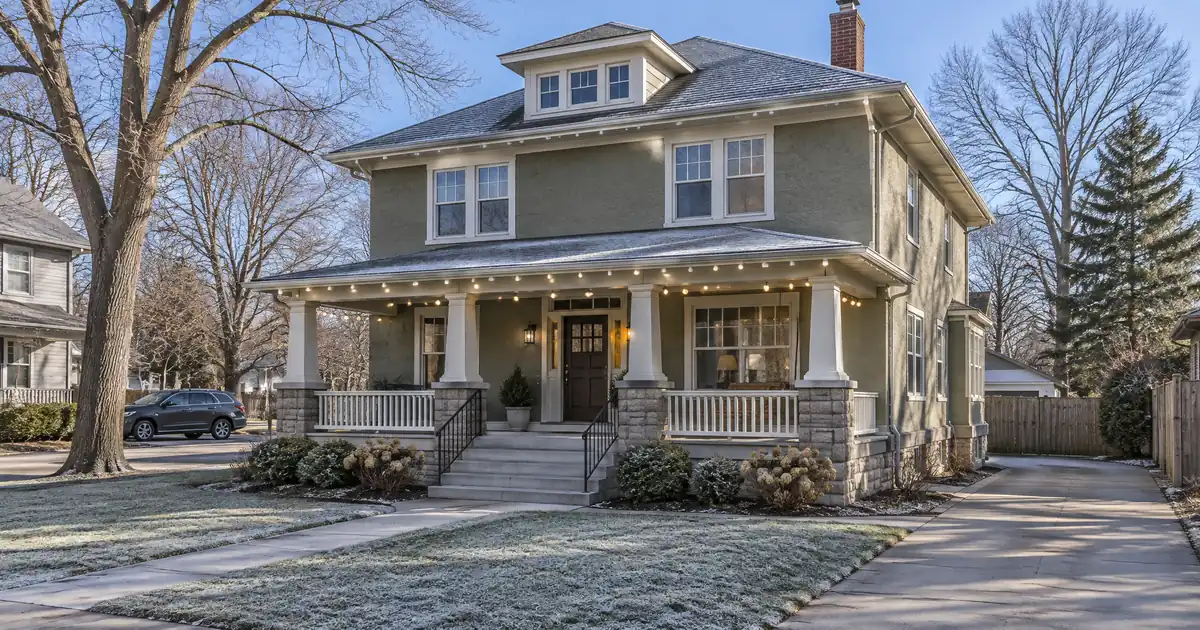
The Quick Read: A DSCR HELOC lets one owner borrow against a rental alone, because the rent qualifies the line and no household income is calculated. A spouse’s paycheck, credit and debts stay out of the analysis when only one spouse applies. A spouse can still be asked to sign the lien document, depending on title and state law.
- The rent is the qualifier: minimum 1.10x coverage on a stress payment over the whole line, subject to underwriting.
- No traditional personal-income documentation, W-2s, pay stubs or debt-to-income ratio, so a single-earner household is not at a disadvantage.
- Signing the note (the debt) and signing the lien (the pledge of the property) are separate acts.
- Title and state property law decide whether a spouse signs anything.
A line like this often appeals to a self-employed owner whose tax returns show heavy write-offs, or a household whose qualifying paycheck belongs to one spouse. This guide walks through how the underwriting treats that file, where spouses still show up, and what to check before you apply. For the wider picture, see the complete DSCR loans guide.
What a DSCR HELOC Actually Is
A DSCR HELOC is a revolving line of credit on a non-owner-occupied one-to-four-unit rental. It sits as a second lien behind the first mortgage you keep, or as a first lien on a rental with no mortgage, and in either case it is closed on its own. It is never a line on your own home.
DSCR stands for debt service coverage ratio. It compares the rental’s gross monthly rent to the qualifying payment. A HELOC is a home equity line of credit. A lien is the lender’s legal claim on the property. The note is your promise to repay.
Through select programs in Lendmire’s wholesale network, the owner’s LLC can stay on title, subject to program terms. Lendmire is the broker. The wholesale lender reviews and approves the file.
Here is how this differs from the lines you may have seen:
| Factor | DSCR HELOC | Personal-income investment HELOC | DSCR cash-out refinance |
|---|---|---|---|
| Reviewed on | Rental income | Your personal income | Rental income |
| First mortgage | Stays in place | Stays in place | Replaced |
| Your income calculated | No | Yes | No |
| Structure | Revolving line | Revolving line | New loan |
The label is used loosely in the market. Some products called a DSCR HELOC still lean on personal income. Ask the lender what actually qualifies the line.
Why One Income Is Not the Obstacle
The rent qualifies the line. No one calculates your income, your spouse’s income or a debt-to-income ratio. A one-paycheck household sits in the same position as a two-paycheck household.
The coverage test works like this. Divide gross monthly rent by the qualifying payment. That payment is fully amortizing on the entire credit limit at the start rate plus 2 percentage points. It is a stress payment, so it runs heavier than what you would owe on the drawn balance. Taxes and insurance are not part of it.
Rent is the lesser of the appraisal’s market rent and the lease, unless three months of receipts support a lease above market. A lease in place is required. A two-to-four-unit property may have at most one vacant unit.
On a second lien, confirm on the file how the lender treats the first-mortgage payment. The lender’s own coverage calculation governs.
Run the logic on a hypothetical duplex. If rent covers the stress payment on the full line at about 1.2x, the file clears the 1.10x minimum. Add a spouse’s salary to that household and the ratio does not move. The income simply is not an input.
The file is still documented. The lender reviews the lease, your credit report, the valuation and title. The rental qualifies the line, but the paperwork still has to be complete.
Borrower, Owner, Signer: Three Roles
Three roles get blended in most conversations. Keep them apart.
| Role | What it means | Does a spouse have to do it? |
|---|---|---|
| Borrower | Signs the note, owes the debt, credit is reviewed | No, generally not |
| Owner on title | Holds an ownership interest in the property | Only if on title |
| Lien signer | Signs the mortgage or deed of trust | Sometimes, by title or state law |
A spouse who signs the lien consents to the property being pledged. That is not an agreement to repay. Only the borrower signs the note.
When a title holder is not a borrower, the program has that person sign a non-borrowing owner acknowledgment and the security instrument. The title search is the step that reveals who needs to sign.
Who Signs What: The Title Matrix
Four facts drive the outcome: whether the spouse is on title, whether the state treats marital property as community property, whether the property is a homestead, and how the program writes its non-borrowing-owner rules.
| Title situation | Who borrows | Lien signature | Spouse income counted |
|---|---|---|---|
| Sole owner, one spouse | That spouse | Usually that spouse only | No |
| Spouse also on deed | Applicant alone | Spouse signs lien as owner | No |
| Spouse off deed, common-law state | Applicant alone | Often not required | No |
| Spouse off deed, community-property state | Applicant alone | State law may require joinder | No |
| Rental held in an LLC | LLC members guarantee | Title holder and guarantors sign | No |
Community-property states matter here. IRS Publication 555 names nine: Arizona, California, Idaho, Louisiana, Nevada, New Mexico, Texas, Washington and Wisconsin. Property acquired during a marriage may be community property even when titled in one name. The publication is a tax document and confirms the list only. It does not set lender signature rules.
Homestead character changes things too. A rental is usually not a homestead. If you ever lived there, or a spouse claims homestead rights, the signature requirement can change. A title company can tell you which rules apply in your state.
What the Law Lets a Lender Require
Under the federal equal credit rule, a lender may not require a spouse’s signature on a credit instrument when the applicant is reviewed on their own for the amount and terms requested. The text appears in 12 CFR 1002.7(d)(1). The eCFR version of Part 1002 carries the same rule.
State law is the carve-out. If the property is jointly owned and state law requires a spouse’s signature to reach it on default, the lender may ask for that signature on the lien. So the practical answer has two halves: your spouse cannot generally be forced onto the debt, but your spouse may still sign the lien.
Treat this as orientation, not legal advice. Confirm your situation with a title company or attorney.
LLC-Held Rentals and Guarantor Spouses
An LLC can stay on title through select programs, subject to program terms. The members sign as guarantors. A guarantor is a person who backs the debt personally.
When the rental sits in an LLC, title and the guarantor structure drive signatures, not marital status alone. A spouse who is not a member and not on title generally has no role. A spouse who is a member may be asked to sign as one. The federal bar on spousal signatures applies to a guarantor’s spouse just as it does to an applicant’s spouse.
If the borrower cannot qualify alone, a lender may condition approval on adding a guarantor or cosigner. It may not make a spousal guarantee a standard requirement.
The Program Snapshot
These are ceilings and floors from select programs in Lendmire’s wholesale network, subject to underwriting. They are not offers.
- Second lien: up to 70% CLTV (combined loan-to-value, meaning the first mortgage balance plus the new line, divided by value) at a 720 credit score or better, on lines of $50,000 to $500,000.
- First lien: up to 75% LTV at 740 or better, and 70% LTV from 700 to 739, on lines to $500,000. Lines above $500,000, up to $1,000,000, carry a 65% LTV ceiling at 720 or better.
- Terms: a 5-year interest-only draw period, then a 25-year repayment period, with a 30-year maturity. The rate is variable.
- Draws: at least 80% of the line is drawn at closing, and later draws are at least $5,000.
- Valuation: lines to $400,000 use an automated valuation with a property inspection report, or a full interior appraisal. Larger lines need a full interior appraisal.
- Seasoning: A rental bought or refinanced inside the last 6 months is not eligible (that clock runs from the last note date to the new note date), and the owner must have held title for 6 months (settlement date to note date).
- Reserves: none required. Exposure is capped at 5 loans or $2,500,000 per borrower.
- Not eligible: rural property, condotels, row homes and leaseholds, among others. The exact numbers vary by lender and program and follow a full review of property, leverage, and credit.
Availability covers every Lendmire licensed state except Tennessee. Borrowers must be U.S. citizens, permanent residents or non-permanent residents with a Social Security number.
Key Terms Defined
Lien: the lender’s legal claim on a property, created by a mortgage or deed of trust.
Note: the signed promise to repay the debt.
Non-borrowing owner: a person on title who does not owe the debt but signs the security instrument.
Community property: property that state law treats as owned jointly by married spouses, often including assets acquired during the marriage.
CLTV: combined loan-to-value, the first mortgage plus the new line, divided by property value.
If Your Spouse Won’t Sign
When state law requires the lien signature and a spouse refuses, the lien cannot be validly created, so the file does not close. You have three options. Choose a different property where the spouse is not on title and no state rule applies. Choose a different product. Or work out the title question before you apply.
Do not try to route around it by quietly moving title without advice. A transfer can raise its own problems, including with the existing first mortgage. Talk to an attorney first.
Divorce in progress, a deed that names only the spouse, and a former residence converted to a rental each change the homestead and title picture. Surface them early.
Mistakes and Late Surprises
Ask the title company before you pay for a valuation, because title and homestead questions can change the file.
Another common mistake is assuming no spouse signature means no spouse paperwork. State law can still require the lien signature. A second is assuming that signing the deed of trust makes the spouse liable for the debt. It does not, since only the note creates repayment liability.
A third is assuming a community-property state always needs both spouses. Rules differ by state and by whether the property is a homestead. A fourth is leaving the label unchecked. Ask what qualifies the line, which payment gets stress-tested, and whether the test covers the full line or only the drawn balance. Under this program it covers the entire limit.
Before You Apply
1. Pull the deed and confirm who holds title.
2. Confirm whether your state is community-property or has strong homestead rules.
3. Confirm the rental was never your homestead.
4. Check seasoning against the two six-month clocks above.
5. Decide whether the LLC or you personally will hold title.
6. Confirm you have a lease in place.
If you are considering a home equity line on a rental property and want to see how the numbers work, Lendmire can help you compare DSCR HELOC options based on the property, the rent, the equity available, credit profile, combined leverage, and your goals. For a look at who offers these lines, see Lendmire’s top investment property HELOC providers on one income without a spouse signing. To talk it through, call 828-256-2183.
Frequently Asked Questions
Can I get a DSCR HELOC with my spouse not on the loan?
Yes, in most cases. The rent qualifies the line, so your spouse’s income and credit are not part of the analysis. Your spouse may still sign the lien if they are on title or state law requires it. That signature is consent to the pledge, not a promise to repay.
Does my spouse’s income help or hurt?
It does neither. No personal income is calculated on this program, and the coverage ratio comes from the rent and the stress payment alone. Adding a paycheck to the household does not change the number.
What does a non-borrowing owner sign?
A title holder who is not a borrower signs a non-borrowing owner acknowledgment and the security instrument. They do not sign the note. Exact documents depend on the program and the state.
How long must I own the rental before a line is available?
Two six-month clocks apply: the line is not available on a rental bought or refinanced in the last 6 months (last note date to new note date), and title must have been held for 6 months (settlement date to note date). Both are subject to underwriting.
What if the rental is in an LLC?
The LLC can stay on title through select programs, subject to program terms. The members sign as guarantors, and a title holder who is not a borrower signs the acknowledgment and the security instrument.
About Lendmire
Lendmire, LLC, NMLS# 2371349, is a mortgage brokerage with consumer lending licenses in 16 states. It arranges DSCR home equity lines of credit on rental property through wholesale lending partners in 15 of its 16 licensed states (every licensed state except Tennessee); each line is written on a non-owner-occupied one-to-four-unit rental and reviewed individually by the lender under the program’s credit and leverage guidelines. Scotsman Guide named Lendmire a Top Mortgage Workplace in both 2025 and 2026.
Get Started
Ready to find the right loan for you?
See your offer in seconds. No credit pull, no obligation.
Informational only. Not a Loan Estimate, approval, or commitment to lend. Program availability and eligibility are subject to lender guidelines, credit approval, property review, and underwriting.
References
This article is part of Lendmire’s DSCR HELOC program — full qualification details, guidelines, and scenarios live on the program page.
Related reading: DSCR HELOC vs DSCR Cash-Out Refinance on One Income Without a Spouse Signing · Can You Get a DSCR HELOC on One Income Without a Spouse Signing? · How Much Can You Borrow on a DSCR HELOC on One Income Without a Spouse Signing? · How a DSCR HELOC Works on One Income Without a Spouse Signing · DSCR HELOC Rules Without Your Spouse or Co-Owner Signing
Brandon Miller
Founder & CEO, Mortgage Loan Originator, Lendmire, LLC
- Mortgage Loan Originator · NMLS# 1129696 · Verify on NMLS Consumer Access
- North Carolina Real Estate Broker · License# 343312 · Verify on NCREC
- North Carolina Insurance Producer · License# 19053198 · Property, Casualty, Life, Health · Verify on NAIC SBS
- Lendmire, LLC · Firm NMLS# 2371349 · Verify firm licensure
Important disclosures. Lendmire, LLC (NMLS# 2371349) is a licensed mortgage brokerage. Lendmire is not a direct lender, depository institution, or financial advisor. All loan inquiries are subject to lender underwriting; this article does not constitute a commitment to lend. Rates, terms, and program guidelines are subject to change without notice and vary by borrower profile, property type, and state. Information in this article is general in nature and is not financial, legal, or tax advice. Equal Housing Opportunity. NMLS Consumer Access: nmlsconsumeraccess.org.