
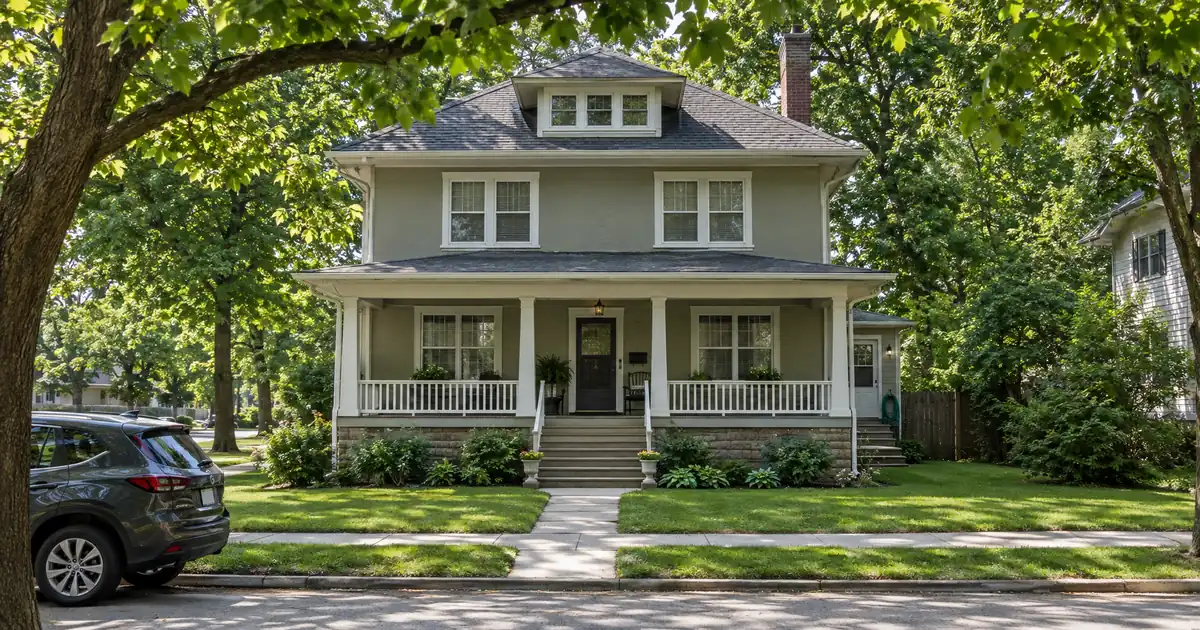
The Quick Read: A DSCR HELOC suits an owner who wants a revolving line on a debt-free LLC rental, qualified on the property’s rent with the entity still on title. A DSCR cash-out refinance suits an owner who wants one lump sum, a larger amount, or a property the line cannot cover. Banks usually decline LLC-owned rentals because of product policy, not because your credit is weak.
- A DSCR HELOC on a paid-off rental is a standalone first-lien line, qualified on rent rather than your personal income, subject to underwriting.
- A DSCR cash-out refinance is a new first-lien loan that pays out a lump sum and adds a full payment the rent must cover.
- Many big banks only write home equity lines on owner-occupied homes and individual borrowers. An LLC rental fails that screen before anyone looks at your file.
- The line requires 6 months of ownership and draws most of the money at closing. The cash-out has more flexibility on property type and size.
Side-by-Side
The left column describes the DSCR HELOC placed through select programs in Lendmire’s wholesale network. The right column describes published industry norms for DSCR cash-out refinances, which vary by lender. Both are subject to lender guidelines, and neither is a commitment to lend.
| Factor | DSCR HELOC (network program) | DSCR cash-out (industry norms) |
|---|---|---|
| Review basis | Rent vs. stressed payment, 1.10x minimum | Rent vs. full payment; floor varies |
| Structure | Revolving line, first or second lien | One-time lump sum, new first lien |
| Documentation | Lease, rent schedule, credit, valuation | Appraisal, rent evidence, entity papers |
| Entity vesting | LLC allowed; members guarantee | LLC borrower; members often guarantee |
| Property types | 1-4 units; rural, condotel and row home properties are excluded | Varies by program |
| Reserves | None required | Commonly required; varies |
| Seasoning | 6 months of ownership | Varies by program |
| Size | Lines from $50,000; first lien to $1,000,000 | Varies by program and property |
Why Do Banks Decline a Paid-Off LLC Rental?
Most declines are about the product, not you. A bank that markets home equity lines usually built that product for an individual borrowing against a home they live in. Your file never gets that far.
Here are the screens that most often end a bank application:
- The bank does not write lines on rentals. Many depository lenders skip non-owner-occupied property entirely.
- The borrower must be a person. Most banks lend to individuals, so an LLC on title fails the first check.
- Personal debt-to-income gets crowded. An investor with several financed rentals can look stretched on paper even when every property cash flows.
- Property-count caps. Some banks limit how many rentals they will finance for one borrower.
Notice that none of these says your credit is bad. Treat a decline as a channel problem. No federal rule bars an LLC-owned rental from securing a line. This is lender policy.
Some community banks and portfolio lenders will lend to the LLC directly. That is commercial credit, and it comes with its own documentation and guarantee terms. Ask for the guidelines in writing before you let anyone pull your credit.
What Changes When the Rental Is Paid Off
A paid-off rental is the cleanest collateral in either structure. There is no first mortgage to preserve and no due-on-sale clause waiting to trigger if title moves. The usual HELOC argument, keep my favorable first mortgage and add a second behind it, disappears.
Both products now sit in first position. The line is a standalone first lien. The cash-out is a new first lien that replaces nothing. The real question is whether you want a revolving structure or a lump sum, and which one the rent can carry.
When a DSCR HELOC Is the Better Fit
The DSCR HELOC works best when you want to tap equity in stages, keep the LLC on title, and keep your personal income out of the file. The rent qualifies the line. Your income is not calculated.
The coverage test is a 1.10x minimum. Lenders divide gross monthly rent by a qualifying payment. That payment is a fully amortizing payment on the entire credit limit at a stressed rate, even if you plan to draw less. Rent is the lesser of the appraiser’s Form 1007 market rent or the lease, and a lease in place is required.
Run the numbers on a paid-off fourplex with solid rents. Suppose the rent clears the stressed payment on the full line at about 1.2x. That would pass the 1.10x test. If the rent only reached 1.05x on the same line, the owner would need a smaller line. The lender’s own calculation governs, and this is illustrative only.
Leverage on a paid-off rental, subject to underwriting:
- Lines to $500,000: up to 75% LTV (loan-to-value) at a 740 score or better, and 70% LTV from 700 to 739.
- Lines above $500,000, up to $1,000,000: a 65% LTV ceiling at 720 or better.
- Second lien: if you keep a mortgage on a different rental, a line behind it reaches up to 70% CLTV (combined loan-to-value, including the first mortgage) at 720 or better, on lines to $500,000. Terms depend on the lender’s guidelines, the property type, the leverage, and a full review of the credit profile.
The structure also has features to weigh. The draw period is 5 years of interest-only payments on the drawn balance. Repayment then runs 25 years, with a 30-year maturity and a variable rate. At least 80% of the line, and never less than $50,000, is drawn at closing. Later draws are at least $5,000 each.
That first draw matters. If you only need a small amount now, a line that funds most of itself up front may carry more cost than you want. It is not a bottomless checking account.
Other file details include:
- Lines to $400,000 use an automated valuation with a property inspection report. Larger lines take a full interior appraisal. Appraisal waivers are not accepted.
- No reserves or cash to close are required.
- A rental bought or refinanced in the last 6 months is not eligible.
- A single borrower is capped at 5 loans or $2,500,000 with the program.
- Credit minimums are 720 on a second lien and 700 on a first lien, with no 30-day mortgage late in the last 12 months.
The line is offered in 15 states under Lendmire’s consumer licensing: Alabama, California, Colorado, Florida, Georgia, Indiana, Michigan, Montana, New Mexico, North Carolina, Ohio, Pennsylvania, Texas, Virginia, and Washington. If your rental sits outside those states, the cash-out route may be the practical path.
Lendmire’s piece Cash-Out Refinance vs. HELOC for a Paid-Off Rental Needing a Roof covers the repair-funding version of this choice.
When a DSCR Cash-Out Refinance Is the Better Fit
A DSCR cash-out refinance works best when you want a lump sum for a known use, a bigger amount, or a property the HELOC program excludes. You get the money once, and the new loan carries a full payment from day one.
The entity is the borrower. The members commonly guarantee, so keeping the LLC does not mean zero personal exposure. The lender looks at the appraisal, rent evidence, entity documents, guarantor credit, and often reserves.
Lump sums fit when:
- You have one defined use. A down payment on the next rental or a full renovation budget needs the money at once, so a revolving line adds little.
- The property falls outside the line’s list. The HELOC program excludes rural property, condotels, row homes, and leaseholds. Some cash-out programs accept property types the line does not, so check program by program.
- The borrower profile differs. Foreign nationals and ITIN borrowers are not eligible for the DSCR HELOC. Some cash-out programs serve them.
- The rent is thin. Cash-out programs differ on coverage floors. Select lenders in the network offer programs below 1.00 coverage, but leverage and terms adjust, so that is a conversation, not a promise.
The entity is also why this loan type exists. DSCR loans are designed for non-owner-occupied investment properties. Because they are business-purpose investor loans, they are reviewed differently from a standard owner-occupied mortgage. The CFPB’s Regulation Z exemption for business-purpose credit and the OCC’s truth-in-lending handbook, which lists credit to a borrower other than a natural person among exempt transactions, explain why consumer-style bank products and entity-borrower investor loans sit on different shelves.
The trade-off is the payment. The new payment covers the whole balance, so it lowers your coverage ratio. The size of the cash-out is limited by coverage as well as value. Many programs also carry prepayment terms, so ask before you sign.
Key Terms Defined
DSCR (debt-service coverage ratio): Gross monthly rent divided by the monthly debt payment. A result of 1.10x means the rent covers the payment with 10% to spare.
First lien: The loan with first claim on the property if the owner defaults. On a paid-off rental, any new loan is the first lien.
CLTV (combined loan-to-value): The first mortgage balance plus the new line, divided by the property’s value.
Seasoning: The waiting period a lender requires after you buy or refinance before you can borrow again.
Recourse: The lender can look to the guarantor personally if the property does not cover the debt.
The Verdict
Choose the DSCR HELOC if the property is a one-to-four-unit rental in an eligible state, the rent clears 1.10x on the whole line, and you want revolving access with the LLC on title. Choose the cash-out refinance if you need a single lump sum, the property or borrower falls outside the line’s list, or the rent is thin.
This is closer than it looks. The line’s draw rules push you to take most of the money at closing, which narrows the gap between the two structures. Many investors will decide on eligibility and rent coverage rather than preference. The stronger play for a borrower with strong rent and a staged capital plan may be the line, though a borrower with one big project could reasonably argue the other way.
Either way, a bank’s no is not a verdict on your file. To see the full range of investor loan structures, read Lendmire’s complete DSCR loans guide.
Next Step
If you are considering a home equity line on a rental property and want to see how the numbers work, Lendmire can help you compare DSCR HELOC options based on the property, the rent, the equity available, credit profile, combined leverage, and your goals.
Tax treatment can depend on how the funds are used and how the property is held; borrowers should keep clear records and speak with a qualified tax professional before relying on any deduction. This article is general information, not legal or tax advice, so consult a qualified attorney or CPA about your own situation.
Frequently Asked Questions
Can an LLC get a HELOC on a rental?
Rarely at a big bank, but yes through select programs. Most depository lenders lend to individuals only. The DSCR HELOC allows the LLC to hold title, with members signing as guarantors. Some community banks also write commercial lines to the entity directly.
Does a paid-off rental still count as cash-out?
Yes. You are taking equity out of the property even though there is no mortgage to pay off. The new loan simply becomes the first and only lien, and the full payment it adds is what the rent must cover.
Why did my bank say no when my credit is strong?
Usually the product does not fit the property or the borrower. The line may only be written on owner-occupied homes, or only to individuals. Neither reflects your credit. Asking a lender for its written guidelines on rentals and entity borrowers tells you quickly whether it is worth applying.
Is a DSCR HELOC the same as a DSCR cash-out refinance?
No. The HELOC is a revolving line with a draw period and a repayment period. The cash-out is a one-time new first-lien loan. They share the idea of qualifying on rent, but the structure, the payment, and the eligibility lists differ.
Which works better if I need cash in stages?
The line, within limits. Later draws are at least $5,000 each. But at least 80% of the line is drawn at closing, so size the line close to what you will actually use.
For how equity extraction works on an investment property, see Lendmire’s guide to cash-out refinance on an investment property.
About Lendmire
Lendmire, NMLS# 2371349, is a mortgage brokerage that arranges home equity lines of credit through wholesale lending partners in its 16 full-service states. Lines on primary residences, second homes and investment properties are each reviewed individually by the lender under the program’s occupancy, credit and combined-loan-to-value guidelines. Scotsman Guide named Lendmire a Top Mortgage Workplace in both 2025 and 2026.
Get Started
Ready to find the right loan for you?
See your offer in seconds. No credit pull, no obligation.
Informational only. Not a Loan Estimate, approval, or commitment to lend. Program availability and eligibility are subject to lender guidelines, credit approval, property review, and underwriting.
References
1. CFPB – Regulation Z §1026.3, Exempt transactions
2. OCC – Comptroller’s Handbook, Truth in Lending Act
This article is part of Lendmire’s DSCR HELOC program — full qualification details, guidelines, and scenarios live on the program page.
Related reading: DSCR HELOC vs Lower-Payment Refinance When You Want Cash Out · DSCR HELOC vs Cash-Out Refinance for a First Rental · DSCR Loan vs DSCR HELOC for a Cash-Out on a Rental
Brandon Miller
Founder & CEO, Mortgage Loan Originator, Lendmire LLC
- Mortgage Loan Originator · NMLS# 1129696 · Verify on NMLS Consumer Access
- North Carolina Real Estate Broker · License# 343312 · Verify on NCREC
- North Carolina Insurance Producer · License# 19053198 · Property, Casualty, Life, Health · Verify on NAIC SBS
- Lendmire LLC · Firm NMLS# 2371349 · Verify firm licensure
Required disclosures. Lendmire (NMLS# 2371349) operates as a licensed mortgage broker, not a direct lender or depository. The discussion in this article is general in nature and should not be relied upon as financial, legal, or tax advice — every investment scenario is unique and should be reviewed by a qualified professional. Any loan inquiry is subject to lender underwriting, and this article is not a commitment to lend or a guarantee of approval. Mortgage rates, loan terms, and program guidelines vary by borrower, property, and state, and may change without notice. Equal Housing Opportunity. Verify licensure at NMLS Consumer Access.