
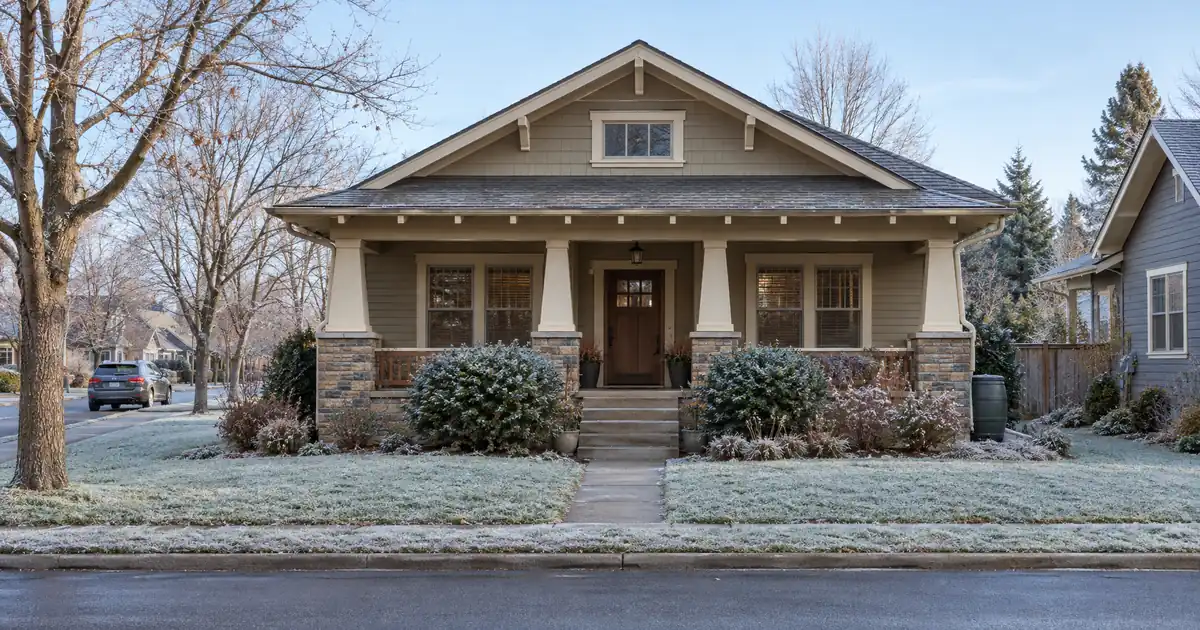
The Quick Read: A DSCR HELOC adds a new lien behind the first mortgage you keep. A DSCR cash-out refinance replaces that first mortgage with a larger loan. Both qualify primarily on the rental’s income covering the payment, subject to lender guidelines, so the real decision is about your existing mortgage, your title, and how much capital you need.
- A HELOC leaves the first mortgage untouched. A cash-out resets it.
- A HELOC is a revolving line, though most of it is drawn at closing. A cash-out is a single lump sum.
- Select programs allow LLC vesting on both paths, subject to program terms.
- The HELOC has tighter leverage and property limits. The cash-out is the broader tool.
The Honest Answer First
The HELOC is for the landlord whose first mortgage is worth keeping. Maybe its terms are good, or the loan is nearly paid down. The investor wants equity without touching it. The cash-out refinance is for the landlord who needs a bigger check, has no mortgage worth protecting, or wants one clean loan instead of two.
The label “DSCR HELOC” gets used loosely, so here is the working definition. It is a revolving line of credit on a non-owner-occupied one-to-four-unit rental. It is written either as a standalone second lien behind the first mortgage or as a standalone first lien on a paid-off rental. The rent qualifies it, not the owner’s personal income file. It is never a line on your own home.
Neither option wins on every file. The flip point is usually the first mortgage. If keeping it saves you something real, lean toward the line. If the equity you need is large or the property falls outside HELOC eligibility, the refinance usually has to carry the deal. For the full picture of how rent-based lending works, Lendmire’s complete DSCR loans guide covers the foundations.
Side-by-Side
The HELOC column reflects parameters from select programs in Lendmire’s wholesale network, subject to underwriting. The cash-out column shows published industry norms, which vary by program.
| Factor | DSCR HELOC | DSCR Cash-Out (industry norms) |
|---|---|---|
| Lien structure | Standalone 2nd lien, or 1st on a paid-off rental | New 1st lien replaces the old one |
| First mortgage | Stays in place | Paid off at closing |
| Funding | Revolving line, at least 80% drawn at closing | Single lump sum |
| Review basis | Rent coverage, minimum 1.10x stress test | Rent coverage, floor varies by program |
| Personal income docs | No traditional personal-income documentation, W-2s, or DTI | Generally none; credit and assets reviewed |
| Property types | 1-4 units, condos, PUDs; several exclusions | Broader, often through 8 units |
| Entity vesting | LLC allowed; members guarantee | LLC commonly allowed with a guarantee |
| Reserves | None required, subject to underwriting | Commonly required; amount varies |
| Valuation | Automated valuation or appraisal by line size | Appraisal with a rent schedule |
A few rows deserve more explanation, and the next two sections supply it.
When the DSCR HELOC Is the Better Fit
The HELOC fits an investor who wants to keep the existing first mortgage, needs a moderate amount of capital, and owns a property that fits the program’s box. It is a narrower tool than the refinance, and that narrowness is the tradeoff.
Keeping the first mortgage. This is the main reason to choose the line. A cash-out refinance resets the whole structure, so you replace every term of a loan that may already suit you. A second lien touches only the new money. If the first mortgage is nearly paid down or its terms are ones you would not want to give up, the line preserves them.
The leverage math. On a second lien behind the first mortgage, combined loan-to-value (CLTV) runs up to 70% at a 720 credit score or better, on lines up to $500,000, through select programs and subject to underwriting. CLTV means the first mortgage balance plus the new line, divided by value. On a rental with no mortgage, a first-lien line reaches 75% LTV at 740 or better and 70% LTV from 700 to 739, on lines up to $500,000. Larger first-lien lines, running to $1,000,000, carry a 65% LTV ceiling at 720 or better. The exact numbers vary by lender and program and follow a full review of property, leverage, and credit.
The coverage test. The rent has to clear a minimum 1.10x. The qualifying payment is a fully amortizing payment on the entire credit limit at the start rate plus 2 percentage points. That is a stress payment, and it counts the full line even if you draw less. Rent is the lesser of the appraiser’s Form 1007 market rent or the lease, and a lease must be in place. A two-to-four-unit property may have at most one vacant unit. The lender’s own calculation governs the final number, including how the first-mortgage payment enters a second-lien test.
The title and income advantages. Many bank-style investment HELOCs run through the owner’s personal profile. NerdWallet notes that investment-property lines come with a smaller pool of lenders, lower borrowing limits than against a primary home, and tougher qualification. A rent-qualified line sidesteps the personal income file. The LLC can stay on title, with members signing as guarantors. Self-employed owners and larger portfolio holders often fit here.
The draw structure. The line has a 5-year interest-only draw period on the drawn balance, then a 25-year fully amortizing repayment period, for a 30-year maturity. The rate is variable. At least 80% of the line is drawn at closing, and later draws are at least $5,000 each.
That draw rule is where a common assumption breaks. A revolving line sounds ideal for a staged renovation, where you draw only as work progresses. Here, most of the line is funded on day one. The line is more flexible than a lump sum, but it is not a standby reserve. If you want to borrow only a sliver and keep the rest idle, this structure may not match that plan.
The file. Lines to $400,000 use an automated valuation (confidence score of 85 or better) with a property inspection report, or a full interior appraisal. Larger lines take a full interior appraisal. Appraisal waivers are not accepted. The rental must have been owned for 6 months, and a property bought or refinanced inside the last 6 months is not eligible. No reserves and no cash to close are required, subject to underwriting. Exposure is capped at 5 loans or $2,500,000 per borrower within the program.
Credit works like this: 720 minimum on a second lien, 700 on a first lien, with no 30-day mortgage late in the past 12 months. Borrowers must be US citizens, permanent residents, or non-permanent residents with a Social Security number. Foreign nationals and ITIN borrowers are not eligible on this program.
What Falls Outside the HELOC
The exclusions are real, and they redirect many investors to the refinance. Rural-designated property, condotels, row homes, leaseholds, land trusts, age-restricted communities, hobby farms, modular and log homes, land contracts, mixed-use and commercial or agricultural property are all outside the program. So is a property listed for sale in the prior two months and one with a solar lien. A declining-market flag lowers the ceiling by 5 points. The program is offered in 15 states: Alabama, California, Colorado, Florida, Georgia, Indiana, Michigan, Montana, New Mexico, North Carolina, Ohio, Pennsylvania, Texas, Virginia, and Washington. It is not offered in Tennessee.
When the DSCR Cash-Out Refinance Is the Better Fit
The cash-out refinance fits the investor who wants a large lump sum, has no first mortgage worth protecting, or owns a property the HELOC excludes. It is the broader tool, and it asks you to accept a full reset in exchange.
Capital size. The HELOC’s second-lien ceiling sits at a 70% combined loan-to-value, and lines top out at $500,000 on a second lien. A larger equity pull, or a property with a high balance, can run past those boundaries. Cash-out programs generally set their own leverage ceiling, usually somewhat lower than purchase leverage. That ceiling varies by program, property type, and credit profile, so it is worth running both paths against the same property before assuming one has more room.
Property flexibility. Published industry norms for cash-out often reach beyond the HELOC’s four-unit limit and may accept some property types the line excludes. A small multifamily or a property with a rural or unusual profile can land in this lane. If your rental appears on the HELOC exclusion list above, this decision is mostly made for you.
Simplicity. One loan is easier to track than two. Because a cash-out pays off the old first mortgage, you end up with a single lien and one payment schedule. A second lien adds a second set of terms and a second payoff to manage at sale or refinance.
An unattractive first mortgage. Say you hold a first mortgage with terms you would happily replace, and you also want cash. Refinancing solves both problems at once. Piling a second lien on top of a loan you dislike leaves you with the problem and a new obligation.
Coverage after the reset. Cash-out always raises the balance, so coverage on the new loan lands lower than on the old one. Consider a rental that clears roughly 1.25x on its current mortgage. After a sizable cash-out, the same rent may sit much closer to 1.0x. Many cash-out programs look for coverage near that mark. Select lenders in the network also review below 1.00, though leverage and terms typically adjust when they do. Run the post-refinance number before you commit, not just the pre-refinance one.
Prepayment and reserves. Cash-out loans in this lane often carry prepayment terms, which you should model if a sale or another refinance is plausible. Reserve requirements are common as well. The HELOC program, by contrast, requires no reserves, subject to underwriting.
Where the Two Paths Hit Different Risks
The risks differ in kind, and each is worth sizing before you choose.
Variable payments and line reductions. The HELOC’s rate is variable, so the payment can move. On the drawn balance, interest-only payments during the draw period will step up when the 25-year repayment period begins. The CFPB’s HELOC booklet also notes that lenders can reduce a credit line if the home’s value drops, and that a HELOC generally must be paid off in full if you sell. Federal guidance is written for consumers, but the structural points carry over to any open-end line. The refinance avoids line-reduction risk because it is a closed-end loan.
Leverage stacking. A line at a 70% CLTV on a second lien leaves a thinner equity cushion than a lower-leverage first mortgage. The refinance can have the same issue if you pull to the program ceiling. Either path can hold a rental with a thin cushion. Passing the coverage test only shows that rent covers the debt. It does not show the property cash flows after repairs, vacancy, and reserves.
Sale and exit. The HELOC pays off at sale along with the first mortgage. The refinance may carry a prepayment cost. Neither is a deal-breaker, but each belongs in your exit model.
Tax. Tax treatment can depend on how the funds are used and how the property is held; borrowers should keep clear records and speak with a qualified tax professional before relying on any deduction.
Which One Fits Which Landlord?
| Investor situation | Likely lane |
|---|---|
| Good first mortgage, moderate cash need | DSCR HELOC |
| LLC-held rental, self-employed owner, keeping first lien | DSCR HELOC |
| Paid-off rental, equity for the next purchase | Either; compare both |
| Large equity pull beyond line limits | DSCR cash-out |
| Property on the HELOC exclusion list | DSCR cash-out |
| First mortgage with terms you want to replace | DSCR cash-out |
Think about a landlord with a paid-off duplex held in an LLC. The first-lien HELOC path reaches 75% LTV at the top credit tier on lines up to $500,000, and a cash-out can pull a single lump sum on the same property. Which wins depends on the use of funds. Staged renovation spending is a poor fit for the line, because most of it is funded at closing rather than drawn as work progresses. A one-time purchase with a defined price suits the lump sum. Final terms depend on the lender’s guidelines, the property type, and the borrower’s complete credit picture.
Consider a second scenario. An owner holds a four-unit property with a first mortgage they like, and wants capital for the next down payment. The second-lien HELOC lets them keep that first loan. The tradeoff is the 70% CLTV ceiling and the combined coverage test.
And if the capital is earmarked for a purchase, Lendmire’s article HELOC vs Cash-Out Refinance for a Rental Down Payment: What Decides covers that specific use.
Key Terms Defined
DSCR (debt service coverage ratio): The property’s gross monthly rent divided by the monthly debt payment the lender uses to test it.
CLTV (combined loan-to-value): The first mortgage balance plus the new line, divided by the property’s value.
Second lien: A loan recorded behind the first mortgage, which stays in place.
Draw period: The stretch during which you can borrow on a line, followed by repayment.
Seasoning: The ownership time required before a lender will lend on a purchased or refinanced property.
The Verdict
The HELOC wins when the first mortgage is an asset, the property fits the program box, and the capital need is moderate. The cash-out wins when you need a bigger check, a cleaner structure, or a property the HELOC excludes.
If both work on paper, a few tiebreakers help. Choose the HELOC when you value keeping the first mortgage over simplicity. Choose the refinance when you would rather carry one loan and one payoff. If you can’t tell, price both against the same property and compare the resulting coverage ratios, because the number that survives the stress test often settles the question.
Frequently Asked Questions
Can an LLC hold title on a DSCR HELOC?
Yes, through the select program described here, subject to underwriting. The LLC can be the vested owner on an investment property, and its members sign as guarantors. A title holder who is not a borrower signs a non-borrowing owner acknowledgment and the security instrument. The borrowers on the line need not be the borrowers on the first mortgage.
Does a DSCR HELOC need a tenant in place?
Yes. A lease in place is required, and rent counts as the lesser of the appraiser’s market rent or the lease. A lease above market rent counts only with three months of receipts. Cash-out programs differ, and some review properties without a current tenant.
How much equity can a landlord reach with a DSCR HELOC?
It depends on the lien position and credit score. A second lien allows up to 70% CLTV at 720 or better, on lines up to $500,000. A first-lien line reaches 75% LTV at 740 or better, and 70% LTV from 700 to 739, on lines to $500,000. First-lien lines above $500,000 carry a 65% LTV ceiling. All of it is through select programs and subject to underwriting. Each figure is subject to lender guidelines and a complete review of property type, leverage, and credit.
Does the DSCR HELOC replace my first mortgage?
No. A second-lien line sits behind the first mortgage, which stays in place. A first-lien line applies only to a rental with no existing mortgage. A cash-out refinance is the option that replaces the first mortgage with a new loan.
Can I keep a property I bought recently and take a line on it?
Not right away. A rental bought or refinanced inside the last 6 months is not eligible, and 6 months of ownership are required. Cash-out programs set their own seasoning rules, which vary by lender, so the timing for each path should be checked against your purchase date.
Running Your Own Numbers
If you are considering a home equity line on a rental property and want to see how the numbers work, Lendmire can help you compare DSCR HELOC options based on the property, the rent, the equity available, credit profile, combined leverage, and your goals. Lendmire is a broker that arranges financing through select lenders in its wholesale network. Investors can reach the team at 828-256-2183 or request a quote.
For how equity extraction works on an investment property, see Lendmire’s guide to cash-out refinance on an investment property.
About Lendmire
Lendmire — NMLS# 2371349 — is a mortgage broker that arranges home equity lines of credit in its 16 full-service states through wholesale lenders, on primary residences, second homes and investment properties. Every line is subject to the lender’s guidelines and full underwriting. Scotsman Guide named Lendmire a Top Mortgage Workplace in both 2025 and 2026.
Get Started
Ready to find the right loan for you?
See your offer in seconds. No credit pull, no obligation.
Informational only. Not a Loan Estimate, approval, or commitment to lend. Program availability and eligibility are subject to lender guidelines, credit approval, property review, and underwriting.
References
1. NerdWallet
This article is part of Lendmire’s DSCR HELOC program — full qualification details, guidelines, and scenarios live on the program page.
Related reading: DSCR HELOC vs Lower-Payment Refinance When You Want Cash Out · DSCR HELOC vs DSCR Cash-Out Refinance at 70% Loan-to-Value With a 735 Credit Score · DSCR HELOC for Landlords Weighing a Rental Cash-Out Refinance
Brandon Miller
Founder & CEO, Mortgage Loan Originator, Lendmire LLC
- Mortgage Loan Originator · NMLS# 1129696 · Verify on NMLS Consumer Access
- North Carolina Real Estate Broker · License# 343312 · Verify on NCREC
- North Carolina Insurance Producer · License# 19053198 · Property, Casualty, Life, Health · Verify on NAIC SBS
- Lendmire LLC · Firm NMLS# 2371349 · Verify firm licensure
Compliance and disclosures. Lendmire (NMLS# 2371349) is a licensed mortgage broker and is not a direct lender, depository institution, financial advisor, or tax professional. Content in this article is general market analysis and educational information — not financial, legal, or tax advice for any specific situation. Lendmire does not guarantee loan approval; every transaction is subject to underwriting by the funding lender. Mortgage pricing and loan program guidelines are subject to change at any time without notice and vary by borrower characteristics, property type, and state regulations. Lendmire complies with Equal Housing Opportunity. Licensure verification: NMLS Consumer Access.