
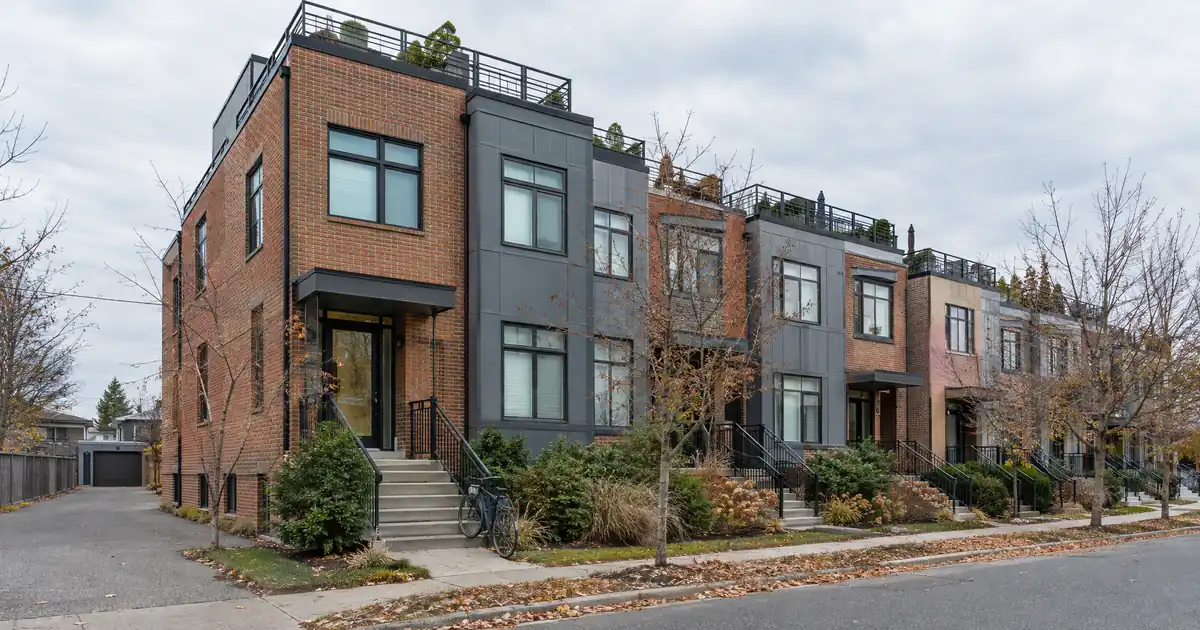
The Quick Read: A DSCR HELOC adds a second lien behind the first mortgage you keep, while a DSCR cash-out refinance pays that first mortgage off and replaces it with one larger loan, and on a condo the choice usually turns on three things: how much you value the current first mortgage, how much cash you need, and whether the building and the rent will pass review twice instead of once. Both options qualify primarily on property-level rental income covering the payment, subject to lender guidelines.
- A DSCR HELOC leaves the first mortgage untouched and adds a revolving line, so it suits an owner who wants to keep the existing first and draw cash in stages.
- A DSCR cash-out refinance gives one loan, one payment and one lump sum, so it suits an owner who wants a single clean structure or a larger sum.
- A condo adds association dues to the coverage math and a project review to the file, whichever route you pick.
- In the network Lendmire works through, the HELOC lane is a standalone second lien capped at 70% combined loan-to-value, with a 1.10x minimum coverage test, subject to underwriting.
- Neither route is automatically cheaper or easier. The right one depends on your first mortgage, your rent and your plan for the money.
The honest answer, in one paragraph: the HELOC is for the investor whose first mortgage is worth keeping and whose cash need is modest, phased or uncertain. The cash-out refinance is for the investor who wants to simplify, needs a bigger sum, or has a first mortgage that is not worth protecting. A condo makes both harder than a house, because the rent has to cover association dues and the building has to be acceptable to the lender. Neither is the default winner. This piece lays out where each one fits so you can decide with the facts in front of you.
For the full framework behind these loans, Lendmire’s complete DSCR loans guide covers how property-rent-based lender review works from the ground up.
Side-by-Side
The table below compares the two structures on how they are built. The HELOC column reflects the program figures Lendmire’s wholesale network uses on non-owner-occupied rentals, subject to underwriting. The cash-out column describes published industry norms, which vary by lender, so treat those cells as general patterns rather than a specific program’s terms.
| Factor | DSCR HELOC (network program) | DSCR Cash-Out Refinance (industry norms) |
|---|---|---|
| Lien position | Standalone second behind your first | New first lien |
| Existing first mortgage | Stays in place | Paid off and replaced |
| Review basis | Rent vs. a stress payment, 1.10x minimum | Rent vs. full payment; floors vary |
| Personal income | Not calculated | Typically not calculated |
| Leverage | Up to 70% CLTV on a second lien | Varies by program and condo status |
| Cash structure | Revolving line, draws of $5,000+ later | One lump sum at closing |
| Condo types | Warrantable and non-warrantable; no condotels | Varies; non-warrantable often adds limits |
| Entity vesting | LLC allowed, members guarantee | Commonly allowed; varies |
| Reserves | None required | Often expected; varies by lender |
| Seasoning | 6 months of ownership | Commonly applies; varies |
A few notes on reading the table. “Personal income not calculated” does not mean undocumented. The rent, the lease, the credit report and the valuation are all documented, and the lender’s own coverage calculation governs. The leverage cell for the HELOC is a ceiling for strong files, not an offer.
What a Condo Changes About This Decision
A condo changes the decision in two ways: association dues enter the coverage math, and the building itself gets reviewed. Both apply to either route, but they bite differently depending on the structure you pick.
Start with dues. Coverage is rent divided by the monthly obligation, and for a condo that obligation includes association dues. A unit with high dues can look healthy on rent alone and still produce thin coverage once everything is counted. Ask for the current dues early, before you choose a route.
Then the project. Investor loans of this type are not bound by the agency warrantable checklist, but lenders still look at the building. Scotsman Guide reports that tightened agency condo guidelines narrowed the definition of a warrantable condo, and that investors with non-warrantable units often turn to DSCR loans. In practice, many associations do not know their own warrantability status, which is what the lender’s condo questionnaire is meant to sort out.
In the HELOC lane, both warrantable and non-warrantable condominiums are eligible, subject to underwriting. Condotels are not, and neither are row homes or leaseholds. A lease must be in place, and rent counts at the lesser of the appraiser’s market rent (Form 1007) or the lease. A condo between tenants, or one operated like a hotel unit, does not fit this lane. If you rent the unit short term, short-term rental rules can vary by city, county, HOA, and property type, so confirm local rules before relying on projected rental income.
On the cash-out side, many lenders across the market also lend on non-warrantable condos, but they often add association documentation, tighter leverage or reserves, and some rule out specific buildings. Developer control and mandatory rental pooling are common disqualifiers. Those are patterns, not promises.
Behind the First: The Gates a Second Lien Has to Clear
A second lien has to clear a few gates that a refinance never faces, and the first mortgage’s own paperwork is the biggest one. The first mortgage stays in place, so everything about it still matters.
Permission and documents. A junior lender needs the first mortgage’s balance and terms, and it needs to confirm the first note and deed of trust allow a second lien. Federal law limits a lender’s power to call a loan due when a borrower creates a junior lien, but that protection is written for a home the borrower occupies or will occupy. 12 CFR 191.5, as published on eCFR, states that exception for owner-occupied homes. A rental condo is not owner-occupied, so do not assume the rule shields you. Read your first mortgage’s own documents. A cash-out refinance avoids the question entirely, because it pays that first mortgage off.
Combined leverage. A second lien is measured by combined loan-to-value: the first mortgage balance plus the new line, divided by the property’s value. In the network’s HELOC lane that tops out at 70% CLTV at a 720 credit score or better, with lines from $50,000 up to $500,000, subject to underwriting. Below a 720 score there is no second-lien option in this program. If your first mortgage already uses most of the equity, there may be little room left, and a refinance may be the only way to reach the cash.
Coverage after the second is added. Across the market, many second-lien programs look at how the same rent covers more than one obligation. A first mortgage that clears coverage alone can look different once a second lien sits behind it. For the network’s HELOC, the qualifying payment is a fully amortizing payment on the entire credit limit at a stress level, tested against rent at a 1.10x minimum. Whether the first mortgage payment joins that test is set by the lender’s own coverage calculation, so ask directly instead of assuming.
Seasoning and valuation. The HELOC lane requires six months of ownership, and a rental bought or refinanced in the last six months is not eligible. Lines up to $400,000 can use an automated valuation with a property inspection report, while larger lines need a full interior appraisal, and a condo appraisal uses Form 1073. Appraisal waivers are not accepted.
For a deeper look at how a second lien compares with a refinance when the existing first mortgage is small, see Lendmire’s piece Cash-Out Refinance vs HELOC on a Condo With a Low First Mortgage.
When a DSCR HELOC Is the Better Fit
The HELOC is the better fit when the first mortgage is worth keeping and the cash need is moderate or staggered. Bankrate notes that a second lien leaves the existing mortgage untouched, and that is the whole case for this route. Your first-mortgage terms and payment stay exactly where they are, and only the new money is added.
Consider these situations:
- You hold a first mortgage you would not want to replace. If its terms are better than anything you would get today, a refinance gives them up. A second lien protects them.
- Your cash need is phased. Renovating a unit, covering a down payment on the next rental, and building a reserve fund rarely happen on one day. At least 80% of the line is drawn at closing, and later draws are $5,000 or more. That suits a plan with a large first need and smaller later ones, but it does not suit a plan where you want to draw almost nothing up front.
- You want the repayment shape. The draw period is five years of interest-only payments on the drawn balance, followed by a 25-year fully amortizing repayment period and a 30-year maturity. The rate is variable. That structure helps cash flow during the draw period, but the payment steps up at repayment, and a variable rate means the cost can move.
- The unit sits in an LLC. Vesting in the owner’s LLC is allowed on this investment-property lane, the members sign as guarantors, and a title holder who is not a borrower signs a non-borrowing owner acknowledgment. This is subject to program terms.
- The condo is free and clear. A rental with no mortgage can take the line as a standalone first lien. The ceiling is 75% LTV at a 740 score or better, 70% at 700 to 739, and 65% on lines above $500,000, which run to $1,000,000. Terms vary by lender guidelines, property type, leverage, credit profile, and full file review.
The HELOC is the weaker choice when your equity is thin, when the first mortgage’s documents are unclear on junior liens, or when the cash need is large and one-time. A line also holds a limit on exposure: the program allows at most five loans or $2,500,000 per borrower.
When a DSCR Cash-Out Refinance Is the Better Fit
The cash-out refinance is the better fit when you want one loan, a larger sum, or a fresh start on the first mortgage. The CFPB describes it as replacing your existing mortgage with a bigger one and taking the difference in cash, and it separates that from a home equity loan, which is a second loan. That difference shapes who benefits from each.
Consider these situations:
- The existing first mortgage is not worth protecting. If its terms are not better than a new loan’s, keeping it only adds a second payment. Replacing it gives you one obligation.
- The cash need is large and known. A single lump sum fits a defined purchase or payoff. Cash-out limits vary widely by program and condo status, so the available amount can be smaller than a quick estimate suggests. Bankrate notes that borrowers commonly need to keep at least 20% equity after a cash-out refinance, which is a market-wide survey figure, not a network figure.
- You want to avoid the junior-lien question. Because it pays off the first mortgage, a refinance does not depend on what your first note says about additional liens.
- Coverage is thin or below 1.00x. The HELOC lane has a 1.10x minimum on a stress payment, which is a high bar for a condo with heavy dues. Select lenders in the network review DSCR loans below 1.00x coverage, but leverage and terms adjust, and not every file qualifies.
- You are a foreign national or an ITIN borrower. The HELOC lane serves U.S. citizens, permanent residents, and non-permanent residents with a Social Security number. Some DSCR first-lien programs in the wider market serve other borrowers, subject to their own guidelines.
The refinance is the weaker choice when your first mortgage carries terms you would struggle to match, because the payoff gives those up. A cash-out also raises the first-mortgage payment, which shrinks cash flow, and it commonly carries its own seasoning requirement. If you only need a small sum, you also take on a larger loan than the need justifies.
A Coverage Walkthrough Without Dollar Figures
Picture a condo whose rent clears the first mortgage obligation at roughly 1.4x on its own, including association dues. That is a healthy cushion. Now suppose the owner adds a second lien. The rent has not changed, but the lender may now test it against a heavier set of obligations, and the cushion can shrink toward the program’s 1.10x minimum.
On the HELOC path, that minimum is tested against a stress payment on the full credit limit, not just the amount drawn. A larger line therefore tightens the test even if you intend to draw little. Choosing a smaller limit, within the $50,000 floor and the draw rules, is one way to improve coverage.
On the cash-out path, the same rent is tested against the one new loan’s full payment, including dues. If the new payment is larger than the old first mortgage payment, coverage falls for that reason instead.
Coverage that clears is not the same as cash flow that works. A file can pass the lender’s test and still leave you with little monthly margin after dues, taxes and insurance. If the unit is a long-term rental you depend on for income, test the margin yourself before choosing, since the qualifying math is illustrative and the lender’s own calculation governs.
Key Terms Defined
DSCR (debt service coverage ratio): Gross monthly rent divided by the monthly obligation, which for a condo includes association dues.
Second lien: A loan secured by the same property that is paid after the first mortgage if the property is sold or foreclosed.
CLTV (combined loan-to-value): The first mortgage balance plus the new line, divided by the property’s value.
Cash-out refinance: A new, larger first mortgage that pays off the old one and returns the difference as cash.
Warrantable condo: A condo project that meets the agency checklist used in conventional lending; a non-warrantable project fails at least one test but may still be reviewable for investor loans.
Draw period: The stretch of a revolving line during which you can borrow; in the network’s HELOC it lasts five years, interest-only on the drawn balance.
The Balanced Verdict
Choose the HELOC when you want to keep your first mortgage, when your cash need comes in stages, and when your rent has room to spare after dues and a second payment. Choose the cash-out refinance when you want one loan, a larger sum, or a fresh first lien, and when your current first mortgage has no features worth saving.
If the first mortgage’s documents are unclear, check them before you start. If your equity is thin, the refinance may be the only workable route. If coverage is thin on both routes, the honest options are to lower the amount you ask for, wait for rent to rise, reduce dues, or look for another source of funds.
Frequently Asked Questions
Does the first mortgage lender have to approve a DSCR HELOC on my condo?
Not necessarily, but the first mortgage’s own documents control whether a second lien is allowed. Federal protection against due-on-sale clauses when a junior lien is created is written for owner-occupied homes, so a rental condo should not rely on it. Read the note and deed of trust, and ask your servicer if anything is unclear.
Can I use an LLC for either option?
Often yes, subject to program terms. In the network’s HELOC lane the LLC can hold title, the members sign as guarantors, and a title holder who is not a borrower signs an acknowledgment. DSCR cash-out refinances commonly accept entity vesting too, though lender policy varies.
Does a non-warrantable condo rule out a DSCR HELOC?
No. Non-warrantable condominiums are eligible in the network’s HELOC lane, subject to underwriting, while condotels are not. On a second lien, the 70% CLTV ceiling already sits below the limits that apply to non-warrantable units, so the project review matters more than the leverage cap.
How much can I borrow on a condo second lien?
Lines run from $50,000 to $500,000, with combined loan-to-value up to 70% at a 720 credit score or better, subject to underwriting. The first mortgage balance counts toward that limit, so a larger first leaves less room for the line. Exact terms depend on the lender’s guidelines, property type, leverage, and a full review of the borrower’s file.
Can I do both a HELOC and a cash-out refinance?
They are usually done in sequence rather than together, because the refinance replaces the first lien that a second lien sits behind. A line placed first may need the junior lender’s cooperation if you later refinance the first mortgage, so plan the order before you commit to either.
Next Step
If you are considering a home equity line on a rental property and want to see how the numbers work, Lendmire can help you compare DSCR HELOC options based on the property, the rent, the equity available, credit profile, combined leverage, and your goals. The HELOC program is available only in select states under Lendmire’s consumer licensing, and Lendmire arranges it as a broker through a wholesale lender, not as the lender. Reach the team at 828-256-2183 or request a quote.
A deeper walk-through of investment-property equity extraction lives in Lendmire’s guide to cash-out refinance on an investment property.
For current guidelines and terms, see Lendmire’s DSCR HELOC programs page.
About Lendmire
As a mortgage broker (NMLS# 2371349), Lendmire helps homeowners and real estate investors in its 16 full-service states open home equity lines of credit arranged through wholesale lenders. Lendmire is never the lender; line amounts, ceilings and terms are set by the lender under its guidelines. Scotsman Guide named Lendmire a Top Mortgage Workplace in both 2025 and 2026.
Get Started
Ready to find the right loan for you?
See your offer in seconds. No credit pull, no obligation.
Informational only. Not a Loan Estimate, approval, or commitment to lend. Program availability and eligibility are subject to lender guidelines, credit approval, property review, and underwriting.
References
1. Scotsman Guide: Invest in Your Future
3. Bankrate: Home equity loan, HELOC or cash-out refi
4. CFPB
This article is part of Lendmire’s DSCR HELOC program — full qualification details, guidelines, and scenarios live on the program page.
Related reading: How to Add a HELOC Behind a DSCR First Lien for a Remodel · DSCR HELOC vs Cash-Out Refinance for Pulling Equity From a Rental · DSCR HELOC vs DSCR Cash-Out Refinance on a Non-Owner-Occupied Property
Brandon Miller
Founder & CEO, Mortgage Loan Originator, Lendmire LLC
- Mortgage Loan Originator · NMLS# 1129696 · Verify on NMLS Consumer Access
- North Carolina Real Estate Broker · License# 343312 · Verify on NCREC
- North Carolina Insurance Producer · License# 19053198 · Property, Casualty, Life, Health · Verify on NAIC SBS
- Lendmire LLC · Firm NMLS# 2371349 · Verify firm licensure
Legal disclosures. Lendmire (NMLS# 2371349) is a state-licensed mortgage brokerage that arranges financing through wholesale lender relationships. Lendmire is not a direct lender, depository institution, or registered financial advisor. The discussion above is general informational content about real estate financing — it is not financial, legal, or tax advice, and readers should consult licensed professionals for guidance on their individual circumstances. Loan inquiries are subject to lender underwriting; this article does not represent a commitment to lend. Loan terms, rates, and qualification standards vary by borrower, property, and state, and are subject to change at any time. Equal Housing Opportunity. NMLS Consumer Access: nmlsconsumeraccess.org.