
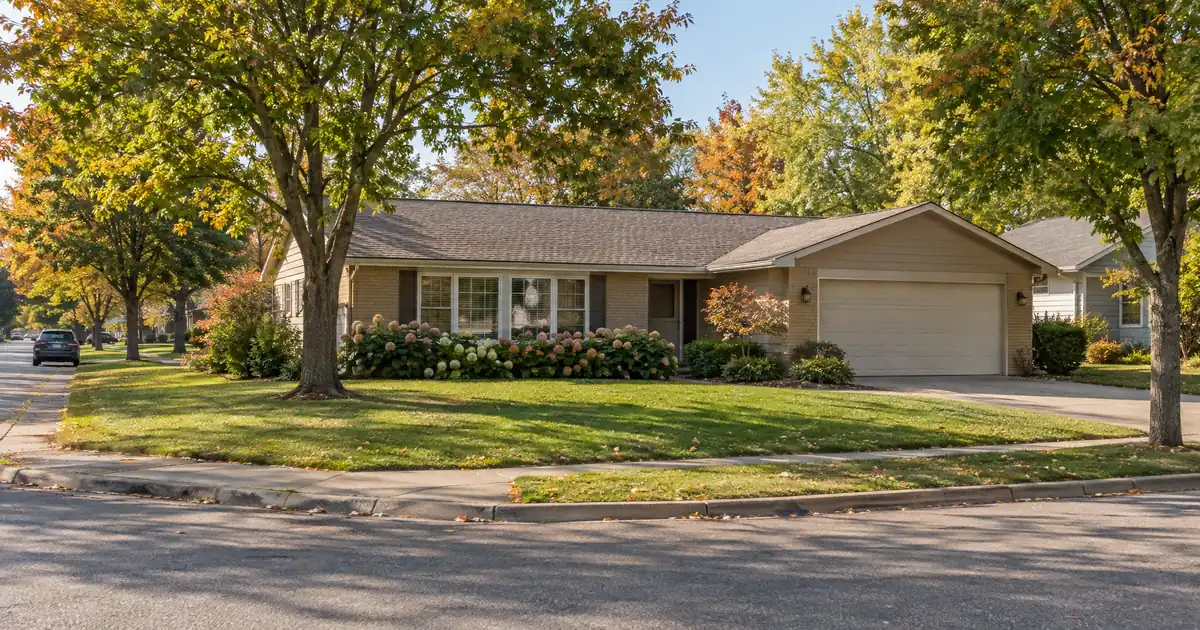
The Quick Read: A DSCR HELOC adds a credit line behind the first mortgage you already have. A DSCR cash-out refinance replaces that first mortgage with a bigger loan and pays you the difference in one lump sum. DSCR, the debt service coverage ratio, asks one question: does the rental’s rent cover its debt payment? Both options qualify primarily on property-level rental income covering the payment, subject to lender guidelines, so neither starts with your personal income.
- Pick the HELOC when you want to keep a first mortgage you like and draw cash in stages.
- Pick the cash-out when you need a large lump sum, or when the property falls outside the HELOC’s eligibility list.
- Watch the coverage test. A cash-out raises your balance, so it can pull a passing property below the line.
- Watch the footprint. The DSCR HELOC described here is offered in 15 of Lendmire’s 16 licensed states, every licensed state except Tennessee.
- Both are secured by the rental. If the new venture struggles, the property carrying the debt is exposed.
The label “DSCR HELOC” is a market term, not a standardized product. Some pages use it for a rent-qualified second mortgage, others for any investment-property credit line. This article uses it for one specific structure, which the next sections spell out. Lendmire is a broker, and its wholesale network places both kinds of loans.
Side-by-Side
The two loans differ most in what happens to your first mortgage, how the cash arrives, and who can hold title. The HELOC column reflects the program Lendmire places through its network, subject to underwriting. The cash-out column shows published industry norms with the usual qualifiers.
| Factor | DSCR HELOC (network program) | DSCR cash-out (industry norms) |
|---|---|---|
| Review basis | Rent covering a stress payment | Rent covering the new full payment |
| Personal income docs | None (no DTI calculation) | Generally none |
| Lien position | Second lien, or first if no mortgage | New first lien |
| Your current first mortgage | Stays in place | Paid off and replaced |
| Cash delivery | Revolving line, draws over time | One lump sum at closing |
| Property types | 1–4 units, no rural, condotel, row home | Broader, varies by program |
| Entity vesting | LLC allowed, members guarantee | LLC commonly allowed |
| Reserves | None required | Commonly reviewed, varies |
LLC vesting works on both sides subject to program terms, and the members typically sign as guarantors. The property list on the HELOC side is tighter than most cash-out programs, so check eligibility early.
Key Terms Defined
Lien: a lender’s legal claim on a property. The first lien gets paid first if the loan defaults.
CLTV (combined loan-to-value): your first mortgage balance plus the new line, divided by the property’s value.
Stress payment: a qualifying payment calculated on the full credit limit, higher than what you pay on the drawn balance. It tests the property, not your actual bill.
Seasoning: the waiting period after you buy or refinance a property before a lender will lend against it again.
Open-end line: a credit line you can draw, repay, and draw again within its terms.
How Each One Qualifies
Both loans look at the rent first. A DSCR is gross monthly rent divided by the monthly obligation, which generally means principal, interest, taxes, insurance, and any HOA dues. A result of 1.00x is break-even, and anything above it leaves some cushion. Passing a coverage test does not mean the property throws off positive cash flow after repairs and vacancy.
On the HELOC, the network program requires a minimum of 1.10x. The test uses a stress payment on the entire credit limit, not just the amount you draw. Rent is the lesser of the appraiser’s Form 1007 market rent or your lease. A lease in place is required, and a two-to-four-unit property can have at most one vacant unit. Whether your first-mortgage payment joins the calculation on a second lien depends on the lender’s own coverage method, so that calculation governs.
On the cash-out, the test runs against the new, larger loan. Rent typically comes from a lease, a rent roll, or the appraiser’s market rent. A vacant or newly acquired property leans on the appraiser’s rent figure. Short-term rentals usually rely on booking history or a market-rent appraisal. Select lenders in the network also review coverage below 1.00x, but leverage and terms adjust when they do.
DSCR loans are designed for non-owner-occupied investment properties. Because they are business-purpose investor loans, they are reviewed differently from a standard owner-occupied mortgage.
When a DSCR HELOC Is the Better Fit
The HELOC wins when the first mortgage is worth keeping and your cash needs are staged or uncertain. Think of a phased rehab, a down payment on the next deal, or a reserve cushion you may or may not use. You borrow against equity without touching the loan underneath.
The network program is built like this, all subject to underwriting:
- Second lien: up to 70% CLTV on a non-owner-occupied rental at a 720 credit score or better, on lines of $50,000 to $500,000.
- First lien on a rental with no mortgage: up to 75% LTV at 740 or better, and 70% LTV from 700 to 739, on lines up to $500,000. Larger first-lien lines, up to $1,000,000, carry a 65% LTV ceiling at 720 or better.
- Draws: at least 80% of the line is drawn at closing, and later draws are at least $5,000 each.
- Term: a 5-year interest-only draw period on the drawn balance, then a 25-year repayment period, with a 30-year maturity. The rate is variable.
- Valuation: lines up to $400,000 use an automated valuation plus a property inspection report, or a full interior appraisal. Larger lines take a full interior appraisal.
- File: no reserves and no cash to close are required, and there is no debt-to-income calculation.
- Exposure: at most 5 loans or $2,500,000 per borrower with the program. Exact terms depend on the lender’s guidelines, property type, leverage, and a full review of the borrower’s file.
Run it as a scenario. Say you own a duplex whose first mortgage sits at about 55% of its value. A second lien at 70% CLTV leaves about 15 points of room, and your coverage must still clear the stress test. That is the practical constraint: the room left behind the first mortgage, not the equity headline.
An investor with a strong personal income file but several existing mortgages may also like this route. The line is not measured against your personal debt ratios. Many investors also pair a line with a later refinance. They use the line to buy or rehab, then move into a long-term DSCR loan once rents are stable. Whether that later refinance clears is never certain, so plan for the case where it does not.
Who is left out? Foreign nationals and ITIN borrowers are not eligible. Rural-designated property, condotels, row homes, leaseholds, mixed-use property, and a property listed for sale in the prior two months are outside this lane. The program is offered in Alabama, California, Colorado, Florida, Georgia, Indiana, Michigan, Montana, New Mexico, North Carolina, Ohio, Pennsylvania, Texas, Virginia, and Washington, and it is not offered in Tennessee.
When a DSCR Cash-Out Refinance Is the Better Fit
The cash-out wins when you need a large sum, want one fixed structure, or own a property type the HELOC excludes. It also fits when the existing first mortgage has no sentimental value, for example because its remaining term is short or it carries a prepayment penalty you are already near the end of.
The new loan pays off your first mortgage and sends you the remainder. The old loan’s terms go away, which is the central trade-off. If that loan was one you wanted to keep, a cash-out costs you something a HELOC would not.
Cash-out also tends to handle bigger needs and a wider list of property types. Typical files include entity documents (articles, operating agreement, EIN letter), the guarantor’s credit report, a reserve review, and an appraisal. Lenders commonly order a rent schedule alongside it, Form 1007 for a single-family home and Form 1025 for a two-to-four-unit property. Personal income documents are generally not part of the file.
Entity title splits many products, though not this one. Many conventional investment-property lines require the borrower to hold title personally or in a trust, and re-vesting a rental out of an LLC to qualify can change liability protection. The network’s DSCR HELOC allows LLC vesting, so an LLC owner does not have to choose a cash-out for that reason alone. Across the broader market, though, the cash-out remains the more common route for LLC-held properties.
Experian notes that fewer lenders offer lines on investment property and that negative equity is a real risk. That is one reason the cash-out remains the default for many investors, because more programs are available for it.
Does Cash-Out Hurt Your Coverage Ratio?
Yes, usually, and this is the most overlooked piece of the decision. A cash-out raises your loan balance, so the monthly obligation rises while the rent stays the same. A property that clears 1.3x on its current first mortgage might land closer to 1.1x after pulling equity. Those figures are illustrative, and the lender’s own calculation governs.
The result is that the coverage floor, not the equity, often limits how much you can take. Investors look at the loan-to-value cap and assume that sets the cash-out amount. In practice, rent against the larger payment frequently binds first. A property with strong rent and modest equity can behave very differently from one with high equity and thin rent.
A HELOC has its own version of this problem. The stress payment is calculated on the whole credit limit, even if you draw only part of it. A large line on a thinly covered property fails the test, so size the line to the rent, not to your ambition.
What Happens to Your Existing First Mortgage?
This is the deciding question for many investors. A HELOC leaves the first mortgage alone, so its balance, term, and any prepayment penalty continue as written. A cash-out retires it, and any penalty becomes a direct cost of the new loan.
Read your first mortgage documents before choosing. Separate covenants about additional liens can apply even when the loan is business-purpose. A second lien must also be paid off or subordinated if you later refinance the first mortgage, which adds friction to any future cash-out. A DSCR second behind a DSCR first is also a narrow path. Rent must support both obligations, and a first mortgage written at high leverage often leaves little room behind it.
Seasoning matters too. The network’s HELOC requires six months on title, and a rental bought or refinanced inside the last six months is not eligible. If you cash-out refinance first and then want a line, you will wait out that window. Plan the order of operations before you commit.
Payment Behavior and Risk
The structure of each loan changes how it feels over time. The CFPB describes a HELOC as an open-end line you can borrow against repeatedly, followed by a repayment period, and notes that payments often rise significantly once repayment begins. The network program has an interest-only draw period and a variable rate, so the payment profile shifts when repayment starts. A cash-out gives you one structure from day one, which makes budgeting simpler.
The CFPB’s HELOC booklet adds that if you sell, you generally must pay the line off in full right away. Build that into your exit plan. It matters most if you intend to sell the rental while the line is open.
Collateral risk is the other half. Both loans are secured by the rental. If your new project falls short, the rental that secures the debt can be at risk. Stress-test the downside before you borrow. Ask what happens if rents soften, the property sits vacant for a stretch, or the variable payment rises at repayment.
Treat unused cash with care. A cash-out puts everything in your account at once, so money you do not deploy still sits on the loan. A line lets you draw only what the project needs, though the program requires at least 80% of the line at closing.
Can You Use Both?
Yes, many investors use them in sequence, not as rivals. A common pattern runs like this:
1. Use a line on a paid-off or low-leverage rental to fund a down payment or rehab on the next property.
2. Stabilize the new property and document rent.
3. Refinance into a long-term DSCR loan, and use that to pay off the line if needed.
Each step has its own test, and step three is never certain. Rents, values, and credit all have to hold. Treat the refinance as a plan, not a promise.
One more practical point from broker experience. Across the wholesale network, the files that run into trouble usually have a leverage problem hidden behind the first mortgage. The investor sees the equity but not the coverage test on the combined debt. Pull the lease, the first mortgage balance, and your credit score together before you pick a path.
For more on the head-to-head, see Lendmire’s piece HELOC vs Cash-Out Refinance for a Rental Down Payment: What Decides.
The Verdict
Neither option is better in the abstract. The HELOC fits an investor who likes the first mortgage, needs staged access to cash, and sits within a 70% CLTV ceiling on a rental that clears the stress test. The cash-out fits an investor who needs a large lump sum, is happy to replace the first mortgage, or holds property that falls outside the HELOC’s eligibility list.
Start with three questions. Do you want to keep the loan you have? Does the rent still cover the payment after you borrow? Does the property and your state fit the program? The answers usually point to one path, and the complete DSCR loans guide walks through the broader qualification picture.
If you are considering a home equity line on a rental property and want to see how the numbers work, Lendmire can help you compare DSCR HELOC options based on the property, the rent, the equity available, credit profile, combined leverage, and your goals. All figures here are ceilings and floors through select programs, subject to underwriting, and not a commitment to lend.
This is general information, not legal or tax advice, and tax treatment can depend on how funds are used and how the property is held, so keep clear records and consult a qualified attorney or CPA about your own situation.
Frequently Asked Questions
Is there really such a thing as a DSCR HELOC?
Yes, though the term is a market label, not a standardized product. In the network program described here, it is a standalone second lien behind your first mortgage, or a standalone first lien on a rental with no mortgage. It is reviewed on rent, with no personal income calculation, subject to underwriting.
Which is better for a large, one-time need?
Usually the cash-out refinance. A single lump sum at closing suits a defined cost better than a revolving line. The HELOC network program caps lines at $500,000 on second liens, and the coverage test applies to the full limit, so a very large need may fit better on a cash-out.
Can an LLC-owned rental get a HELOC?
The network DSCR HELOC allows vesting in the owner’s LLC on investment property, with the members signing as guarantors. Many personal-income lines do not allow LLC title, which is why investors often turn to cash-out for LLC-held rentals. Exact terms depend on the program and lender.
Does a cash-out hurt my DSCR?
It can, because the loan balance goes up while rent stays the same, so coverage typically falls. A property that passes comfortably today may land near the program floor afterward, so test the new payment before you commit.
Can I use both?
Yes, in sequence. Many investors draw on a line first, then refinance into a long-term DSCR loan. Seasoning applies, and the refinance has to clear on its own terms, so the second step is never assured.
A deeper walk-through of investment-property equity extraction lives in Lendmire’s guide to cash-out refinance on an investment property.
About Lendmire
Lendmire is a mortgage brokerage (NMLS# 2371349) arranging home equity lines of credit — primary-residence, second-home and investment-property lines — through a wholesale lending network in its 16 full-service states. Eligibility is determined by the lender on each file. Scotsman Guide named Lendmire a Top Mortgage Workplace in both 2025 and 2026.
Get Started
Ready to find the right loan for you?
See your offer in seconds. No credit pull, no obligation.
Informational only. Not a Loan Estimate, approval, or commitment to lend. Program availability and eligibility are subject to lender guidelines, credit approval, property review, and underwriting.
References
1. Experian – HELOC on investment property
2. CFPB: What Is a Home Equity Line of Credit HELOC
This article is part of Lendmire’s DSCR HELOC program — full qualification details, guidelines, and scenarios live on the program page.
Related reading: DSCR HELOC vs DSCR Cash-Out Refinance With a 720 Credit Score · DSCR HELOC vs DSCR Cash-Out Refinance With Solar Panels on the Roof · DSCR HELOC vs DSCR Cash-Out Refinance to Refinance an Older HELOC Entering Repayment
Brandon Miller
Founder & CEO, Mortgage Loan Originator, Lendmire LLC
- Mortgage Loan Originator · NMLS# 1129696 · Verify on NMLS Consumer Access
- North Carolina Real Estate Broker · License# 343312 · Verify on NCREC
- North Carolina Insurance Producer · License# 19053198 · Property, Casualty, Life, Health · Verify on NAIC SBS
- Lendmire LLC · Firm NMLS# 2371349 · Verify firm licensure
Disclosure information. Lendmire is a state-licensed mortgage brokerage under NMLS# 2371349. Lendmire is not a depository institution, direct lender, or financial advisor — all loans referenced are placed through wholesale lender partners and are subject to each lender's underwriting standards. This article is provided for general informational purposes and is not a commitment to lend, nor does it constitute financial, legal, or tax advice. Loan programs, terms, rates, and qualification standards change without notice and depend on borrower profile, property type, and the state in which the subject property is located. Equal Housing Opportunity provider. NMLS Consumer Access: nmlsconsumeraccess.org.