
The Quick Read: A DSCR HELOC suits an investor who wants to keep a good first mortgage, qualify on the rent, and pull a defined amount from equity, while a DSCR cash-out refinance suits an investor who wants one new first loan, often with a wider property range, and accepts losing the old loan. A low appraisal hurts both, because both size the loan off the lender’s value, not your rehab budget. The rehab changes your decision less than your existing first mortgage and your rent do.
- Both products size off the lender’s valuation. Your after-repair estimate is not an input.
- A DSCR HELOC keeps your current first mortgage in place. A cash-out replaces it.
- A value miss shrinks a line or a cash-out by more than the miss itself, because leverage magnifies it.
- A DSCR HELOC through this network requires 6 months of ownership, so a freshly refinanced rental is not eligible yet, subject to underwriting.
A DSCR HELOC is a revolving line of credit on a rental, qualified primarily on property-level rental income covering the payment, subject to lender guidelines. A DSCR cash-out refinance is a new first mortgage that pays off the old one and hands you the difference. DSCR stands for debt service coverage ratio. It is the rent divided by the monthly obligation on the property.
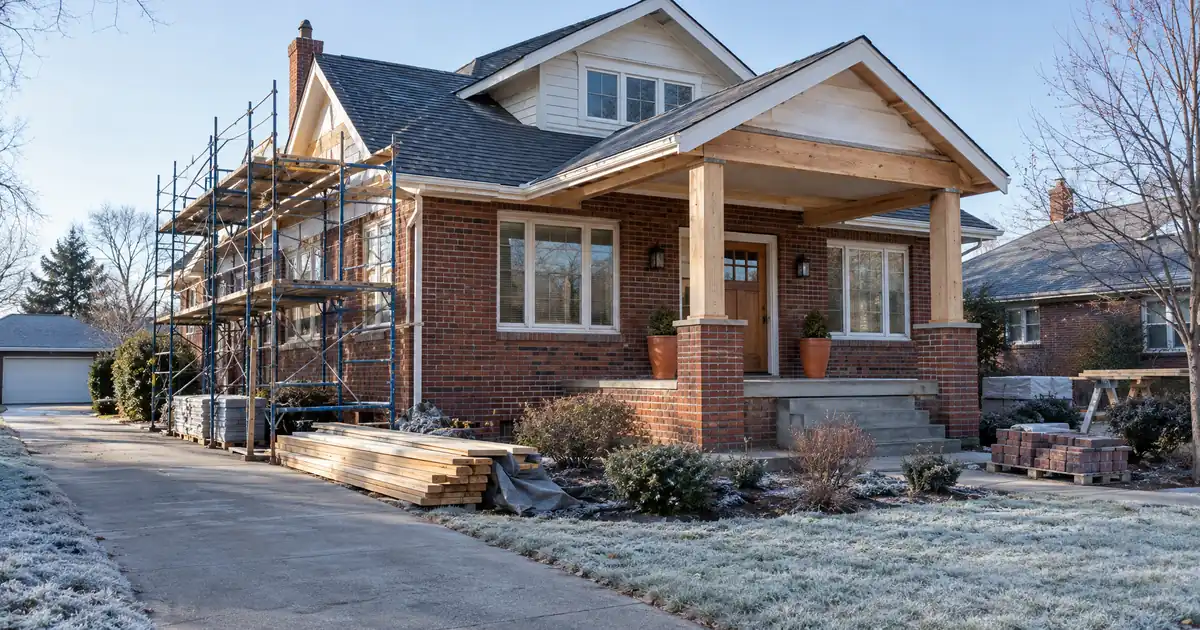
Here is the situation. You bought a tired rental, renovated it, and the appraisal came in below what you expected. Which product rescues the plan? The honest answer starts with the first mortgage and the rent. Neither product pays you for improvements the comparable sales do not support.
Side-by-Side
Both columns below describe the same goal, which is getting cash out of a rental. The left column shows the DSCR HELOC figures Lendmire’s wholesale network places, through select programs and subject to underwriting. The right column shows published industry norms for DSCR cash-out refinances, which vary by lender. Lendmire’s network places both products.
| Factor | DSCR HELOC (Lendmire network) | DSCR cash-out (industry norms) |
|---|---|---|
| Lien position | Second lien, or first on a paid-off rental | Replaces your existing first loan |
| Review basis | Rent coverage, 1.10x minimum on a stress payment | Rent coverage; floor varies by lender |
| Personal income file | Not calculated | Typically not calculated |
| Entity vesting | LLC allowed; members sign as guarantors | LLC commonly allowed |
| Property types | 1-4 units; no rural, condotel, row home | Often wider; varies by program |
| Valuation | AVM plus inspection to $400,000; else full appraisal | Full appraisal with rent schedule is typical |
| Seasoning | 6 months of ownership required | Varies; cost-basis sizing is common early on |
| Reserves | None required | Commonly required |
| How cash arrives | 80%+ of line at closing; later draws $5,000+ | Lump sum at closing |
| Loan structure | Variable rate, 5-year interest-only draw, 25-year repayment | New term loan on the full balance |
A few cells deserve a plain-English note. AVM means automated valuation model, a computer estimate built from public records and nearby sales. Seasoning is the waiting period a lender wants after you buy or refinance before it will lend against the property again. Stress payment means the lender tests coverage on a payment calculated on the entire credit limit at a higher-than-starting rate, even if you draw less.
Why the Appraisal Ignored Your Rehab
The appraiser did not insult your work. Appraisers measure what the market supports, not what you spent. Madison Park Appraisal explains contributory value as what a feature adds to market value, as shown by comparable sales. That contribution can be more than cost (rare), less than cost (common), or about equal to cost.
Appalachian Appraisal Services adds that renovations count when market data supports them. Unpermitted work, or work well above neighborhood norms, may not contribute value the way you expect. Then the appraiser leans on comps with similar permitted living area.
Sometimes the problem is not your rehab at all. Thin comps and lagging sales data can pull a number down, as the same firm notes in its piece on why an appraisal comes in low.
Two numbers matter on a rental file, and either can miss:
- Value. It drives leverage. A low value shrinks the loan on either product.
- Rent. It drives coverage. A rehab that raised value but not market rent does nothing for the coverage test.
On the HELOC side, rent is the lesser of the appraiser’s Form 1007 market rent or your lease. Form 1007 is the appraisal form that estimates what a single-family rental should rent for. A lease above market counts only with three months of receipts. A lease in place is required, and a two-to-four-unit property may have at most one vacant unit.
What a Low Value Does to Each Option
A low value cuts the available cash on both products, and it cuts it by more than the size of the miss. Both use the same basic arithmetic: the ceiling times value, minus what you already owe. Shave the value and the ceiling shaves it again.
Run it as a modeled example, not a market fact. Say your first mortgage equals 40% of your own after-repair estimate. You expect a DSCR HELOC as a second lien at up to 70% CLTV, which is the first mortgage balance plus the new line, divided by value. That headroom is 30% of your estimate.
Now the appraisal lands 10% below your estimate. Seventy percent of the lower value leaves 23% of your original estimate as headroom. A 10% value miss cut the line by roughly a quarter. Painful, but the first mortgage stays intact.
A cash-out follows the same math at whatever ceiling the lender’s program sets. The difference is what you lose along the way. A cash-out replaces your first loan, so a smaller result comes with a new first mortgage on the whole balance. That matters if your existing first mortgage has terms you like.
The second risk is a payoff that no longer fits. Suppose you meant to retire a bridge or hard-money loan with the proceeds. If the value miss leaves the new loan smaller than that payoff, the refinance cannot do its job. Check this before you pay for the appraisal, not after.
Coverage moves too. A larger new loan means a heavier monthly obligation and a thinner ratio. A value miss that forces a smaller loan can help coverage even as it hurts proceeds. Odd, but true.
Can You Dispute the Value?
Sometimes, and only through the lender. A reconsideration of value is a formal request to revisit an appraisal. The Federal Reserve’s published interagency guidance describes ways a regulated lender can resolve valuation deficiencies. Those include raising the problem with the appraiser, requesting an independent review by a qualified appraiser, and obtaining a second appraisal. The Federal Register notice carries the final text.
That guidance is aimed at regulated institutions. How a non-bank DSCR lender handles a request is lender-specific, and a process is not a promise of a higher number. Treat it as a structured way to ask, not a right to win.
What helps is evidence, not frustration:
- Closed comps. Sold properties, not listings.
- Permits and invoices. They show the work was done properly and what it cost.
- Before and after photos. They show condition, not just spend.
- A scope-of-work list. It lets a reviewer match your work to comps with similar finishes.
Cost is still not value. A packet works when it shows the market already paid for this kind of work nearby.
When a DSCR HELOC Is the Better Fit
A DSCR HELOC fits when the first mortgage is worth keeping, the amount you need is defined, and you do not want your personal income file in play. It is structured as a standalone second lien behind a first mortgage you keep, or a standalone first lien on a rental with no mortgage. It is never closed together with a purchase, and it is never a line on your own home.
Across the wholesale network Lendmire works with, the pattern is consistent. Owners who refinanced years ago into a first loan they like keep it and add a line.
The qualifying details, subject to underwriting:
- Coverage. Minimum DSCR of 1.10x, with rent divided by a stress payment on the entire credit limit. Whether the first-mortgage payment joins that payment on a second lien is not published, so the lender’s own coverage calculation governs.
- Leverage, second lien. Up to 70% CLTV on a non-owner-occupied rental at a 720 credit score or better, on lines from $50,000 up to $500,000.
- Leverage, first lien. On a rental with no mortgage, up to 75% LTV at 740 or better. It is 70% LTV at 700 to 739, on lines up to $500,000. Lines above $500,000, up to $1,000,000, carry a 65% LTV ceiling at 720 or better.
- Credit and history. A 720 minimum on a second lien and 700 on a first lien. No 30-day mortgage late in the last 12 months, and 48 months since a bankruptcy, foreclosure, short sale, or deed-in-lieu.
- Entity. LLC vesting is allowed on investment property, subject to program terms. Members sign as guarantors.
- Structure. A variable rate, a 5-year interest-only draw period on the drawn balance, then a 25-year fully amortizing repayment period, with a 30-year maturity. At least 80% of the line is drawn at closing, and later draws are at least $5,000.
- File. No reserves and no cash to close are required. A borrower may carry at most 5 loans or $2,500,000 with the program. Leverage, reserves, and pricing vary by lender and program; the final terms follow the full file review.
Now the rehab twist. For lines up to $400,000, the valuation may be an AVM with a property inspection report, or a full interior appraisal. Above $400,000, a full interior appraisal is required. Appraisal waivers are not accepted. An automated estimate may not capture interior work, so a rehab-heavy file leans on the appraisal and the inspection report.
Then the catches, and they are real. This line suits a defined draw, not a bridge. Most of the line is drawn at closing, so you owe interest on it from day one. A rental bought or refinanced inside the last 6 months is not eligible, and 6 months of ownership are required. Fresh from a bridge-loan refinance? Wait.
Also outside this lane: rural-designated property, row homes, condotels, leaseholds, and a property listed for sale in the prior 2 months. Borrowers must be US citizens, permanent residents, or non-permanent residents with a Social Security number. The program is offered in 15 states: Alabama, California, Colorado, Florida, Georgia, Indiana, Michigan, Montana, New Mexico, North Carolina, Ohio, Pennsylvania, Texas, Virginia, and Washington. Tennessee is not one of them. Rate and pricing terms come with the lender’s disclosures.
When a DSCR Cash-Out Refinance Is the Better Fit
A cash-out fits when the existing first loan is a bridge, a hard-money note, or something you want gone, and you want a single lump sum on a new loan. It also fits when your property falls outside the HELOC’s list of exclusions. Published industry norms for DSCR cash-outs are generally broader on property type, and many programs allow LLC vesting, subject to lender program eligibility.
Three situations tilt toward it:
1. The first loan has to go. If a short-term loan is maturing, a line behind it is the wrong shape. A refinance pays it off.
2. You need the whole sum at once. A defined purchase or paydown wants a lump sum. Idle cash on a revolving structure is a cost, not a feature.
3. You are inside the HELOC’s seasoning window. A rental refinanced or bought in the last 6 months cannot take the HELOC. Many cash-out programs have their own seasoning rules, and inside that window a lender may size the loan on your cost basis rather than the appraised value. The reason is that the market has not yet confirmed what your rehab did.
Cash-out files lean on the lease or rent schedule, the appraisal, entity papers, and reserves. Reserves, meaning cash left after closing, are commonly part of the file. Expect to document more of the property and less of the person. For Lendmire’s broader take, see the DSCR HELOC vs lower-payment refinance when you want cash out.
The costs run the other way. You lose the old first loan’s terms and reprice the whole balance. You also owe a heavier monthly obligation on the new loan, which lowers coverage. Check the ratio on the new payment before you commit. And a value miss does not spare you. It makes the proceeds smaller while the old loan’s payoff stays the same.
Your Options After a Low Appraisal
Whatever you chose, a low value leaves you with a short menu. Pick based on what failed, value or rent.
Ask for reconsideration. Worth it when closed comps support your number and the file has holes the appraiser missed. Skip it when your case is the cost of the work.
Take a smaller draw or a smaller cash-out. Often the cleanest path. You get less, but you keep the plan intact.
Switch products. A cash-out that cannot pay off a bridge loan might become a HELOC if the first lien stays. The reverse can also happen. Either way, the new product has its own eligibility, so ask before assuming.
Bring cash. If the payoff must happen, a paydown at closing can close the gap. Painful, though common in thin-margin projects.
Wait and re-season. Time lets the market see the improved property, and lets later comps catch up. Waiting costs holding expense, but it may reset the file.
Order another appraisal. A second report is a legitimate step when the first one missed the mark, and the lender decides whether to allow it. The fee is typically non-refundable, so spend it only when the evidence is real.
When Neither Fits
Sometimes the right answer is to stop. Walk away from both if any of these are true:
- The rent does not cover the obligation at the lender’s test, whatever the value says.
- The cash you need depends on your own estimate, not the lender’s value.
- The proceeds would not clear the payoff you are counting on.
- The property sits in an excluded class, such as a condotel or rural-designated parcel on the HELOC side.
Plenty of rehabs leave some capital in the property. That can still work if the rental cash flows. Partial recovery is a result, not a failure.
Key Terms Defined
CLTV: combined loan-to-value, meaning all liens on the property added together and divided by value.
Contributory value: the amount a feature adds to market value, as supported by comparable sales.
Reconsideration of value: a formal request, made through the lender, to revisit an appraisal.
Seasoning: the waiting period between a purchase or refinance and the next loan on the property.
Stress payment: the payment a lender uses to test coverage, based on the whole credit limit.
The Verdict
Pick the DSCR HELOC when you have a first mortgage worth keeping, a defined cash need, a property inside the program’s list, and six months of ownership behind you. Pick the DSCR cash-out refinance when the old loan must go, you want one lump sum, or the property falls outside the HELOC’s boundaries.
The rehab itself rarely decides it. What decides it is the first mortgage, the rent, and whether the lender’s value leaves enough headroom. Run your plan at a lower value before you pay for any appraisal. The complete DSCR loans guide walks through coverage and leverage in more depth.
Frequently Asked Questions
Will the lender use my after-repair value estimate?
No. The lender orders its own valuation, and your estimate is not an underwriting input. Your scope, receipts, and closed comps can support a reconsideration request, but cost alone does not move the number.
Does a DSCR HELOC avoid the valuation problem?
No. On the network’s program, lines up to $400,000 use an AVM with a property inspection report or a full interior appraisal, and larger lines need a full appraisal. Appraisal waivers are not accepted, so a low value shrinks the line the same way it shrinks a cash-out, subject to underwriting.
Can my LLC hold title on a DSCR HELOC?
Yes, subject to program terms. LLC vesting is allowed on investment property, and the members sign as guarantors. A title holder who is not a borrower signs a non-borrowing owner acknowledgment and the security instrument.
I refinanced a bridge loan a few months ago. Can I still get a DSCR HELOC?
Not yet, if it was inside the last 6 months. A rental bought or refinanced in that window is not eligible, and 6 months of ownership are required. A cash-out may have different seasoning rules, which vary by lender.
Can I ask for a second look at a low appraisal?
Yes, through the lender, with closed comps, permits, invoices, and photos. A lender may review the file, order an independent review, or obtain a second appraisal. None of those steps promises a higher value.
Next Step
If you are considering a home equity line on a rental property and want to see how the numbers work, Lendmire can help you compare DSCR HELOC options based on the property, the rent, the equity available, credit profile, combined leverage, and your goals. Lendmire is a broker, so lenders in its wholesale network review eligibility and make the final call.
For the mechanics of pulling equity out of a rental property, see Lendmire’s guide to cash-out refinance on an investment property.
About Lendmire
Lendmire (NMLS# 2371349) is a mortgage brokerage serving homeowners and real estate investors in its 16 full-service states. Home equity lines of credit are arranged through wholesale lending channels; Lendmire brokers the line and the lender underwrites each application under its occupancy-based guidelines. Scotsman Guide named Lendmire a Top Mortgage Workplace in both 2025 and 2026.
Get Started
Ready to find the right loan for you?
See your offer in seconds. No credit pull, no obligation.
Informational only. Not a Loan Estimate, approval, or commitment to lend. Program availability and eligibility are subject to lender guidelines, credit approval, property review, and underwriting.
References
2. Appalachian Appraisal Services: What Hurts a Home Appraisal
3. Appalachian Appraisal Services: Appraisal Came In Low
4. Federal Reserve: Interagency Guidance on Reconsiderations of Value
5. Federal Register: Interagency Guidance on Reconsiderations of Value
This article is part of Lendmire’s DSCR HELOC program — full qualification details, guidelines, and scenarios live on the program page.
Related reading: DSCR HELOC vs Cash-Out Refinance for a First Rental · DSCR HELOC for Landlords Weighing a Rental Cash-Out Refinance · DSCR Cash-Out Refi vs HELOC on a DSCR-Financed Rental
Brandon Miller
Founder & CEO, Mortgage Loan Originator, Lendmire LLC
- Mortgage Loan Originator · NMLS# 1129696 · Verify on NMLS Consumer Access
- North Carolina Real Estate Broker · License# 343312 · Verify on NCREC
- North Carolina Insurance Producer · License# 19053198 · Property, Casualty, Life, Health · Verify on NAIC SBS
- Lendmire LLC · Firm NMLS# 2371349 · Verify firm licensure
Important disclosures. Lendmire (NMLS# 2371349) is a licensed mortgage brokerage. Lendmire is not a direct lender, depository institution, or financial advisor. All loan inquiries are subject to lender underwriting; this article does not constitute a commitment to lend. Rates, terms, and program guidelines are subject to change without notice and vary by borrower profile, property type, and state. Information in this article is general in nature and is not financial, legal, or tax advice. Equal Housing Opportunity. NMLS Consumer Access: nmlsconsumeraccess.org.