
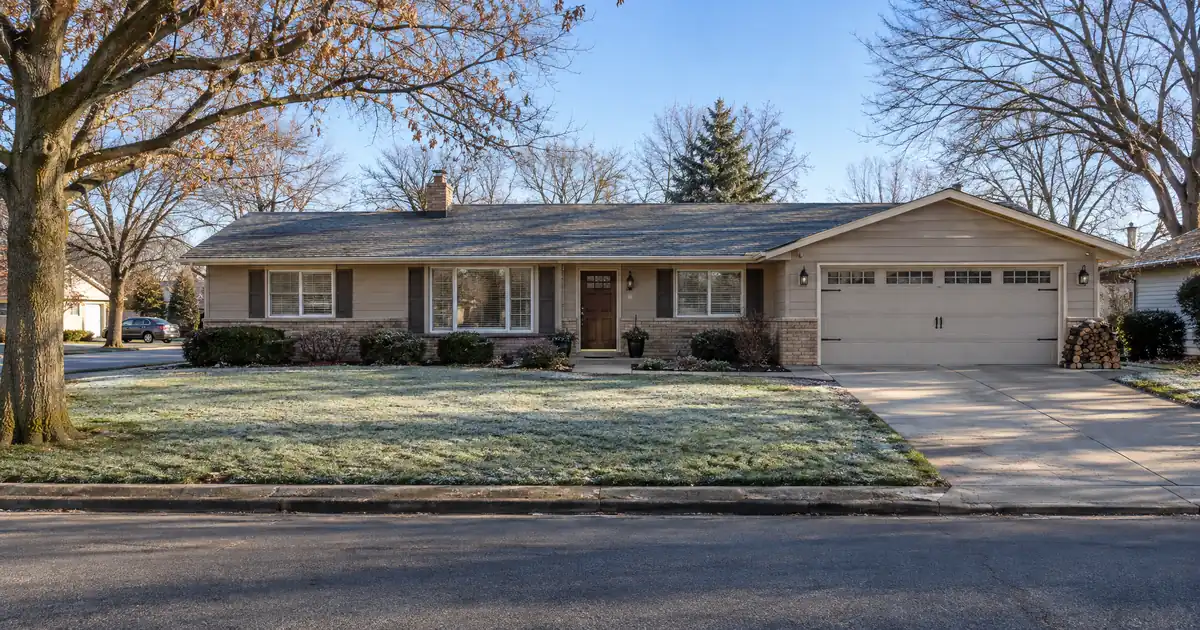
The Quick Read: A DSCR HELOC fits a landlord who wants to keep a good first mortgage and draw equity in stages, while a DSCR cash-out refinance fits one who wants a single lump sum for a known equipment bill and will replace the first mortgage to get it. Both qualify primarily on property-level rental income covering the payment, subject to lender guidelines.
- A DSCR HELOC adds a line on top of the first mortgage you keep. A cash-out refinance replaces that mortgage with one larger loan.
- On the HELOC, at least 80% of the line is drawn at closing, so it is less flexible for staged equipment spending than it first looks.
- A cash-out raises the payment on the same rent, so your coverage ratio falls. The HELOC tests coverage on the full line, drawn or not.
- Neither product dictates how you spend the money. A roof, boilers, HVAC or an appliance package are all ordinary uses.
“Big equipment costs” here means major building systems and appliance packages on a rental you own. You are probably choosing between two structures, and the right one depends on three things. How many invoices are coming matters, along with how you hold title and what your current first mortgage is worth keeping. Choose the HELOC if you want to leave the first mortgage alone and the bill is large enough to justify a line that starts at $50,000. Choose the cash-out if you want one clean loan and you are comfortable giving up your current first mortgage. Both are business-purpose loans on investment property, and both are subject to underwriting.
A quick vocabulary note. DSCR stands for debt service coverage ratio, which is the property’s monthly rent divided by its monthly debt payment. A lien is a lender’s legal claim on the property. A second lien sits behind your first mortgage.
Side-by-Side
The two columns below are not mirror images. The left column reflects guidelines from the wholesale network Lendmire places files with. The right column reflects published industry norms for DSCR cash-out refinances. Individual lenders vary, so treat every cell as typical, not guaranteed.
| Factor | DSCR HELOC (network guidelines) | DSCR Cash-Out Refinance (industry norms) |
|---|---|---|
| Review basis | Rent covering a stress payment on the full line | Rent covering the new, larger payment |
| Personal income file | Not calculated | Generally not the basis |
| What happens to the first mortgage | Stays in place | Paid off and replaced |
| How funds arrive | Revolving line, 80% or more drawn at closing | One lump sum at closing |
| Property types | 1-4 units, condos, townhomes, PUDs; no condotels or row homes | Varies; many programs accept 1-4 units |
| Entity vesting | LLC allowed, subject to program eligibility | Commonly allowed, subject to program terms |
| Reserves | None required on this program | Often reviewed on the file |
| Seasoning | 6 months of ownership | Varies by lender and program |
Documentation on both sides centers on the property: a lease, a rent analysis from the appraisal, entity papers if you hold in an LLC, and the credit report. Neither is paperwork-free. The rent and the lease are documented, and the credit report and the valuation are reviewed.
How Each Option Handles a Big Equipment Bill
Equipment spending comes in three patterns: one large invoice, a series of milestone payments, or an ongoing cycle of replacements across several units. A cash-out matches the first pattern best, because you receive the money once and pay the vendor once. A line sounds like the natural match for the other two, but there is a catch.
On the DSCR HELOC described here, at least 80% of the line is drawn at closing. It also never goes below $50,000 drawn. Later draws must be at least $5,000 each. So if you want a line “just in case” and plan to draw only a little, this structure does not work that way. You start with most of the line borrowed and carry interest on that balance. The line gives you reserved capacity for the remaining slice, not a standby fund for the whole amount.
A cash-out has its own timing problem. You receive everything at closing, and idle cash sits in your account until the vendor invoices arrive. If the equipment bill is uncertain, you can end up with a bigger balance than you needed.
The honest conclusion is that neither product is ideal for a bill you cannot size yet. Get the quote first, then decide.
One more fit question is the asset’s useful life. A boiler or an appliance package wears out long before a 30-year loan matures. Both products stretch repayment well beyond the equipment’s life, so you can end up still paying for something you have already replaced. Plan to pay the balance down faster than the schedule requires, or accept that the debt will outlive the hardware.
When a DSCR HELOC Is the Better Fit
The HELOC is the better fit when your first mortgage is worth keeping and the equipment bill is large enough to justify a line starting at $50,000. A first mortgage taken on better terms than today’s market is the classic reason. Replacing it just to fund a roof and HVAC package would reprice the entire balance, not just the new money.
Here is how the network’s HELOC is structured:
- Lien position. It is a standalone second lien behind the first mortgage you keep. It can also be a standalone first lien on a rental with no mortgage.
- Qualification. The rent qualifies the line, with a minimum DSCR of 1.10x. The test uses a fully amortizing stress payment on the entire credit limit, not just the drawn amount.
- Leverage on a second lien. Combined loan-to-value (CLTV), meaning the first mortgage balance plus the new line divided by property value, goes up to 70% at a 720 credit score or better. Lines run from $50,000 to $500,000.
- Leverage on a first lien. On a rental with no mortgage, loan-to-value (LTV) reaches 75% at 740 or better. It sits at 70% from 700 to 739 on lines up to $500,000. Lines above $500,000, up to $1,000,000, carry a 65% LTV ceiling at 720 or better.
- Terms. The draw period is 5 years of interest-only payments on the drawn balance. Then a 25-year fully amortizing repayment period follows, for a 30-year maturity. The rate is variable.
- Valuation. Lines to $400,000 use an automated valuation plus a property inspection report, or a full appraisal. Larger lines take a full interior appraisal. Appraisal waivers are not accepted.
- Seasoning. A rental bought or refinanced inside the last 6 months is not eligible. Terms depend on the lender’s guidelines, the property type, the leverage, and a full review of the credit profile.
Every figure above is a ceiling or floor, not an offer, and all are subject to underwriting through select programs.
The entity piece is a real advantage. Vesting in your LLC is allowed on this program, subject to program eligibility. The members sign as guarantors. A title holder who is not a borrower signs a non-borrowing owner acknowledgment. The borrowers on the line also need not be the borrowers on the first mortgage.
A HELOC is also useful when you hold several rentals. Each file is reviewed on its own property, up to 5 loans or $2,500,000 per borrower with the program. That makes it a workable tool for an investor who is replacing systems across a small portfolio, one property at a time.
For the foundation behind all of these products, the complete DSCR loans guide covers the fundamentals.
The program has limits. It is not available on rural-designated property, condotels, row homes, leaseholds, land trusts, mixed-use or properties with a solar lien. Foreign nationals and ITIN borrowers are not eligible. It is offered in 15 states under Lendmire’s consumer licensing: Alabama, California, Colorado, Florida, Georgia, Indiana, Michigan, Montana, New Mexico, North Carolina, Ohio, Pennsylvania, Texas, Virginia and Washington. Tennessee is not on the list.
When a DSCR Cash-Out Refinance Is the Better Fit
A cash-out refinance is the better fit when you want one loan, one payment and one lump sum, and your current first mortgage has no special value. Maybe it is due for a change anyway. Maybe you want to fold a short-term balance into a longer-term loan. Maybe you simply prefer a single closing over stacking a new lien on an old one.
It also suits an equipment bill you can size today. If the quote for the building systems is firm and the vendor wants payment at once, a lump sum matches the need. You avoid the 80% draw-at-closing question entirely.
A cash-out works for properties the HELOC excludes, as well. A condotel, a row home, rural property or a leasehold may fit a cash-out program even though it sits outside the HELOC lane, subject to the program in question. Program eligibility differs across the wholesale network, so a property that fails one lender’s test is sometimes acceptable to another.
The other common reason is entity structure and flexibility. A rental already vested in an LLC can generally take a DSCR cash-out, depending on program guidelines. Lenders in the network also vary on how they treat different collateral, such as short-term rentals, which typically get more conservative leverage. Short-term rental rules can vary by city, county, HOA, and property type, so investors should confirm local rules before relying on projected rental income.
What you give up is the first mortgage. A cash-out reprices the entire balance, not only the new money. That is the cost to weigh against the convenience.
Programs below a 1.00 coverage ratio are available through select lenders in the network, though loan-to-value and terms adjust. A cash-out on a thinly covered property is often reviewed through that route.
What Each Does to Your Coverage Ratio
The cash-out and the HELOC change your coverage in different ways. Both examples here are modeled assumptions, not market data.
Run the numbers on a duplex whose rent covers its existing mortgage payment at roughly 1.4x. A cash-out that adds a large new balance raises the payment on the same rent, and coverage might drop to about 1.15x. That still clears many programs’ baseline. A bigger equipment bill, or a rental with thinner starting coverage, can push the same math below 1.00. At that point you would look at a sub-1.00 program, which carries lower leverage and adjusted terms, or a smaller loan.
The HELOC works differently. The qualifying payment is a fully amortizing stress payment on the entire credit limit, and the minimum is 1.10x. So even if you plan to draw only part of the line, the test assumes the whole thing. Coverage can look tighter on paper than your actual drawn payment would suggest. You do not need to calculate this by hand, because the lender’s own coverage calculation governs.
The practical lesson is to size the equipment bill against coverage before you apply. A smaller line or smaller cash-out may clear where a larger one would not.
Where Each One Can Hurt You
The risks come from how each product behaves over time, not from the day you close.
The Consumer Financial Protection Bureau explains that a home equity line of credit is an open-end line with a draw period followed by a repayment period. It adds that monthly payments are often significantly higher once repayment begins, and in some cases the whole balance may come due. The agency’s HELOC brochure says some plans allow interest-only payments during the draw period. It also warns that payments can change even if you draw no more money. That matches how this network program works: interest-only for 5 years, then a 25-year amortizing repayment, with a variable rate.
In plain terms, a line that feels light during the draw period gets heavier later. Build the step-up into your cash-flow plan now, not in year six. A variable rate also means the payment can move without any action on your part.
The HELOC has a second risk. Lenders can reduce or suspend a line in some circumstances, which would matter if you were relying on later draws to pay vendors mid-project. For that reason, do not count on future draws for work that cannot wait.
A cash-out carries a different risk. You give up your existing first mortgage, and your payment rises on the same rent. If rents soften or a unit sits vacant, you have less cushion. You are also committing to a longer repayment on a shorter-lived asset.
An investment-property HELOC from a traditional lender has its own hurdles. NerdWallet notes that not all lenders offer them and that requirements are strict. That is one reason a rent-qualified line exists as a separate product.
Alternatives and Housekeeping
Before you borrow against the property at all, compare a few other paths. Equipment-specific financing is one. Vendor payment plans are another, and paying from cash flow is a third, if the replacement schedule allows it. Each has its own cost, term and approval path, and none of them touches your first mortgage.
DSCR loans are designed for non-owner-occupied investment properties. Because they are business-purpose investor loans, they are reviewed differently from a standard owner-occupied mortgage. The same logic applies to the HELOC described above: it is never offered on your own home or a second home.
The Balanced Verdict
Neither option wins across the board. The right choice turns on what you are protecting.
If you are protecting a first mortgage you like, lean toward the HELOC. If you want one loan and one payment, lean toward the cash-out. If the bill is a firm number due at once, the cash-out matches it. If the work will unfold across several units over time, the HELOC fits better, as long as you can live with 80% or more drawn at closing.
A few quick filters help:
- Your property is in an LLC and you want to keep it there: both can work, subject to program terms.
- Your property type is a condotel or row home: the HELOC lane is closed, so look at cash-out.
- You are inside six months of ownership: the HELOC is closed until the seasoning period passes.
- Your coverage is already thin: neither product may clear without a smaller ask.
Hybrid paths exist too. Some investors use a line first, then refinance into a long-term loan once the work is done and rents have stabilized. That is a legitimate sequence, though it means paying costs twice.
Frequently Asked Questions
Is a DSCR HELOC a real product, or just a search term?
It is a real product through select programs. Across the wholesale network Lendmire works with, it is a standalone second lien behind your first mortgage, or a standalone first lien on a paid-off rental. It qualifies primarily on property-level rental income covering the payment, subject to lender guidelines. It is offered in 15 states, so confirm availability before you plan around it.
Can I use either loan to pay for equipment?
Yes. Neither product restricts how you spend the money on your own rental. Equipment such as boilers, HVAC, roofing systems and appliance packages are ordinary uses. Keep invoices and records so you can show where the funds went.
Will a cash-out hurt my coverage ratio more than a HELOC?
Usually, a cash-out lowers coverage more, because it raises the payment on the same rent. A HELOC leaves your first mortgage payment alone, but it adds a payment of its own, and the test runs on the full line. Run both cases before you commit.
What if my rental is already in an LLC?
The DSCR HELOC described here allows LLC vesting, subject to program eligibility, with members signing as guarantors. A DSCR cash-out can also generally close in an LLC, depending on program guidelines. A conventional personal-income HELOC may not accept entity title, so check that product’s rules.
What if I bought the property recently?
On the DSCR HELOC, a rental bought or refinanced within the last 6 months is not eligible. Cash-out seasoning varies by program, so ask the lender what applies to your purchase date.
Next Step
If you are considering a home equity line on a rental property and want to see how the numbers work, Lendmire can help you compare DSCR HELOC options based on the property, the rent, the equity available, credit profile, combined leverage, and your goals. Lendmire is a mortgage broker that arranges financing through select lenders in its wholesale network, and every file is subject to underwriting and is not a commitment to lend.
Investors weighing their equity options can start with Lendmire’s guide to cash-out refinance on an investment property.
About Lendmire
Lendmire is a mortgage brokerage (NMLS# 2371349) arranging home equity lines of credit — primary-residence, second-home and investment-property lines — through a wholesale lending network in its 16 full-service states. Eligibility is determined by the lender on each file. Scotsman Guide named Lendmire a Top Mortgage Workplace in both 2025 and 2026.
Get Started
Ready to find the right loan for you?
See your offer in seconds. No credit pull, no obligation.
Informational only. Not a Loan Estimate, approval, or commitment to lend. Program availability and eligibility are subject to lender guidelines, credit approval, property review, and underwriting.
References
3. NerdWallet – HELOC on an investment property
This article is part of Lendmire’s DSCR HELOC program — full qualification details, guidelines, and scenarios live on the program page.
Related reading: DSCR Loan vs DSCR HELOC for a Cash-Out on a Rental · DSCR HELOC vs Delayed Financing When You Want Cash Out · DSCR HELOC vs Lower-Payment Refinance When You Want Cash Out
Brandon Miller
Founder & CEO, Mortgage Loan Originator, Lendmire LLC
- Mortgage Loan Originator · NMLS# 1129696 · Verify on NMLS Consumer Access
- North Carolina Real Estate Broker · License# 343312 · Verify on NCREC
- North Carolina Insurance Producer · License# 19053198 · Property, Casualty, Life, Health · Verify on NAIC SBS
- Lendmire LLC · Firm NMLS# 2371349 · Verify firm licensure
Disclosures. The information presented in this article is general market commentary, not financial, legal, or tax advice. Lendmire is a mortgage brokerage (NMLS# 2371349) — not a direct lender or depository institution — and loan placement is subject to lender underwriting. Nothing in this content represents a commitment to lend. Loan terms, pricing, and program availability vary based on borrower qualifications, property characteristics, and state of subject property, and are subject to change at any time. Lendmire complies with Equal Housing Opportunity requirements. Consumer access: nmlsconsumeraccess.org.