
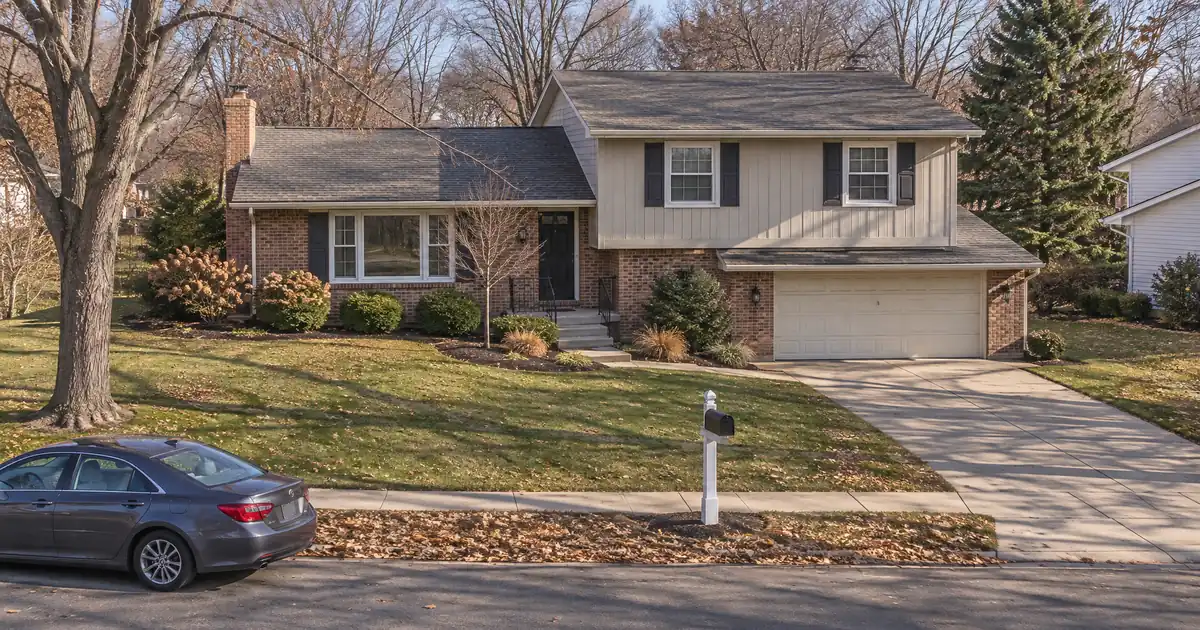
The Quick Read: Borrowing against the rental with a DSCR HELOC keeps the property and its rent, while selling converts the property into cash and may create a taxable gain. A DSCR HELOC is a line of credit qualified on the rental’s income. It suits a parent who wants to keep a rental that still covers its debt. Selling suits a parent who wants out of the debt and the property.
- A DSCR HELOC leaves you owning the rental, and you carry the debt, not your son.
- Selling removes the property, its rent, and its future growth. It can also trigger tax.
- The gift step is the same either way: your son’s lender will want a signed gift letter and a clean paper trail.
- The line only works if the rent still covers the debt after the new lien goes on.
- Program terms below are typical ranges through select programs, subject to underwriting.
The Honest Answer First
Pick the HELOC if the rental is a good performer you want to keep, you have real equity, and the rent can carry a new line. Pick the sale if the property is tired, cash flow is thin, you want to simplify, or you would rather not carry debt for years to help a child.
Neither option is the “smart” one in the abstract. One keeps an asset and adds a liability. The other removes both and may create a tax bill. A useful test is one question: do I still want this rental in five years?
Both paths end the same way. You hand your son money, and his lender documents it. That second half is shared, so the real decision is the first half.
Side-by-Side
The DSCR HELOC column reflects how this product works through Lendmire’s wholesale network, subject to underwriting. The sale column describes ordinary industry practice, not a program.
| Factor | DSCR HELOC | Selling the rental |
|---|---|---|
| What you keep | The rental and its rent | Nothing, you exit |
| Review basis | The rental’s rent against the debt | A buyer’s financing, not yours |
| Personal income documents | No traditional personal-income documentation or W-2s | Not applicable |
| Property types | Single-family, PUD, townhome, 2-4 units, condos | Any property that sells |
| Entity vesting | LLC title allowed | Seller’s title, any form |
| Valuation | Automated valuation or appraisal, by line size | Market price from a buyer |
| Seasoning | 6 months since the last note date and 6 months on title | None |
| Tax event | Borrowing is not a sale | Possible gain and depreciation tax |
| Debt afterward | New line stays on you | Existing mortgage paid off |
| Timeline | Set by the line process | Set by the market and a buyer |
How the DSCR HELOC Path Works
A HELOC is an open-end line of credit. The federal consumer-finance regulator explains that you borrow during a draw period, then the line moves into repayment, and payments often rise at that point.
The DSCR version is built for rentals. Across the wholesale network, it is a standalone second lien behind the first mortgage you keep. On a rental with no mortgage, it is a standalone first lien. The rent qualifies the line, with no personal income calculation. DSCR means the debt service coverage ratio: gross monthly rent divided by the qualifying payment.
Here are the main parameters, framed as typical ranges, subject to underwriting:
- Coverage: a minimum DSCR of 1.10x. The qualifying payment is a fully amortizing payment on the entire credit limit at a stress rate, taxes and insurance excluded.
- Rent used: rent is the lesser of the appraisal’s market rent and the lease, unless three months of receipts support a lease above market.
- Second lien leverage: up to 70% combined loan-to-value (CLTV, meaning the first mortgage plus the new line, divided by value) at a 720 credit score or better, on lines of $50,000 to $500,000.
- First lien leverage: up to 75% loan-to-value (LTV) at 740 or better and 70% LTV from 700 to 739, on lines up to $500,000. First-lien lines above $500,000, up to $1,000,000, carry a 65% LTV ceiling at 720 or better.
- Terms: a 5-year interest-only draw period, a 25-year repayment period, a 30-year maturity, and a variable rate.
- Draws: at least 80% of the line is drawn at closing, and later draws are at least $5,000. These specifics are subject to lender guidelines and a full review of property, leverage, and credit.
On a second lien, confirm on the file how the lender treats the first-mortgage payment in its coverage calculation. That treatment can change the math.
Other file points matter too. A lease must be in place, and a two-to-four-unit property may have at most one vacant unit. Lines to $400,000 use an automated valuation with a property inspection report, or a full interior appraisal. Lines above $400,000 take a full interior appraisal. A rental bought or refinanced in the last 6 months is not eligible (that clock runs from the last note date to the new note date), and you must have held title for 6 months (settlement date to note date). A property listed for sale in the prior 2 months is also not eligible. No reserves are required.
Some properties are outside the program: rural-designated property, condotels, row homes, and leaseholds. Each borrower is limited to 5 loans or $2,500,000 with the program.
The line is offered in 15 of Lendmire’s 16 licensed states, every licensed state except Tennessee. You can read the broader picture in Lendmire’s complete DSCR loans guide.
When a DSCR HELOC Is the Better Fit
The line fits when the rental is worth keeping and the numbers still work afterward.
You like the property. A rental with steady tenants and growing equity is hard to replace. Selling it ends the rent and any future appreciation. A line lets you pull equity out and keep going.
Your rent can absorb a new debt. This is the deciding test. The new line adds a payment, and the rent must still cover everything. If the rent barely clears the existing mortgage, a second lien may push the property into the red.
You own it in an LLC. LLC vesting is allowed on this line, subject to lender program eligibility, with members signing as guarantors. That avoids retitling the property just to borrow.
You want to skip the personal income file. The line qualifies primarily on property-level rental income covering the payment, subject to lender guidelines. That helps a parent with several properties or a complicated tax return.
You want the debt to stay with you. The gift is not a loan to your son, so the line does not touch his debt-to-income ratio. The gift letter must state that no repayment is required. A gift he must repay is a loan, and his lender will count it as debt.
Picture a parent whose duplex has a modest first mortgage and plenty of equity, with rent that clears 1.10x even after a stress payment on the full line. That is the profile the product was built for.
Two cautions. The line is variable-rate, so the debt can grow more expensive during a multi-year gift. And the draw period eventually ends. The CFPB notes that payments often jump once repayment starts, so plan for that step up rather than hoping rent rises to meet it. Also, a rental stays pledged as collateral, so a vacancy or a rough year puts the property at risk.
When Selling Is the Better Fit
Selling fits when the property no longer earns its place, or when you want a clean exit.
Cash flow is thin. Investors on BiggerPockets have made the point that borrowing against a property that will not cash-flow afterward can favor selling. That is commentary, not a rule, but the logic holds. A new lien on a weak property compounds the problem.
You want out of landlording. Selling ends repairs, vacancies, and tenant calls. It also ends exposure to a variable-rate line.
The property is not eligible. A rental bought or refinanced in the last 6 months, one held on title for less than 6 months, one listed for sale in the prior 2 months, or one in an excluded category, such as a row home or condotel, cannot use this line. A sale may be the only route.
You prefer one and done. A BiggerPockets reply describes selling as one and done: you give up future equity, but you also give up the ongoing risk.
The tax cost is acceptable. This is the big variable. Selling a rental can create a taxable gain, and depreciation changes the math. The IRS says allowable depreciation reduces your basis even if you never claimed it, and the taxable gain may also face the 3.8% Net Investment Income Tax. Tax treatment varies; consult a qualified professional.
A 1031 exchange will not help with a gift. It defers tax only when proceeds roll into replacement property, and cash taken out is taxable boot, per BiggerPockets. Cash you plan to give away is generally not deferred.
The Gift Step Is the Same Either Way
Whichever path you pick, your son’s lender decides what documentation it needs. FHA is one example. For FHA loans, the lender must get a gift letter signed and dated by the donor and borrower. The letter lists the donor’s name, address, and phone number, the relationship, the dollar amount, and a statement that no repayment is required. His loan may not be FHA, and other programs set their own rules.
Practical steps help on either path:
1. Move the money into your own account first, then to him or to closing.
2. Keep the trail clean. Cash on hand is hard to document.
3. Keep your son off the line, if a clean gift is the goal.
4. Ask his lender what it needs before you move any funds.
A related idea is a gift of equity. That is a discount when a family member sells a home to a relative, and it is a different tool. It applies only when your son buys from you or another family member. Buying from a stranger calls for a cash gift.
What About Sibling Fairness?
This comes up more than the paperwork does. A gift, a documented family loan, and an advance on an inheritance are three different things. Each has different paperwork and different effects on your other children.
A line adds debt that outlives the gift and may need to be repaid from your estate. A sale leaves less to pass on in property, but no debt. Decide which of those you can explain to your other kids, and put it in writing.
Shared Costs and Tax Basics
Gifts above the annual exclusion are generally reported on Form 709, the federal gift tax return. Exclusion amounts change over time, so confirm the current annual exclusion per recipient and the current lifetime exclusion with a tax professional before you file. The donor, not the recipient, generally owes any gift tax. Reporting a larger gift does not by itself mean tax is due, because the lifetime exclusion may absorb it, so ask your CPA how it applies to you.
Interest on a line secured by a rental and used to fund a gift is a question for your CPA. Do not assume a deduction.
Key Terms Defined
DSCR: the debt service coverage ratio, meaning the rental’s monthly rent divided by the qualifying payment.
HELOC: a home equity line of credit, which is a revolving line secured by property.
CLTV: combined loan-to-value, meaning the first mortgage balance plus the new line, divided by the property’s value.
Seasoning: the waiting period a lender wants after a purchase or refinance before it will lend again.
Gift letter: a signed statement that money is a gift and needs no repayment.
Boot: cash or other value taken out of a 1031 exchange that is taxable.
A Balanced Verdict
Keep the rental and use a DSCR HELOC when the property is strong, the equity is real, and the rent clears the coverage test with room to spare. You keep the asset and its rent, and you take on debt that you must carry for years.
Sell when the property is weak, the debt would strain your cash flow, you want a clean break, or the rental does not fit the program. You lose the asset but you also lose the risk.
If you are torn, run both on paper: the coverage ratio after the new line, and the net proceeds after costs and taxes. Then ask a tax professional about the sale. If you are considering a home equity line on a rental property and want to see how the numbers work, Lendmire can help you compare DSCR HELOC options based on the property, the rent, the equity available, credit profile, combined leverage, and your goals. You can request a quote through Lendmire’s quote page.
Frequently Asked Questions
Can I use a DSCR HELOC to help my son buy a home?
Yes, the line is a source of cash you can gift, subject to underwriting. His lender will want a gift letter and a documented transfer. You carry the debt, and he does not.
How long must I own the rental before I can borrow against it?
Two six-month clocks apply: the line is not available on a rental bought or refinanced in the last 6 months (last note date to new note date), and title must have been held for 6 months (settlement date to note date). Both are program guidelines subject to underwriting.
Does the gift count as debt on my son’s mortgage?
Not if it is a true gift. The letter must state that no repayment is required. If he must repay it, his lender will treat it as a loan.
Can I put the line on a rental held in an LLC?
Yes, LLC vesting is allowed, with members signing as guarantors, subject to program terms. The line is only for investment property.
Does selling a rental always trigger tax?
Not always, but it can. Gain, depreciation, and the Net Investment Income Tax all play a role, and a CPA can estimate your result before you list.
About Lendmire
Lendmire (NMLS# 2371349) is a mortgage brokerage serving landlords and real estate investors in 16 licensed states. DSCR home equity lines of credit on non-owner-occupied one-to-four-unit rentals are arranged through wholesale lending channels in 15 of those states (every licensed state except Tennessee); Lendmire brokers the line and the lender underwrites each application on the property’s rent, credit and leverage. Scotsman Guide named Lendmire a Top Mortgage Workplace in both 2025 and 2026.
Get Started
Ready to find the right loan for you?
See your offer in seconds. No credit pull, no obligation.
Informational only. Not a Loan Estimate, approval, or commitment to lend. Program availability and eligibility are subject to lender guidelines, credit approval, property review, and underwriting.
References
3. BiggerPockets forum – Should I sell or cash-out refi
4. IRS FAQ – basis and sale of home/rental
5. BiggerPockets – How to take cash out of a 1031 exchange
This article is part of Lendmire’s DSCR HELOC program — full qualification details, guidelines, and scenarios live on the program page.
Related reading: How Much Can You Borrow on a DSCR HELOC for Putting Rental Equity Into Stocks? · How Much Can You Borrow on a DSCR HELOC for a Rental Qualified on Its Income? · How Much Can You Borrow on a DSCR HELOC for Using Home Equity on an Investment Property?
Brandon Miller
Founder & CEO, Mortgage Loan Originator, Lendmire LLC
- Mortgage Loan Originator · NMLS# 1129696 · Verify on NMLS Consumer Access
- North Carolina Real Estate Broker · License# 343312 · Verify on NCREC
- North Carolina Insurance Producer · License# 19053198 · Property, Casualty, Life, Health · Verify on NAIC SBS
- Lendmire LLC · Firm NMLS# 2371349 · Verify firm licensure
Compliance and disclosures. Lendmire (NMLS# 2371349) is a licensed mortgage broker and is not a direct lender, depository institution, financial advisor, or tax professional. Content in this article is general market analysis and educational information — not financial, legal, or tax advice for any specific situation. Lendmire does not guarantee loan approval; every transaction is subject to underwriting by the funding lender. Mortgage pricing and loan program guidelines are subject to change at any time without notice and vary by borrower characteristics, property type, and state regulations. Lendmire complies with Equal Housing Opportunity. Licensure verification: NMLS Consumer Access.