
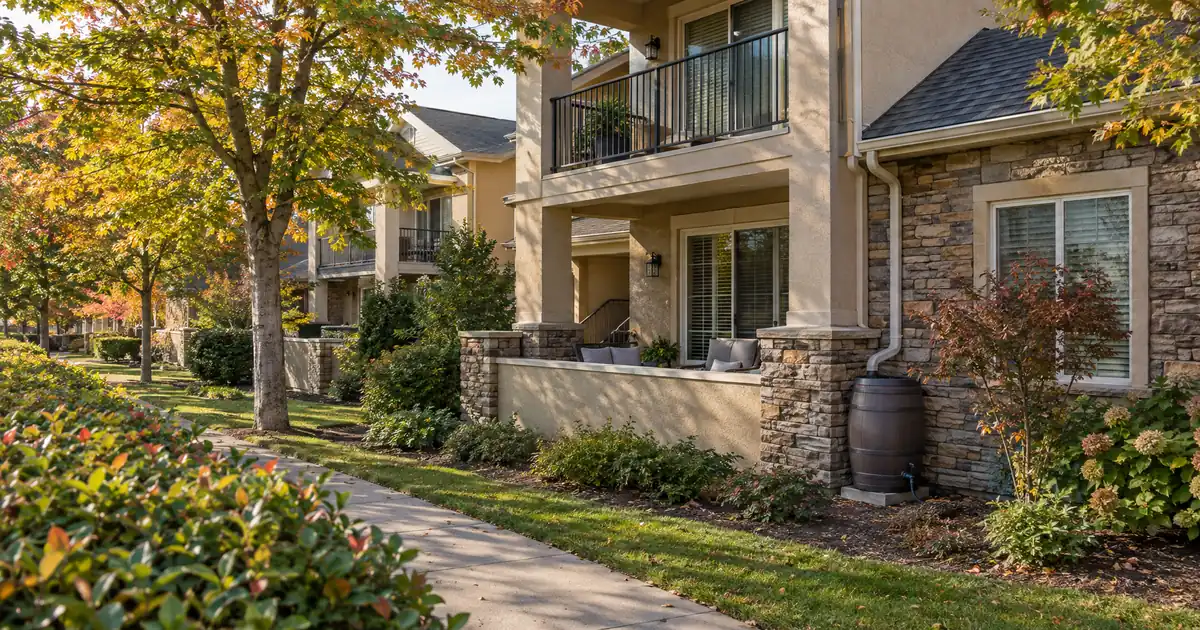
The Quick Read: A DSCR HELOC on a condo clears two separate reviews, one on the rent and borrower and one on the building, so a pending lawsuit does not end the file automatically, yet it narrows the lenders willing to review it and can change the outcome depending on who is suing whom and why. A DSCR HELOC is a home equity line on a rental, qualified on the rent instead of the owner’s personal income. Strong rent does not fix a building problem, because the project is judged on its own.
- The line sits as a standalone second lien behind the first mortgage the owner keeps, or as a standalone first lien on a paid-off rental.
- Rent has to cover a stress payment on the whole credit limit at 1.10x or better, subject to underwriting.
- The type of lawsuit matters more than the word “pending.” Defect and safety suits against the association are the hardest to place.
- The lender’s valuation, the building questionnaire and the lease are the documents that decide most files.
- This program is offered in 15 of Lendmire’s 16 licensed states, every licensed state except Tennessee, through select programs.
What Is a DSCR HELOC on a Rental Condo?
A DSCR HELOC is a revolving line of credit secured by a rental the owner keeps. The rent qualifies the line. The lender does not collect tax returns, W-2s or pay stubs, and it does not calculate the owner’s debt-to-income ratio. Qualification runs primarily on property-level rental income covering the payment, subject to lender guidelines.
The label is loose, so it helps to separate it from a common cousin. An investment-property HELOC qualified on personal income is a different product. NerdWallet notes that not every lender offers a HELOC on an investment property and that those that do apply strict requirements built around the borrower’s credit, income and equity. A DSCR HELOC swaps the personal-income test for a rent test.
Across Lendmire’s wholesale network, the structure is simple. The line is written as a standalone second lien behind the first mortgage, or as a standalone first lien on a rental with no mortgage. It is never closed with a purchase, never a third lien, and never placed on the owner’s own home or a second home. The owner can hold title in an LLC, subject to lender program eligibility, with the members signing as guarantors. DSCR loans are designed for non-owner-occupied investment properties. Because they are business-purpose investor loans, they are reviewed differently from a standard owner-occupied mortgage.
Lendmire is the broker here. It arranges the file through a wholesale lender in its network, and the lender approves or declines.
Key Terms Defined
DSCR (debt service coverage ratio): gross monthly rent divided by the qualifying payment, with 1.10x as the minimum on this line.
Warrantable condo: a building that meets conventional agency project standards. Non-warrantable means it misses at least one, such as a pending lawsuit, heavy investor ownership or thin reserves.
Condo questionnaire: the form the association or its management company completes. It covers ownership mix, finances, litigation, rentals and development status.
CLTV (combined loan-to-value): the first mortgage balance plus the new line, divided by the property value. It applies to second liens.
Stress payment: a fully amortizing payment on the entire credit limit at the start rate plus 2 percentage points, used only to test coverage.
Draw period: the five-year stretch when the line is interest-only on the drawn balance, before the repayment period begins.
Why Does a Lawsuit Change the Lender Pool Instead of Your Credit?
A building lawsuit lands on the project review, not on the borrower review. Your credit score and the rent can both be strong, and the file can still be declined or limited because of what the building is facing.
DSCR lenders do not sell into the agency market, so the agency project rules are a reference point, not their rulebook. For contrast only, the Fannie Mae Selling Guide makes a project ineligible when the association or developer is named in litigation tied to safety, structural soundness, habitability or functional use. It also allows minor matters to pass under listed conditions. Lenders in the DSCR space set their own versions of that line.
Scotsman Guide reports that DSCR lenders still underwrite the HOA. They often order a third-party analytics report covering outstanding litigation, reserve adequacy and the split between owner-occupants and investors. The same piece notes that non-warrantable condos fall outside the criteria of many DSCR programs. So the practical effect is a narrower field, not a blanket no.
Large retail lenders tend to decline fast when a suit shows up on the questionnaire. Programs built for non-warrantable projects read the same suit by type and stage. That difference is why a file turned down at a big bank can still get a real review elsewhere.
How Does Underwriting Treat the File, Step by Step?
Underwriting runs in a fixed order, and the building is its own gate. Here is the sequence Lendmire sees on condo files.
1. Borrower and rental screen. The lender pulls credit. A second lien needs a 720 score or better, and a first lien needs 700 or better. It also checks mortgage history: no 30-day late in the last 12 months, and 48 months since a bankruptcy, foreclosure, short sale or deed-in-lieu.
2. Rent test. The lender takes the lesser of the appraiser’s Form 1007 market rent or the lease. A lease above market counts only with three months of receipts. A lease in place is required, and a two-to-four-unit property can have at most one vacant unit. Gross rent divided by the stress payment on the full credit limit has to reach 1.10x. Whether the first-mortgage payment joins the qualifying payment on a second lien is set by the lender’s own coverage calculation.
3. Valuation. Lines up to $400,000 use an automated valuation with a property inspection report. Larger lines use a full interior appraisal, which on a condo is a Form 1073. Appraisal waivers are not accepted.
4. Project review. The lender orders the building analysis and sends the questionnaire to the association. The litigation answers are the center of the review.
5. Classification of the suit. The underwriter sorts the matter by who the parties are, what the claim is about and what stage it has reached.
6. Decision. The result is approve, approve with conditions, or decline at the project level. Rent strength does not cure a project-level decline.
The seasoning rule also applies: a rental bought or refinanced inside the last 6 months is not eligible (that clock runs from the last note date to the new note date), and the owner must have held title for 6 months (settlement date to note date).
Not All Lawsuits Are Equal
The party names and the claim type decide how a lender reads a suit. No program reads every suit the same way, so treat the right-hand column below as a general pattern, not a promise.
| Lawsuit type | Who is involved | Likely lender read | Ask the HOA |
|---|---|---|---|
| Construction defect | Association vs. developer | Hardest to place | Scope, repair plan, cost |
| Structural or safety | Association as defendant | Often a decline | Engineer report, status |
| Insured injury claim | Third party vs. association | Usually milder | Is the carrier defending? |
| Dues collection | Association vs. unit owner | Routine | Delinquency level |
| Owner vs. owner dispute | Two unit owners | Often limited effect | Is the association a party? |
| Class action | Many owners vs. association | Frequently declined | Claim scope, stage |
Stage adds a second layer. A freshly filed suit leaves cost and outcome unknown. A suit in discovery still has open exposure. A settled suit with the repair funded looks very different from one heading toward a judgment. Many underwriters want that stage in writing from the association, not from a manager’s phone call.
The insurance question matters too. When the association’s carrier is defending the suit, the lender sees capped exposure. When the association is paying legal fees from reserves, the lender sees a reserve problem.
Litigation Is Rarely the Only Trigger
Lenders rarely stop at one flag. Scotsman Guide’s condo coverage lists commercial space, delinquent dues, reserve shortfalls and insurance gaps as other reasons a building lands in the non-warrantable bucket. A lawsuit plus thin reserves is a harder file than a lawsuit alone, because the suit may force a special assessment the reserves cannot absorb.
Some issues are harder blocks than litigation. This line does not accept condotels, row homes, rural-designated property, leaseholds, land trusts or age-restricted communities. A building with mandatory rental pooling or hotel-style operation falls into the same category of trouble. A non-warrantable condo is an eligible property type on this line, but eligibility on paper is not approval of the building.
One more lever sits outside the lawsuit. A declining-market flag on the property lowers the leverage ceiling by 5 points. Litigation that drags down local sales can feed that flag.
How Does a Lawsuit Hit the Rent Test?
A lawsuit moves the coverage number through the building’s costs, not through the rent. Scotsman Guide describes the DSCR denominator as the loan payment plus taxes, insurance and HOA fees. When an association funds a legal fight or a repair, dues rise or a special assessment lands, and that pressure shows up in the cost side of the ratio. BiggerPockets members describe special assessments as a standing risk for condo owners.
Run an illustrative case, not a program term. Say a unit’s rent covers the stress payment at about 1.25x before the building announces a dues increase. If the added cost trims coverage toward 1.12x, the file still clears the 1.10x minimum but with almost no cushion. A second increase pushes it below. The lender’s own calculation governs, so the point is the direction of travel, not the exact figure.
That is why a rent-qualified line on a building in litigation needs a margin above the minimum. Rent that lands right at 1.10x leaves no room for the next dues notice.
How the Line Behaves Over Time
Status drift is the quiet risk. A building can be clean at application and carry a new filing before the line is set up. Board minutes often show a dispute building for months before it reaches a financing file, so owners who read minutes can spot trouble early.
The program shape also helps the investor plan. At least 80% of the line, and never less than $50,000, is drawn at closing. Later draws must be at least $5,000 each. The draw period runs five years interest-only on the drawn balance, followed by a 25-year repayment period and a 30-year maturity. The rate is variable. Lines run from $50,000 to $500,000 on a second lien. A first lien reaches $1,000,000, but any first-lien line above $500,000 carries a 65% loan-to-value ceiling.
What happens if a suit begins after closing is not something a general article can answer. Whether a lender can suspend, reduce or freeze a line is set in the lender’s HELOC disclosures and the line agreement. Read those terms before signing, and treat a building under a new suit as a reason to ask that question directly.
What Leverage Applies?
Leverage is set by lien position and credit tier, not by the lawsuit, and the figures below are ceilings through select programs, subject to underwriting. They apply to non-owner-occupied rentals.
| Lien position | Credit tier | Ceiling |
|---|---|---|
| Second lien | 720 or better | 70% CLTV |
| First lien | 740 or better | 75% LTV |
| First lien | 700 to 739 | 70% LTV |
| First lien, over $500,000 | 720 or better | 65% LTV |
Value is a combined number on a second lien. If the first mortgage already uses most of the allowed CLTV, little room is left for a line, whatever the building looks like. No reserves and no cash to close are required, and a borrower can hold at most 5 loans or $2,500,000 with the program.
Documents and Sequence
Most delays and declines trace to documents the owner does not control. The association or its management company supplies nearly everything the project review needs, so ask early.
1. Request the questionnaire first. Send it to the manager before anything else, since it carries the litigation answers.
2. Collect the litigation paperwork. Ask for the complaint summary, the stage of the case, the insurance defense status and any settlement terms.
3. Pull the financials. Get the current budget, reserve balance, delinquency report and master insurance certificate.
4. Read the minutes. Look for assessment talk, repair estimates and attorney updates.
5. Gather the owner file. Have the lease, rent receipts if the lease is above market, the first-mortgage statement, entity documents if the LLC holds title, and hazard insurance.
6. Request a consult before the valuation is ordered. Lendmire’s team can read the questionnaire answers against the program before the owner spends on a valuation.
If the manager is slow, escalate in writing to the board. If the answers are vague, an attorney letter on the case status can fill the gap.
HELOC, Cash-Out, Wait or Sell?
The right structure depends on the first mortgage, the building and the owner’s goals. A DSCR cash-out refinance replaces the first lien and is reviewed on rent under that program’s own rules. The HELOC leaves the first mortgage alone.
| Path | Best fit | Watch for |
|---|---|---|
| DSCR HELOC | Keep the first mortgage | Combined leverage cap |
| DSCR cash-out refinance | Replace the first lien | Project review applies too |
| Wait | Suit near settlement | Status drift |
| Sell | Heavy assessments ahead | Smaller buyer pool |
For more on the comparison, see Lendmire’s piece DSCR HELOC vs DSCR Cash-Out Refinance on a Condo When the Building Is in Litigation. The complete DSCR loans guide covers the wider program family.
Resale belongs in the decision. A unit in a building under litigation can be hard to sell to conventional buyers while the case is open. A smaller buyer pool also shapes how the lender views the collateral.
Where This Will Not Work
Some files fail on facts the owner cannot change. A rental bought or refinanced in the last 6 months is out. A property listed for sale in the prior two months is out. So is any condo that operates as a condotel, a rural-designated property, a leasehold or a property with a solar lien. Foreign national and ITIN borrowers are not eligible on this program. Citizens, permanent residents and non-permanent residents with a Social Security number are.
A class action over structural defects, a building with rental pooling, or a project with several stacked problems may find no lender at all. In those cases the honest answer is to wait for the suit to resolve, look at other equity paths or sell.
Frequently Asked Questions
Does any lawsuit disqualify the building?
No. Pending litigation is one input in the project review, and the type and stage of the suit carry the weight. Insured injury claims and dues collections are usually read as milder. Every decision remains subject to underwriting.
Can a settled suit change the outcome?
Often, yes. A settlement with the repair funded and the reserves intact removes much of the open exposure that worries underwriters. The lender will want written proof of the settlement and of how the cost was paid, whether from insurance, reserves or an assessment.
Does strong rent override the building problem?
No. Rent coverage and project eligibility are separate tests, and the rent test never cures a project-level decline. A unit that covers the stress payment comfortably can still be turned down because of the building.
What if the HOA will not return the questionnaire?
The file stalls, because the lender cannot judge the building without it. Send the request in writing to the manager and the board, and ask for the litigation disclosure separately. If the association still refuses, that silence is itself a sign the building may not be financeable under this program, and the owner should plan another path.
Is a non-warrantable condo harder to sell?
Usually, yes. Conventional buyers often cannot finance a unit in a building under litigation, so the buyer pool shrinks. Investors who pay cash or use non-warrantable programs can still buy. Plan the exit before the line is drawn.
Next Step
If you are considering a home equity line on a rental property and want to see how the numbers work, Lendmire can help you compare DSCR HELOC options based on the property, the rent, the equity available, credit profile, combined leverage, and your goals. You can request a quote at Lendmire’s mortgage quote page or call 828-256-2183. Program terms change, and every file is underwritten individually. Nothing here is a commitment to lend.
About Lendmire
Lendmire (NMLS# 2371349) is a mortgage broker. Home equity lines of credit — on a primary residence, a second home or an investment property — are arranged through wholesale lenders in Lendmire’s 16 full-service states, and every line is underwritten by the lender under its program guidelines. Scotsman Guide named Lendmire a Top Mortgage Workplace in both 2025 and 2026.
Get Started
Ready to find the right loan for you?
See your offer in seconds. No credit pull, no obligation.
Informational only. Not a Loan Estimate, approval, or commitment to lend. Program availability and eligibility are subject to lender guidelines, credit approval, property review, and underwriting.
References
1. NerdWallet, HELOC on an investment property
2. Fannie Mae Selling Guide B4-2.1-03, Ineligible Projects
3. Scotsman Guide, Get in the Game
4. Scotsman Guide, Condominium Expertise Can Pay Dividends
5. BiggerPockets forum, Condo Buying Must Know
This article is part of Lendmire’s DSCR HELOC program — full qualification details, guidelines, and scenarios live on the program page.
Related reading: Best DSCR HELOC Program on a Rental Condo for a First-Time Equity Borrower · DSCR HELOC Options to Buy a Rental Property · Best DSCR HELOC Program in a Declining Market
Brandon Miller
Founder & CEO, Mortgage Loan Originator, Lendmire LLC
- Mortgage Loan Originator · NMLS# 1129696 · Verify on NMLS Consumer Access
- North Carolina Real Estate Broker · License# 343312 · Verify on NCREC
- North Carolina Insurance Producer · License# 19053198 · Property, Casualty, Life, Health · Verify on NAIC SBS
- Lendmire LLC · Firm NMLS# 2371349 · Verify firm licensure
Disclosures. The information presented in this article is general market commentary, not financial, legal, or tax advice. Lendmire is a mortgage brokerage (NMLS# 2371349) — not a direct lender or depository institution — and loan placement is subject to lender underwriting. Nothing in this content represents a commitment to lend. Loan terms, pricing, and program availability vary based on borrower qualifications, property characteristics, and state of subject property, and are subject to change at any time. Lendmire complies with Equal Housing Opportunity requirements. Consumer access: nmlsconsumeraccess.org.