
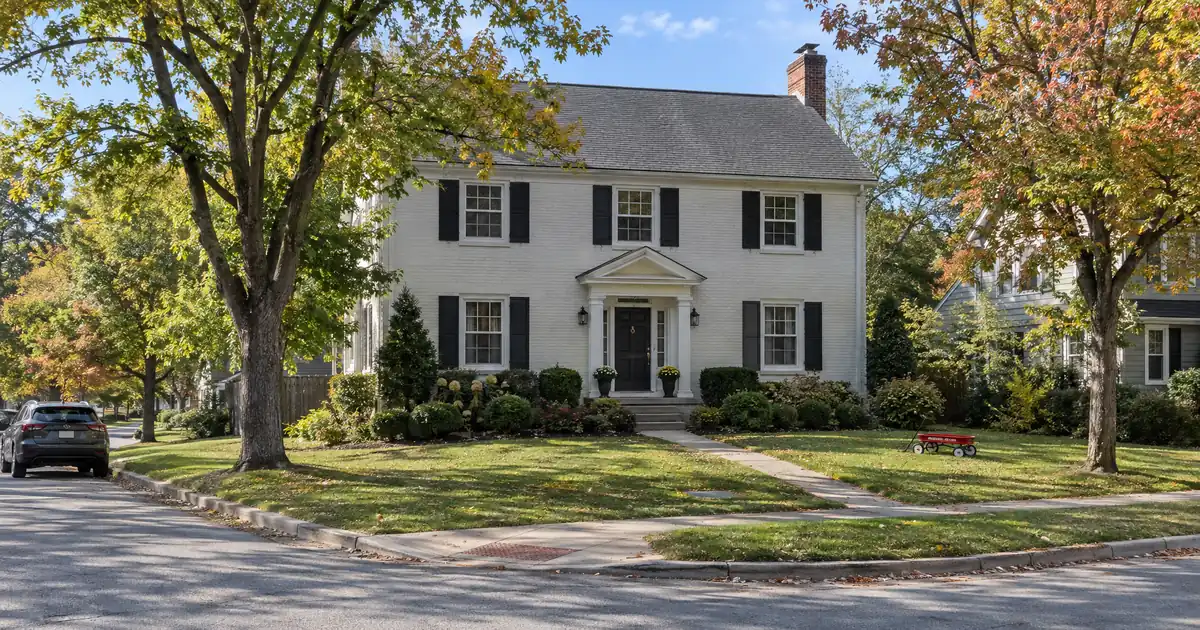
The Quick Read: A DSCR HELOC works on an inherited home only once title sits with people who can sign the lien, because every owner of record must sign the security instrument, so a refusing heir can block the line unless one heir first holds title alone.
- The line qualifies primarily on property-level rental income covering a stress payment of at least 1.10x, subject to lender guidelines. There are no traditional personal-income documentation, W-2s or personal income calculation.
- It is a standalone second lien (up to 70% CLTV at a 720 score or better) or a standalone first lien on a rental with no mortgage (up to 75% LTV at 740 or better), through select programs and subject to underwriting.
- The home must be a non-owner-occupied rental with a lease in place.
- If an heir refuses to sign, your realistic routes are negotiation, a buyout, or a court-ordered partition. A lender will not work around that heir.
What Is a DSCR HELOC on an Inherited Rental?
A DSCR HELOC is a revolving line of credit secured by a rental you keep. DSCR stands for debt service coverage ratio, which compares the rent to the payment the lender tests. The line is a standalone second lien behind the first mortgage you keep. On a rental with no mortgage, it is a standalone first lien.
It is never closed together with a purchase. It is never a third lien. It is never a line on your own home or a second home.
Lendmire is a mortgage broker, so it arranges this product through a wholesale lender in its network. The lender decides eligibility. Lendmire offers the program in 15 of its 16 licensed states, every licensed state except Tennessee.
The appeal for an investor-heir is plain. You can reach the equity without refinancing a first mortgage you like, and without opening your personal income file. An LLC can hold title, depending on program terms. The complete DSCR loans guide covers the wider family of these loans.
DSCR loans are designed for non-owner-occupied investment properties. Because they are business-purpose investor loans, they are reviewed differently from a standard owner-occupied mortgage.
Inheritance adds one problem the rent cannot solve: who actually owns the house.
Why Do Refusing Heirs Control the Gate?
When several heirs inherit a house without a trust or a special deed, they usually hold it as tenants in common. Each owns a share of the whole property, not a room or a slice. Nolo’s overview of joint ownership explains that a co-tenant can mortgage their own share but cannot transfer the other co-tenants’ interests.
That rule explains why one heir cannot borrow against the whole house. A lender that took a lien on only one heir’s share would be able to foreclose only that fractional interest. It would then become a co-owner with the other heirs. A DSCR HELOC is built on a lien over the whole property, so a fractional lien is not a fit.
So a lender generally needs one of two things:
1. Every owner on title signs the lien documents.
2. Title sits in one borrower’s name, usually after a buyout.
This is the gate in the title. The DSCR math comes after it.
Who Has to Sign, by Title Situation
Across the wholesale network Lendmire works with, the title report is where a stalled estate shows up. A missing owner, an unfinished probate or a half-signed deed all surface there. Second liens up to $400,000 use an owner-and-encumbrance report. A full title policy applies on a first lien and on second liens above $400,000.
| Situation | Who signs | Realistic outcome |
|---|---|---|
| All heirs agree, all stay on title | Every owner | File can proceed |
| One heir bought out the rest | The keeper alone | File can proceed |
| Heirs on title, one refuses | All heirs on title, but one will not sign | Negotiate, mediate or partition |
| Estate still in probate | Executor, if title has not passed | Wait for distribution deed |
A title holder who is not a borrower still signs a non-borrowing owner acknowledgment and the security instrument. So an heir who stays on title and does not sign blocks the lien. Each situation is reviewed individually, subject to lender guidelines.
What Can a Refusing Heir Actually Do?
A refusing heir can say no to a loan, but cannot hold the house hostage forever. Refusal is not a stable standoff, because any co-owner can ask a court for partition. The Land Trust Alliance notes that any tenant in common can force that process.
Many states have softened the blow for family-inherited property. The American Bar Association reports that the Uniform Partition of Heirs Property Act is enacted in 24 states plus the District of Columbia and the U.S. Virgin Islands. Under the act, the other co-owners get notice and an appraisal. They also get a right to buy out the partitioning owner before a court-ordered sale.
One state’s version, New York’s statute, defines heirs property as tenancy-in-common property with no binding partition agreement among the co-tenants. It also requires that at least one co-tenant acquired title from a relative. The court determines value.
For you, this changes the negotiation in two ways:
- If you want to keep the house, a buyout at an agreed value is usually cheaper than a partition fight.
- If an heir wants out, they have a legal exit, which makes a fair buyout offer easier to justify.
Partition rules differ by state and by facts. A real estate attorney in the property’s state should review your position before you rely on any of this.
How Does Underwriting Treat the File, Step by Step?
The lender treats an inherited rental like any other rental, once title is clean. Here is the order a file follows.
1. Title is established. The lender looks for the death certificate, the probate order or letters, and the recorded distribution deed. These show who actually holds title.
2. The borrower is identified. Borrowers are U.S. citizens, permanent residents, and non-permanent residents with a Social Security number. Foreign nationals and ITIN borrowers are not eligible on this program.
3. The rent is set. Rent counts as the lesser of the appraiser’s Form 1007 market rent or the lease. A lease in place is required. A two-to-four-unit property may have at most one vacant unit.
4. The coverage test runs. Gross monthly rent divided by the qualifying payment must be at least 1.10x. That payment is a fully amortizing payment on the entire credit limit at the start rate plus 2 percentage points.
5. Leverage and credit are checked. The tier comes from the lender’s own credit report. On a second lien, the lender’s coverage calculation governs how the first-mortgage payment is treated.
6. Value is confirmed. Lines up to $400,000 may use an automated valuation (confidence score 85 or better) with a property inspection report. Otherwise, a full interior appraisal is used. Lines above $400,000 take a full interior appraisal. Appraisal waivers are not accepted.
7. Seasoning is checked. A rental bought or refinanced inside the last 6 months is not eligible (that clock runs from the last note date to the new note date), and the owner must have held title for 6 months (settlement date to note date).
The test runs on the whole limit, not the amount you draw. A large undrawn line can fail coverage on a modest rental. That catches many heirs who size the line to the equity instead of to the rent.
The seasoning rule in this program does not include an inheritance exemption. Agency guidelines carve one out for conventional loans, but those rules do not carry over to DSCR files. Confirm your own timing with the lender before you plan around it.
Leverage and Line Terms
Leverage depends on lien position. A second lien is measured as combined loan-to-value (CLTV), which is the first mortgage balance plus the new line, divided by value. A first lien is measured as plain loan-to-value (LTV). These are ceilings, never offers, and all are subject to underwriting.
| Lien on an investment property | Score | Ceiling | Line size |
|---|---|---|---|
| Second lien | 720 or better | 70% CLTV | $50,000 to $500,000 |
| First lien | 740 or better | 75% LTV | Up to $500,000 |
| First lien | 700 to 739 | 70% LTV | Up to $500,000 |
| First lien, larger line | 720 or better | 65% LTV | Above $500,000 to $1,000,000 |
Below 720 there is no second-lien option. The first-lien floor is 700. A declining-market flag lowers the ceiling by 5 points.
The terms work like this:
- Draw period: 5 years, interest-only on the drawn balance.
- Repayment period: 25 years, fully amortizing.
- Maturity: 30 years, with a variable rate.
- First draw: at least 80% of the line, and never less than $50,000, is drawn at closing.
- Later draws: at least $5,000 each.
Credit history matters too. The program asks for no 30-day mortgage late in the last 12 months. It asks for 48 months since a bankruptcy, foreclosure, short sale or deed-in-lieu. No reserves and no cash to close are required. One borrower can have at most 5 loans or $2,500,000 with the program.
The Buyout-First Path
The line usually comes after a buyout, not before it. Since the line is never closed with a purchase, and the owner must have held title for the seasoning period, it cannot be the tool that creates your sole ownership.
The usual sequence looks like this:
1. Agree on a value. A rental appraisal is one neutral way to do that.
2. Fund the buyout another way. Some keepers use cash. Others use a loan secured by the property, closed so the other heirs sign deeds at the table.
3. Record the deed so title sits with the keeper, or with the keeper’s LLC.
4. Let seasoning run, and put a tenant on a lease if the home is not already rented.
5. Apply for the line against the equity that remains.
Whether a particular program will fund a co-owner buyout is a program-by-program question. Ask the lender before you count on the line for that purpose.
A DSCR cash-out refinance is a separate product, and it replaces the first mortgage instead of sitting behind it. If your inherited home carries a low-cost first mortgage, a second-lien line leaves that loan alone.
If you plan to hold the house in an LLC, moving inherited title into the entity is a separate step. Plan it before the application, subject to program terms.
Worked Example: Three Siblings, One Keeper
Say three siblings inherit a paid-off rental with a tenant on a lease. One sibling wants to keep it, and the other two want out. These are illustrative percentages, not an offer.
The keeper owes the two others their shares, about two-thirds of the appraised value combined. After the buyout is funded another way and the deed is recorded, the keeper holds a rental with a lien from the buyout loan, or none if paid in cash.
Now suppose the keeper paid cash and the home has no mortgage. A first-lien line is possible. At a 740 score or better, the ceiling is 75% LTV. At 700 to 739, it is 70%. If the home later carries a first mortgage for 30% of its value, a second lien tops out at 70% CLTV, which leaves roughly 40 points of value for the line. All of this assumes a 720 score or better. Each figure is subject to lender guidelines and a complete review of property type, leverage, and credit.
Then the rent has to pass the stress test on the full limit. A rental that clears roughly 1.2x on the whole line is comfortable, while one that sits near 1.0x will likely fall short. The lender’s own calculation governs.
If the other siblings still refuse to sell or sign, none of this starts.
Where the General Rule Breaks
The rule that you need title and a signature has several named exceptions and edge cases.
One heir mortgages only their share. This is legal in many places, but it produces a fractional lien. A DSCR HELOC is not built for it.
The estate is still in probate. Heirs may not hold title yet. A signature from one heir may not convey what a title insurer will accept, so wait for the distribution deed.
An existing reverse mortgage. Reverse mortgages generally come due at the borrower’s death, so a family cannot simply keep one in place. This needs its own conversation with the servicer.
An existing first mortgage. A second-lien line leaves the first mortgage in place. The decedent’s loan must stay current, or the lender will see the default on the file.
An heir lives in the house. This program is for non-owner-occupied rentals only. An owner-occupied home needs a different product, and a bank HELOC qualified on personal income is a separate program with its own rules.
The home is vacant. A lease in place is required, so a house that sits empty after the funeral does not qualify yet.
Ineligible property types. Rural-designated property, row homes, condotels, leaseholds, land trusts, mixed-use property, a property listed for sale in the prior 2 months, and a property with a solar lien are all outside this lane.
A closed-end second sold as a line. Some products labeled as a HELOC pay one fixed amount. A buyout needs a lump sum, so confirm the structure before you design the deal around it.
When Selling Is the Cleaner Answer
Sometimes the right answer is to sell. If the heirs cannot agree on value, if the keeper cannot fund a buyout, or if the rent would fail the coverage test on the line you need, keeping the house costs more than it earns.
A negotiated sale lets everyone walk away with cash on their own timeline. A partition sale is usually less friendly.
Key Terms Defined
Tenants in common: Co-owners who each hold a share of the whole property, with no automatic right to the other owners’ shares.
Partition: A court process that lets a co-owner force a sale or a division of jointly owned property.
CLTV: Combined loan-to-value, meaning the first mortgage balance plus the new line, divided by the property’s value.
Seasoning: The waiting period a lender wants after you buy or refinance a property before you borrow against it again.
Non-borrowing owner acknowledgment: The document a title holder signs when they own the property but are not a borrower on the line.
Vesting: The name or entity that holds legal title to the property, such as an individual or an LLC.
Before You Apply: A Short Checklist
- The recorded deed showing who holds title, plus probate papers if needed.
- A signed buyout agreement, or signatures from every owner on title.
- A current lease and rent history.
- Mortgage statements for any first mortgage, showing it is current.
- A decision on whether an LLC will hold title.
- Hazard insurance covering both liens, with flood coverage where required.
Frequently Asked Questions
Can one heir get a DSCR HELOC without the other heirs?
Only if that heir holds title alone. If other heirs remain on title, they must sign the security instrument, even if they are not borrowers on the line. An heir who will not sign blocks the file.
What happens if the other heirs will not sell or sign?
Your routes are negotiation, mediation, or a partition action. Any co-owner can ask a court to force a sale. In states that adopted the model partition act, the co-owners who want to keep the home usually get a chance to buy out the partitioning owner first.
Does the line qualify on my personal income?
No. The line qualifies primarily on property-level rental income covering the payment, subject to lender guidelines. There are no traditional personal-income documentation, W-2s or personal income calculation, but the rent, the lease, the credit report and the valuation are all documented.
Can I use the line to buy out my siblings?
It depends on the program and on the order of events. The line is never closed with a purchase, and the owner must already hold title. Most keepers fund the buyout another way and use the line afterward, so ask the lender before you rely on it.
Does the stress test run on the drawn balance?
No. It runs on the entire credit limit, whether or not you draw all of it. Sizing the line to the rent, not the equity, keeps coverage at or above 1.10x.
Your Next Step
If you are considering a home equity line on a rental property and want to see how the numbers work, Lendmire can help you compare DSCR HELOC options based on the property, the rent, the equity available, credit profile, combined leverage, and your goals. Call 828-256-2183 or request a quote. Programs change, every file is underwritten individually, and nothing here is a commitment to lend.
About Lendmire
Lendmire (NMLS# 2371349) is a mortgage brokerage serving homeowners and real estate investors in its 16 full-service states. Home equity lines of credit are arranged through wholesale lending channels; Lendmire brokers the line and the lender underwrites each application under its occupancy-based guidelines. Scotsman Guide named Lendmire a Top Mortgage Workplace in both 2025 and 2026.
Get Started
Ready to find the right loan for you?
See your offer in seconds. No credit pull, no obligation.
Informational only. Not a Loan Estimate, approval, or commitment to lend. Program availability and eligibility are subject to lender guidelines, credit approval, property review, and underwriting.
References
1. Nolo – Joint Property Ownership
2. Land Trust Alliance – Partition of Heirs Property Act
3. American Bar Association – Uniform Laws Update
4. New York State Senate – RPAPL 993
This article is part of Lendmire’s DSCR HELOC program — full qualification details, guidelines, and scenarios live on the program page.
Related reading: Best DSCR HELOC Program While the Home Is Still in Probate · Best DSCR HELOC Program Without Income Verification · DSCR HELOC Lenders on a Rental With No Existing Mortgage
Brandon Miller
Founder & CEO, Mortgage Loan Originator, Lendmire LLC
- Mortgage Loan Originator · NMLS# 1129696 · Verify on NMLS Consumer Access
- North Carolina Real Estate Broker · License# 343312 · Verify on NCREC
- North Carolina Insurance Producer · License# 19053198 · Property, Casualty, Life, Health · Verify on NAIC SBS
- Lendmire LLC · Firm NMLS# 2371349 · Verify firm licensure
Important disclosures. Lendmire (NMLS# 2371349) is a licensed mortgage brokerage. Lendmire is not a direct lender, depository institution, or financial advisor. All loan inquiries are subject to lender underwriting; this article does not constitute a commitment to lend. Rates, terms, and program guidelines are subject to change without notice and vary by borrower profile, property type, and state. Information in this article is general in nature and is not financial, legal, or tax advice. Equal Housing Opportunity. NMLS Consumer Access: nmlsconsumeraccess.org.