
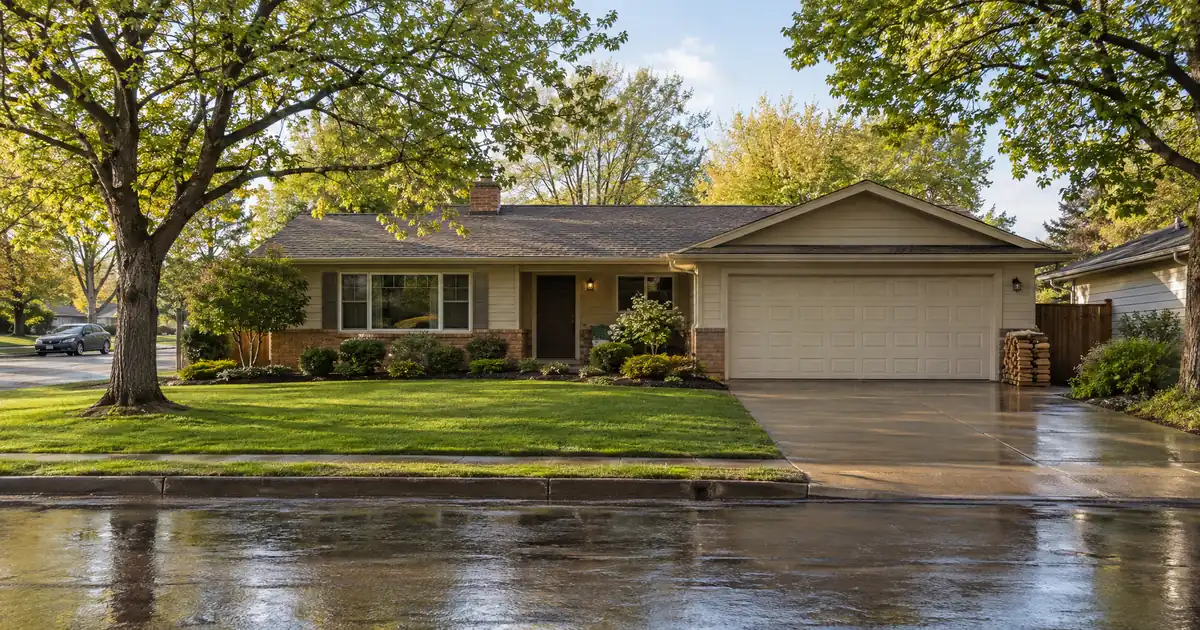
The Quick Read: A DSCR HELOC is a revolving line of credit on a rental you own, qualified on the property’s rent instead of your personal income. You draw on the line, pay the card issuers in full, and repay the line on its own schedule. The rental, not you personally, carries the qualifying test, subject to lender guidelines.
- It is a standalone second lien behind the first mortgage you keep, or a standalone first lien on a paid-off rental.
- The rent must cover a stress payment on the whole line at 1.10x or better, subject to underwriting.
- Second liens typically reach 70% combined loan-to-value at a 720 credit score or better, on lines of $50,000 to $500,000.
- Card debt moves from unsecured to secured. A missed payment now puts a rental at risk.
- Whether the lender allows proceeds to retire personal cards is a question to settle in writing before you apply.
Card debt feels like a personal problem. A DSCR HELOC makes it a property problem. That trade can be smart, or it can be expensive, and the mechanics decide which.
Lendmire is a broker. It arranges this line through a wholesale lender in its network. It does not lend or approve. The program is offered in 15 of Lendmire’s 16 licensed states, every licensed state except Tennessee.
What Is a DSCR HELOC (and What Isn’t It)?
A DSCR HELOC is a home equity line of credit on a non-owner-occupied one-to-four-unit rental. It is reviewed on the rental’s income: no traditional personal-income documentation, W-2s, or personal income calculation, subject to lender guidelines. The line is never placed on your own home or a second home.
Think of it as a credit line with the rental as collateral. You can hold the property in your LLC, subject to program terms. The members sign as guarantors.
Label confusion is real. “DSCR HELOC” is a market nickname, and products behind it vary. Some are revolving lines. Some are closed-end second mortgages. Ask which one you are being offered before you pay for anything.
| Product | Reviewed on | Structure |
|---|---|---|
| DSCR HELOC | Rental income | Revolving line, second or first lien |
| Investment-property HELOC (personal-income) | Your income and DTI | Revolving line |
| DSCR cash-out refinance | Rental income | New first mortgage replaces the old one |
| Closed-end home equity loan | Varies by program | One lump sum |
The personal-income HELOC and the cash-out refinance are different programs with their own rules.
How Does the Card Payoff Work, Step by Step?
You qualify the rental, take the line, draw most of it at closing, and pay each card issuer directly. After that, you repay the line, not the cards. The sequence is short, but each step has a trap.
1. Total your card balances. Pull a payoff figure from every issuer. Balances move daily.
2. Size the line. At least 80% of the line, and never less than $50,000, is drawn at closing. A $30,000 card balance does not fit this program. A smaller tool serves you better there.
3. Qualify the rental. The lender reviews the rent, the lease, your credit report, and the valuation.
4. Close the line. You sign as borrower, or as guarantor if an LLC holds title.
5. Draw and pay the issuers. Send payoffs directly to each issuer and keep the confirmations.
6. Deal with the cards. Lower the limits or close the weakest accounts. This is the relapse-prevention step.
Paying cards off may lower your credit utilization once the balances report as paid. A score improvement is not guaranteed, and a new account can affect your score in other ways.
Because at least 80% of the line is drawn at closing, the most that can sit undrawn is 20%. Say your cards come to less than the amount drawn. The extra cash lands in your account, and any undrawn portion can be drawn later in chunks of at least $5,000. It is available, but it is also temptation. Many investors keep it for repairs or the next purchase.
How Does the Rent Test Apply to the Whole Line?
The lender tests the rent against a payment on the entire credit limit, not just what you draw. That payment is fully amortizing and uses the start rate plus 2 percentage points, a stress payment. Gross monthly rent divided by that payment must reach at least 1.10x, subject to underwriting.
That sizing rule surprises people. A line that is partly drawn is still tested as if the whole limit were borrowed. Oversizing the line makes the test harder to pass.
Rent is the lesser of the appraiser’s market rent (Form 1007) or the lease. A lease above market can count with three months of receipts. A lease must be in place. A two-to-four-unit property may have at most one vacant unit.
On a second lien, whether the first mortgage payment joins the qualifying payment is not published. The lender’s own coverage calculation governs. Ask for it before you commit.
Does paying off cards change the ratio? No. The ratio compares rent to the property’s debt, and your cards were never part of it. What changes is that the new line now sits on the property.
Can the Line Pay Off Personal Cards?
Often yes, but you must confirm it. DSCR loans are designed for non-owner-occupied investment properties. Because they are business-purpose investor loans, they are reviewed differently from a standard owner-occupied mortgage. Programs treat the use of proceeds inconsistently, and that is where this plan can stall.
Ask the lender these questions in writing:
- Does this program allow proceeds to pay personal consumer debt?
- Are there any limits on how the funds are used?
- Does the business-purpose declaration change if I pay cards?
- Will the lender pay the issuers directly at closing?
Do not assume. A clear written answer protects you. If the answer is no, a different structure may fit better.
What Do You Still Have to Qualify On?
The rent leads, but the file has other requirements. Rent does not erase credit or property standards. The numbers below are typical ceilings and floors from select wholesale-network programs, subject to underwriting.
Credit. A 720 minimum on a second lien, 700 on a first lien. No 30-day mortgage late in the last 12 months. 48 months since a bankruptcy, foreclosure, short sale, or deed-in-lieu.
Leverage on a second lien. Up to 70% CLTV, which is the first mortgage balance plus the new line, divided by value. Lines run up to $500,000.
Leverage on a first lien. Up to 75% LTV at 740 or better on lines to $500,000. It is 70% from 700 to 739. Lines above $500,000, up to $1,000,000, carry a 65% ceiling. Final terms depend on the lender’s guidelines, the property type, and the borrower’s complete credit picture.
Reserves. None required. No cash to close.
Valuation. Lines to $400,000 use an automated valuation with a property inspection report, or a full interior appraisal. Larger lines take a full interior appraisal. Appraisal waivers are not accepted.
Seasoning. A rental bought or refinanced inside the last 6 months is not eligible (that clock runs from the last note date to the new note date), and the owner must have held title for 6 months (settlement date to note date).
Borrowers. U.S. citizens, permanent residents, and non-permanent residents with a Social Security number. Foreign nationals and ITIN borrowers are not eligible.
Exposure. At most 5 loans or $2,500,000 per borrower with the program.
Property. Single-family, PUD, townhome, two-to-four units, and condominiums qualify. Rural property, condotels, row homes, and leaseholds do not. A declining-market flag can lower the ceiling.
Across our wholesale network, the second-lien cells are narrow. Below 720, there is simply no second-lien option. Many borrowers with card debt have damaged scores, so check your credit report first.
How Does Repayment Work Over Time?
For five years, you pay interest only on the drawn balance. Then a 25-year fully amortizing repayment period begins, for a 30-year maturity. The rate is variable.
| Phase | Length | What you pay |
|---|---|---|
| Draw period | 5 years | Interest only on drawn balance |
| Repayment period | 25 years | Principal and interest |
| Maturity | 30 years total | Line is paid off |
Interest-only feels great for a few years. It also means the card debt you consolidated does not shrink unless you pay extra. Many borrowers treat the interest-only payment as a floor and pay down principal on a schedule.
When the repayment period starts, the payment steps up. Plan for that before it arrives. The rate and the pricing terms come with the lender’s disclosures.
What Risks Are Specific to Rental Investors?
The biggest risk is the lien. Bankrate explains that rolling card debt into home equity borrowing trades unsecured debt for secured debt. Missed payments then risk foreclosure, not just a credit-score hit. Missing card payments can lead to collections, but the issuer cannot take a property.
For an investor, the collateral is an income-producing asset. Here is the practical weight of that:
- The lien reaches your portfolio. A default on the line puts a rental you may be counting on at risk.
- Equity has other uses. Equity spent on cards is not available as reserves or a down payment.
- Relapse. If you run the cards up again, Bankrate cautions that you end up with less home equity and balances still outstanding.
- Variable rate. Your payment can move.
- The cause. If the balances came from an ongoing monthly shortfall that is not fixed, consolidating treats the symptom.
Tax treatment can depend on how the funds are used and how the property is held; borrowers should keep clear records and speak with a qualified tax professional before relying on any deduction.
How Does It Compare to Other Options?
The right tool depends on balance size, your first mortgage, and how you hold title.
| Your situation | Likely better fit |
|---|---|
| Balance under the $50,000 line minimum | Smaller tool, such as a personal loan |
| Low-rate first mortgage you want to keep | DSCR HELOC as second lien |
| Rental with no mortgage | DSCR HELOC as first lien |
| Large balance, mortgage you’d happily replace | DSCR cash-out refinance |
| One lump sum, no revolving access | Closed-end second |
Benzinga walks through the general mechanics and alternatives, including balance transfers and personal loans. A closed-end loan can make sense if you want one lump sum and no temptation to redraw.
Keeping the first mortgage matters. If it is a mortgage you would not want to replace, a second lien leaves it alone. A cash-out refinance replaces it.
This is a genuine tradeoff. The line is flexible and keeps your first mortgage. It also adds a variable-rate payment and a stress test on the whole limit.
Is It Right for You?
Good fit:
- Your rental has a lease in place and rent that clears 1.10x on a stress payment.
- Your card balance is large enough to justify the $50,000 minimum.
- The balances came from a one-time event, not a recurring gap.
- Your credit sits at 720 or better for a second lien.
- You will close or cap the cards afterward.
Think twice:
- You are not sure how you’ll avoid running the cards back up.
- The rental is your only meaningful asset.
- The property is rural, a row home, or recently purchased.
- The lender will not confirm that proceeds can pay personal cards.
The complete DSCR loans guide explains how property-rent-based lender review works across all of these loan types.
Key Terms Defined
DSCR (debt service coverage ratio): Gross monthly rent divided by the qualifying payment. Here the minimum is 1.10x.
CLTV (combined loan-to-value): The first mortgage balance plus the new line, divided by the property’s value.
Lien: A lender’s legal claim on a property until the debt is repaid.
Draw period: The five years when you borrow from the line and pay interest only on what you drew.
Utilization: The share of your card limits that you are using. Lower is better for your score.
Seasoning: The waiting period between buying or refinancing a rental and borrowing against it.
Frequently Asked Questions
Can an LLC hold title to the rental?
Yes, on an investment property, subject to program terms. The members sign as guarantors. A title holder who is not a borrower signs a non-borrowing owner acknowledgment and the security instrument. The borrowers on the line need not match the borrowers on the first mortgage.
Does paying off my cards change my DSCR?
No. The ratio compares rent to the property’s qualifying payment, and your cards were never in it. What changes is the new payment on the line. Pay close attention to line size, because the stress test runs on the whole limit.
What if my card balance is smaller than the line minimum?
Lines start at $50,000, and at least 80% of the line is drawn at closing. A smaller balance does not fit well. You would borrow more than you need, and the interest-only payment grows with it. A smaller tool is usually the better choice.
Can I use it if the rental has no mortgage?
Yes. It becomes a standalone first lien. The ceiling is 75% LTV at 740 or better on lines to $500,000, with a 700 credit floor, subject to underwriting. Lines above $500,000 carry a 65% ceiling. Each figure is subject to lender guidelines and a complete review of property type, leverage, and credit.
Next Step
If you are considering a home equity line on a rental property and want to see how the numbers work, Lendmire can help you compare DSCR HELOC options based on the property, the rent, the equity available, credit profile, combined leverage, and your goals. You can request a quote or call 828-256-2183. Programs change, and every file is underwritten individually.
Card payoff is a cash-flow decision first and a financing decision second.
About Lendmire
Lendmire — NMLS# 2371349 — is a mortgage broker that arranges home equity lines of credit in its 16 full-service states through wholesale lenders, on primary residences, second homes and investment properties. Every line is subject to the lender’s guidelines and full underwriting. Scotsman Guide named Lendmire a Top Mortgage Workplace in both 2025 and 2026.
Get Started
Ready to find the right loan for you?
See your offer in seconds. No credit pull, no obligation.
Informational only. Not a Loan Estimate, approval, or commitment to lend. Program availability and eligibility are subject to lender guidelines, credit approval, property review, and underwriting.
References
1. Bankrate – Use home equity to consolidate debt
2. Bankrate – HELOC calculator and guide
3. Benzinga – Using a HELOC to pay off credit card debt
This article is part of Lendmire’s DSCR HELOC program — full qualification details, guidelines, and scenarios live on the program page.
Related reading: How a DSCR HELOC Works on a Texas Rental · How a DSCR HELOC Works Without a Job · How a DSCR HELOC Works With No Monthly Payment
Brandon Miller
Founder & CEO, Mortgage Loan Originator, Lendmire LLC
- Mortgage Loan Originator · NMLS# 1129696 · Verify on NMLS Consumer Access
- North Carolina Real Estate Broker · License# 343312 · Verify on NCREC
- North Carolina Insurance Producer · License# 19053198 · Property, Casualty, Life, Health · Verify on NAIC SBS
- Lendmire LLC · Firm NMLS# 2371349 · Verify firm licensure
Disclosure information. Lendmire is a state-licensed mortgage brokerage under NMLS# 2371349. Lendmire is not a depository institution, direct lender, or financial advisor — all loans referenced are placed through wholesale lender partners and are subject to each lender's underwriting standards. This article is provided for general informational purposes and is not a commitment to lend, nor does it constitute financial, legal, or tax advice. Loan programs, terms, rates, and qualification standards change without notice and depend on borrower profile, property type, and the state in which the subject property is located. Equal Housing Opportunity provider. NMLS Consumer Access: nmlsconsumeraccess.org.