
The Quick Read: The lender’s valuation, not your rehab spend, sizes a DSCR HELOC, so a valuation that missed the work shrinks the line before the rent test even starts. A DSCR HELOC is a revolving line on a rental, written as a standalone second lien or a standalone first lien and qualified on the rent rather than your personal income, subject to lender guidelines. The practical fix is to work out which number came in short (value, rent, or both), then pick a response path.
- Rehab cost is not value. Value comes from closed sales of similar properties.
- On a second lien, a lower value cuts the line first because combined leverage is capped.
- Rent must cover a stress payment on the entire line, so a low rent opinion hurts too.
- An automated valuation leaves no report to dispute; the fix is a full appraisal with a rehab file.
- A review request can hold the value or lower it. Model the plan at the lower number first.
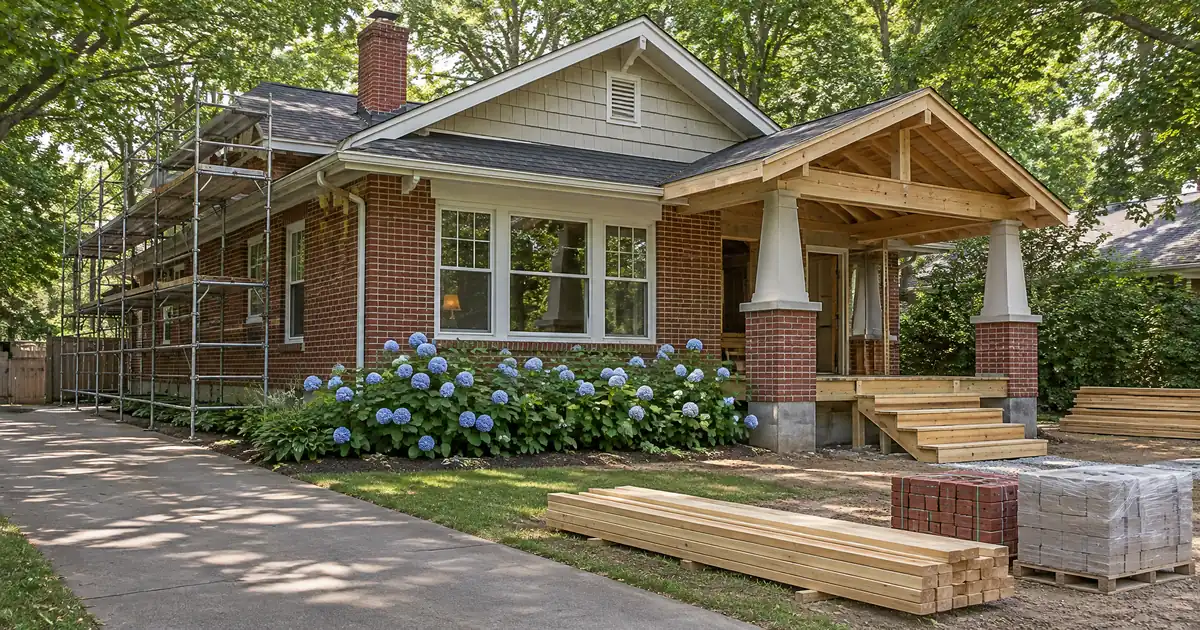
Picture a landlord who gutted a kitchen and two baths, rented the unit, and then saw a valuation come back with no sign of the work. The cause is rarely a mistake in the usual sense. The appraiser pulled comparable sales, and those sales did not reflect the finished condition. This article walks through how a DSCR HELOC treats that outcome, step by step, and what the investor can do about it.
What a DSCR HELOC Is
A DSCR HELOC is a revolving line of credit on a non-owner-occupied one-to-four-unit rental. It is written as a standalone second lien behind the first mortgage you keep, or as a standalone first lien on a rental with no mortgage. It is never a third lien, never closed with a purchase, and never placed on your own home or a second home.
The rent qualifies the line. No traditional personal-income documentation, W-2s, pay stubs, or debt-to-income calculation enter the file, subject to lender guidelines. The LLC can stay on title (subject to program terms), with its members signing as guarantors.
The structure appeals to owners with a low-rate first mortgage they would rather not replace. A cash-out refinance swaps that loan. A line sits behind it. For a broader look at how property-rent-based lender review works, see the complete DSCR loans guide.
DSCR loans are designed for non-owner-occupied investment properties. Because they are business-purpose investor loans, they are reviewed differently from a standard owner-occupied mortgage.
Key Terms Defined
- Combined loan-to-value (CLTV): the first-mortgage balance plus the full new line, divided by appraised value.
- As-is value: what the property is worth in its current, documented condition.
- After-repair value (ARV): your estimate of worth once work is done; a planning number, not an underwriting input.
- Hypothetical condition: an appraisal assumption that is contrary to what exists but used for analysis.
- Reconsideration of value (ROV): a request, routed through the lender, asking the appraiser to review the report.
- Stress payment: a fully amortizing payment on the whole credit limit at a higher test rate, used only to measure coverage.
Why Does the Appraisal Ignore Rehab Work?
An appraiser values a property from closed sales of similar properties, not from what you spent. When the comps had no improvements, the value reflects an unrenovated home, however much work you did.
Several causes show up repeatedly:
1. Thin renovated comps. If few finished homes nearby sold recently, the appraiser leans on older, unimproved sales.
2. Limited time on site. Upgrades the appraiser never notices never get adjusted for.
3. Finish-level mismatch. Mid-grade work compared against high-grade comps gets little credit.
4. Unusual features. A custom space gets value only if comps with that feature sold for more.
5. Timing. If the valuation was ordered before the work was finished or documented, the as-is number ignores it.
Appraisers do have tools for unfinished or undocumented work. The CE Shop explains the difference between an extraordinary assumption (something assumed to exist that could change the value if false) and a hypothetical condition. Working RE quotes the USPAP definitions of both. An appraiser may assume documented, finished work is complete, but that is a judgment call the report must state. An independent appraiser writing on The Valuation Piece describes giving an as-is value alongside an ARV under a hypothetical condition, based on plans or scope and comps that reflect the finished state.
A DSCR HELOC file generally wants the as-is value of a finished, rentable property. A property still mid-rehab is generally not a fit.
Ignored or Under-Credited?
| What you see | Likely cause | Best first move |
|---|---|---|
| No trace of the work in comps | Unimproved comps used | Better, closer renovated comps |
| Some credit, but small | Finish-level or adjustment dispute | Itemized upgrade list vs. comps |
| No report to read | Automated valuation | Request a full appraisal |
| Value fine, rent low | Weak rent comps | Rent comps for the 1007 opinion |
How the Line Is Sized, Step by Step
Step 1: The rehab finishes. You pay for the work with cash or a bridge loan, and the unit becomes rentable. Your ARV estimate stays a planning number.
Step 2: The lender orders its own valuation. Lines up to $400,000 use an automated valuation with a property inspection report, or a full interior appraisal, through select programs. Larger lines take a full interior appraisal. Appraisal waivers are not accepted.
Step 3: The appraiser picks comps and adjusts. This is where a rehab is credited or missed.
Step 4: Value feeds the leverage test. On a second lien, combined leverage tops out at 70% CLTV at a 720 credit score or better, on lines of $50,000 to $500,000, subject to underwriting. The first-mortgage balance plus the entire line, divided by value, must fit under that ceiling. A lower value shrinks the line first. Final terms depend on the lender’s guidelines, the property type, and the borrower’s complete credit picture.
A labeled illustration, using round modeled numbers and not an offer: say value comes in 10% below what you planned. The 70% ceiling then covers 10% less total debt, but your first mortgage did not shrink. Every dollar of that lost headroom comes out of the line. Because the first mortgage stays fixed, a modest value miss can cut the available line by a much larger percentage.
Step 5: The rent test. Minimum coverage is 1.10x: gross monthly rent divided by a fully amortizing payment on the entire credit limit at the start rate plus 2 percentage points. Rent is the lesser of the appraisal’s Form 1007 market rent and the lease, unless three months of receipts support a lease above market. Taxes and insurance are not part of that qualifying payment. A lease must be in place, and a two-to-four-unit property may have at most one vacant unit. On a second lien, confirm on the file how the lender treats the first-mortgage payment in its coverage calculation.
Notice what this means. A rehab-blind appraisal can hurt value and rent at once.
Step 6: Seasoning. A rental bought or refinanced inside the last 6 months is not eligible (that clock runs from the last note date to the new note date), and the owner must have held title for 6 months (settlement date to note date).
Structures and Variations
First lien versus second lien changes the math. On a rental with no mortgage, a first-lien line reaches 75% LTV at a 740 score or better and 70% LTV from 700 to 739, on lines up to $500,000. Lines above $500,000, up to $1,000,000, carry a 65% LTV ceiling at 720 or better. A borrower who keeps a first mortgage takes a second lien, which needs a 720 score. Each figure is subject to lender guidelines and a complete review of property type, leverage, and credit.
The draw rules matter for a rehab refinance. At least 80% of the line is drawn at closing, and the closing draw is never less than $50,000. Later draws are at least $5,000. The draw period runs 5 years interest-only on the drawn balance, then a 25-year repayment period, with a 30-year maturity and a variable rate.
Other parameters, all subject to lender guidelines: at most 5 loans or $2,500,000 per borrower with the program, no reserves required, and no 30-day late on the mortgage in the last 12 months. Rural property, condotels, row homes, and leaseholds fall outside it. A declining-market flag lowers the ceiling 5 points.
Be careful with the label. Some products sold as a DSCR HELOC are closed-end seconds that pay out a fixed amount, not a revolving line. Ask which one is on offer.
Where the General Rule Breaks
Automated valuation. If an automated model produced the number, there is no report to reassess. Whether a given lender uses one varies, so ask. The fix is to request a full appraisal and submit the rehab file with it.
Rehab not finished. A standard as-is valuation gives unfinished work no weight. Appraisal educators say a subject-to value can be given before the work is complete, based on the plans or scope and comparable sales, so ask for one alongside the as-is value.
Cosmetic versus value-adding work. Paint and carpet may add close to nothing. Structural, permitted, and layout-changing work has a better chance of drawing adjustments, depending on comps and underwriter review.
Review requests. A reconsideration runs through the lender, not directly from you. Supply specific errors, similar recent comps, and an improvement list. Do not pressure for a number. Agency borrowers have a formal reconsideration right; do not assume a DSCR borrower does. A re-review can also hold the value or lower it.
Entity-owned, multi-unit, and short-term-rental collateral can carry different documentation or leverage, so confirm those terms on the specific file.
Short-term rental rules can vary by city, county, HOA, and property type, so investors should confirm local rules before relying on projected rental income.
Build the Evidence File
Across a wholesale network, the pattern in how files get documented is consistent: the appraiser works from what is put in front of them. A useful packet includes:
| Document | What it proves |
|---|---|
| Itemized scope and invoices | What was done and its cost |
| Before and after photos | Condition change |
| Permits | Work was legal and inspected |
| Upgrade list vs. comps | Why the subject outranks unimproved sales |
| Recent renovated sales | Market support for the finished level |
Be honest about permits. Unpermitted work is a weak thing to lean on. And cost is still not value: the packet supports a higher number only where comps agree.
Practical timing: finish the work, document it, confirm the property is rentable with a lease in place, then order the valuation.
What Should You Do When Value Comes In Low?
Four options generally exist: bring cash, take a smaller line, ask for a documented review, or wait and reappraise once stronger comps exist.
| Situation | Best move | Tradeoff |
|---|---|---|
| Value slightly short | Smaller line | Less cash than planned |
| Rent short | Better rent comps, documented receipts | Review may not move it |
| Automated valuation | Full appraisal plus rehab file | Added step on the file |
| Large gap | Wait or change product | Capital stays tied up |
| Inside seasoning window | Wait | Delay |
Sometimes challenging isn’t worth it. If the gap comes from thin comps and no better ones exist, a review request invites a hold or a cut. Stress-test the plan at the lower value before paying for anything more.
For this exact situation, other products can fit better. A DSCR cash-out refinance replaces the first mortgage, which may cost an owner a low-rate loan but can reach more leverage on standard rentals (75% LTV ceiling on a standard rental cash-out, 70% on short-term-rental collateral, through select programs). Lendmire’s piece on how an investment property HELOC works when the appraisal ignored your rehab covers the personal-income version of this line, and its companion on investment property HELOC requirements when the appraisal ignored your rehab covers what that route asks of the borrower. Leverage, reserves, and pricing vary by lender and program; the final terms follow the full file review.
Where the Plan Breaks
- Variable rate. Cost can move after closing. The pricing terms come with the lender’s HELOC disclosures.
- Line reduction. A line can be reduced or suspended if value falls, depending on the lender’s terms.
- Draw-before-you-need-it. Because most of the line is drawn at closing, you carry interest on money you may not need.
- Late exit. A rate-and-term or cash-out refinance later may need its own appraisal, with the same rehab-credit risk.
No product erases a low valuation. A different product only changes which loan amount or leverage test that valuation is applied to.
Frequently Asked Questions
Can I use my after-repair value to size the line?
No. The lender’s valuation sets the line, and your ARV is a planning figure. If the work is finished and documented, a full appraisal with your evidence file gives the rehab its best chance to show up.
Can a challenge lower the value?
Yes. A re-review may hold the number or reduce it, because a fresh look at the comps and adjustments can move the value in either direction. Weigh that before requesting one, especially when better comps do not exist.
Does a strong coverage ratio waive seasoning?
No. Two six-month clocks apply: the line is not available on a rental bought or refinanced in the last 6 months (last note date to new note date), and title must have been held for 6 months (settlement date to note date). Coverage and seasoning are separate tests.
Does DSCR mean there is no valuation?
No. The income test changes, but the property is still valued. Appraisal waivers are not accepted, and lines above $400,000 take a full interior appraisal, subject to underwriting.
Where is this offered?
The program is offered in 15 of Lendmire’s 16 licensed states, every licensed state except Tennessee, through select programs. Eligibility depends on the borrower, the property, and lender guidelines.
If you are considering a home equity line on a rental property and want to see how the numbers work, Lendmire can help you compare DSCR HELOC options based on the property, the rent, the equity available, credit profile, combined leverage, and your goals. Lendmire is a broker arranging financing through select lenders in its wholesale network, and nothing here is a commitment to lend.
About Lendmire
Lendmire (NMLS# 2371349) is a mortgage brokerage serving landlords and real estate investors in 16 licensed states. DSCR home equity lines of credit on non-owner-occupied one-to-four-unit rentals are arranged through wholesale lending channels in 15 of those states (every licensed state except Tennessee); Lendmire brokers the line and the lender underwrites each application on the property’s rent, credit and leverage. Scotsman Guide named Lendmire a Top Mortgage Workplace in both 2025 and 2026.
Get Started
Ready to find the right loan for you?
See your offer in seconds. No credit pull, no obligation.
Informational only. Not a Loan Estimate, approval, or commitment to lend. Program availability and eligibility are subject to lender guidelines, credit approval, property review, and underwriting.
References
1. The CE Shop – Extraordinary assumption
2. Working RE – Extraordinary assumption or hypothetical condition
3. The Valuation Piece – Playing Pretend
This article is part of Lendmire’s DSCR HELOC program — full qualification details, guidelines, and scenarios live on the program page.
Related reading: DSCR HELOC Checklist to Understand How DSCR Is Calculated · Can You Get a DSCR HELOC That Does Not Report to Personal Credit? · DSCR HELOC When the Rent Does Not Cover the Payment: The 2026 Guide
Brandon Miller
Founder & CEO, Mortgage Loan Originator, Lendmire LLC
- Mortgage Loan Originator · NMLS# 1129696 · Verify on NMLS Consumer Access
- North Carolina Real Estate Broker · License# 343312 · Verify on NCREC
- North Carolina Insurance Producer · License# 19053198 · Property, Casualty, Life, Health · Verify on NAIC SBS
- Lendmire LLC · Firm NMLS# 2371349 · Verify firm licensure
Disclosure information. Lendmire is a state-licensed mortgage brokerage under NMLS# 2371349. Lendmire is not a depository institution, direct lender, or financial advisor — all loans referenced are placed through wholesale lender partners and are subject to each lender's underwriting standards. This article is provided for general informational purposes and is not a commitment to lend, nor does it constitute financial, legal, or tax advice. Loan programs, terms, rates, and qualification standards change without notice and depend on borrower profile, property type, and the state in which the subject property is located. Equal Housing Opportunity provider. NMLS Consumer Access: nmlsconsumeraccess.org.