
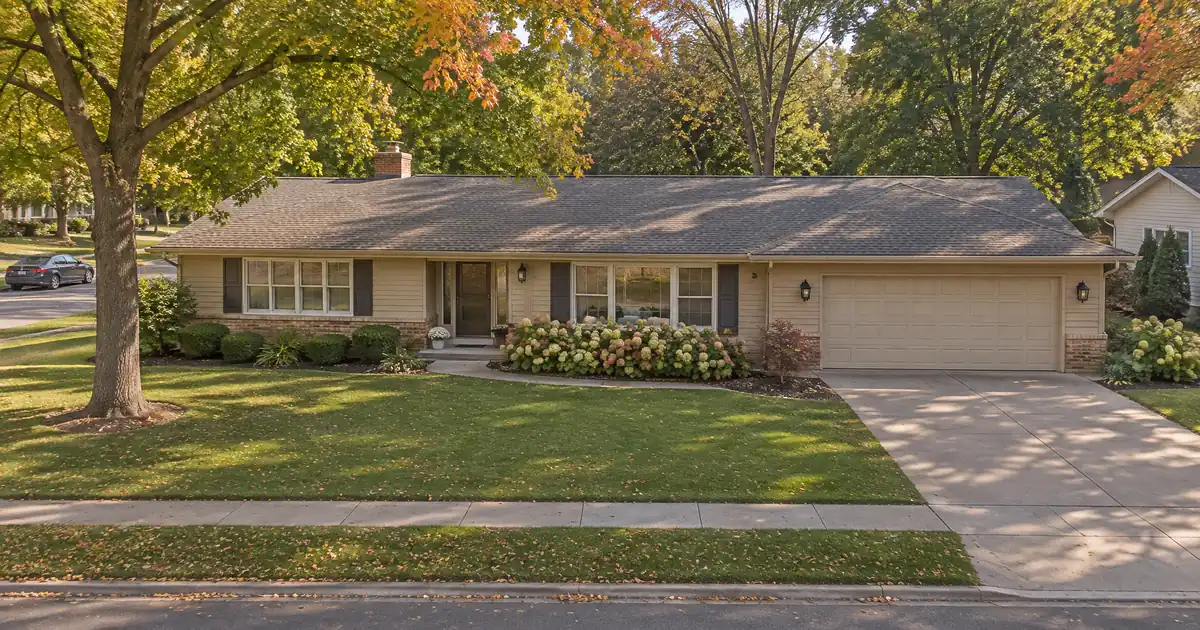
The Quick Read: A low AVM confidence score changes how the property is valued, not whether the line is dead. On lines up to $400,000, the program accepts an automated valuation only at a confidence score of 85 or better, paired with a property inspection report. If the score misses, the deal works to a full interior appraisal, and rent qualifying stays separate from value.
- The score rates how reliable the value estimate is. It is not the value, and it is not an approval or a denial.
- Lines above $400,000 take a full interior appraisal from the start, regardless of score.
- The rent test (1.10x minimum) and the value test run separately, so a miss on one does not change the other.
- A new value can resize the line, because combined leverage is measured against it.
- Everything here is subject to underwriting and lender guidelines.
What a DSCR HELOC Is
A DSCR HELOC is a revolving line of credit on a non-owner-occupied one-to-four-unit rental, qualified on the property’s rent instead of the owner’s personal income. It comes in two forms. It is either a standalone second lien behind the first mortgage the owner keeps, or a standalone first lien on a rental with no mortgage. It is never closed with a purchase, never a third lien, and never placed on the owner’s own home.
The term is industry shorthand, not a standardized product. Some lenders write first-lien lines, some write second liens, and some bank products use personal income. This article describes the structure the wholesale network places: rent qualifies the line, the owner’s income is never calculated, and the LLC can stay on title, subject to program terms. For the broader product family, see Lendmire’s complete DSCR loans guide.
The line is offered in 15 of Lendmire’s 16 licensed states, every licensed state except Tennessee. Lendmire is the broker. It arranges the line through a wholesale lender, and the lender underwrites it.
Key Terms Defined
- AVM: An automated valuation model, a computer estimate of value built from public records and sales data.
- Confidence score: A reliability rating attached to the AVM value. Higher means the model had better data.
- FSD (forecast standard deviation): The band around the estimate within which the true value has about a 68% chance of falling.
- CLTV: Combined loan-to-value, meaning the first mortgage balance plus the new line, divided by value.
- DSCR: Gross monthly rent divided by the qualifying payment.
- Form 1007: The appraiser’s market rent schedule for a rental.
What the Confidence Score Actually Measures
The score tells the lender how much to trust the number. It does not tell the lender what the property is worth. Vendors build it from the forecast standard deviation, or FSD. Under that approach, an FSD of 0.01 reads as 99% confidence and an FSD of 0.5 reads as 50%.
Scales differ by vendor. Realist, the model behind MLSNow, reports a separate confidence score and FSD, with scores running from 60 to 100. It also says that the less data a model has, the less likely the result is to be accurate. So an 85 from one vendor is not the same reading as an 85 from another. If the score is treated as 100 minus the FSD, 85 corresponds to an FSD of about 15%. That is arithmetic, not a program figure. The program’s threshold is set by its own guidelines.
Why Scores Come Back Short
Scores drop when the model lacks data. The usual causes:
| Cause | Fixable? | What to do |
|---|---|---|
| Thin comparable sales | Rarely | Expect the appraisal path |
| Rural or unusual location | No | Rural is outside this lane anyway |
| Unusual features | Sometimes | Document them for the appraiser |
| Recent renovation not in public records | Often | Send permits, receipts, photos |
| Public-record errors (beds, baths, square feet) | Often | Correct the record, then rerun |
Rehab-driven equity usually needs an appraisal. An AVM reads past sales and public records, and it lags renovations. An investor who just finished a rehab and expects the model to catch up can save a step by ordering the full interior appraisal first.
Who Sets the Pass-or-Fail Line
The cutoff is a program guideline, not a federal number. The interagency AVM quality-control rule, summarized by the CFPB, covers AVMs used to value a consumer’s principal dwelling. A non-owner-occupied rental is outside that scope. Even where the rule applies, the OCC bulletin says it sets no specific requirements for how institutions structure their policies, so they keep flexibility.
In practice, the threshold is contractual. Across wholesale programs, valuation cutoffs and loan-size caps for the automated route vary. This program uses a score of 85 or better on lines to $400,000.
How the File Runs Step by Step
1. Rent and property underwriting. The lender calculates coverage as gross monthly rent divided by a qualifying payment. That payment is a fully amortizing payment on the entire credit limit at a stress rate (the start rate plus 2 percentage points). The program minimum is 1.10x, subject to underwriting. Taxes and insurance are not part of the qualifying payment. Confirm on the file how the lender treats the first-mortgage payment on a second lien.
2. Rent figure. Rent is the lesser of the appraisal’s market rent and the lease, unless three months of receipts support a lease above market. A lease in place is required, and a two-to-four-unit property may have at most 1 vacant unit.
3. Valuation order. On lines to $400,000, the automated valuation runs and returns a value plus a confidence score.
4. Pass or fail on the score. At 85 or better, the value is accepted, paired with a property inspection report. Below 85, the file generally moves to a full interior appraisal rather than ending.
5. Appraisal route. Lines above $400,000 take a full interior appraisal on Form 1004, 1073 or 1025, with the rent schedule from Form 1007. Appraisal waivers are not accepted.
6. Sizing. The confirmed value feeds the leverage test. A lower or less certain value means less line.
7. Timing. Bills.com notes that a full appraisal adds time compared with an AVM, so build the extra step into your planning.
The Valuation Ladder for Rentals
| Path | When it applies | Human visit? |
|---|---|---|
| AVM (score 85+) plus inspection report | Lines to $400,000 | Inspection report |
| Full interior appraisal | Score misses, or any line above $400,000 | Yes, interior |
Notice what is missing. There is no “no valuation” lane. The property is always valued, even on “no-appraisal” lines, which still value the property with software, as Bills.com points out.
How the New Value Changes the Line
The value is the denominator in the leverage test, so a different value changes the line. On a second lien, combined leverage tops out at 70% CLTV at a 720 score or better, on lines of $50,000 to $500,000. On a first lien with no mortgage, leverage reaches 75% LTV at 740 or better and 70% from 700 to 739 on lines to $500,000, then 65% on larger lines up to $1,000,000. Terms depend on the lender’s guidelines, the property type, the leverage, and a full review of the credit profile.
Run both outcomes on a rental the AVM valued at one figure.
- If the appraisal comes in higher: The same first mortgage balance now sits against a larger value. The 70% CLTV ceiling allows more room for the line, up to the line cap.
- If the appraisal comes in lower: The first mortgage consumes more of the 70% CLTV ceiling, so the line shrinks. If the first mortgage already uses most of that ceiling, the second lien may not be worth drawing.
A declining-market flag lowers the ceiling 5 points, and Philadelphia lines carry a ceiling 10 points lower. All figures are ceilings, never offers.
The 1.10x test does not move with value. Coverage is rent against the stress payment on the full line. A smaller line, however, lowers that payment, which can help the ratio.
Value and Rent Are Separate Tests
An AVM miss does not change the rent math. The appraisal does supply the Form 1007 market rent, so the appraisal can touch both. The coverage calculation itself is unchanged: rent divided by the qualifying payment, with the lender’s own calculation governing.
Disputing or Supplementing the Number
The score is a function of the data, so better data can lift it. Send the evidence before the deal works to the appraisal path:
- Recent comparable sales in the same neighborhood
- Permits and receipts for improvements
- Photos documenting condition and finishes
- Corrected property characteristics where public records are wrong
- The lease and, where the lease exceeds market, three months of rent receipts
This will not fix a structural cause such as thin sales in a low-volume area. It does fix record errors and unreported work.
Proceed, Appraise, or Switch
| Situation | Reasonable move |
|---|---|
| Score just under 85, clean record | Order the appraisal; the value may hold |
| Recent rehab, equity not yet visible | Appraise first |
| Line wanted above $400,000 | Appraisal is required regardless |
| Appraisal value cuts the line too far | Resize, or look at other structures |
| Several properties scoring low | Plan the appraisal path for each |
Valuation is a data problem, not a product problem. If the AVM misses on a HELOC, the same property typically faces an appraisal on a DSCR cash-out refinance too. The comparison between the two then turns on the existing first mortgage, not valuation.
What This Does Not Fix
A low appraised value stays low. A low AVM score also cannot be argued past on a rural-designated property, row home, condotel or leasehold, since those are outside the lane. A rental bought or refinanced inside the last 6 months is not eligible (that clock runs from the last note date to the new note date), and the owner must have held title for 6 months (settlement date to note date). Borrowers must be US citizens, permanent residents or non-permanent residents with a Social Security number. Exposure is capped at 5 loans or $2,500,000 per borrower with the program.
The draw rules also matter once the value is set. At least 80% of the line is drawn at closing, and later draws are at least $5,000. The draw period is 5 years interest-only, followed by a 25-year repayment period and a 30-year maturity. The rate is variable, and the pricing terms come with the lender’s HELOC disclosures.
Frequently Asked Questions
Does a low AVM confidence score mean my line is denied?
No. The usual outcome is a switch to a full interior appraisal. The line stays alive, and the appraised value then drives the sizing, subject to underwriting.
Is an AVM the same as an appraisal?
No. An AVM is a statistical estimate. The FSD behind the score means a 68% likelihood that the true value falls within the band, not certainty. A full appraisal involves a person inspecting the interior.
Can I just ask for the full appraisal and skip the AVM?
Often, yes, and it can make sense after a rehab or on a thin-comps property. Lines above $400,000 require the appraisal anyway. Confirm the ordering route with your broker before the file goes in.
What if no AVM exists for the property?
The file takes the appraisal path. Properties with little public data are the ones the model struggles with most.
Does the appraisal change my rent test?
The 1.10x test is rent against the stress payment, and it is calculated the same way on either valuation path. The appraisal’s Form 1007 market rent can feed rent used for lender review, since rent is the lesser of market rent and the lease, unless three months of receipts support a lease above market.
Can my LLC hold the property on this line?
Vesting in the owner’s LLC is allowed on investment property, subject to program terms. Members sign as guarantors, and a title holder who is not a borrower signs a non-borrowing owner acknowledgment.
If you are considering a home equity line on a rental property and want to see how the numbers work, Lendmire can help you compare DSCR HELOC options based on the property, the rent, the equity available, credit profile, combined leverage, and your goals. Reach the team at 828-256-2183 or request a quote.
About Lendmire
As a mortgage broker (NMLS# 2371349), Lendmire helps landlords and real estate investors open DSCR home equity lines of credit on their rentals — lines qualified on the property’s rent, never on the owner’s own home — through wholesale lenders in 15 of Lendmire’s 16 licensed states (every licensed state except Tennessee). Lendmire is never the lender; line amounts, ceilings and terms are set by the lender under its guidelines. Scotsman Guide named Lendmire a Top Mortgage Workplace in both 2025 and 2026.
Get Started
Ready to find the right loan for you?
See your offer in seconds. No credit pull, no obligation.
Informational only. Not a Loan Estimate, approval, or commitment to lend. Program availability and eligibility are subject to lender guidelines, credit approval, property review, and underwriting.
References
1. Realist Automated Value Model
2. CFPB: Quality Control Standards for Automated Valuation Models
4. Bills.com: Appraisal, LTV and HELOC
This article is part of Lendmire’s DSCR HELOC program — full qualification details, guidelines, and scenarios live on the program page.
Related reading: 5 DSCR HELOC Options on a Short-Term Rental or Airbnb · What Is a DSCR HELOC With a 1007 Rent Schedule Appraisal? · Can You Get a DSCR HELOC Without It Reporting on Your Personal Credit?
Brandon Miller
Founder & CEO, Mortgage Loan Originator, Lendmire LLC
- Mortgage Loan Originator · NMLS# 1129696 · Verify on NMLS Consumer Access
- North Carolina Real Estate Broker · License# 343312 · Verify on NCREC
- North Carolina Insurance Producer · License# 19053198 · Property, Casualty, Life, Health · Verify on NAIC SBS
- Lendmire LLC · Firm NMLS# 2371349 · Verify firm licensure
Disclosure information. Lendmire is a state-licensed mortgage brokerage under NMLS# 2371349. Lendmire is not a depository institution, direct lender, or financial advisor — all loans referenced are placed through wholesale lender partners and are subject to each lender's underwriting standards. This article is provided for general informational purposes and is not a commitment to lend, nor does it constitute financial, legal, or tax advice. Loan programs, terms, rates, and qualification standards change without notice and depend on borrower profile, property type, and the state in which the subject property is located. Equal Housing Opportunity provider. NMLS Consumer Access: nmlsconsumeraccess.org.