
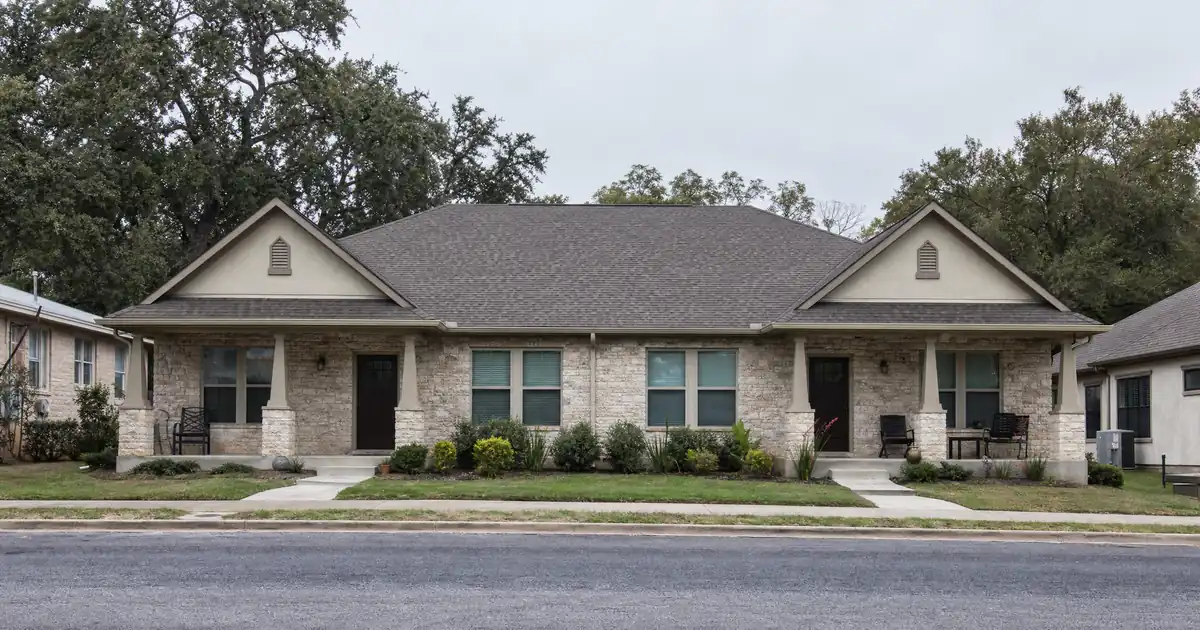
Two investors look at the same Fredericksburg listing sheet and reach opposite conclusions. One is eyeing a restored German limestone cottage two blocks off Main Street — the kind of property that photographs well for a vacation rental listing and sells for a premium because of it. The other is looking at a newer four-bedroom build out along the US-290 corridor, priced well below the Historic District comps, sitting on a bigger lot with room to add a second unit. Run the long-term rental math on both and the corridor property wins every time. The cottage’s price reflects short-term rental income potential, not what a year-round tenant will actually pay to live there — and that gap is the single most important thing to understand before financing anything in this market.
DSCR Calculator
Run the numbers in your market
Rate source: Freddie Mac 30-yr average via FRED® — Federal Reserve Bank of St. Louis · effective Jul 30, 2026
Prefilled with starting assumptions — enter your own rent or nightly figures, taxes, insurance, and HOA for a more accurate picture.
Program parameters update from Lendmire’s centralized guideline source. Taxes and insurance are editable estimates.
As of Jul 30, 2026 · General Freddie Mac market benchmark, not a Lendmire loan offer. Rent, nightly rate, occupancy, taxes, and insurance are editable estimates. Short-term rental figures are estimates only and vary significantly by season, property type, management approach, and local short-term-rental rules — confirm local regulations before relying on them. Qualifying income for short-term rentals varies by program — some use appraisal market rent, others use documented STR history or projections — and is confirmed in underwriting. Not a Loan Estimate, approval, or commitment to lend. Program availability and eligibility are subject to lender guidelines, credit approval, property review, and underwriting.
At a Glance: A Fredericksburg, Texas investment property purchase is underwritten primarily on the property’s projected long-term rent measured against its full monthly obligation rather than the borrower’s personal income documents — with the file built around a rent estimate, entity paperwork and title before it ever reaches lender review.
- Renter households make up just 32 percent of the market, per the City of Fredericksburg’s housing study
- Duplex and small-apartment stock sits at only 10.07 percent of all housing, per NeighborhoodScout
- Citywide median sale price hit $510K in November, up 13.6 percent year over year, per Redfin
- Average sold STR price ran $666,973 last year — far above standard resale comps
- Gillespie County’s population grew a modest 0.83 percent over the past year
Fredericksburg Market Snapshot
A quick read on the Fredericksburg investor landscape — figures come from the cited sources below. Confirm current property-level numbers before underwriting.
| Metric | Detail |
|---|---|
| Home prices | Median sale price $510K (Nov 2025) (Redfin Fredericksburg Housing) |
| Population | Population ~11,419-11,766 range (U.S. Census Bureau QuickFacts) |
| Employment | Hcm 700 employees/83 beds (City of Fredericksburg City) |
Two Different Housing Markets Wearing One Zip Code
Fredericksburg’s population sits at 11,419 across just 9.6 square miles, per Census Reporter’s American Community Survey profile — a genuinely small town carrying real-estate pricing that has no business belonging to a town this size. Median age runs 48.5 against 35.6 statewide, and median household income lands at $64,534, about 80 percent of the Texas figure. That combination — older, above-median income, small population — points toward workforce and retiree-adjacent rental demand rather than mass apartment absorption.
The Gillespie County Economic Development Commission names its target industries as agriculture and tourism, aviation maintenance, metal fabrication and specialty food and beverage — and frames growth as lifestyle migration, people who visit for a weekend and decide to stay. That’s not a bad story for an investor. It’s just a different story than a job-growth-driven boomtown, and it should shape how an investor models rent growth: gradual, not explosive.
Here’s the tension that matters for underwriting. The town’s own 2018 housing study found that renter households make up 32 percent of the market, with 1,647 renters counted at the time. But the STR economy — 63 short-term rentals sold in city limits at an average price of $666,973 last year, per a local Fredericksburg brokerage’s own transaction data — has pulled resale pricing well above what long-term rent alone will support in the tourist core. An investor underwriting a DSCR purchase against long-term market rent, not nightly comps, is going to see a materially different number than the seller’s asking price suggests.
Where the Purchase Math Actually Works
The corridor wins, and it isn’t close. Workforce single-family homes along the US-290 corridor and in newer subdivisions like Silver Creek pair with achievable long-term rents in a way that Historic District cottages simply don’t — new construction priced in the $400K–$525K range against monthly rents landing somewhere in the $1,500–$2,000 band, per market data cited in current Fredericksburg listing research.
Silver Creek offers the kind of amenity package — parks, pools, newer builds — that keeps a workforce or retiree tenant renewing a lease rather than shopping around. Cross Mountain West, Sunset Village, Town Creek and North Heights show up consistently in active MLS data as established residential subdivisions, though granular per-neighborhood pricing isn’t publicly available at this level of detail, so any investor evaluating those specific streets needs a current comp pull rather than a citywide average.
Skip the Historic District and the cottages for pure long-term-rental math. Not because they’re bad properties — they’re excellent STR assets — but because the price premium exists specifically to capture nightly-rate income, and a DSCR file underwritten on 12-month lease rent against that premium is going to come in thin. That’s not a knock on the properties. It’s a mismatch between what the seller is pricing and what a long-term tenant will pay.
What Does a Duplex Conversion Actually Pencil At?
This is where the market gets interesting, and it’s the finding that most competitor content on Fredericksburg financing misses entirely. Duplex and fourplex product makes up just 10.07 percent of the town’s housing stock, per NeighborhoodScout — and the city’s own housing study pegs it at 20 percent of the non-apartment-building unit count against 629 total units sitting in buildings of five or more. Either way you slice it, small multifamily is scarce relative to a 32 percent renter household share. An investor who converts a single-family lot into a legal duplex isn’t fighting for share in a saturated category — there’s barely a category to compete in.
Run the numbers on a workforce single-family home priced around $400,000 in a US-290 corridor subdivision, rented long-term at roughly $2,000 a month. Financed at 75 percent LTV with taxes and insurance built into the full monthly obligation, that scenario lands well under 1.0x coverage — the single-family price point simply outruns what one household’s rent check can support at standard leverage. Now model the same basic property converted into a legal duplex, priced closer to $375,000 with two units renting near $1,300 a month each — combined rent near $2,600. Financed the same way, that scenario clears right around 1.0x, including taxes and insurance in the full monthly obligation. Same neighborhood, same rough price tier, completely different coverage outcome — because two rent checks against one loan is the entire game in a market where single-family purchase prices have outrun single-tenant rents.
DSCR files in markets like this one — small-town, tourism-adjacent, price-inflated by a parallel STR economy — typically come in with tight or sub-1.0x coverage on straight single-family long-term rent, and the stronger files are the ones where the borrower either brings additional cash down to reduce leverage, structures the loan interest-only to ease the monthly obligation, or documents a legal small-multifamily conversion instead of banking on a single tenant to carry a $400K-plus purchase. That’s not unique to Fredericksburg, but the gap between price and achievable rent is wider here than in most Hill Country towns its size.
Where the number lands below 1.0x on long-term rent alone, a handful of paths get reviewed rather than dead-ended — a sub-1.0x program with reduced leverage, an interest-only structure, or a blended underwrite that factors documented STR income alongside projected long-term rent. Which of those fits depends on the file, the borrower’s credit profile and the lender’s guidelines, and none of it is a guarantee — it’s a conversation to have before writing an offer, not after.
For investors weighing the leverage question directly: the guide “What Is a DSCR Loan” covers how the ratio itself gets calculated, and DSCR loan options for Texas investors lays out the broader state-level program landscape Lendmire arranges through its wholesale network.
The Anchors That Keep Rent Demand Real
The tenant base underneath Fredericksburg’s rental market isn’t tourism — it’s healthcare and education payroll, and that’s a durable foundation even in a slow-growth county. The town’s hospital, formerly Hill Country Memorial, has been absorbed into Methodist Hospital Hill Country, an 83-bed facility now backed by a 50-50 partnership between Methodist Healthcare Ministries and HCA. That’s a structural upgrade from a standalone rural nonprofit to a facility with national-system capital behind it — the kind of change that typically brings staffing stability rather than the fragile single-employer risk small towns often carry.
Fredericksburg Independent School District adds another steady leg: six schools, 3,005 students and a budget spending $11,721 per student on $45.374 million in annual revenue, per a regional college data. That’s real payroll — teachers, administrators, support staff — none of it dependent on wine-country tourism holding up.
County-level growth backs this up as steady rather than explosive. Gillespie County’s population sits at an estimated 28,197, up from 24,875 a decade ago — a 13.35 percent gain over that stretch but just 0.83 percent in the past year alone, per World Population Review. This rewards patient long-term-rental positioning over a fast-appreciation bet. An investor underwriting rapid rent spikes off population growth here is modeling the wrong market.
The Vacancy Number That Doesn’t Mean What It Looks Like
Fredericksburg’s citywide vacancy rate reads at 22.21 percent, per NeighborhoodScout — a number that would set off alarm bells in most markets, and it deserves a second look here rather than a first-glance panic. That figure is almost certainly inflated by second-home and STR-classified units sitting empty between bookings in the tourist core, not by workforce housing sitting unrented. A property in a US-290 corridor subdivision leases on an entirely different timeline than a Historic District cottage waiting for its next weekend guest — but the citywide average blends both into one misleading headline. Verify occupancy at the submarket level, not the city level, before assuming that vacancy number applies to whatever property is under contract.
There’s a forward-looking supply signal worth tracking too. Friedën, a new development positioned two miles south of Main Street, has multifamily and commercial phases coming in the near term. New competing units entering the market near the town core could pressure workforce rents in that radius before an investor’s own hold period plays out — worth watching for anyone buying close to the south side.
Single-family homes still dominate the housing stock at 72.63 percent, with large apartment buildings making up just 11.66 percent, per the same NeighborhoodScout data. That leaves the middle — duplexes, fourplexes, small conversions — as the genuinely underbuilt category, and it’s the category where DSCR purchase math has the most room to work in an investor’s favor.
The Museum That Makes This Town Different
Fredericksburg’s tourism draw isn’t generic Hill Country charm — it’s anchored by something no comparable town has. Admiral Chester W. Nimitz was born here in 1885, and that fact alone is why the National Museum of the Pacific War exists in a landlocked Texas town rather than anywhere near an actual ocean. Boerne, Kerrville, Johnson City and Wimberley have wineries and creeks and historic downtowns. None of them have a national-caliber, single-purpose museum drawing visitors from across the country. That’s a real, structural demand driver for the STR side of this market — but it’s precisely why an investor can’t treat Historic District pricing as a proxy for long-term rental value. The museum and the wine trail explain why the cottages cost what they cost. They don’t explain what a year-round renter will pay to live in one.
Frequently Asked Questions
How do you qualify for a DSCR loan in Fredericksburg, Texas?
Qualification centers on the property’s projected rent measured against its full monthly obligation rather than the borrower’s traditional personal-income documentation. On most files, purchase leverage runs 75 to 80 percent LTV, with a stronger tier available up to 85 percent for the strongest files where guidelines allow. Given Fredericksburg’s price-to-rent gap on straight single-family product, the file often works better structured around a duplex conversion, additional cash down, or documented STR income than a stock single-family purchase alone.
What are the requirements for an investment property loan in Fredericksburg, Texas?
Most DSCR purchase files run a minimum coverage benchmark around 1.00x, credit tiers generally starting near 620 with better leverage available above 660 to 700, and reserves of roughly six months of the property’s full monthly obligation (closer to nine months on loans above $1.5 million). Entity-titled purchases are common in this market and reviewed subject to program guidelines.
DSCR vs. conventional financing
Two common ways to finance an investment property in Fredericksburg, TX. They qualify you differently — here’s how investors weigh them.
Why investors choose it
- Qualifies on the property’s rental income — no personal tax returns, W-2s, or pay stubs needed to document income.
- No personal debt-to-income ceiling to clear, so existing mortgages and obligations don’t cap your borrowing the same way.
- Can be closed in an LLC, keeping the property inside a business entity.
- Built for scaling — not held to the limit on number of financed properties that conventional financing applies.
- Underwriting centers on the deal: generally qualifies when the rent covers the payment, a 1.00x coverage ratio being a common baseline (confirmed in underwriting).
- Designed specifically for investment property, including long-term and, where the program allows, short-term rentals.
Where it’s strong
- Often the lowest ongoing financing cost for a buyer who fully qualifies on personal income — a fit for a first property or a cost-first purchase.
Trade-offs for investors
- Requires full personal income documentation and must fit within a debt-to-income limit — salary, existing debts, and other mortgages all count.
- Typically held in your personal name rather than a business entity.
- Caps how many financed properties you can carry, which can become a ceiling as a portfolio grows.
- Evaluates you as a borrower as much as the property, which usually means more paperwork.
How investors usually choose: a first or single property often optimizes for the lowest financing cost; portfolio builders often optimize for leverage, vesting in an LLC, and scaling past conventional caps. The right answer depends on your goals, the property, and current guidelines — both paths run through select lenders in Lendmire’s wholesale network, with eligibility and terms confirmed in underwriting.
Do Fredericksburg duplex conversions qualify for DSCR financing the same way as single-family homes?
Yes, subject to the same rental-income-based underwriting approach, though the lender will typically want documented rent for each unit and confirmation the conversion is legal under current zoning. Given that duplex and small-apartment stock makes up just 10.07 percent of the housing base here, a legal conversion often produces a stronger coverage ratio than a comparably priced single-family home, since two rent checks are covering one loan payment.
Why does Fredericksburg’s median home price run so high for a town this size?
Home values here sit well above what the town’s population size would typically suggest, a pattern driven largely by the collision between genuine workforce housing demand and a wine-tourism STR economy where sold prices have consistently outpaced comparable inland markets. That’s an unusual price profile for a city this modest in size, and it reflects tourism-adjacent pricing bleeding into general resale comps rather than broad-based wage-driven appreciation.
What credit score ranges may DSCR lenders review for a Fredericksburg rental property?
Lendmire works with lenders across its DSCR platform where credit tiers commonly start near a 620 floor with stronger leverage options opening up around 660 and again near 700. Exact eligibility depends on the specific lender’s guidelines, the property and the borrower’s full file.
What’s the difference between a DSCR loan and a conventional investment property loan?
A DSCR loan is reviewed primarily on the subject property’s rental income, while a conventional investment loan runs on the borrower’s personal debt-to-income ratio and traditional personal-income documentation. For a full side-by-side breakdown, the guide “Where DSCR and Conventional Diverge” against conventional financing covers the mechanics in more detail.
An investor with questions about a specific Fredericksburg file can reach Lendmire at 828-256-2183 or start a quote to get a file moving through the platform.
Lendmire is a DSCR-focused mortgage brokerage, placing investor loans. Rather than reviewing a borrower’s personal income documentation, lenders on the platform generally evaluate DSCR eligibility around the rental income a property produces — a structure that tends to fit LLC-held rentals subject to program eligibility, self-employed investors and portfolios that have outgrown conventional financed-property caps.
Compare Fredericksburg to Boerne, thirty minutes down 87 toward San Antonio, and the math tilts differently. Boerne carries similar Hill Country charm and a similar tourism draw but without a single-purpose national museum inflating its downtown core, which means its price-to-achievable-rent gap tends to run narrower than Fredericksburg’s. For an investor chasing straightforward single-family coverage without a conversion strategy, Boerne is worth cross-shopping. But for an investor willing to do the work — convert a lot, document two rent rolls instead of one, buy the corridor instead of the cottage — Fredericksburg’s duplex undersupply is the sharper opportunity of the two, and it’s one almost nobody else is underwriting correctly yet.
About Lendmire
Lendmire is a DSCR-focused mortgage brokerage, NMLS# 2371349, placing investor loans across 41 markets, including Washington, D.C. DSCR eligibility is generally reviewed by the lender on a property’s rental income rather than personal income documentation, which fits LLC-held rentals, self-employed investors, and portfolios scaling past conventional financed-property limits. Scotsman Guide named Lendmire a Top Mortgage Workplace in both 2025 and 2026.
Get Started
Ready to find the right loan for you?
In about 30 seconds you can review financing options available for your investment property. No commitment required.
Informational only. Not a Loan Estimate, approval, or commitment to lend. Program availability and eligibility are subject to lender guidelines, credit approval, property review, and underwriting.
References
1. NeighborhoodScout Fredericksburg Real Estate
2. Redfin Fredericksburg Housing Market
3. U.S. Census Bureau / Census Reporter — Fredericksburg ACS Profile
4. City of Fredericksburg City
5. Gillespie County Economic Development Commission
6. mikestarks.com — Fredericksburg TX Real Estate Market Report Average Home Price
7. Methodist Hospital Hill Country
8. World Population Review — Gillespie County
10. National Museum of the Pacific War / Visit Fredericksburg
11. Scotsman Guide — Top Workplaces 2025
12. a 2026 Scotsman Guide Top Mortgage Workplace
This article is part of Lendmire’s DSCR loan program — full qualification details, guidelines, and scenarios live on the program page.
Related reading: DSCR Cash Out Refinance in Fredericksburg, Texas: Equity Extraction in an Appreciation-Led Market · DSCR Loans in Fredericksburg / Hill Country, Texas: Investor Financing for Wine Country STRs, the Historic Main Street District & Central Texas Real Estate Investors · DSCR Cash Out Refinance in Fort Worth, Texas: Will Rent Cover the New Loan After Cash Out?
Guides: DSCR Loans in Fredericksburg, TX · DSCR Loans in Texas
Brandon Miller
Founder & CEO, Mortgage Loan Originator, Lendmire LLC
- Mortgage Loan Originator · NMLS# 1129696 · Verify on NMLS Consumer Access
- North Carolina Real Estate Broker · License# 343312 · Verify on NCREC
- North Carolina Insurance Producer · License# 19053198 · Property, Casualty, Life, Health · Verify on NAIC SBS
- Lendmire LLC · Firm NMLS# 2371349 · Verify firm licensure
Compliance and disclosures. Lendmire (NMLS# 2371349) is a licensed mortgage broker and is not a direct lender, depository institution, financial advisor, or tax professional. Content in this article is general market analysis and educational information — not financial, legal, or tax advice for any specific situation. Lendmire does not guarantee loan approval; every transaction is subject to underwriting by the funding lender. Mortgage pricing and loan program guidelines are subject to change at any time without notice and vary by borrower characteristics, property type, and state regulations. Lendmire complies with Equal Housing Opportunity. Licensure verification: NMLS Consumer Access.