
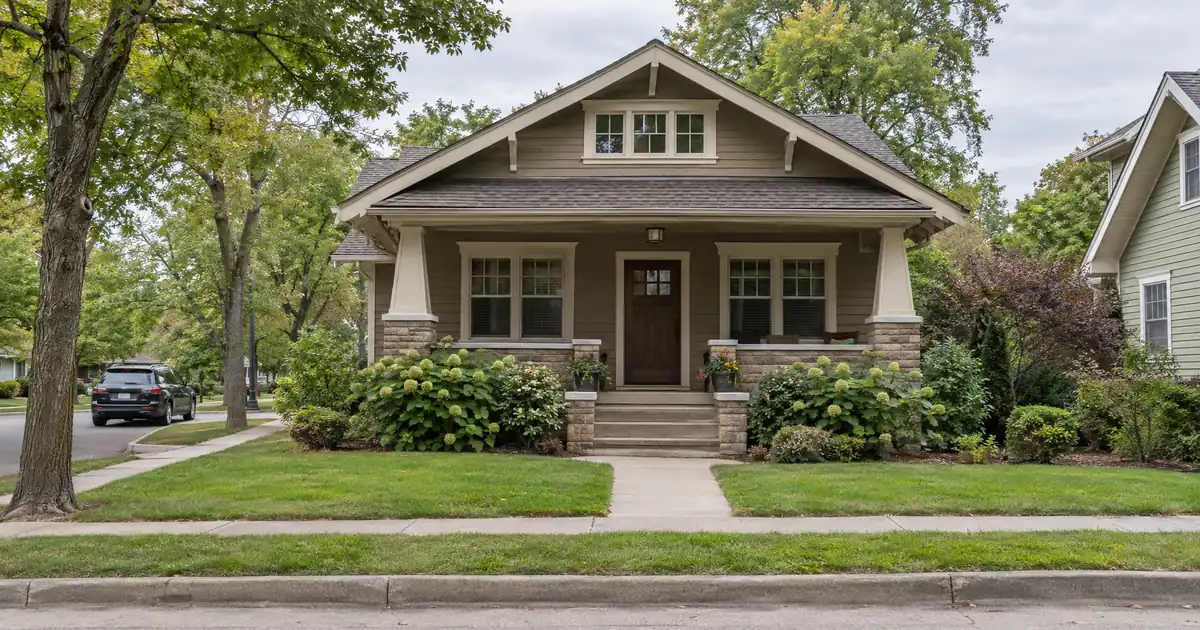
The Quick Read: Yes, a non-U.S. Resident can finance a U.S. rental with a DSCR loan. The loan is reviewed primarily on property-level rental income covering the payment, subject to lender guidelines. Expect a heavier document file than a domestic borrower: passport, proof of funds, entity papers, and source-of-funds review. These programs are investment-only, so you cannot live in the property.
Key Takeaways
- No federal law bars a non-citizen from getting a U.S. mortgage. Programs, not statutes, set the limits.
- The loan runs on the property’s rent versus its full housing payment. Your home-country paycheck is not the test.
- Programs sort borrowers by residency, visa status, tax ID, and where the money sits. The same person can fit one program and miss another.
- Typical purchase leverage is 75%-80% LTV, with select programs reaching 85% at around a 700 score.
- Clearing the coverage test is not the same as positive cash flow. Repairs, vacancy, and management sit outside the math. Every figure here varies by lender and program — guidelines, property type, leverage, and credit profile all apply.
What Is a Foreign-National DSCR Loan?
It is an investment-property loan sized on the rental’s income instead of the borrower’s personal income. DSCR stands for debt service coverage ratio. You divide the property’s monthly rent by its monthly PITIA. PITIA is principal, interest, taxes, insurance, and any HOA dues.
DSCR Calculator
Run the numbers in your market
Rate source: Freddie Mac 30-yr average via FRED® — Federal Reserve Bank of St. Louis · effective Sep 24, 2026
Prefilled with starting assumptions — enter your own rent or nightly figures, taxes, insurance, and HOA for a more accurate picture.
Program parameters update from Lendmire’s centralized guideline source. Taxes and insurance are editable estimates.
As of Sep 24, 2026 · General Freddie Mac market benchmark, not a Lendmire loan offer. Rent, nightly rate, occupancy, taxes, and insurance are editable estimates. Short-term rental figures are estimates only and vary significantly by season, property type, management approach, and local short-term-rental rules — confirm local regulations before relying on them. Qualifying income for short-term rentals varies by program — some use appraisal market rent, others use documented STR history or projections — and is confirmed in underwriting. Not a Loan Estimate, approval, or commitment to lend. Program availability and eligibility are subject to lender guidelines, credit approval, property review, and underwriting.
A “foreign national” here means a non-resident alien for mortgage purposes. Lenders treat these files as non-QM, meaning non-qualified mortgage: a loan that sits outside standard agency underwriting. Non-QM loans still get full underwriting. They just measure different things.
DSCR loans are designed for non-owner-occupied investment properties. Because they are business-purpose investor loans, they are reviewed differently from a standard owner-occupied mortgage.
If you want the fundamentals first, Lendmire’s complete DSCR loans guide covers them start to finish. This article stays on the foreign-buyer angle.
Why Can’t I Just Use My Home Income and Credit?
Because U.S. underwriting cannot see it. Credit bureaus generally do not share data across borders, so a spotless credit history at home does not appear on a U.S. credit pull. Foreign pay stubs and tax filings are hard for a U.S. lender to verify.
The DSCR structure sidesteps that problem. The property’s rent becomes the main coverage figure. Your file swaps the income packet for identity, asset, and entity documents.
Here’s the catch. “No personal income documentation” does not mean “no documentation.” It means qualification runs on the property’s income, and the rest of the file gets heavier.
How Underwriting Treats a Foreign-National File, Step by Step
Across the wholesale network Lendmire works with, the deal works through the same sequence. The details shift by program.
1. Program fit. The lender first classifies you. Citizenship, residency, visa status, country of residence, tax ID, and asset location all matter. There is no universal standard, so a borrower who fits one program may miss another. Confirm the program before you shop for property.
2. Entity. Most foreign-national files close in a U.S. LLC, subject to lender program eligibility. You sign a personal guaranty, and the LLC holds title. A foreign entity may need a U.S. subsidiary LLC to act as borrower. An LLC alone does not create eligibility or asset protection. It also does not hide you from lenders, title companies, or tax authorities, as Harris Sliwoski’s legal guide notes.
3. Identity and tax ID. A passport is the core ID. Some programs want an ITIN, an Individual Taxpayer Identification Number issued by the IRS. Others do not. Ask early, because ITIN processing is not instant and lender pages describe it in weeks.
4. Credit. With no U.S. credit file, programs typically use alternatives: a bank reference letter or an international credit report. Where a U.S. score exists, the network’s tiers apply. A 620 floor exists in parts of the network. Most programs want around 660. A 700+ score unlocks the strongest leverage tiers.
5. Assets and funds. Expect proof of funds for the down payment, closing costs, and reserves. Foreign statements usually need certified English translation. A home-bank reference letter often helps. Whether overseas funds count as reserves, or whether reserves must sit in a U.S. account, varies by lender. That difference alone can decide which program you use.
6. Property and rent. The appraisal includes a market-rent schedule, just like a domestic DSCR file. For a single-family rental that is the Form 1007 rent schedule. The lender divides that rent by PITIA to get your coverage number.
7. Compliance checks. Lenders screen borrowers against sanctions lists and verify identity, including anyone controlling an entity. Title companies and banks commonly ask where the money came from. Sanctioned countries can end a file outright. Some lenders also limit which passports they accept.
8. Closing logistics. Many closings are handled remotely, using international notarization or a power of attorney, depending on the title company and state. A U.S. bank account is often needed for servicing or entity funding.
What Coverage and Leverage Look Like
Coverage of 1.00 means the rent equals the full PITIA. It is where select programs start, a floor for those programs and not a universal standard. Stronger ratios open better pricing and leverage.
Coverage below 1.00 is available through select lenders in the network, with leverage and terms adjusted. That usually means less leverage and a tougher look at the rest of the file.
Here are the network ranges that matter most for a foreign buyer. All are typical guidance, subject to lender guidelines and individual underwriting.
| Factor | Typical network range |
|---|---|
| Purchase LTV | 75%-80% (20%-25% down) |
| High-leverage purchase | Up to 85% at roughly 700+ score |
| Cash-out refinance | Around 75% LTV, about 6 months seasoning |
| Credit tiers | 620 floor; most want ~660; 700+ best |
| Loan size | Up to $3,000,000 standard |
| Reserves | About 6 months PITIA; about 9 above $1,500,000 |
Seasoning is the waiting period a lender wants between buying a property and refinancing it. Reserves are cash you keep on hand after closing, measured in months of PITIA.
Reserves flex. Lender, leverage, loan size, and transaction type all move them. Some conservative rate-and-term files at modest leverage under $1,500,000 can see reserves waived. Do not plan around that.
Market surveys from other sources report larger down payments for foreign buyers, often 25%-35%. On the network’s programs, the ranges above apply, and your file’s credit, coverage, and asset documentation decide where you land.
Structures and Variations
The spine is the 30-year fixed loan. Select lenders in the network also offer 40-year terms and interest-only periods. ARM structures exist for investors who want them. Above $2,500,000, the network generally holds to 30-year fixed structures.
Interest-only lowers the monthly obligation, which can lift the coverage number. It does not erase leverage caps, credit floors, or reserve rules. A bigger down payment works the same way. It lowers the payment and can raise the ratio, but the file still has to clear both tests: enough equity and enough rental coverage.
Short-term rentals follow different rules. Purchases go to 75% LTV. Refinances run around 70%, and cash-out is 70% on short-term-rental collateral. Expect a 640+ score and about 12 months of hosting history. Coverage floors are 1.00 on purchases and 1.00 on refinances. Short-term rental rules can vary by city, county, HOA, and property type, so investors should confirm local rules before relying on projected rental income. Final terms depend on lender guidelines, property type, leverage, and the borrower’s complete credit picture.
A practitioner note: files from overseas buyers tend to stall on paperwork, not on coverage. The rent clears, then the reserve statements arrive in the wrong currency, in the wrong name, or without translation. Gathering fund documents before you pick a property prevents most of the late surprises.
Where the General Rule Breaks
Visa holders and green-card holders. Holders of work visas such as H-1B, L-1, E-2, O-1, and TN may fit a standard DSCR program instead of the foreign-national overlay. Classification is program-specific, so ask how each lender labels you.
U.S. Expats. A U.S. citizen living abroad is not a foreign national. Some programs still treat the file similarly, since U.S. income documents may be hard to produce.
Foreign-entity borrowers. These are case by case and often require a U.S. LLC in the chain.
Owner-occupancy. Primary residences and second homes are not eligible on these programs. The property must be a rental.
Property type. Manufactured homes (single- and double-wide), log homes, and barndominiums are not offered through the network’s DSCR programs. Condos, condotels, 2-4 unit buildings, and rural properties are treated differently by program.
No-ratio loans. These are available only through select lenders, generally for borrowers who already own a primary residence. That rarely describes a new foreign buyer.
Restricted areas. Some states limit land ownership by buyers from specific countries, mostly for agricultural or rural land. Property near certain military installations can also draw federal review. Harris Sliwoski describes a case where a Chinese-owned company had to divest land near an Air Force base. Check state law before you make an offer.
DSCR vs. conventional financing
Two common ways to finance an investment property in this market. They qualify you differently — here’s how investors weigh them.
Why investors choose it
- Qualifies on the property’s rental income — no personal tax returns, W-2s, or pay stubs needed to document income.
- No personal debt-to-income ceiling to clear, so existing mortgages and obligations don’t cap your borrowing the same way.
- Can be closed in an LLC, keeping the property inside a business entity.
- Built for scaling — not held to the limit on number of financed properties that conventional financing applies.
- Underwriting centers on the deal: generally qualifies when the rent covers the payment, a 1.00x coverage ratio being a common baseline (confirmed in underwriting).
- Designed specifically for investment property, including long-term and, where the program allows, short-term rentals.
Where it’s strong
- Often the lowest ongoing financing cost for a buyer who fully qualifies on personal income — a fit for a first property or a cost-first purchase.
Trade-offs for investors
- Requires full personal income documentation and must fit within a debt-to-income limit — salary, existing debts, and other mortgages all count.
- Typically held in your personal name rather than a business entity.
- Caps how many financed properties you can carry, which can become a ceiling as a portfolio grows.
- Evaluates you as a borrower as much as the property, which usually means more paperwork.
How investors usually choose: a first or single property often optimizes for the lowest financing cost; portfolio builders often optimize for leverage, vesting in an LLC, and scaling past conventional caps. The right answer depends on your goals, the property, and current guidelines — both paths run through select lenders in Lendmire’s wholesale network, with eligibility and terms confirmed in underwriting.
HELOC lines. Investment-property HELOC lines cap at $500,000 total. That matters later, if you tap equity on a rental you already own.
Does the New Federal Reporting Rule Apply to My Purchase?
Almost certainly not, and right now it is on hold anyway. FinCEN’s residential real estate rule targets non-financed transfers of property to entities and trusts. A DSCR purchase is financed. That is our reading of the rule, so confirm with your closing attorney.
The rule’s status has also changed. Per FinCEN’s FAQ page, a federal court vacated the rule, and while that order stays in force, reporting persons need not file Real Estate Reports. The government has appealed. Check that page again before you close.
Taxes: The Part That Changes Your Real Return
Taxes affect what you keep, not whether the loan is approved. The IRS says rental income of a nonresident alien that is not effectively connected with a U.S. trade or business is taxed at a flat 30%, or a lower treaty rate, with no deductions. Owners can often elect different treatment, which allows deductions but adds filing duties.
Tax treatment depends on how the funds are used and how the property is held. Keep clear records and speak with a qualified tax professional, ideally one who handles cross-border cases, before relying on any deduction.
Cash Flow Is Not the Same as Coverage
Clearing 1.00 does not mean the property makes money. The DSCR compares rent to PITIA only. Repairs, vacancy, property management, utilities, and capital expenses all sit outside the calculation.
Remote owners feel this most. You will almost certainly hire a property manager, and that fee comes out of rent. A file that clears at 1.00 with nothing to spare can turn negative after a single vacancy. Investors from abroad tend to be better served by a property with real cushion than one that scrapes by.
Key Terms Defined
DSCR: Debt service coverage ratio. Monthly rent divided by monthly PITIA.
PITIA: Principal, interest, taxes, insurance, and association dues. The full monthly housing obligation.
LTV: Loan-to-value. The loan amount as a percentage of the property’s value.
Non-QM: A loan that sits outside standard qualified-mortgage underwriting, with its own documentation rules.
ITIN: An Individual Taxpayer Identification Number, issued by the IRS to people who need a U.S. tax ID but cannot get a SSN.
Seasoning: The waiting period between buying a property and refinancing it.
Reserves: Liquid funds kept after closing, counted in months of PITIA.
Source of funds: The documented origin of your down payment and reserves.
How the Decision Looks in Practice
Picture a buyer abroad eyeing a small rental. She holds a passport, no U.S. score, and funds in a home-country bank. Her first move is not house hunting. It is confirming which programs accept her classification, where reserves must sit, and whether an ITIN is required.
Next comes the entity, then the funds paper trail, then the property. Only after that does the rent-to-payment ratio decide how much she can borrow. Buyers who reverse that order often lose time on deals they cannot finance.
The choice against paying cash comes down to leverage. A DSCR loan lets you hold more properties with the same capital. Cash removes financing friction but ties up equity. Neither is universally right.
Investors who already own a U.S. property may also want to read about refinancing a rental without a seasoning period, since seasoning rules matter for cash-out plans.
If you are buying or refinancing a rental property and want to see how the numbers work, Lendmire can help you compare DSCR loan options based on the property income, credit profile, leverage, and investor goals. As a broker, it arranges financing through select lenders in a 41-market DSCR footprint, Washington, D.C. included. Every file is underwritten individually, and this is not a commitment to lend.
Frequently Asked Questions
Can a non-U.S. Citizen get a mortgage on a rental property in the U.S.?
Yes. No federal statute prohibits lending to non-citizens, per Expat Focus. Lenders still screen against sanctions lists and verify identity and funds. Eligibility depends on the program, your residency and visa classification, and the property.
Do I need a U.S. credit score?
Not always. Credit bureaus generally do not share data across borders, so programs often accept a bank reference letter or international credit report. Where a U.S. score exists, most network programs want around 660, with a 620 floor in parts of the network and 700+ for the strongest leverage.
Do I need a U.S. LLC?
Most foreign-national files use one, subject to program terms. You sign a personal guaranty and the LLC holds title. The LLC does not by itself create eligibility, asset protection, or anonymity from banks and tax authorities.
Can I use overseas funds for reserves?
It depends on the lender. Some accept foreign accounts, some want reserves in a U.S. account, and documentation depth varies widely. Typical reserves are about 6 months of PITIA, stepping up to about 9 months above $1,500,000. Ask before you commit to a program.
Can I finance a short-term rental?
Some programs allow it. Purchases go to 75% LTV, with a 640+ score and about 12 months of hosting history expected. Refinances run around 70%. These specifics are subject to lender guidelines and a full review of property, leverage, and credit.
About Lendmire
Lendmire (NMLS# 2371349) is a DSCR-focused mortgage broker that helps arrange investor financing across 41 markets, including Washington, D.C., through wholesale and investor-lending channels. DSCR eligibility is generally reviewed by the lender on the property’s rental income rather than personal income documentation, subject to lender guidelines — which works for self-employed investors, LLC operators, and portfolios above four financed properties. Scotsman Guide named Lendmire a Top Mortgage Workplace in both 2025 and 2026.
Get Started
Ready to find the right loan for you?
In about 30 seconds you can review financing options available for your investment property. No commitment required.
Informational only. Not a Loan Estimate, approval, or commitment to lend. Program availability and eligibility are subject to lender guidelines, credit approval, property review, and underwriting.
References
1. Harris Sliwoski – Foreign Investment in US Real Estate
2. FinCEN Residential Real Estate FAQ
4. Expat Focus – US Property Financing
This article is part of Lendmire’s DSCR loan program — full qualification details, guidelines, and scenarios live on the program page.
Related reading: DSCR Refinance Tampa FL Rental Property Investors · What Documents Are Needed for a DSCR Loan? · DSCR Refinance Miami FL Investment Properties
Brandon Miller
Founder & CEO, Mortgage Loan Originator, Lendmire LLC
- Mortgage Loan Originator · NMLS# 1129696 · Verify on NMLS Consumer Access
- North Carolina Real Estate Broker · License# 343312 · Verify on NCREC
- North Carolina Insurance Producer · License# 19053198 · Property, Casualty, Life, Health · Verify on NAIC SBS
- Lendmire LLC · Firm NMLS# 2371349 · Verify firm licensure
Disclosures. The information presented in this article is general market commentary, not financial, legal, or tax advice. Lendmire is a mortgage brokerage (NMLS# 2371349) — not a direct lender or depository institution — and loan placement is subject to lender underwriting. Nothing in this content represents a commitment to lend. Loan terms, pricing, and program availability vary based on borrower qualifications, property characteristics, and state of subject property, and are subject to change at any time. Lendmire complies with Equal Housing Opportunity requirements. Consumer access: nmlsconsumeraccess.org.