
The Quick Read: A DSCR loan is long-term financing for a rental that already works. Private lending, including hard money, is short-term financing for a deal that still needs work or speed. The first qualifies primarily on property-level rental income covering the payment, subject to lender guidelines. The second leans on the property’s value and your exit plan.
Here is the honest answer on who each is for. If you are buying or refinancing a stabilized rental you plan to hold, a DSCR loan is usually the fit. If you are buying something that needs renovation, or you need a short bridge, private money is usually the fit. Many investors use both, one after the other.
What this loan actually costs to carry in your market.
Hard money is sized against the project and priced by time. Enter the deal and see how much the program will lend, the cash required at closing, the carry while you hold it, and what is left at the exit.
Leverage tiers on the current program: 85% with fewer than 2, 90% with 2 or more, 93% with 5 or more completed projects — every tier capped at 75% of after-repair value. Loan amounts up to $5,000,000, larger by exception; terms of 6 to 18 months, interest-only, no prepayment penalty. The rehab portion funds in draws against completed work, not at closing.
Program parameters shown update from Lendmire’s centralized guideline source. Rate, points, and months are editable assumptions, not quoted terms.
Cost cap sets the loan · positive spread
Illustrative estimate only — not a quote, Loan Estimate, approval, or commitment to lend. Rate, points, and months are editable assumptions. Hard money is business-purpose financing for real estate investors, not a consumer mortgage. Leverage on the current program tops out at 93% of project cost for investors with a documented track record, capped at 75% of after-repair value, with rehab funding up to 100% of the documented budget released in draws; actual terms vary by lender, borrower experience, property, and exit. Lendmire is a mortgage broker, not a lender.
Two quick definitions before the comparison. A DSCR loan is a business-purpose investor loan where the lender compares the property’s rent to its full monthly payment. Private lending is short-term, asset-based financing from a fund, an individual, or an institutional hard-money lender.
Key Takeaways
- DSCR loans are built for stabilized, rent-ready properties held long term.
- Private and hard-money loans are built for acquisition, rehab, and bridge situations.
- The deciding factors are usually property condition and your plan, not just cost.
- The two products often work in sequence: bridge, stabilize, then refinance.
- Program details vary by lender, property, and experience, and nothing here is a commitment to lend.
Side-by-Side
| Factor | DSCR Loan | Private / Hard Money |
|---|---|---|
| Review basis | Rent measured against full payment | Property value, equity, exit plan |
| Documentation | Lease or rent evidence, appraisal, credit | Value, scope of work, borrower experience |
| Property types | Stabilized 1-4 unit rentals | 1-4 units; ground-up to 10 units |
| Entity vesting | LLC common, subject to program eligibility | LLC common, per lender terms |
| Reserves | Commonly around six months of PITIA | Varies; cash to close and rehab equity matter |
| Term and purpose | Long-term hold, 30-year fixed spine | Short interest-only bridge for buy or rehab |
A few notes on that table. PITIA stands for principal, interest, taxes, insurance, and association dues. That is the full monthly housing payment a DSCR lender measures rent against. LLC vesting means holding title in a limited liability company. On DSCR files, the lender typically asks for a personal guarantee from the owners behind the entity.
Timing is left out on purpose. It depends too much on the file, the property, and the lender to compare fairly.
DSCR Loan vs. Private Lending: What Decides the Choice?
Two questions settle most decisions. Is the property ready to rent today? And how long do you plan to hold it?
A DSCR lender wants a property that produces rent now. The appraiser documents market rent, using a rent schedule form for single-family homes and an operating income form for 2-4 units. The lender then checks whether that rent covers the payment. If the roof is off or the units are gutted, there is no rent to measure. Not a fit.
A private lender asks different questions. What is the property worth today? What will it be worth after the work? How much of your own money is in the deal? Is the exit plan believable? Rent is beside the point, because the loan is not meant to last.
That is why the products rarely compete head to head. They solve different stages of the same deal. A tenant-ready fourplex you want to keep for years points one way. A distressed duplex you plan to renovate and reposition points the other.
When a DSCR Loan Is the Better Fit
A DSCR loan is the better fit when the property is stabilized, you plan to hold it, and you want lighter personal-income documentation. That is the whole use case. Everything else is detail.
The core mechanics. Divide monthly rent by the full monthly payment. Clear the lender’s threshold and the property carries the loan. Across our wholesale network, 1.00 is where select programs start. It is a floor for those specific programs, not a universal standard. Stronger ratios open better terms and leverage. Coverage below 1.00 is available through select lenders in the network, with leverage and terms adjusted.
Leverage and credit. On purchases, most files land at 75% to 80% LTV, which means 20% to 25% down. LTV is loan-to-value: the loan balance as a percentage of the property’s value. Select high-leverage programs reach 85% LTV with roughly a 700+ credit score. Cash-out refinances on standard rentals top out around 75% LTV across most of the network. Lenders commonly expect about six months of seasoning, meaning time on title, before a cash-out.
On credit, a 620 floor exists in parts of the network. Most programs want around 660. A 700+ score unlocks the strongest leverage tiers. Loan sizes run roughly up to $3,000,000 on standard programs (smaller balances available through select lenders). Above $2,500,000, the network generally holds to 30-year fixed structures.
Terms. The spine is the 30-year fixed. Extended terms, such as 40 years, and interest-only periods are available through select lenders. ARM structures exist for investors who want them. The long runway is the point. You are buying stability, not a bridge.
Reserves. Reserves are liquid funds the lender wants you to keep after closing. They vary by lender, leverage, loan size, and transaction type. Around six months of PITIA is common. Conservative rate-and-term files at modest leverage under $1,500,000 can see reserves waived. Larger loans typically step up to about nine months. Treat any single number as a starting point, not a rule.
A larger down payment helps, but only so far. More cash down lowers the payment and can lift your coverage. It does not erase leverage caps, credit floors, reserve rules, or property eligibility. The strongest files clear both tests: enough equity and enough rental coverage.
Property limits. DSCR programs in the network are not offered on manufactured homes (single- or double-wide), log homes, or barndominiums. Short-term rentals have their own tiers. Purchase leverage tops out at 75% LTV. Expect a 640+ score and about 12 months of hosting history. Short-term rental rules can vary by city, county, HOA, and property type, so investors should confirm local rules before relying on projected rental income. These specifics are subject to lender guidelines and a full review of property, leverage, and credit.
Here is the misunderstanding that costs investors money. Clearing 1.00 is not the same as positive cash flow. The ratio compares rent to PITIA and nothing else. Repairs, vacancy, management, utilities, and capital expenses all sit outside the calculation. A property can clear the lender’s test and still leave you thin at the end of the year. Run your own numbers too.
Prepayment penalties deserve a look as well. They are common on DSCR loans, and they can matter if you sell or refinance early. Ask about them before you pick a program, not after.
For a deeper walkthrough of the product itself, see the complete DSCR loans guide.
When Private Lending Is the Better Fit
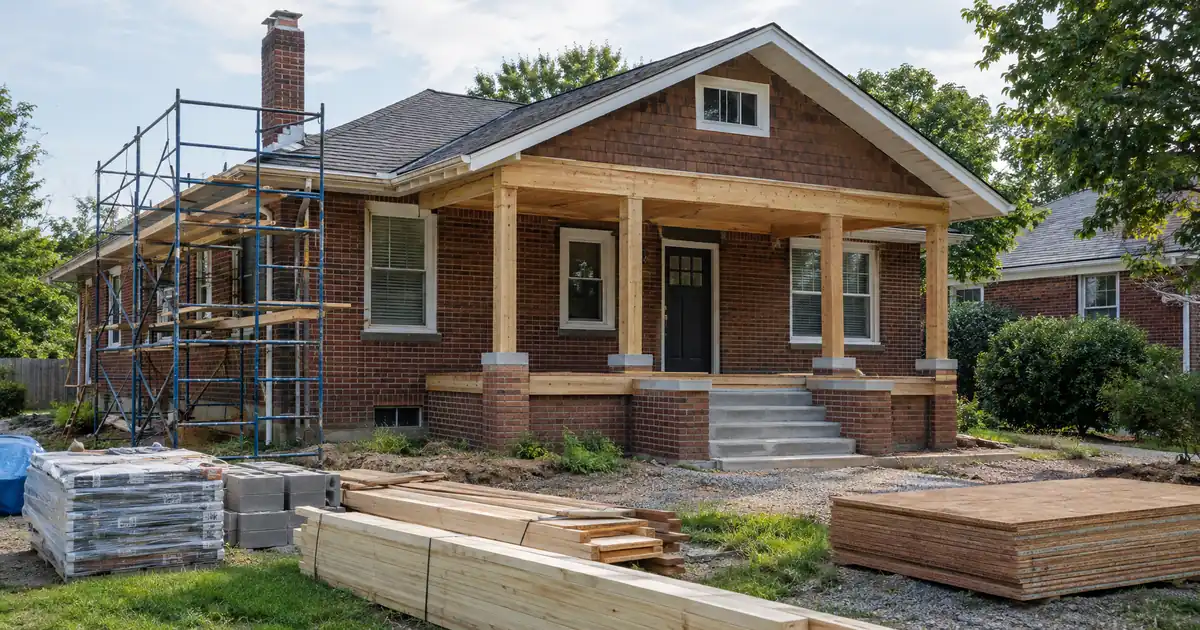
Private lending is the better fit when the property is not rent-ready, when you are renovating, or when you need a short bridge. The loan is priced and structured to be temporary, and it looks at the asset rather than the rent.
The word “private” covers two things. One is individual or fund capital, often relationship-based. The other is the institutional hard-money lender, which focuses on bridge and fix-and-flip deals. Both are asset-based. Terms vary because each lender sets its own criteria. Our private money lending guide covers the basics in more depth.
The hard-money program on the Lendmire side gives a useful picture of what these loans look like. Every figure below varies by lender, property, and experience, and nothing is a commitment to lend.
- Fix-and-flip leverage is measured against cost, not value. It runs 85% of project cost with fewer than two completed projects. It rises to 90% of project cost at two or more, and 93% of project cost at five or more. Every tier is capped at 75% of after-repair value.
- Bridge purchases without rehab go up to 80% of the purchase price.
- Cash-out and rate-and-term refinances go up to 65% of value.
- Rehab funds can cover up to 100% of the rehab budget, released in draws as work is completed. That is a budget figure, not a purchase LTV.
- Ground-up construction reaches up to 90% of cost and 75% of completed value at three or more completed projects.
- Terms run 6 to 18 months, interest-only, with no prepayment penalty.
- Loan amounts go up to $5,000,000, and larger by exception.
- Credit starts at a 620 minimum, with additional conditions below 660. First-time investors qualify at the lower leverage tiers.
- Collateral is non-owner-occupied 1-4 unit residential, and ground-up construction up to 10 units.
Read that leverage list carefully. There is no true 100% purchase program. The top tier is reserved for experienced investors. The “100%” on the list applies only to the rehab budget, funded in draws against finished work. Anyone selling you 100% of a purchase should be asked to show the structure.
Underwriting stays asset-based: the property, the plan, and the exit. It is not a shortcut around credit review.
Notice what is missing: a rent test. That is the feature and the limit. It lets you finance a property that has no tenants yet. It also means the loan comes due whether or not the property is ready. Six to eighteen months is not a long runway if permits stall or a contractor disappears.
Here is a fair way to think about it. Private money is paying for flexibility on a specific deal. If the deal is on schedule, that trade is fine. If it slips, the exit plan carries all the weight.
Where Investors Get It Wrong
Three mistakes show up again and again on files like these.
Using the wrong tool for the timeline. Putting a rent-ready property on short-term money creates a refinance deadline you did not need. Putting a half-finished property into a DSCR application gets you nowhere, because rent potential does not cure an ineligible or uninhabitable property.
DSCR vs. conventional financing
Two common ways to finance an investment property. They qualify you differently — here’s how investors weigh them.
Why investors choose it
- Qualifies on the property’s rental income — no personal tax returns, W-2s, or pay stubs needed to document income.
- No personal debt-to-income ceiling to clear, so existing mortgages and obligations don’t cap your borrowing the same way.
- Can be closed in an LLC, keeping the property inside a business entity.
- Built for scaling — not held to the limit on number of financed properties that conventional financing applies.
- Underwriting centers on the deal: generally qualifies when the rent covers the payment, a 1.00x coverage ratio being a common baseline (confirmed in underwriting).
- Designed specifically for investment property, including long-term and, where the program allows, short-term rentals.
Where it’s strong
- Often the lowest ongoing financing cost for a buyer who fully qualifies on personal income — a fit for a first property or a cost-first purchase.
Trade-offs for investors
- Requires full personal income documentation and must fit within a debt-to-income limit — salary, existing debts, and other mortgages all count.
- Typically held in your personal name rather than a business entity.
- Caps how many financed properties you can carry, which can become a ceiling as a portfolio grows.
- Evaluates you as a borrower as much as the property, which usually means more paperwork.
How investors usually choose: a first or single property often optimizes for the lowest financing cost; portfolio builders often optimize for leverage, vesting in an LLC, and scaling past conventional caps. The right answer depends on your goals, the property, and current guidelines — both paths run through select lenders in Lendmire’s wholesale network, with eligibility and terms confirmed in underwriting.
Skipping the exit math. Investors compare the starting loan and ignore what happens at the end. Look at the prepayment period on a DSCR loan and the maturity date on a bridge loan. A short hold can undo the benefits of long-term financing.
Treating “non-QM” as “no rules.” Non-QM means the loan falls outside the Qualified Mortgage definition. It does not mean anyone can lend on any terms. State licensing, usury, and prepayment-penalty statutes still apply to business-purpose loans. Some state limits on prepayment penalties apply only to individual borrowers, not entities.
Here is the practitioner view. In DSCR files, the ratio is rarely the item that stalls a deal. The stronger files line up names, ownership, rent, occupancy, and assets before submission. It is dull work, and it saves files.
How the Two Products Work Together
Plenty of scaling investors use both, in order. Buy with bridge money, renovate, place tenants, then refinance into long-term financing once the property is stabilized.
Picture an investor who buys a tired triplex with a hard-money loan-to-cost structure. The work gets done, all three units lease, and the property is now rent-ready. That is the point where a DSCR refinance becomes realistic. The rent now carries the payment at a coverage ratio the lender can evaluate, and the short-term loan is paid off. Lendmire brokers that path, connecting the bridge stage to long-term DSCR financing.
Say you are unsure which side of the line a property is on. Ask one question: could a tenant move in next month? If yes, look at DSCR first. If no, the property needs a bridge first.
The reverse move rarely makes sense. Nobody refinances a stable 30-year rental into 12-month interest-only money without a specific reason. Cash-out on a DSCR loan, at around 75% LTV on standard rentals, is usually the better tool for pulling equity from a stabilized property. Short-term rentals sit lower, at 70% for cash-out. Our overview of private money lending explains the other end of this pairing.
What About the Regulatory Difference?
DSCR loans are designed for non-owner-occupied investment properties. Because they are business-purpose investor loans, they are reviewed differently from a standard owner-occupied mortgage.
Private and hard-money loans are generally structured the same way. So the business-purpose label does not separate the two products. Federal rules exempt credit extended primarily for a business purpose from Regulation Z, as eCFR 12 CFR 1026.3 sets out. The CFPB’s regulator text states the same exemption. The lender decides the purpose case by case, so an owner-occupied or mixed-use plan changes the analysis.
Key Terms Defined
- DSCR (debt service coverage ratio): Monthly rent divided by the full monthly payment on the property.
- PITIA: Principal, interest, taxes, insurance, and association dues, the full housing payment.
- LTV (loan-to-value): The loan balance as a percentage of the property’s value.
- Loan-to-cost: The loan as a percentage of what you pay for the property plus the work.
- After-repair value: What the property should be worth once renovations are finished.
- Hard money: Short-term, asset-based lending secured by the property.
- Non-QM: A loan that falls outside the Qualified Mortgage definition.
- Seasoning: The time a lender wants you to hold a property before a cash-out refinance.
The Verdict
Neither product is the better loan in a vacuum. Each wins at a different stage.
Choose a DSCR loan if the property is rent-ready, you plan to hold it, and you want a long, stable structure. Choose private lending if the property needs work, or you are buying with a plan to renovate and reposition. Choose both, in sequence, if you are building a portfolio the way most repeat investors do.
The honest tie-breaker is your exit. If you cannot explain in one sentence how the short-term loan gets paid off, keep looking. If you cannot explain how the property carries a long-term loan, do not apply for one yet.
One more thing. Tax treatment can depend on how the funds are used and how the property is held; investors should keep clear records and speak with a qualified tax professional before relying on any deduction.
If you are buying or refinancing a rental property and want to see how the numbers work, Lendmire can help you compare DSCR loan options based on the property income, credit profile, leverage, and investor goals. Lendmire is a broker arranging DSCR financing through select lenders in its wholesale network across 41 markets, including Washington, D.C.
Frequently Asked Questions
Can I refinance a hard-money loan into a DSCR loan?
Yes, that is the common path once the property is stabilized and rented. The DSCR lender looks at rent evidence, the appraisal, your credit, and reserves. Approval depends on lender guidelines, the property, and your profile. It is not automatic.
What if my rehab runs long and the bridge loan comes due?
That is the main risk of short-term money. Terms run 6 to 18 months on the hard-money program, so a slipped schedule can leave you refinancing or selling under pressure. Build a cushion into your timeline and confirm extension options before you sign.
Do I need strong credit for either one?
Both look at credit. In the network, a 620 floor exists on some DSCR programs and on the hard-money program. Most DSCR programs want around 660, and 700+ opens the strongest leverage. Hard money adds conditions below 660. Both vary by lender, property, and experience.
Can I use private lending for a long-term hold?
It is a poor fit. Private loans are short-term and interest-only. Holding a rental for years on that structure means repeated refinance risk. Long-term holds belong on long-term financing.
Is a DSCR loan a no-documentation loan?
No. Qualification runs on the property’s income, with no personal income documentation in the usual sense. But lenders still review credit, LTV, reserves, property type, and occupancy. The file has to be consistent.
Short-term financing tends to work best when the long-term plan is decided early, including refinancing out of a hard money loan with a DSCR loan.
About Lendmire
Lendmire, NMLS# 2371349, is a mortgage brokerage focused on investor financing, arranging DSCR loans in 40 states plus Washington, D.C. — 41 markets total. Qualification is based on the property’s income rather than personal income documentation, subject to lender guidelines, making it a fit for LLC-held rentals and scaling portfolios. Scotsman Guide named Lendmire a Top Mortgage Workplace in both 2025 and 2026.
Many investors treat hard money as the acquisition tool and plan the exit up front — see refinancing out of a hard money loan with a DSCR loan.
Get Started
Ready to find the right loan for you?
In about 30 seconds you can review financing options available for your investment property. No commitment required.
Informational only. Not a Loan Estimate, approval, or commitment to lend. Program availability and eligibility are subject to lender guidelines, credit approval, property review, and underwriting.
References
2. CFPB § 1026.3 Exempt transactions
This article is part of Lendmire’s hard money loan program — full qualification details, guidelines, and scenarios live on the program page.
Related reading: DSCR Loan vs. Fix and Flip Loan · How To Find Private Money Lenders · HELOC vs. Cash-Out Refinance for Rental Property
Brandon Miller
Founder & CEO, Mortgage Loan Originator, Lendmire LLC
- Mortgage Loan Originator · NMLS# 1129696 · Verify on NMLS Consumer Access
- North Carolina Real Estate Broker · License# 343312 · Verify on NCREC
- North Carolina Insurance Producer · License# 19053198 · Property, Casualty, Life, Health · Verify on NAIC SBS
- Lendmire LLC · Firm NMLS# 2371349 · Verify firm licensure
Compliance and disclosures. Lendmire (NMLS# 2371349) is a licensed mortgage broker and is not a direct lender, depository institution, financial advisor, or tax professional. Content in this article is general market analysis and educational information — not financial, legal, or tax advice for any specific situation. Lendmire does not guarantee loan approval; every transaction is subject to underwriting by the funding lender. Mortgage pricing and loan program guidelines are subject to change at any time without notice and vary by borrower characteristics, property type, and state regulations. Lendmire complies with Equal Housing Opportunity. Licensure verification: NMLS Consumer Access.