
Introduction
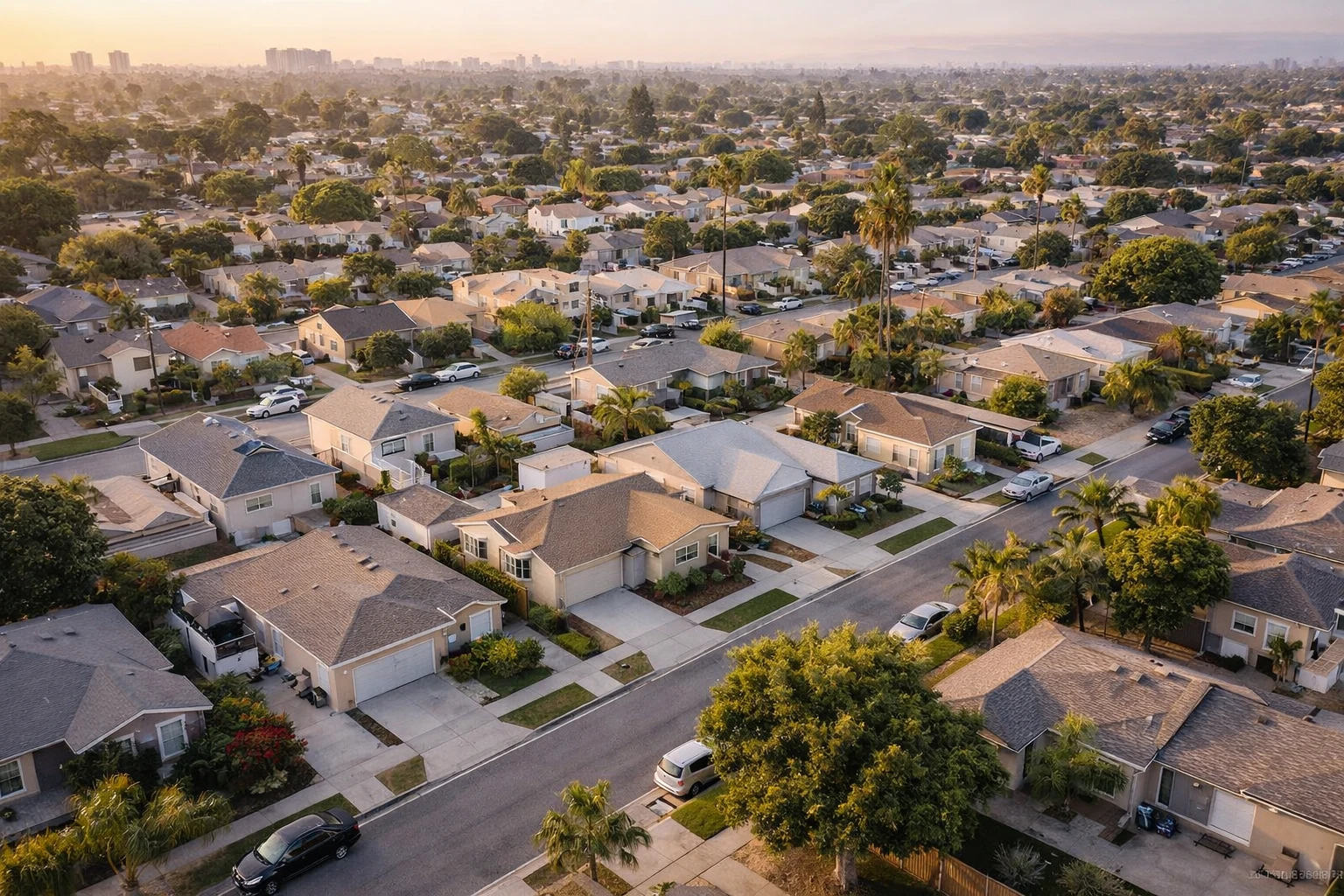
DSCR loans in Long Beach serve investors who hold rental properties in neighborhoods like Belmont Shore, North Long Beach, and Bixby Knolls — areas large enough to support deep rental markets, economically complex enough to generate multi-sector tenant demand, and strategically positioned between Los Angeles and Orange County in a way that makes housing perpetually undersupplied relative to demand. The Port of Long Beach, one of the busiest container ports in the world and the economic anchor of the entire region, employs tens of thousands of logistics, maritime, and trade workers directly and supports hundreds of thousands of jobs across the broader supply chain. Long Beach Airport, California State University Long Beach with over 37,000 enrolled students, a significant healthcare employment base anchored by Long Beach Memorial Medical Center, and a growing technology and aerospace sector collectively produce a labor force that generates persistent, multi-income-tier rental demand across the city’s varied neighborhoods.
For real estate investors, Long Beach offers something rare in coastal Southern California: genuine neighborhood diversity at price points that span from entry-level North Long Beach workforce properties to premium Belmont Shore coastal rentals — with a full spectrum of investment strategies between those poles. DSCR loans have become the dominant financing tool for active investors in this market, and for good reason. These programs qualify based entirely on the rental income generated by the property — no W-2s, no personal tax returns, no employment verification. For investors operating through LLCs, managing multiple properties, or running self-employed income streams that conventional lenders cannot fully credit, DSCR financing removes the primary barrier between deal identification and deal execution. Lendmire provides DSCR investor loan programs in 41 markets, with the speed and flexibility that Long Beach’s acquisition environment demands.
What Is a DSCR Loan?
A DSCR loan — Debt Service Coverage Ratio loan — is an investment property mortgage that qualifies based entirely on whether the subject property’s rental income is sufficient to cover its monthly debt obligations. The borrower’s personal income, employment history, and tax documentation play no role in the qualification. The lender evaluates the asset: specifically, the mathematical relationship between what the property earns and what it costs to finance.
DSCR Calculator
Run the numbers in California
Rate source: Freddie Mac 30-yr average via FRED® — Federal Reserve Bank of St. Louis · effective Jul 30, 2026
Prefilled with starting assumptions — enter your own rent or nightly figures, taxes, insurance, and HOA for a more accurate picture.
Program parameters update from Lendmire’s centralized guideline source. Taxes and insurance are editable estimates.
As of Jul 30, 2026 · General Freddie Mac market benchmark, not a Lendmire loan offer. Rent, nightly rate, occupancy, taxes, and insurance are editable estimates. Short-term rental figures are estimates only and vary significantly by season, property type, management approach, and local short-term-rental rules — confirm local regulations before relying on them. Qualifying income for short-term rentals varies by program — some use appraisal market rent, others use documented STR history or projections — and is confirmed in underwriting. Not a Loan Estimate, approval, or commitment to lend. Program availability and eligibility are subject to lender guidelines, credit approval, property review, and underwriting.
DSCR Formula: Gross Monthly Rental Income ÷ Monthly PITIA (Principal, Interest, Taxes, Insurance, and Association dues)
A DSCR of 1.0 means the property’s rental income exactly covers its debt service. Ratios above 1.0 reflect positive cash flow — the higher the ratio, the stronger the loan profile and the broader the program options available. Most DSCR lenders require a minimum ratio between 1.0 and 1.25, though some programs accommodate below-1.0 ratios for well-qualified borrowers. In Long Beach, where acquisition prices are elevated relative to much of the country, achieving strong DSCR ratios requires careful submarket selection and property-level underwriting — which is precisely where experienced DSCR specialists add value. For a full explanation of how DSCR qualification works, read what is a DSCR loan. To understand how it compares structurally to conventional investment financing, see the DSCR vs conventional investment loans breakdown.
Why Long Beach Is Attractive for DSCR Investors
Long Beach’s investment case begins with its economic permanence. The port complex is not a cyclical employer — it is foundational infrastructure for the global supply chain, and its workforce requirements are structural rather than discretionary. The thousands of longshoremen, logistics coordinators, customs brokers, and port operations professionals who work in and around the port need housing, and they need it in Long Beach. That baseline of port-related rental demand provides a floor beneath the market that insulates Long Beach investors from the full volatility that affects more tourism or tech-dependent rental markets.
Above that foundation sits a layered stack of additional demand drivers. CSULB’s student and staff population creates a persistent rental market in the university-adjacent neighborhoods of Los Cerritos and Bixby Knolls. The downtown Long Beach corridor and the East Village Arts District attract the young professional and creative class workforce that has grown with the city’s diversification beyond the port. Belmont Shore and Naples Island command premium rents from coastal lifestyle seekers and higher-income professionals who work across the LA-OC corridor. And the working-class neighborhoods of North Long Beach and Central Long Beach house the service economy and logistics workforce in an affordable rental tier that keeps occupancy reliably high.
One insight specific to Long Beach that many outside investors miss: the city has made deliberate and sustained investments in its downtown and waterfront that have meaningfully upgraded the rental premium for properties in the urban core. The redevelopment of the Pike Outlets area, the convention center expansion, and the transformation of the East Village into a legitimate arts and dining destination have elevated downtown Long Beach rents in a way that was not fully priced into the market five years ago. Investors who entered the downtown and East Village corridor ahead of that curve have seen both significant appreciation and rent growth — and the trajectory continues.
Key Benefits of DSCR Loans for Investors in Long Beach
- No personal income verification: Qualify entirely on the subject property’s rental income — W-2s, tax returns, and employment documentation are not required.
- LLC and entity ownership fully supported: Purchase and hold through an LLC, LP, or corporation — standard practice for California investment property portfolios.
- Short-term rental income eligible: Belmont Shore, Naples Island, and the downtown waterfront generate measurable STR demand — explore DSCR loans for Airbnb and short-term rentals for full qualification details.
- Non-warrantable condo and small multifamily access: DSCR programs reach property types that conventional lenders restrict, including non-warrantable condos and 2–4 unit buildings common in Long Beach’s urban neighborhoods.
- Portfolio scaling without DTI limits: Add multiple Long Beach properties without personal debt-to-income ratios capping your acquisition pace.
- Jumbo loan availability: Long Beach’s higher price points are accommodated by DSCR jumbo programs extending well above conventional loan limits.
Thinking about a rental property in Long Beach? Lendmire’s DSCR specialists work with investors in 41 markets — no W-2s, no tax returns, just the property’s numbers. Call or apply online to see what you qualify for.
DSCR Loan Requirements
Quick Reference: DSCR loans evaluate the property’s income performance. Investors with solid credit and a qualifying Long Beach property can access these programs regardless of personal income complexity or ownership structure.
- Credit Score: Most programs start at 620–640 minimum; best pricing available at 700+
- Down Payment: Typically 20–25% for purchases; some programs allow 15% with stronger DSCR ratios
- DSCR Ratio: Minimum 1.0–1.25 depending on program; below-1.0 options available for qualified borrowers
- Property Types: SFRs, 2–4 units, condos (warrantable and non-warrantable), small multifamily, STR properties
- Loan Amounts: $100,000 to $3,000,000+; jumbo DSCR programs available for Long Beach’s higher price tiers
- Loan Terms: 30-year fixed most common; 5/1, 7/1, and 10/1 ARM options available
- LLC Ownership: Fully supported — no requirement to hold title in personal name
- Reserves: none at or below $1,500,000 and 70% LTV; 6 months PITIA above 70% LTV; 9 months above $1,500,000; 6 months on a cash-out (cash-out proceeds may satisfy)
DSCR vs. Conventional Investment Loans
Conventional investment loans are particularly ill-suited to Long Beach’s investor profile. The city’s elevated acquisition prices push many properties above conventional loan limits, requiring jumbo programs with even stricter income documentation standards. Self-employed investors — a significant portion of active Long Beach buyers — face complex documentation requirements when their tax returns reflect aggressive depreciation and business expense deductions that reduce reportable income well below actual cash flow. LLC ownership, which is essentially standard for California investment property portfolios given the state’s legal environment, typically disqualifies properties from conventional investment financing. DSCR loans address every one of these friction points simultaneously.
The table below captures the key structural differences. For a complete breakdown, see the DSCR vs conventional investment loans comparison guide.
| Feature | DSCR Loan | Conventional Loan |
| Income Verification | Rental income only | W-2s and tax returns |
| Personal Tax Returns | Not required | Required (2 years) |
| LLC Ownership | Permitted | Typically not allowed |
| Portfolio Scaling | No DTI cap on properties | Limited by personal DTI |
| Qualification Basis | Property cash flow | Borrower income |
Best Investment Areas in Long Beach
North Long Beach — Workforce Rental Core and Cash Flow Entry Point
North Long Beach represents the city’s most accessible entry point for cash-flow-focused investors and the submarket where DSCR ratios are most achievable at current interest rates. The area houses a large share of Long Beach’s service economy, logistics, and port-support workforce — a tenant base that is employed, consistent, and not inclined to relocate frequently. North Long Beach has also been the subject of increasing city investment in infrastructure and community development, with several corridors showing early signs of the revitalization trajectory that transformed other Long Beach neighborhoods a decade earlier.
SFRs and duplexes in North Long Beach can be acquired in the $550,000–$750,000 range — below the Long Beach median — and generate combined monthly rents of $2,800–$3,800 for multifamily configurations. The DSCR math in this submarket is more favorable than in coastal or premium neighborhoods, and investors who can identify well-maintained or light-rehab properties are finding the best combination of current cash flow and forward appreciation potential in the city.
Bixby Knolls — Stable Upmarket Rental with Strong Tenant Quality
Bixby Knolls, Long Beach’s midtown residential district centered around Atlantic Avenue’s dining and retail corridor, has established itself as one of the city’s most desirable neighborhoods for working professionals and families who prioritize community character, walkability, and neighborhood stability. The area’s California bungalow and mid-century architectural stock, combined with excellent school proximity and easy freeway access, attracts a high-quality tenant base with strong lease renewal rates.
Rental properties in Bixby Knolls command monthly rents of $2,400–$3,400 for 2–3 bedroom SFRs, with well-maintained properties at the upper end of that range attracting tenants who stay for multiple lease cycles. Acquisition prices in the $700,000–$1,000,000 range require careful underwriting to achieve workable DSCR ratios, but the depth of demand, tenant quality, and appreciation trajectory in Bixby Knolls justify the premium for investors with a longer hold horizon.
Belmont Shore — Coastal Premium and Short-Term Rental Opportunity
Belmont Shore, the beachside retail and residential district along 2nd Street, is Long Beach’s most vibrant coastal neighborhood and its strongest short-term rental territory. The area’s walkable beach access, dense restaurant and bar scene, and proximity to Naples Island and the Marina create sustained demand from both long-term renters who pay a significant lifestyle premium and short-term visitors seeking alternatives to hotel accommodations. Belmont Shore properties — particularly those within walking distance of the beach or 2nd Street — generate nightly STR rates that can substantially outperform long-term lease projections during peak season.
Long-term rentals in Belmont Shore for 2-bedroom units run $2,800–$4,200 per month depending on condition, proximity to the beach, and unit configuration. STR income for well-positioned properties during summer and event weekends pushes nightly rates to $160–$380. Acquisition prices are elevated — typically $900,000 to $1,500,000+ for SFRs and larger condos — and DSCR qualification requires either jumbo programs or STR income underwriting to support the ratios, but Belmont Shore’s income-generating capacity is real and documented.
Downtown Long Beach / East Village Arts District — Urban Density and Professional Tenant Demand
Downtown Long Beach and the adjacent East Village Arts District have undergone a genuine transformation over the past decade, evolving from an underinvested urban core into a legitimate destination neighborhood with restaurants, galleries, live music venues, and a growing residential population of young professionals, artists, and remote workers who value urban energy and walkability. The convention center, the Pike waterfront development, and the proximity to the port’s professional workforce all contribute to sustained rental demand in the downtown core.
Condos and loft-style units in downtown Long Beach and the East Village generate monthly rents of $1,900–$2,900 for 1–2 bedroom configurations. Acquisition prices for investment-grade condos in this submarket typically range from $350,000 to $650,000, creating DSCR ratios that — while requiring careful deal selection — are more achievable than in coastal submarkets. Non-warrantable condo buildings, common in downtown Long Beach, are accessible through DSCR programs where conventional financing cannot go.
Los Cerritos / CSULB Area — University Market and Consistent Rental Demand
The neighborhoods surrounding California State University Long Beach — particularly the Los Cerritos and College Estates areas — support a persistent rental market driven by the university’s 37,000+ enrolled students, faculty, and research staff. The CSULB community generates year-round rental demand with particularly strong lease activity in spring and summer as new students and incoming staff seek housing for the fall semester. Properties within a reasonable commute of campus attract both student households and university professionals seeking to minimize their transit burden.
SFRs and small multifamily properties in the CSULB corridor acquire in the $650,000–$900,000 range and generate rents of $2,600–$3,800 depending on unit count and configuration. Investors comfortable with a student tenant mix and the higher-than-average turnover that accompanies it find that the CSULB market offers DSCR ratios that are more favorable than coastal submarkets at comparable price tiers, particularly for 3–4 bedroom properties rented by the room.
Signal Hill — Hilltop Value Play with Panoramic Views
Signal Hill, the independent municipality entirely surrounded by Long Beach, offers one of the area’s most interesting value investment scenarios. The city’s hilltop position provides panoramic views of the LA Basin, Catalina Island, and the port complex — a genuine lifestyle asset that commands rent premiums above comparable non-view properties in surrounding areas. Signal Hill’s oil heritage has given way to a residential and commercial community that benefits from Long Beach’s amenity base while maintaining its own character and, importantly, lower property taxes as an independent city.
SFRs and condos in Signal Hill acquire in the $500,000–$750,000 range and generate monthly rents of $2,400–$3,200, producing DSCR ratios that are among the more achievable in the greater Long Beach market. The view premium adds an income component that purely data-driven underwriting sometimes undervalues — well-positioned Signal Hill properties consistently outperform rent projections based on comparable non-view inventory.
Using DSCR Loans for Short-Term Rentals in Long Beach
Long Beach’s short-term rental market is anchored by coastal demand but extends well beyond beach season. The Long Beach Convention Center hosts major events year-round including the Grand Prix of Long Beach, the Long Beach Comic Con, professional conferences, and trade shows that generate concentrated accommodation demand that hotels frequently cannot fully absorb. Cruise ship departures from the Queen Mary area and the Port of Long Beach add a travel-day accommodation segment that produces consistent STR bookings throughout the year.
- Belmont Shore / 2nd Street Corridor: Highest STR demand concentration in the city; nightly rates $160–$380 during summer and event periods; beach access and 2nd Street walkability command the strongest premiums year-round
- Downtown / Convention Center Area: Event-driven STR peaks during Grand Prix weekend (April), Comic Con, and major conventions; nightly rates $150–$300 during peak events; steady business traveler base between events
- Naples Island / Alamitos Bay: Waterfront and canal-adjacent properties attract boating lifestyle visitors; nightly rates $200–$450 for well-positioned water-access units; strong snowbird and extended-stay demand from winter visitors
- CSULB Area (Graduation / Move-In Seasons): Concentrated family accommodation demand during May graduation and August move-in; nightly rates $120–$200; short booking windows but high occupancy during key university calendar dates
- Signal Hill / Views Properties: Premium view positioning supports nightly rates of $130–$220; business traveler and leisure visitor segment drawn by proximity to port and downtown without downtown pricing; consistent occupancy year-round
DSCR lenders qualify STR income using actual trailing 12-month platform revenue or AirDNA market projections. Long Beach’s STR market has substantial operational history and platform data to support documentation-based qualification. For full program details, see DSCR loans for Airbnb and short-term rentals.
Example DSCR Scenario in Long Beach
Property Type: Duplex, North Long Beach
Purchase Price: $680,000
Down Payment: $136,000 (20%)
Loan Amount: $544,000
Estimated Monthly Rent (Combined): $3,600 ($1,800 per unit)
Estimated Monthly PITIA: $3,090 (principal, interest at approx. 7.5%, taxes, insurance, including California property tax rates)
DSCR Ratio: $3,600 ÷ $3,090 = 1.17 — qualifying ratio under most DSCR programs with compensating factors; 25% down improves to approximately 1.22
This scenario illustrates the importance of submarket selection and down payment optimization in a high-cost California market. A North Long Beach duplex acquired at $680,000 generates combined income that approaches — and with a slightly larger down payment clears — the 1.20 threshold that opens the widest program selection. The borrower in this example acquired through an LLC, provided zero personal income documentation, and structured the transaction with 20% down. Dual-unit income provides redundancy against single-unit vacancy, and the property’s North Long Beach positioning captures the workforce rental tenant base that keeps occupancy reliably high. This is exactly how many investors scale using DSCR loans in Long Beach.
Ready to run the numbers on your next Long Beach property? Lendmire closes DSCR loans in as few as 15 days — no income docs, no W-2s, and LLC ownership is welcome. Reach out today and let’s get started.
DSCR Refinance Options in Long Beach
Long Beach investors who acquired properties before California’s post-2020 appreciation surge are sitting on substantial equity positions that can be strategically accessed through DSCR refinancing. Properties purchased in 2018–2021 at prices that have since appreciated 20–40% in many neighborhoods represent refinanceable equity that, when extracted via cash-out refinance, can fund down payments on additional acquisitions without liquidating the underlying asset.
Explore DSCR refinance loan options for rate-and-term refinances that exit high-rate bridge or hard money debt on stabilized Long Beach rentals, cash-out refinances that extract appreciation gains for redeployment into the next acquisition, and post-rehab stabilization refinances for value-add projects that have been completed and are generating rental income. California’s DSCR refinance market is active.
For investors managing portfolios across Long Beach’s diverse submarkets — a North Long Beach duplex, a Bixby Knolls SFR, and a downtown condo — strategic refinancing allows continuous portfolio optimization: lower carrying costs on stabilized assets, pull equity from high-appreciators, and redeploy capital without returning to personal income qualification cycles.
Why Investors Choose Lendmire
- DSCR-only expertise: Lendmire specializes exclusively in investor financing — no retail mortgage volume competing for processing attention.
- 41-market broker access: Multiple DSCR investors and lenders allow Lendmire to source programs for Long Beach’s varied price tiers, property types, and investor profiles — including non-warrantable condos and jumbo acquisitions.
- Speed: Lendmire closes DSCR loans in as few as 15 days — critical in Long Beach’s acquisition environment where well-priced investment properties move fast.
- California market experience: Deep familiarity with California property tax structures, LLC titling, and the income documentation challenges that self-employed California investors face with conventional lenders.
- Jumbo DSCR capability: Long Beach’s price levels require jumbo programs — Lendmire accesses the right investors for transactions above conventional limits.
- STR underwriting: AirDNA-based qualification and actual revenue documentation for Long Beach’s coastal and event-driven STR market.
- Lendmire works with real estate investors across 41 markets, including full program access in California.
Lendmire is a great option for DSCR loans, offering flexible solutions for real estate investors in 41 markets.
Frequently Asked Questions
What is the minimum credit score for a DSCR loan in Long Beach?
Most DSCR programs begin at a 620–640 minimum credit score. Borrowers with scores above 700 access the widest program selection and pricing. In a high-cost market like Long Beach where loan amounts are elevated, a strong credit score plays a meaningful role in securing optimal rate tiers.
Do I need tax returns or W-2s to qualify?
No. DSCR loans qualify entirely on the subject property’s rental income relative to its monthly debt service. Personal tax returns, W-2 employment verification, and income analysis are not part of the process. This is particularly valuable in California, where aggressive depreciation deductions and business expense strategies often make tax returns a poor representation of actual investor cash flow.
Can I purchase a Long Beach investment property through an LLC?
Yes. LLC, LP, and corporate entity ownership are fully supported under Lendmire’s DSCR programs in California. Given California’s legal environment and the liability exposure associated with rental properties in the state, LLC titling is strongly advisable and creates no complications in the DSCR qualification or closing process.
What DSCR ratio is required to qualify in a high-cost market like Long Beach?
Most programs require a minimum ratio of 1.0 to 1.25. In Long Beach, where acquisition prices require careful deal selection to achieve qualifying ratios, investors often optimize by increasing down payment to 25% or targeting North Long Beach and multifamily properties where the income-to-cost ratio is most favorable. DSCR specialists can model the down payment and property selection scenarios that produce the strongest qualifying ratios for specific Long Beach targets.
Can Airbnb or Grand Prix weekend STR income be used to qualify?
Yes. Short-term rental income from Airbnb, VRBO, or other platforms — including event-driven income from Grand Prix weekend, Comic Con, and Long Beach Convention Center events — can be used in DSCR qualification. Lenders use actual trailing 12-month platform revenue or AirDNA market projections. Long Beach has substantial STR operating history and platform data across its coastal and downtown submarkets, which supports clean documentation-based qualification.
How quickly can Lendmire close a DSCR loan in Long Beach?
Lendmire regularly closes DSCR loans in 15–21 days. In Long Beach’s acquisition environment — where well-priced investment properties in desirable submarkets receive multiple offers — a lender who can commit and close in two to three weeks is a genuine advantage over buyers requiring 45–60 day conventional loan timelines.
About Lendmire
Lendmire, NMLS# 2371349, is a mortgage brokerage focused on investor financing, arranging DSCR loans in 40 states plus Washington, D.C. — 41 markets total. Qualification is based on the property’s income rather than personal income documentation, subject to lender guidelines, making it a fit for LLC-held rentals and scaling portfolios. Scotsman Guide named Lendmire a Top Mortgage Workplace in both 2025 and 2026.
Get Started
Ready to find the right loan for you?
In about 30 seconds you can review financing options available for your investment property. No commitment required.
Informational only. Not a Loan Estimate, approval, or commitment to lend. Program availability and eligibility are subject to lender guidelines, credit approval, property review, and underwriting.
This article is part of Lendmire’s DSCR loan program — full qualification details, guidelines, and scenarios live on the program page.
Related reading: DSCR Loans Olympic Peninsula: Investor Financing for Olympic National Park, Port Angeles, Sequim, Long Beach & Real Estate Investors · DSCR Loans in Fresno, California: Investor Financing for Tower District, Clovis, and Sunnyside — Central Valley Cash Flow, Agricultural Economy Rentals, and Affordable California Growth · DSCR Loan for Urban Rental Properties
Guides: DSCR Loans in Long Beach, CA · DSCR Loans in California
Brandon Miller
Founder & CEO, Mortgage Loan Originator, Lendmire LLC
- Mortgage Loan Originator · NMLS# 1129696 · Verify on NMLS Consumer Access
- North Carolina Real Estate Broker · License# 343312 · Verify on NCREC
- North Carolina Insurance Producer · License# 19053198 · Property, Casualty, Life, Health · Verify on NAIC SBS
- Lendmire LLC · Firm NMLS# 2371349 · Verify firm licensure
Legal disclosures. Lendmire (NMLS# 2371349) is a state-licensed mortgage brokerage that arranges financing through wholesale lender relationships. Lendmire is not a direct lender, depository institution, or registered financial advisor. The discussion above is general informational content about real estate financing — it is not financial, legal, or tax advice, and readers should consult licensed professionals for guidance on their individual circumstances. Loan inquiries are subject to lender underwriting; this article does not represent a commitment to lend. Loan terms, rates, and qualification standards vary by borrower, property, and state, and are subject to change at any time. Equal Housing Opportunity. NMLS Consumer Access: nmlsconsumeraccess.org.