
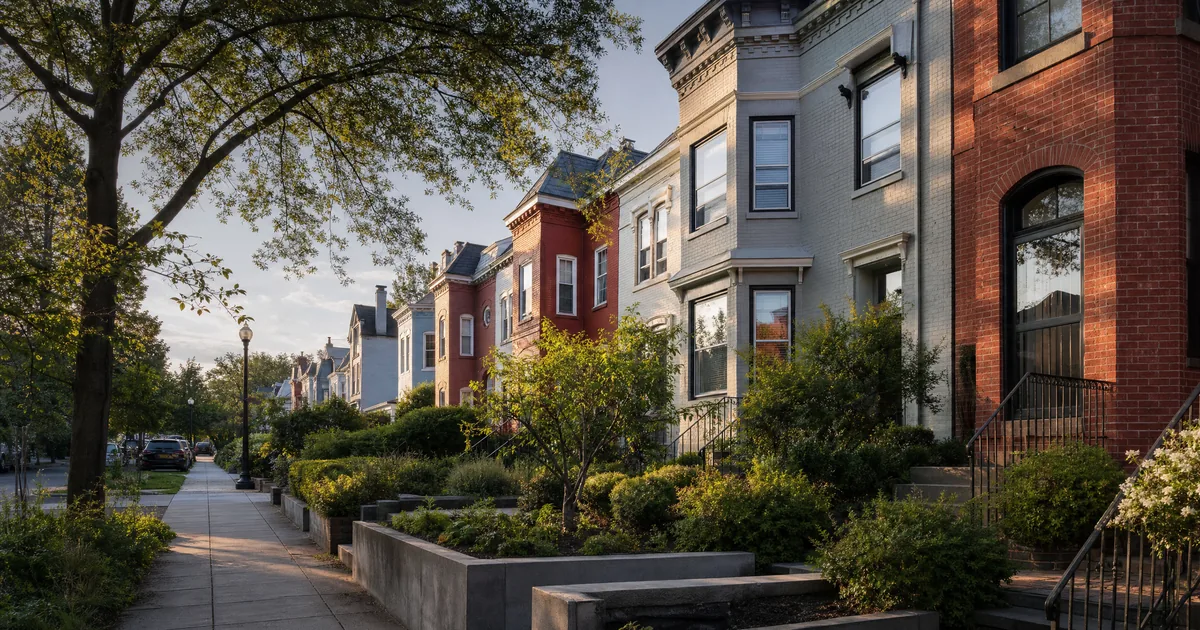
DSCR Loans in Washington, DC
Use this Washington, DC DSCR loan guide to understand how rental-property cash flow is evaluated, what lenders still review, and how purchase, rate-and-term refinance, cash-out refinance, long-term-rental, and legally permitted rental scenarios can be structured.
Current Washington, DC DSCR guidelines, updated from one source.
The figures below are displayed from Lendmire’s centralized DSCR standards source and update automatically when current program guidance changes. Final eligibility remains specific to the borrower, property, and selected wholesale lender.
Maximum purchase LTV
Maximum leverage is subject to credit, DSCR, loan size, property type, reserves, experience, and current wholesale-lender overlays.
Maximum refinance LTV
Rate-and-term refinances use the current value, existing payoff, qualifying rent, credit profile, seasoning, and selected program.
Maximum cash-out LTV
Cash-out proceeds depend on the proposed new loan, payoff, value, DSCR, ownership seasoning, costs, and complete underwriting.
Minimum FICO
The published floor does not guarantee maximum leverage. Lower scores generally receive reduced LTV and less exception flexibility.
Rent is 25% higher than estimated monthly PITIA.
Rent equals estimated monthly PITIA.
May be available with stronger credit and lower LTV.
Current standard-program snapshot · updated August 20, 2026. Purchase and rate-and-term LTV above 80% is by exception and subject to the full scenario.
What a Washington, DC DSCR loan is — and how the approval works.
A DSCR loan is business-purpose financing for a non-owner-occupied rental property. Instead of qualifying primarily through traditional personal-income calculations, the lender starts with the property’s accepted rental income and compares it with the proposed monthly housing expense.
Property cash flow leads the analysis
The central question is whether the lender-accepted monthly rent supports the proposed principal, interest, property taxes, insurance, and applicable association dues. The stronger that relationship, the more financing structures may be available.
Traditional personal income is not the starting point
Many DSCR programs do not qualify the loan by calculating personal income from W-2s, pay stubs, or tax returns. That can be useful for self-employed investors, borrowers with significant deductions, and owners building larger rental portfolios.
Credit, assets, and property quality still matter
A DSCR loan is not documentation-free. Lenders still review credit, liquidity, reserves, appraisal results, rent support, insurance, title, entity documents, property condition, legal use, and the requested transaction structure.
The accepted income method depends on the rental
Long-term properties may use an existing lease or appraisal market rent. Every financed unit should be legally recognized, and the proposed rental strategy must comply with District licensing, zoning, and property-use requirements.
PITIA generally includes principal, interest, property taxes, insurance, and applicable condominium, cooperative, or association dues. The live program cards above explain what the current DSCR levels mean, while the calculator below lets you edit each property input. The lender determines the final qualifying rent and housing expense using the appraisal and other accepted documentation.
A compact urban rental market with distinct neighborhood strategies.
Washington, DC combines federal and nonprofit employment, universities, hospitals, transit-oriented neighborhoods, historic rowhouse districts, condominium corridors, and long-term-rental demand across all four quadrants. Each strategy carries different rent, tax, licensing, legal-unit, association, historic-preservation, flood, and property-condition considerations.
Districtwide figures provide general market context, not property-level underwriting. A lender still evaluates the subject property’s qualifying rent, taxes, insurance, condominium or cooperative dues, legal unit count, condition, appraisal, and program eligibility.
Data source: U.S. Census Bureau QuickFacts — District of Columbia, including the 2025 population estimate, 2020–2025 population change, 2020–2024 median value of owner-occupied housing units, and 2020–2024 median gross rent.
Distinct DC neighborhoods, distinct property considerations.
From historic Capitol Hill rowhouses to condominium-heavy central neighborhoods and value-oriented sections of Northeast and Southeast, District investors encounter very different acquisition costs, unit configurations, association expenses, local rules, and underwriting questions.
Capitol Hill, Hill East & Navy Yard
Capitol Hill and nearby neighborhoods combine federal, congressional, legal, nonprofit, transit, and waterfront employment demand. Investors commonly evaluate historic rowhouses, condominium units, English basements, and two-unit properties, with legal unit count, historic status, association dues, and property taxes materially affecting the analysis.
Petworth, Columbia Heights & Brightwood
These Northwest neighborhoods offer rowhouses, condominium conversions, basement units, and small multifamily properties supported by transit and broad renter demand. Investors should verify unit legality, certificate-of-occupancy records when applicable, separate utilities, rental licensing, property condition, and actual property expenses.
Shaw, Logan Circle, U Street & NoMa
Central neighborhoods combine high-density development, historic housing, transit, universities, hospitals, restaurants, and professional employment. Condominium dues, cooperative rules, special assessments, rental caps, building insurance, and smaller-unit appraisal support can materially affect DSCR and property eligibility.
Brookland, Woodridge & Northeast DC
Brookland and surrounding Northeast communities combine university, healthcare, institutional, transit, and residential demand. Investors commonly review rowhouses, detached homes, legal basement units, and small multifamily properties, with building condition, utility configuration, permits, and recognized unit count central to underwriting.
Anacostia, Congress Heights & Southeast DC
Southeast neighborhoods can provide different entry-price and redevelopment profiles than many Northwest submarkets. Investors should confirm rents, legal use, condition, appraisal support, property taxes, insurance, and site-specific flood exposure—particularly near the Anacostia and Potomac river systems.
Georgetown, Dupont Circle & Upper Northwest
Georgetown, Dupont Circle, Cleveland Park, Woodley Park, and nearby neighborhoods include high-value historic rowhouses, condominiums, cooperatives, and older apartment properties. Historic-preservation review, association governance, aging systems, higher acquisition costs, and property-specific rent evidence require careful modeling.
Lendmire can also review eligible investment-property scenarios in Adams Morgan, Bloomingdale, H Street Corridor, Trinidad, Takoma, Deanwood, Southwest Waterfront, Fort Totten, and other District neighborhoods. Availability remains subject to the property, program, and current lending footprint.
Four ways Washington, DC investors can use DSCR financing.
Review the core transaction paths available for eligible District investment properties. The right structure depends on the purpose of the loan, the property’s qualifying rent, leverage, credit, reserves, legal use, and current lender guidelines.
DSCR purchase loans
Finance an eligible Washington, DC investment property using qualifying rental income. The structure depends on value, requested leverage, DSCR, credit, reserves, property type, legal unit count, and current lender guidelines.
Rate-and-term refinance
Replace an existing rental-property loan, restructure the payment, or exit qualifying bridge or private financing. The property and proposed loan must still satisfy current program, title, insurance, and legal-use standards.
Cash-out refinance
Access eligible equity to support another acquisition, replenish reserves, fund improvements, or pursue another portfolio strategy. Gross proceeds depend on the new loan, payoff, costs, seasoning, value, rent, and underwriting.
Long-term rental DSCR
Model the property around a legally permitted long-term rental and accepted lease or market rent. Current District short-term and vacation-rental licensing is primary-residence based, and DLCP states investment properties and corporate entities are not eligible for that license category.
Model a Washington, DC property before requesting a quote.
The calculator starts with editable District sample assumptions for property value, rent, taxes, insurance, and leverage. Tax and insurance assumptions can refresh from Lendmire’s centralized state data, while the interest-rate field uses a weekly Freddie Mac market benchmark. Every field remains editable, and the benchmark is not a DSCR loan quote.
Washington, DC DSCR calculator
Enter the proposed new loan and the lender-accepted monthly qualifying rent. Use a legally permitted rental strategy and do not rely on short-term booking revenue unless local requirements and the selected lender both support that use.
Loading the current weekly Freddie Mac market benchmark…
Illustrative Washington, DC starting assumptions: $525,000 property value, $3,012 monthly rent, 0.62% annual property tax, 0.35% annual insurance, and 75% purchase LTV. The opening rent is set to produce a DSCR of at least 1.00. All fields are editable.
Illustrative estimate only. The Freddie Mac benchmark is an editable conventional market reference, not a DSCR loan quote, APR, Loan Estimate, approval, or commitment to lend. Actual qualifying rent, rate, taxes, insurance, association treatment, LTV, cash proceeds, legal use, and eligibility depend on lender guidelines and full underwriting.
What lenders still review after the DSCR calculation.
The property’s coverage ratio is central, but it is only one part of the file. A complete Washington, DC DSCR review also considers the borrower’s credit and liquidity, the property’s appraisal and rent evidence, legal unit count, requested leverage, and closing structure.
Same investment property, different underwriting lens.
Qualification commonly depends on verified personal income, employment, tax returns, and the borrower’s debt-to-income ratio, along with the property and credit profile.
The lender focuses on accepted property rent relative to monthly PITIA, while separately reviewing credit, assets, reserves, appraisal, insurance, title, legal use, property eligibility, and the selected program.
What to prepare for a Washington, DC DSCR review.
Exact documentation varies, but these four categories give an investor a practical starting point before requesting a property-specific quote.
This is a general preparation guide, not a universal document checklist. The selected lender may request additional information based on the property, borrower, entity, loan purpose, legal use, and underwriting findings.
Local details that can change the DSCR decision.
District taxes, legal unit count, rental-business licensing, condominium or cooperative obligations, historic status, flood exposure, property condition, and rental-use restrictions can materially change a DSCR result or a property’s eligibility.
Use these checks to keep the Washington, DC file clean and financeable.
The exact treatment varies by wholesale lender, so the goal here is not to promise a universal outcome. It is to identify the main District-specific questions an investor should resolve before appraisal and underwriting.
- Confirm the rent and legal-unit story. Use the correct lease or market-rent support and verify that every financed unit is legal and recognized.
- Model the complete carrying cost. Taxes, insurance, condo or co-op dues, utilities, maintenance, assessments, and flood exposure can materially change DSCR.
- Verify licenses and property use. Review the rental-business license, RAD registration, certificate of occupancy, zoning, association rules, and intended rental strategy.
Qualifying rent evidence and legal unit count
Long-term rentals may rely on an existing lease, appraisal market rent, or another accepted method. Basement units, accessory apartments, converted spaces, and two-to-four-unit properties should match zoning, permit, certificate-of-occupancy, appraisal, and municipal records before their income is relied upon.
Rental licensing, RAD registration, and occupancy records
District rental housing generally requires the appropriate Basic Business License and Rental Accommodations Division registration. Apartments and two-family rentals may also require a Certificate of Occupancy, while the selected lender may request evidence that the intended use is properly documented.
Taxes, association costs, insurance, and flood exposure
Use actual property-level estimates whenever possible. Condominium or cooperative dues, special assessments, master-policy coverage, property taxes, and site-specific river, stormwater, or flood exposure can materially change monthly PITIA and property eligibility.
Historic districts, older housing, and building condition
Many District neighborhoods contain historic rowhouses, older multifamily buildings, and protected properties. Roofs, foundations, electrical systems, plumbing, HVAC, lead-related issues, deferred maintenance, renovation permits, and historic-preservation constraints may require closer review.
Short-term-rental restrictions and entity vesting
Current District rules tie short-term and vacation-rental licenses to a host’s primary residence and state that investment properties and corporate entities are not eligible. LLC vesting may still be available for a legally permitted long-term DSCR property, but entity, title, guarantee, licensing, and closing requirements remain program-specific.
From a Washington, DC scenario to closing.
Start with the property and transaction details, compare the available structures, complete the property documentation, and move through underwriting toward closing.
Run the scenario
Provide the District property details, loan purpose, value, requested loan amount, rent strategy, legal unit count, credit range, and timing.
Compare programs
Lendmire reviews multiple wholesale DSCR options for leverage, cash flow, property fit, and borrower profile.
Document the property
Complete the appraisal, rent analysis, insurance, title, entity, asset, licensing, occupancy, and other documentation required by the lender.
Close and scale
Finalize the selected structure, close the transaction, and preserve a clear path for the next portfolio move.
A brokerage built around investor scenarios.
Washington, DC rentals range from historic rowhouses and legal basement units to condominium, cooperative, small multifamily, and higher-value urban properties. Those files do not all belong with the same lender.
Wholesale comparison
Lendmire can compare multiple non-QM wholesale lenders instead of forcing every District property into one institution’s DSCR box.
Investor specialization
The review focuses on rental cash flow, leverage, entity vesting, reserves, legal unit count, property type, refinance purpose, and portfolio strategy.
One path to action
Use current program guidance, an editable calculator, verified reviews, and a direct scenario-review path to move from research to a property-level conversation.
Trusted by buyers & investors alike.


Washington, DC DSCR loan FAQs
These answers address the purchase, refinance, entity, calculation, legal-unit, licensing, and rental-strategy questions District investors commonly raise. Final program terms remain scenario-specific.
Can I use a DSCR loan to purchase a Washington, DC rental property?
Yes, eligible District investment properties may be financed with a DSCR purchase loan. Qualification is based primarily on the property’s accepted rental income relative to its proposed monthly housing expense, together with credit, leverage, reserves, property type, legal unit count, appraisal, and current lender guidelines.
Can I refinance or take cash out of a Washington, DC rental?
Rate-and-term and cash-out options may be available. The final loan amount depends on appraised value, existing payoff, requested proceeds, ownership seasoning, qualifying rent, proposed PITIA, credit profile, legal use, and the selected program’s maximum leverage.
Can a non-owner-occupied Washington, DC Airbnb qualify?
Current District licensing rules state that short-term and vacation rentals are tied to a host’s primary residence and that investment properties and corporate entities are not eligible for the license. Because DSCR financing is intended for non-owner-occupied investment property, a typical District DSCR scenario should generally be modeled around legally permitted long-term rent unless the applicable authorities and selected lender confirm another compliant structure.
How is DSCR calculated for a Washington, DC property?
A common residential DSCR calculation divides qualifying monthly rent by monthly principal, interest, property taxes, insurance, and applicable condominium, cooperative, or association dues. A result of 1.00 means the accepted rent equals the estimated monthly housing expense. Program calculations and thresholds can vary.
Can I close a Washington, DC DSCR loan in an LLC?
Many DSCR programs permit eligible LLC or other entity vesting for long-term investment properties. The lender and closing team may require organizational documents, ownership information, certificates, resolutions, personal guarantees, corporate registration, licensing, and specific title language. Entity eligibility is reviewed with the full scenario.
Which Washington, DC neighborhoods does Lendmire cover?
Lendmire can review eligible investment-property scenarios throughout its active District lending footprint, including Capitol Hill, Petworth, Columbia Heights, Shaw, Logan Circle, NoMa, Brookland, Anacostia, Georgetown, Dupont Circle, Cleveland Park, and other neighborhoods. Property and program eligibility still apply.
Do District rental licensing and zoning rules affect financing?
They can. The investor may need the appropriate rental housing business license, Rental Accommodations Division registration, legal unit documentation, and a Certificate of Occupancy for certain property configurations. Zoning, condo or co-op restrictions, historic status, and intended rental use should also be verified for the subject address.
What information should I submit for a Washington, DC DSCR quote?
Start with the property address, neighborhood, transaction type, estimated value or purchase price, requested loan amount, current payoff for a refinance, monthly rent, property type, legal unit count, ownership structure, condo or co-op dues, credit range, and closing timeline. A loan officer can then identify the additional documents needed.
What documents are typically needed for a Washington, DC DSCR loan?
A typical file may include identification, credit authorization, evidence of down payment and reserves, the purchase contract or current payoff, lease or rental-income support, appraisal and rent schedule, insurance, title information, entity documents, condo or co-op information, rental licensing, and legal-unit or occupancy records when applicable.
How is a DSCR loan different from a conventional investment-property loan?
A conventional investment-property loan commonly qualifies the borrower using verified personal income and debt-to-income calculations. A DSCR loan instead starts with the rental property’s accepted income relative to its proposed PITIA, while still reviewing credit, assets, appraisal, reserves, insurance, title, legal use, and property eligibility.
Bring the Washington, DC property. We will help structure the financing.
Start with a purchase, rate-and-term refinance, cash-out refinance, or legally permitted long-term-rental scenario. No credit pull or commitment is required to request an initial review.
This guide is part of Lendmire’s DSCR loan program — full qualification details, guidelines, and scenarios live there.
Also in this state: Super Jumbo DSCR Loans in Washington, D.C. · Short-Term Rental Loans in Washington, D.C. · Investment Property Cash-Out Refinance in Washington, D.C. · Hard Money Loans in Washington, D.C.