
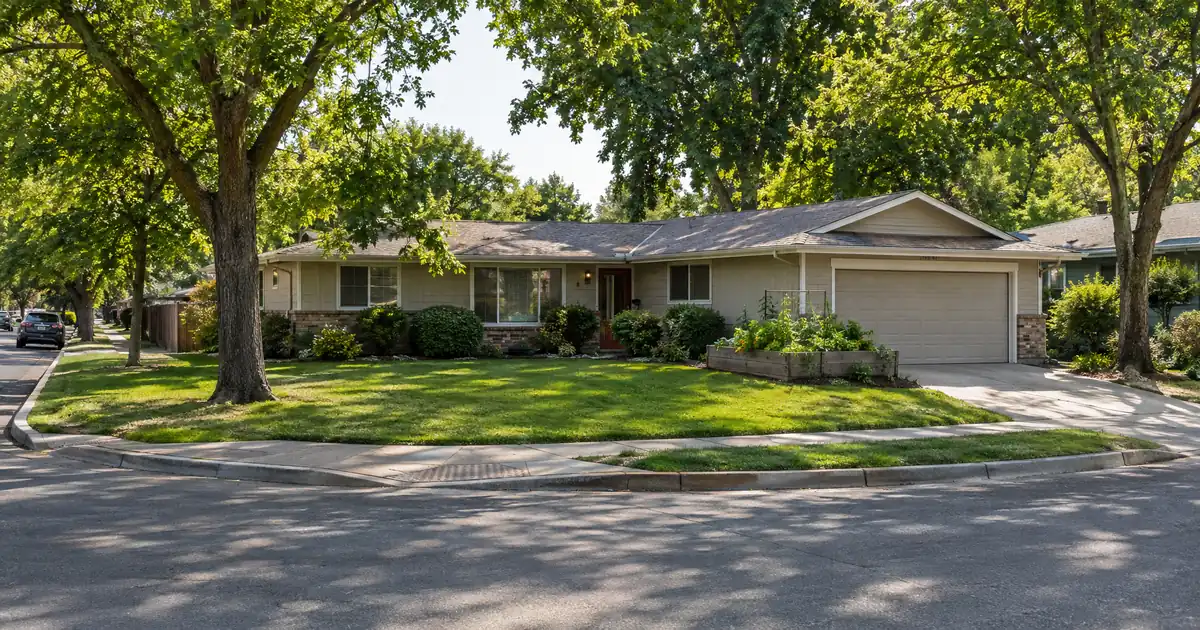
The Quick Read: A DSCR second lien is a line of credit placed behind the first mortgage you keep, and it qualifies primarily on the rental’s income covering the payment, so your paycheck and W-2s never enter the calculation, though credit, the valuation and the property still get reviewed, subject to lender guidelines. You keep your existing first mortgage untouched. You borrow against the equity the rental has built.
- Structure: a standalone second lien behind your first mortgage, or a standalone first lien on a paid-off rental. The LLC can stay on title.
- Coverage test: the rent must cover a stress payment on the entire credit limit at a minimum of 1.10x, through select programs.
- Leverage test: combined loan-to-value (CLTV) up to 70% on a second lien at a 720 credit score or better, on lines of $50,000 to $500,000.
- Still reviewed: credit report, lease, rent estimate, valuation and title. Only personal income calculation drops out. Every figure here varies by lender and program — guidelines, property type, leverage, and credit profile all apply.
What Is a DSCR Second Lien?
A DSCR second lien is a loan secured by your rental that sits behind the first mortgage in repayment priority. DSCR stands for debt service coverage ratio. It measures whether the property’s rent covers its debt payment.
The version we place through a wholesale lender in Lendmire’s network is a revolving line, a DSCR HELOC. HELOC means home equity line of credit. You borrow against the line, repay, and borrow again within limits. This one covers a non-owner-occupied rental of one to four units, never your own home or a second home.
Why would an investor want it? Many owners hold a first mortgage they would not want to replace. A full cash-out refinance resets that loan. A second lien leaves it alone and adds a new layer on top.
Our complete DSCR loans guide covers the wider family of investor loans.
Does a W-2 Job Disqualify You?
No. A W-2 job neither helps nor hurts the file. The lender does not calculate your personal income, pull tax returns, collect pay stubs or build a debt-to-income ratio.
Think of it as swapping the question. A conventional lender asks whether you earn enough to carry the debt. A DSCR lender asks whether the building earns enough. Same goal, different evidence.
That matters most for three kinds of owners:
- Salaried owners whose income is already tied up in a primary mortgage.
- Self-employed owners whose tax returns show heavy write-offs.
- Owners holding rentals in LLCs who want the entity to remain the borrower.
Here is the catch people miss. “Rent instead of income” does not mean “nothing to review.” Your credit report, the lease, the valuation, title and the property type all get looked at. Only the paycheck goes away.
How the Underwriting Works, Step by Step
Every file runs the same basic path. Details shift by lender, so treat this as the pattern.
1. Confirm the lien position. The line sits behind a first mortgage you keep, or stands alone as a first lien if the rental has no mortgage. It is never a third lien.
2. Establish the rent. The lender uses the lesser of the appraiser’s market rent (Form 1007, the single-family rent schedule) or the lease. A lease in place is required. If the lease runs above market, it counts only with three months of receipts.
3. Run the coverage test. Gross monthly rent is divided by a stress payment on the whole credit limit. The minimum is 1.10x.
4. Run the leverage test. The first mortgage balance plus the new line, divided by the property’s value, must fit under the CLTV ceiling.
5. Check credit and history. A 720 score is the floor on a second lien. No 30-day mortgage late in the last 12 months. At least 48 months since a bankruptcy, foreclosure, short sale or deed-in-lieu.
6. Order the valuation and title. More on this below.
All of this is subject to underwriting. Lendmire is the broker. It arranges the file and the lender decides.
How the Coverage Test Reads Your Rent
The stress payment is a fully amortizing payment on the entire credit limit, not just the part you draw. The lender sets that payment at a stricter assumption than the real one. That cushion is intentional.
So a line you only half use is still tested as if fully used. Size the line to the rent, not to your immediate cash need.
Whether the first-mortgage payment joins the qualifying payment on a second lien varies between lenders. The lender’s own coverage calculation governs. Ask for that calculation before you commit, because it changes how much room the rent gives you.
In practical terms, rent that clears 1.10x with margin gives you options. Rent sitting right at the line gives you a smaller line. Rent below it usually means resizing the loan or choosing another structure.
If a two-to-four-unit property is partly empty, the file allows at most one vacant unit. A fully leased building reads cleanest.
Second Lien or First Lien: What the Leverage Looks Like
Leverage depends on lien position. Second lien is measured as CLTV, combined loan-to-value. First lien is measured as plain LTV.
| Factor | Second lien | First lien |
|---|---|---|
| Position | Behind your first mortgage | Rental with no mortgage |
| Max leverage | 70% CLTV | Up to 75% LTV |
| Minimum score | 720 | 700 |
| Line size | $50,000 to $500,000 | Up to $1,000,000 |
On a first lien, the ceilings step down with score and size. At 740 or better, lines to $500,000 reach 75% LTV. From 700 to 739, they reach 70% LTV. Lines above $500,000 carry a 65% LTV ceiling. Final terms depend on lender guidelines, property type, leverage, and the borrower’s complete credit picture.
On a second lien, 720 to 739 and 740-plus both top out at 70% CLTV. Below 720, there is no second-lien option in this program.
These are ceilings on an investment property, not offers. A declining-market flag on the property lowers the ceiling 5 points.
A Percentage Walk-Through
Say your rental’s first mortgage sits at 50% of the property’s value. Under a 70% CLTV ceiling, the new line can add up to 20 points of value. Say the first mortgage sits at 60%. Now the room is 10 points.
Run that against the line minimum, too. Lines start at $50,000, and at least 80% of the line is drawn at closing. If the room under the ceiling is smaller than a $50,000 line, the second lien does not fit that property. That is a common reason a second lien looks good on paper but fails in practice (a high first-mortgage balance eats the equity before the new line gets a seat).
What the Line Looks Like After Closing
Terms are fixed by the program, subject to underwriting:
- A 5-year draw period, interest-only on the drawn balance.
- Then a 25-year fully amortizing repayment period.
- A 30-year maturity.
- A variable rate. The rate and pricing terms come with the lender’s disclosures.
- At least 80% of the line drawn at closing, never less than $50,000.
- Later draws of at least $5,000 each.
Interest-only during the draw period keeps the early carry lighter, but the balance does not shrink on its own. Plan how the repayment period will look before you draw the full line.
What the Valuation and Title Require
For lines up to $400,000, the lender can use an automated valuation (confidence score of 85 or better) paired with a property inspection report. A full interior appraisal is the alternative. Above $400,000, a full interior appraisal is required, on Form 1004, 1073 or 1025.
Appraisal waivers are not accepted on this program. Do not plan around skipping the valuation step.
Title review differs by size. A first lien and any second lien above $400,000 take a full title policy. A smaller second lien takes an owner-and-encumbrance report.
Hazard insurance must cover both liens, and flood coverage applies where required.
Business Purpose: Why Rent Can Stand In for Income
DSCR loans are designed for non-owner-occupied investment properties. Because they are business-purpose investor loans, they are reviewed differently from a standard owner-occupied mortgage.
The Federal Register notice on the federal ability-to-repay rule says business-purpose loans fall outside its coverage and treats investment-purpose loans as business-purpose. The OCC’s examination handbook also lists credit extended to non-natural persons, such as an LLC, among the exempt categories.
That is the legal reason a lender can look at the building instead of the borrower. It does not mean no rules apply. Document the loan’s purpose honestly, and keep funds tied to your investing.
Where the General Rule Breaks
A few edge cases trip up otherwise good files.
Below 720. A second lien has no cell under 720. A paid-off rental may still work as a first lien at 700, with lower leverage.
Two different waiting clocks. Seasoning means the waiting period since the last purchase or refinance. A rental bought or refinanced inside the last 6 months is not eligible, counted from the last note date to the new note date. Ownership is a separate clock. You need 6 months on title, counted from settlement date to note date.
Property type. Eligible: single-family, planned-unit developments, townhomes, two-to-four units, warrantable and non-warrantable condominiums, and lots to 10 acres. Not eligible: rural-designated property, row homes, condotels, commercial or agricultural property, leaseholds, land trusts, age-restricted communities, hobby farms, modular and log homes, land contracts, mixed-use, a property listed for sale in the prior 2 months, or a property with a solar lien.
Short-term rentals. The program needs a lease in place. A property run only on nightly bookings is a poor fit. Short-term rental rules can vary by city, county, HOA, and property type, so investors should confirm local rules before relying on projected rental income.
Borrower type. US citizens, permanent residents and non-permanent residents with a Social Security number are eligible. Foreign nationals and ITIN borrowers are not.
Portfolio size. A borrower can hold at most 5 loans or $2,500,000 with the program.
Your first mortgage’s own terms. Read it before applying. Some first-mortgage documents restrict additional liens. This is the one gap most listings skip, and it costs borrowers real time.
Can the LLC Stay on Title?
Yes, for investment property. The members sign as guarantors. A title holder who is not a borrower signs a non-borrowing owner acknowledgment and the security instrument. The borrowers on the line do not have to match the borrowers on the first mortgage. Eligibility is subject to program terms.
That flexibility is rare among home equity products. Many equity lines for individuals require personal title and a debt-to-income review.
Second Lien, Cash-Out Refinance or Personal-Income Line?
Each tool has a different job.
| Factor | DSCR second lien | DSCR cash-out refinance |
|---|---|---|
| First mortgage | Stays in place | Replaced |
| Reviewed on | Rental income | Rental income |
| Best when | First mortgage is worth keeping | Existing loan is not worth keeping |
An investment-property HELOC qualified on personal income uses a different test. It reads your income and debts, which is the file this program avoids.
If your first mortgage is one you would not want to replace, the second lien usually wins. If you also want to restructure the original loan, a refinance fits better. Lendmire’s piece DSCR HELOC vs. DSCR Cash-Out Refinance Using Rent Instead of W-2 Income walks through that trade-off.
The stronger play often depends on how much equity is left. A thin cushion favors the smaller second lien. A large cushion gives the refinance more room. It is a genuine toss-up on mid-range files.
When This Is the Wrong Tool
Skip the second lien if:
- Your combined leverage already sits near 70%.
- The rent does not clear 1.10x on the full line.
- The property is in an ineligible category.
- You need a loan closed together with a purchase. This line is never written alongside a purchase.
- You want a third lien or a line on your own home.
When coverage falls short, the fixes are practical. Choose a smaller line, wait for a lease renewal at a stronger rent, or pay down the first mortgage.
Tax treatment varies; consult a qualified tax professional before relying on any deduction.
Key Terms Defined
- DSCR (debt service coverage ratio): the rent divided by the debt payment. Above 1.00x means rent covers it.
- Second lien: a loan secured by the property that sits behind the first mortgage.
- CLTV (combined loan-to-value): the first mortgage balance plus the new line, divided by the property’s value.
- Stress payment: a deliberately stricter payment assumption used to test whether rent has a cushion.
- Seasoning: the waiting period since your last purchase or refinance.
- Form 1007: the appraiser’s rent schedule that estimates market rent.
Frequently Asked Questions
Can I get one with a W-2 job?
Yes. Your job is simply not used in the calculation. The lender qualifies the line on the rental’s income, subject to lender guidelines. It still reviews your credit, the lease, the valuation and title.
Do I need tax returns or pay stubs?
No. This program does not ask for tax returns, W-2s or pay stubs, and it builds no debt-to-income ratio. Expect to supply the lease, ownership and entity documents, and insurance details. Everything is subject to underwriting.
Does the first mortgage payment count in the coverage test?
That depends on the lender’s own calculation, and it is not something to assume. Ask for the coverage calculation early so you know how much room the rent really gives you.
What if my rent clears 1.10x but my leverage does not?
Then the leverage test sets the size of the line. A smaller line, a stronger valuation, or more principal paid on the first mortgage can open room. Each depends on the property and credit profile.
Is this offered everywhere?
No. The program is offered in 15 of Lendmire’s 16 licensed states, every licensed state except Tennessee. Availability depends on the property and the lender’s review.
Next Step
If you are considering a home equity line on a rental property and want to see how the numbers work, Lendmire can help you compare DSCR HELOC options based on the property, the rent, the equity available, credit profile, combined leverage, and your goals. Reach the team at 828-256-2183 or request a quote.
About Lendmire
Lendmire, LLC — NMLS# 2371349 — is a mortgage broker that arranges home equity lines of credit in its 16 full-service states through wholesale lenders, on primary residences, second homes and investment properties. Every line is subject to the lender’s guidelines and full underwriting. Scotsman Guide named Lendmire a Top Mortgage Workplace in both 2025 and 2026.
Get Started
Ready to find the right loan for you?
See your offer in seconds. No credit pull, no obligation.
Informational only. Not a Loan Estimate, approval, or commitment to lend. Program availability and eligibility are subject to lender guidelines, credit approval, property review, and underwriting.
References
1. Federal Register – CFPB Ability-to-Repay and Qualified Mortgage Standards Final Rule
2. OCC Comptroller’s Handbook – Truth in Lending Act
This article is part of Lendmire’s DSCR HELOC program — full qualification details, guidelines, and scenarios live on the program page.
Related reading: How Much Can You Borrow on a DSCR HELOC Using Rent Instead of W-2 Income? · How a DSCR HELOC Works With W-2 and LLC Income · Does a DSCR HELOC Count Rent Instead of Your Income? · How to Qualify for a DSCR HELOC Qualified on the Rent Instead of Your Tax Returns · How Much Can You Borrow on a DSCR HELOC Qualified on the Rent Instead of Your Tax Returns? · DSCR HELOC Requirements for Charleston Landlords Borrowing Against Rent Income
Brandon Miller
Founder & CEO, Mortgage Loan Originator, Lendmire, LLC
- Mortgage Loan Originator · NMLS# 1129696 · Verify on NMLS Consumer Access
- North Carolina Real Estate Broker · License# 343312 · Verify on NCREC
- North Carolina Insurance Producer · License# 19053198 · Property, Casualty, Life, Health · Verify on NAIC SBS
- Lendmire, LLC · Firm NMLS# 2371349 · Verify firm licensure
Disclosure information. Lendmire, LLC is a state-licensed mortgage brokerage under NMLS# 2371349. Lendmire is not a depository institution, direct lender, or financial advisor — all loans referenced are placed through wholesale lender partners and are subject to each lender's underwriting standards. This article is provided for general informational purposes and is not a commitment to lend, nor does it constitute financial, legal, or tax advice. Loan programs, terms, rates, and qualification standards change without notice and depend on borrower profile, property type, and the state in which the subject property is located. Equal Housing Opportunity provider. NMLS Consumer Access: nmlsconsumeraccess.org.