
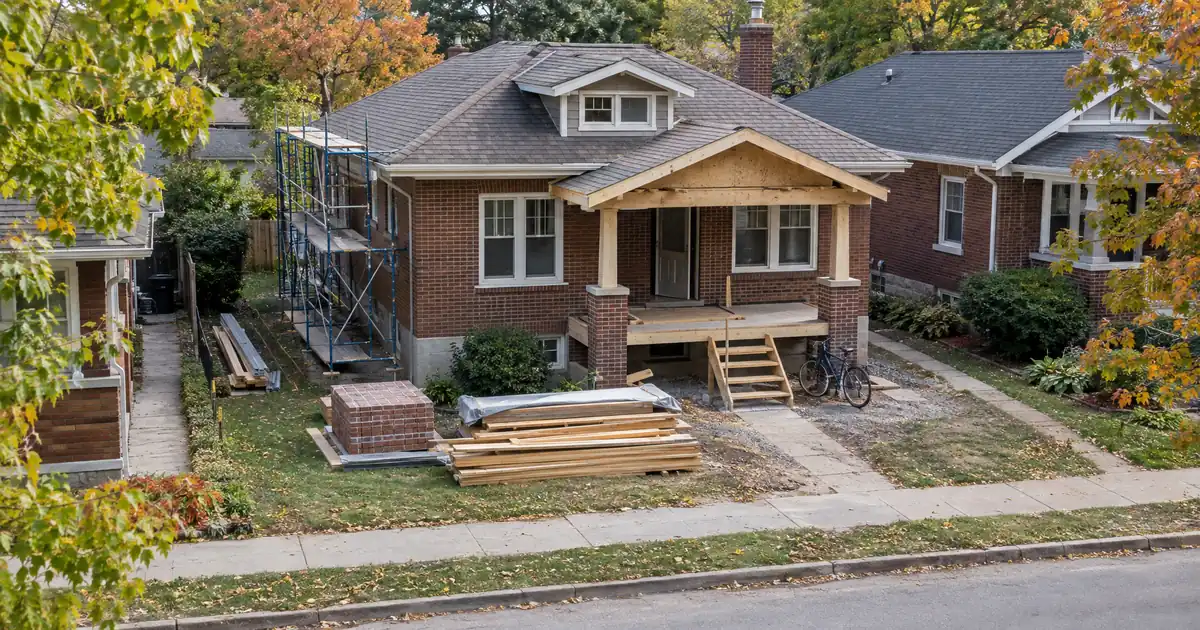
The Quick Read: When a flip stalls, the usual exit is to refinance the hard money payoff into a long-term DSCR loan, which qualifies primarily on property-level rental income covering the payment, subject to lender guidelines. That only works if the rehab is finished, the new appraisal supports the balance, and the loan has aged long enough for the lender’s seasoning rule.
- Four exits exist: cut the price, extend the loan, convert to a rental, or switch products if the rental loan fails.
- Hard money runs 6-18 months, interest-only, with no prepayment penalty. Terms vary by lender, property, and experience.
- A DSCR loan can pay off the hard money loan as a rate-and-term refinance (up to 85% LTV, no cash back) or a cash-out refinance (up to 75% LTV).
- The new lender’s appraisal sets the loan size, not your projected after-repair value.
- Clearing 1.00 coverage on a DSCR loan is one gate among several, and it is not the same as positive cash flow.
Hard money works because it is short. That is also what hurts when the house sits. Each month adds interest while the maturity date gets closer. This guide walks through the exit mechanics start to finish, with the edge cases that derail files.
DSCR Calculator
Run the numbers in your market
Rate source: Freddie Mac 30-yr average via FRED® — Federal Reserve Bank of St. Louis · effective Oct 15, 2026
Prefilled with starting assumptions — enter your own rent or nightly figures, taxes, insurance, and HOA for a more accurate picture.
Program parameters update from Lendmire’s centralized guideline source. Taxes and insurance are editable estimates.
As of Oct 15, 2026 · General Freddie Mac market benchmark, not a Lendmire loan offer. Rent, nightly rate, occupancy, taxes, and insurance are editable estimates. Short-term rental figures are estimates only and vary significantly by season, property type, management approach, and local short-term-rental rules — confirm local regulations before relying on them. Qualifying income for short-term rentals varies by program — some use appraisal market rent, others use documented STR history or projections — and is confirmed in underwriting. Not a Loan Estimate, approval, or commitment to lend. Program availability and eligibility are subject to lender guidelines, credit approval, property review, and underwriting.
What Does “Exiting Hard Money” Actually Mean?
Exiting means a new source of funds pays off the hard money balance. There are four routes in practice: sell, extend, refinance into long-term rental financing, or refinance into something else if the rental loan fails.
Selling means cutting the price until it clears. The market sets value, and rehab spend does not. Extending means asking the lender for more time. Extensions are set by the lender, vary widely, and cost money. Converting means keeping the property, renting it, and replacing the loan with a long-term one.
Many investors use the conversion path. Hard money lenders in the wholesale network and elsewhere price flips as short-term paper. Hard money on the current program runs 6-18 months, interest-only, with no prepayment penalty, and varies by lender, property, and experience. There are no multi-year options. Investors who need more runway refinance into long-term rental financing, which Lendmire brokers through select lenders in its network. The program details sit on the hard money exit refinance page.
Key Terms Defined
- Maturity date: the day the full hard money balance is due.
- Seasoning: the waiting period after you take title before a lender will refinance on appraised value rather than cost.
- Rate-and-term refinance: a payoff-only refinance with no cash back at closing.
- Cash-out refinance: a refinance that returns cash from equity.
- Form 1007: the appraiser’s market rent schedule for a single-family rental.
- DSCR: monthly rent divided by the full monthly obligation (principal, interest, taxes, insurance, and any HOA dues).
How Does the Exit Refinance Work, Step by Step?
The refinance runs in a fixed order, and each step can stop the file. Skipping one is how deals fail.
1. Add up the real payoff. It is more than purchase plus rehab. Interest, points, draw fees, and extension fees all count. Interest accrues for as long as the loan is open.
2. Decide whether the property is a rental. An unfinished rehab will not work, because the appraisal and rent schedule depend on finished condition. REI Investor Guide notes the property must be rent-ready but does not need a tenant, and that most lenders use appraisal market rent on a vacant property.
3. Order the new lender’s appraisal. It includes a market rent schedule. The loan is sized on this value. Here is the real risk on a stalled flip: if buyers would not pay your list price, the appraiser may not either.
4. Test coverage as several gates. Investor Fuel describes coverage ratio, minimum rent, property type, and lease documentation as separate gates. A file near 1.0 can fail on a gate other than the ratio.
5. Check seasoning against the maturity date. On the network’s DSCR cash-out refinance, the common expectation is about 6 months of ownership, measured from title recording. If seasoning clears after your maturity date, the extension cost becomes part of the math.
6. Compare the extension cost with the refinance cost. If the refinance is cheaper than the extension, refinance. If it is not, extend or sell.
7. Pick the loan type and close. A DSCR rate-and-term refinance pays off the balance with no cash back and allows up to 85% LTV. A DSCR cash-out refinance caps at 75% LTV. Both are subject to lender guidelines and not a commitment to lend.
What Does the DSCR Loan Look At?
It looks at the property, then the borrower. The DSCR loan compares rent used for lender review to the full monthly obligation. On the network, 1.00 is where select programs start, not a universal standard. Stronger ratios open better leverage. A separate select-lender path takes coverage below 1.00, with leverage and terms adjusted.
Credit matters too. A 620 floor exists in parts of the network, most programs want around 660, and 700+ unlocks the strongest tiers. Reserves vary by lender, leverage, loan size, and transaction type. They commonly run around 6 months of PITIA, and about 9 months above $1,500,000. Standard programs go up to $3,000,000.
Flip experience does not drive the exit. The DSCR loan reviews the property’s rental income. A thin track record on flips does not by itself block the refinance, though credit and reserves still apply.
One caution that trips investors: clearing 1.00 does not mean positive cash flow. DSCR counts rent against the payment only. Repairs, vacancy, management, utilities, and capex sit outside it. Read the complete DSCR loans guide for the full qualification framework.
Where the General Rule Breaks
Several edge cases change the answer. Know them before the maturity date, not after.
Payoff-only versus cash-out. If time is short, rate-and-term is the safer route. You give up cash back, but you drop the maturity pressure. Take equity later, once the loan has seasoned.
Rent comes in thin. A deal near 1.0 can still be declined on a separate rent requirement. The fallback is a different product. In the Investor Fuel case, a DSCR refinance failed and the file moved to a bank statement loan based on the borrower’s documented income. Lendmire’s piece Exiting Hard Money Into a No-Ratio DSCR Loan When the Rent Is Still Thin covers that path. No-ratio structures exist only through select lenders, generally for borrowers who already own a primary residence.
You spent more than it appraises for. If all-in cost sits near the leverage cap, the refinance recycles little cash. Selling may beat holding.
Re-titling mid-process. Moving the property into an LLC can reset seasoning at some lenders. Ask before you record a new deed. LLC vesting is available, subject to lender program eligibility.
Prepayment penalties. Hard money has none on this program. A DSCR loan may carry a step-down prepayment penalty, depending on the lender and structure. That matters if you later sell the rental.
Property type. Manufactured homes, log homes, and barndominiums are not offered in the network’s DSCR programs. If your flip is one of these, the conversion route is closed.
Delayed financing. That is an agency exception, not a DSCR feature. A hard-money-financed purchase rarely fits it.
Extend, Refinance, or Sell?
| Situation | Best fit | Main trade-off |
|---|---|---|
| Rent-ready, seasoning clears before maturity | DSCR refinance | Long hold, prepayment penalty |
| Seasoning clears after maturity | Short extension, then refinance | Extension fee |
| Rent too thin for DSCR | Alternate product or sell | Different documentation |
| Cost basis near the cap | Price cut and sell | Realized loss |
| Rehab unfinished | Finish first, then decide | More carry cost |
Extensions are discretionary, so whether a lender grants one, and on what terms, varies from lender to lender.
How Do Holding Costs Change the Decision?
They compound, and they are easy to underestimate. Interest-only hard money charges for every day the loan is open. Add taxes, insurance, utilities, and upkeep on a property that is producing nothing. Every added month shrinks the equity you were trying to protect.
Price the wait before you commit to it. If the exit is a rental refinance, estimate carry through the seasoning period and compare it to a price cut today. Sometimes a modest discount beats six more months of interest. Honestly, that is the call many flippers avoid making until the lender calls first.
The better habit comes earlier. Line up the exit product before the rehab starts, and work with a broker who has more than one product type available. The Investor Fuel case makes the same point: the flipper who had a fallback closed, and the one who did not would have been stuck.
Mistakes That Derail Exit Files
- Waiting for the last week. Seasoning and appraisal take time you cannot compress. Start early.
- Using projected ARV. The new lender’s appraisal controls the loan size.
- Assuming rehab completion starts seasoning. Seasoning generally runs from the deed recording date. Confirm lender policy.
- Ignoring the rent gates. Minimum rent and lease documentation matters as much as the ratio.
- Refinancing into a payment the rent cannot carry. A conversion swaps a short fuse for a long hold.
- Skipping the entity check. Settle vesting before you apply, not mid-file.
Tax treatment can depend on how the funds are used and how the property is held; investors should keep clear records and speak with a qualified tax professional before relying on any deduction.
Documents to Have Ready
Gather the hard money note and payoff statement, the settlement statement showing your recording date, rehab draw records, the insurance binder, entity documents if vested in an LLC, and proof of reserves. For a leased property, add the lease. For a vacant one, the appraisal’s market rent does the work. A complete package leaves fewer preventable gaps for the lender to chase.
Frequently Asked Questions
Can I extend a hard money loan instead of refinancing?
Often, but it is the lender’s call and it costs money. Extensions are not standardized. They work best when the project is on track and you are current. Compare the fee against the cost of refinancing before you accept.
Can I refinance a vacant flip into a DSCR loan?
Yes, if the property is finished and rent-ready. A tenant is not required, and lenders generally use the appraisal’s market rent when the property is vacant. An unfinished rehab will not qualify.
How much can a DSCR loan pay off after a flip?
On the network, a DSCR rate-and-term refinance goes up to 85% LTV with no cash back, and a DSCR cash-out refinance caps at 75% LTV. Credit, reserves, coverage, and the new appraisal all apply, and nothing is guaranteed. These specifics are subject to lender guidelines and a full review of property, leverage, and credit.
What if the DSCR refinance fails?
The file can move to another product. A bank statement loan, which is reviewed on documented income under the applicable program, is one option. Select lenders also offer coverage below 1.00 with leverage and terms adjusted.
Does finishing the rehab start the seasoning clock?
Generally no. Seasoning typically runs from the deed recording date, so a long rehab does not shorten the wait. Confirm the policy with the lender before you plan around it.
If you are buying or refinancing a rental property and want to see how the numbers work, Lendmire can help you compare DSCR loan options based on the property income, credit profile, leverage, and investor goals. Reach the team at 828-256-2183 or request a quote.
Every unsold flip is a clock, and the investors who exit cleanly are the ones who priced that clock before they signed the note.
About Lendmire
As a DSCR and non-QM mortgage broker, Lendmire — NMLS# 2371349 — connects investors with wholesale lending channels across 41 markets, including Washington, D.C. The property’s rental income, not the borrower’s tax returns, is central to lender review, which works for self-employed operators and portfolios beyond four financed properties. Scotsman Guide named Lendmire a Top Mortgage Workplace in both 2025 and 2026.
Get Started
Ready to find the right loan for you?
In about 30 seconds you can review financing options available for your investment property. No commitment required.
Informational only. Not a Loan Estimate, approval, or commitment to lend. Program availability and eligibility are subject to lender guidelines, credit approval, property review, and underwriting.
References
1. REI Investor Guide: How to Refinance Into a DSCR Loan After a Fix and Flip
2. Investor Fuel: Flip Won’t Sell, Refinance Out of Hard Money
This article is part of Lendmire’s hard money loan program — full qualification details, guidelines, and scenarios live on the program page.
Related reading: How to Qualify for a 40-Year DSCR Loan on a Single-Family Property · How Much You Can Borrow for a DSCR Loan for First-Time Investors? · How a BRRRR Rehabber Uses a Signed Lease to Exit Hard Money Early
Brandon Miller
Founder & CEO, Mortgage Loan Originator, Lendmire LLC
- Mortgage Loan Originator · NMLS# 1129696 · Verify on NMLS Consumer Access
- North Carolina Real Estate Broker · License# 343312 · Verify on NCREC
- North Carolina Insurance Producer · License# 19053198 · Property, Casualty, Life, Health · Verify on NAIC SBS
- Lendmire LLC · Firm NMLS# 2371349 · Verify firm licensure
Legal disclosures. Lendmire (NMLS# 2371349) is a state-licensed mortgage brokerage that arranges financing through wholesale lender relationships. Lendmire is not a direct lender, depository institution, or registered financial advisor. The discussion above is general informational content about real estate financing — it is not financial, legal, or tax advice, and readers should consult licensed professionals for guidance on their individual circumstances. Loan inquiries are subject to lender underwriting; this article does not represent a commitment to lend. Loan terms, rates, and qualification standards vary by borrower, property, and state, and are subject to change at any time. Equal Housing Opportunity. NMLS Consumer Access: nmlsconsumeraccess.org.