
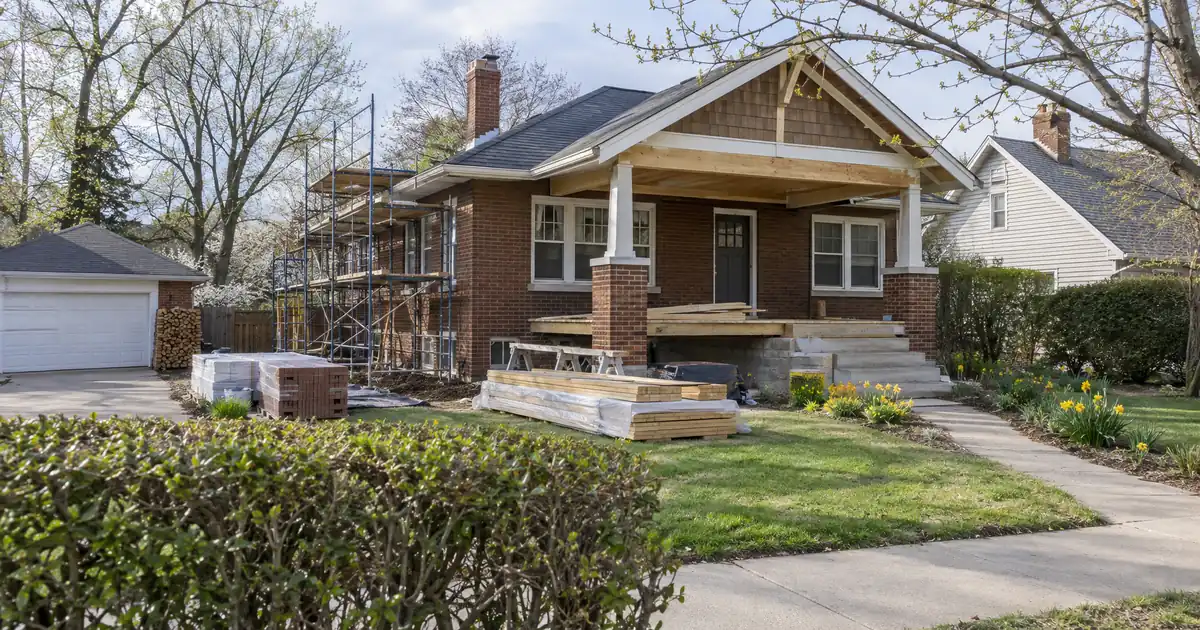
The Quick Read: On a first flip, the lender with faster, more reliable draws usually fits a thin cash cushion and a tight schedule, while the cheaper lender fits an investor with deep reserves, a simple scope, and a contractor who will wait to be paid. These are two ways of choosing within one product, the short-term rehab loan, not two different loans. The deciding factor is how and when the rehab money reaches you, not only what the loan costs.
- Rehab funds sit in a lender-controlled holdback and are released against completed, inspected work.
- You front part of the work, so liquidity matters more than most first-timers expect.
- A cheaper lender with slow or batched inspections can stall a crew and extend the carry period.
- A faster lender can be the wrong call if the scope is simple and your cash is deep.
- Compare structure (inspections, turnaround, interest on undrawn funds, extensions) alongside price.
Hard money is asset-based. The lender looks at the property, the plan, and the exit more than at your personal income. That is true of both options here, so the choice comes down to draw administration and your own cash position.
What this loan actually costs to carry.
Hard money is sized against the project and priced by time. Enter the deal and see how much the program will lend, the cash required at closing, the carry while you hold it, and what is left at the exit.
Leverage tiers on the current program: 85% with fewer than 2, 90% with 2 or more, 93% with 5 or more completed projects — every tier capped at 75% of after-repair value. Loan amounts up to $5,000,000, larger by exception; terms of 6 to 18 months, interest-only, no prepayment penalty. The rehab portion funds in draws against completed work, not at closing.
Program parameters shown update from Lendmire’s centralized guideline source. Rate, points, and months are editable assumptions, not quoted terms.
Cost cap sets the loan · positive spread
Illustrative estimate only — not a quote, Loan Estimate, approval, or commitment to lend. Rate, points, and months are editable assumptions. Hard money is business-purpose financing for real estate investors, not a consumer mortgage. Leverage on the current program tops out at 93% of project cost for investors with a documented track record, capped at 75% of after-repair value, with rehab funding up to 100% of the documented budget released in draws; actual terms vary by lender, borrower experience, property, and exit. Lendmire is a mortgage broker, not a lender.
The honest answer on who each is for: the fast-draw lender suits a first-timer with limited liquidity, a contractor who expects prompt payment, and a deadline that matters. The cheaper lender suits an investor who can carry the project through slow draws and has a scope simple enough that delays are unlikely to compound.
Side-by-Side
The table below describes published industry norms for short-term rehab loans, not Lendmire guideline terms. Structures vary by lender, property, and experience, and nothing here is a commitment to lend.
| Factor | Fast-Draw Lender | Cheaper Lender |
|---|---|---|
| Review basis | Property, plan, and exit | Property, plan, and exit |
| Documentation | Contract, scope, budget, proof of funds | Same, often with more review steps |
| Draw inspection | Often photo or video review, or quick scheduling | Often in-person, scheduled in batches |
| Interest on undrawn funds | Varies; ask in writing | Varies; ask in writing |
| Property types | Non-owner-occupied residential | Non-owner-occupied residential |
| Entity vesting | LLC or individual, per lender terms | LLC or individual, per lender terms |
| Reserve expectation | Often lower need for personal float | Often higher need for personal float |
| Timeline (qualitative) | Predictable release cadence | Release cadence may stretch |
Read the qualification rows twice. They are nearly identical on purpose. Neither lender is easier to qualify with. The difference shows up after closing, when you submit your first draw request.
How a Draw Actually Works
Most first-timers assume the lender hands over the rehab money at closing. Usually it does not. The purchase portion funds at closing, and the rehab portion goes into a lender-controlled holdback. You pay for work first, then request a draw against finished line items. An inspector verifies the work, and the lender releases funds, often less a retained amount.
The steps run in this order:
1. The lender reviews the purchase contract, scope of work, budget, and your experience.
2. An appraisal or price opinion, plus title and insurance, set the collateral picture.
3. The purchase funds at closing; the rehab budget sits in holdback.
4. You start work, usually fronting the contractor for the first phase.
5. You submit a draw request with invoices, photos, and often lien waivers.
6. The lender verifies the work by inspection or photo and video review.
7. Funds release, less any retained amount, and the balance pays out at completion.
No federal regulator writes private hard-money draw rules. Draw schedules are contract terms. The closest public template is the FHA 203(k) program, an owner-occupant rehab product that is not hard money. HUD’s 203(k) Borrower’s Acknowledgement describes a 10 percent holdback on each draw request, kept to protect against liens, and retained for up to 35 days or the lien-filing period if longer. Treat that as a template only. Private lenders set their own retainage, and 10 percent is not a market norm.
Network terms are different from that template. Across Lendmire’s wholesale network, up to 100% of the rehab budget funds in draws against completed work, and that figure is a rehab-budget number, never a purchase LTV. Terms and structure vary by lender, property, and experience.
When a Fast-Draw Lender Is the Better Fit
A fast-draw lender earns its place when cash is the scarcest thing on the project. On a first flip, that is most of the time.
Picture an investor with a modest cash cushion beyond the down payment. The contractor wants a deposit, then payment at each milestone. If the lender’s inspector takes a long time to schedule, the crew waits, the carry period grows, and the sale or refinance slides back. Each stalled week sits on top of interest-only payments on the funded balance.
A fast-draw lender fits when:
- Your reserves are thin and you need reimbursements to arrive on a predictable cadence.
- Your contractor is new to you, or insists on prompt milestone payments.
- The scope is complex, with several trades that depend on each other.
- The loan term leaves little room, since terms run 6-18 months on the current network program, interest-only, with no multi-year options.
That last point matters. If the rehab runs late, the term can expire before the property is sold or refinanced. Draw speed ties directly to your exit.
A practical test is to ask for a dry run. Have the lender walk through a hypothetical first draw, from request to wire, and put the steps in writing. Ask who inspects, how inspections get ordered, whether there is a stated turnaround, and whether interest is charged on the full balance or only on funds drawn.
When a Cheaper Lender Is the Better Fit
The cheaper lender wins more often than speed-focused advice admits. It wins when delay is unlikely to hurt you.
Say you have deep reserves and a cosmetic scope: paint, flooring, fixtures, a kitchen refresh. The work moves in few phases, so there are few draws to wait on. Your contractor accepts a deposit and a final payment, or you can cover the middle from your own cash. A slow inspection costs you little because you were never relying on the reimbursement to keep the crew paid.
A cheaper lender fits when:
- You can carry the project comfortably between draws.
- The scope is simple and the schedule has slack.
- Your contractor has worked with you before and will tolerate a payment lag.
- You are not racing a term deadline or a seasonal sale window.
The cost to watch is hidden. A lower-priced loan with slow, batched inspections and interest on undrawn funds can carry more real cost than it appears to. This article does not compare pricing, so the tool here is structure. Weigh holdback terms, inspection method, turnaround, interest on undrawn funds, and extension terms before you weigh the headline number. Pricing itself lives in the calculator, which gives an illustrative estimate only.
How Much Personal Cash a First Flip Needs
The cash you hold outside the loan decides which lender fits. Every draw model asks you to front work, and reimbursement arrives later. Network leverage for fix-and-flip files runs 85% of project cost with fewer than two completed projects, 90% of project cost at two or more, and 93% of project cost at five or more, with every tier capped at 75% of after-repair value. These figures are loan-to-cost, vary by lender, property, and experience, and the top tier is reserved for experienced investors.
For a first-timer that means the lowest tier. You bring the remaining share of project cost yourself, plus a float to cover work between draws. Size that float against your contractor’s payment terms and your lender’s draw cadence, not against the best case. If the cadence is slow, the float must be larger. If the cadence is reliable, it can be smaller. That is the real trade between the two lenders.
Credit also matters. A 620 minimum score applies in the network, with additional conditions below 660, and first-time investors qualify at the lower leverage tiers. Underwriting stays asset-based, meaning property, plan, and exit, subject to lender guidelines.
Where Slow Draws Hurt Most
Run a simple stress test in your head. Take the same project under fast, average, and slow draw timing.
- Fast timing: crews stay paid, the schedule holds, and the exit date holds with it.
- Average timing: small gaps appear, and your float covers them.
- Slow timing: the crew pauses, you front more than planned, and the carry period stretches toward the end of the term.
The cheaper lender’s advantage can disappear under slow timing, because delay adds carry and risks an extension or a missed exit. It holds up under fast or average timing, or when your float is deep enough to absorb the gap. That is the crossover: the less cushion you have, the sooner the cheaper loan stops being cheaper in practice.
First-timers carry extra exposure here. An unproven contractor relationship means less goodwill when a draw runs late, and fewer completed projects mean the lowest leverage tier and the most cash tied up in the deal.
Red Flags Before You Sign
Whichever lender you pick, watch for these:
- A vague answer on who inspects and how long it takes.
- Terms that shift after a verbal commitment.
- Draws funded below the agreed amount.
- No written explanation of interest on undrawn funds.
- Layers of brokers or fund controllers between you and the money, which can add delay.
Some private lenders fund the rehab with no holdback, and others ask you to bring all rehab funds to closing. Neither is standard, and both change the cash you need. Read the structure before you read the price.
Entity Setup and the Business-Purpose Question
Settle your vesting plan before the flip loan, not after. Both the rehab loan and any later rental loan ask for entity documents, and mismatched paperwork creates preventable gaps. Subject to lender program eligibility, loans to an LLC are common on investor files.
Business-purpose lending is treated differently from owner-occupied mortgages. The CFPB’s Truth in Lending exam material lists an exemption for credit extended primarily for a business purpose. The test turns on the purpose of the loan, not the label investment property, as Compliance Alliance explains, and a flip is not automatically exempt. Talk to counsel about how you hold title.
The Bridge to Long-Term Rental Financing
A rehab loan and a DSCR loan do different jobs, and they run in sequence. A distressed or partly renovated property is generally not ready for rental financing until it is rent-ready. A DSCR loan is reviewed primarily on property-level rental income covering the payment, subject to lender guidelines, and it does not fund staged rehab draws.
If your first flip becomes a hold, many investors refinance out of hard money into long-term DSCR financing once the property is stabilized, and Lendmire brokers that path. Lendmire’s complete DSCR loans guide explains how rent coverage is calculated. Clearing the coverage test is not the same as positive cash flow, because repairs, vacancy, and management sit outside the calculation. For more on the choice of funding tools, see Lendmire’s piece HELOC vs Hard Money for a Flip: Which Wins at Different Deal Sizes.
Key Terms Defined
Holdback: The part of the loan kept by the lender and released as rehab work is completed.
Draw: A request for a portion of the holdback after you finish and document a phase of work.
Loan-to-cost: The loan amount measured against the total project cost, which is the purchase plus the rehab budget.
After-repair value (ARV): The estimated value of the property once the work is finished.
Retainage: An amount held back from each draw until liens are confirmed clear.
The Verdict
Choose the fast-draw lender when your cash is thin, your scope is complex, your contractor expects prompt payment, or your term leaves little slack. Choose the cheaper lender when your reserves are deep, your scope is simple, and a slow draw would cost you little. Either way, make the lender show you the draw process in writing before you sign.
If you are buying, rehabbing or refinancing an investment property on a short timeline and want to see how the numbers work, Lendmire can help you compare hard money options based on the project, the exit plan, leverage, and your goals. Leverage, terms, and eligibility vary by lender, property, and experience, and nothing here is a commitment to lend.
Frequently Asked Questions
Is the lowest-priced lender always a more affordable loan?
No. Interest on undrawn funds, inspection delays, and draw fees can change the real carry cost. A lender that looks cheaper on paper may cost more if its draws stall your crew and extend the project.
Who pays the contractor first on a flip?
Usually you do. Rehab money sits in holdback and is released against completed, inspected work, so you front part of the budget and are reimbursed. Some lenders structure it differently, so confirm the model in writing.
Can a first-time flipper qualify?
Yes, at the lower leverage tiers. Network fix-and-flip leverage runs 85% of project cost with fewer than two completed projects, capped at 75% of after-repair value, and varies by lender, property, and experience. A 620 minimum score applies, with extra conditions below 660.
Can I negotiate draw terms?
Often, yes. Turnaround expectations, inspection logistics, and fee structure can be discussed alongside everything else. Ask for the first-draw walkthrough and any commitments in writing.
What happens if the rehab runs past the loan term?
The term can expire before the property is sold or refinanced. Network terms run 6-18 months, interest-only, with no multi-year options, so draw delays feed directly into exit risk. Many investors who hold refinance into long-term DSCR financing after stabilizing.
About Lendmire
A non-QM mortgage broker (NMLS# 2371349), Lendmire arranges DSCR financing for real estate investors in 41 markets — 40 states plus Washington, D.C. Because deals are underwritten primarily on property cash flow rather than personal income documentation, the structure suits self-employed buyers and entity-owned portfolios. Lendmire places loans through wholesale investor lenders; it is not a direct lender. Scotsman Guide named Lendmire a Top Mortgage Workplace in both 2025 and 2026.
Get Started
Ready to find the right loan for you?
In about 30 seconds you can review financing options available for your investment property. No commitment required.
Informational only. Not a Loan Estimate, approval, or commitment to lend. Program availability and eligibility are subject to lender guidelines, credit approval, property review, and underwriting.
References
1. HUD 203(k). Borrower’s Acknowledgement (Form 92700-A)
2. CFPB Truth in Lending exam material
3. Compliance Alliance, Reg Z and Investment Properties
This article is part of Lendmire’s hard money loan program — full qualification details, guidelines, and scenarios live on the program page.
Related reading: How to Document Private Loan Money on Your First DSCR Rental Loan · How to Make a DSCR Cash-Out Cover Your Hard Money Note and Rehab Cards · Staying With the Repriced DSCR Lender vs Moving to a Broker
Brandon Miller
Founder & CEO, Mortgage Loan Originator, Lendmire LLC
- Mortgage Loan Originator · NMLS# 1129696 · Verify on NMLS Consumer Access
- North Carolina Real Estate Broker · License# 343312 · Verify on NCREC
- North Carolina Insurance Producer · License# 19053198 · Property, Casualty, Life, Health · Verify on NAIC SBS
- Lendmire LLC · Firm NMLS# 2371349 · Verify firm licensure
Important disclosures. Lendmire (NMLS# 2371349) is a licensed mortgage brokerage. Lendmire is not a direct lender, depository institution, or financial advisor. All loan inquiries are subject to lender underwriting; this article does not constitute a commitment to lend. Rates, terms, and program guidelines are subject to change without notice and vary by borrower profile, property type, and state. Information in this article is general in nature and is not financial, legal, or tax advice. Equal Housing Opportunity. NMLS Consumer Access: nmlsconsumeraccess.org.