
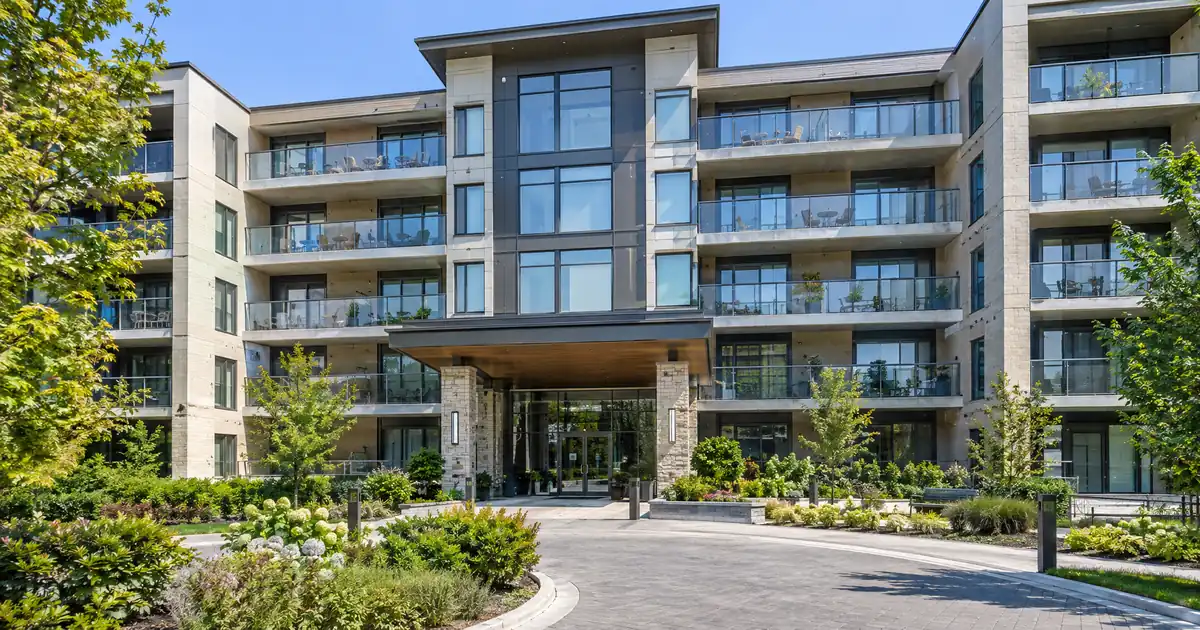
The Quick Read: It depends on the lawsuit and on what it does to the building. FHA reviews the condo project, not just your unit, and a suit that threatens safety, habitability or the association’s finances can block the loan. A routine, insured claim is treated very differently. Your own credit and equity matter too, but they can’t fix a project problem.
Why Does FHA Care About the Building?
FHA insures the loan, and the loan is secured by a unit inside a shared project. If the association gets hit with a big judgment, every owner’s finances take the hit. So HUD checks the project itself: insurance coverage, financial condition, nature of title, physical condition and “the existence of any pending legal action”.
Your unit can look perfect on paper. The building can still stop the file.
Across the wholesale lenders we place FHA files with, this is the surprise borrowers hit most. They have equity, steady payments and good credit. Then the project review turns up something they never knew about. You do not control the association’s lawsuit, but you can find out about it early.
If you want the borrower-side mechanics first, Lendmire’s FHA cash-out refinance program page covers the basics of how the loan works.
What Counts as “Litigation” to FHA?
HUD’s Handbook 4000.1 glossary defines litigation as a current or pending lawsuit, arbitration or mediation involving the condo project or the association. It also reaches matters that concluded within 12 months of the application date.
Two things are carved out:
- Foreclosures.
- Actions the association brings to collect past-due assessments from owners.
So the association suing a unit owner who stopped paying dues is not the trigger. A construction-defect suit against the developer, or a dispute over the building’s structure, is a different story.
One caution: HUD updates its handbook periodically, and the rules on project litigation appear in Handbook 4000.1, sections II.A.8.p and II.C. Treat this article as the map and let your lender confirm the current wording.
Which Lawsuits Matter and Which Don’t?
HUD’s project approval form, HUD-9992, asks about pending litigation and then triages it. The questions focus on whether the suit relates to safety, structural soundness, habitability or functional use. They also ask when a settlement or judgment is expected, whether insurance can pay without hurting the project’s finances, and whether any litigation risk is not covered by insurance or exceeds coverage. You can read the form itself at HUD’s HUD-9992 page.
That triage is the whole game. Here is how it tends to play out. These are general tendencies, not predictions, and each lender applies its own judgment.
| Type of suit | Who is involved | Typical reaction |
|---|---|---|
| Owner slips on the sidewalk | Association, insured | Often manageable |
| Association collecting dues | Association vs. owner | Excluded from the definition |
| Construction defect | Association vs. developer | Serious; heavy scrutiny |
| Structural or safety dispute | Association vs. contractor or owners | Commonly a problem |
| Large uninsured claim | Anyone vs. association | Commonly a problem |
| Suit settled recently | Any | Still counts for 12 months |
Some lenders add stricter rules of their own on top of HUD’s. That is why two lenders can give two answers on the same building.
Three Quick Scenarios
Picture a homeowner whose association is defending a minor injury claim that its liability insurance fully covers. The suit does not touch safety or finances. This is the kind of file that can move forward, subject to the rest of the project review.
Now say the association is suing the original builder over water intrusion and failing balconies. The suit goes to habitability and structure, and any repair bill may land on owners as special assessments. Expect hard questions, and expect a real chance the project is ineligible.
Consider a third case. The association settled a defect suit six months ago. The homeowner assumes it is over. Under the handbook definition, it is still litigation for 12 months after it concluded.
How Does the Review Actually Work?
Here is the sequence, step by step.
1. The lender checks the project’s status. Through FHA Connection, the lender looks the building up on HUD’s approved list. HUD’s FHA Connection help says a project must be approved before FHA insurance applications on individual units can be processed. Statuses include approved, expired, rejected and withdrawn.
2. The route gets picked. If the project is approved and current, the unit follows the standard path. If it is not approved, or its status is expired, rejected or withdrawn, the lender may pursue single-unit approval.
3. The association answers the litigation questions. Its manager or board completes them. If the answer is “yes,” the lender must follow the handbook’s verification steps. The single-unit questionnaire, HUD-9991, points lenders to Handbook 4000.1 section II.A.8.p.iii for that.
4. Documents get gathered. HUD’s required documentation list includes the HUD-9992 and, once units have closed, the HUD-9991. Lenders also typically want governing documents, the budget, a balance sheet, insurance certificates and a written explanation of any suit.
5. The underwriter weighs four things. The nature of the suit, whether insurance covers it, whether a judgment could threaten solvency, and the timing.
6. Your personal underwriting runs. Occupancy, payment history, credit, income and a new appraisal.
Delays at the association become delays on your file. Nobody on your side can speed up a management company that sits on a form.
How Is Cash-Out Different Here?
The condo review is the same project-level review. Cash-out adds borrower-level rules on top.
Based on the programs we arrange, an FHA cash-out reaches up to 80% loan-to-value (LTV, the loan as a percentage of the home’s value) on a home you have owned and occupied for 12 months before the case number is assigned. It must be your principal residence. Cash-out is not available on second homes or rentals. Some older HUD material still shows 85%. That figure is out of date.
Compare that with the other FHA refinances:
| Refinance type | Appraisal | Leverage |
|---|---|---|
| FHA Streamline | None | Existing FHA loan only |
| FHA rate-and-term | Yes | Up to 97.75% on a principal residence |
| FHA cash-out | Yes | Up to 80% LTV |
A Streamline on an existing FHA loan skips the appraisal and uses a limited credit review, so it asks less of you. Cash-out has no such shortcut. You get a new appraisal, full credit review and the project review.
FHA cash-out also carries mortgage insurance: an upfront premium of 1.75% of the base loan, usually financed, plus an annual premium that depends on term, amount and LTV. Above 90% LTV on a thirty-year loan, the annual premium lasts the full term. At or below 90%, it ends after eleven years. Cash-out lands at 80%, so the shorter schedule is the one that generally applies. County loan limits apply too. All of this is subject to lender guidelines and full file review.
What If Your Building Is Not on the Approved List?
Not on the list does not mean not eligible. Single-unit approval lets a lender approve one unit in a project that is not approved, or whose status is expired, rejected or withdrawn.
It has limits. HUD describes it as available only if the project:
- Is complete and ready for occupancy.
- Has at least five dwelling units.
- Is not a manufactured home project.
- Meets a subset of project requirements, including FHA concentration, owner-occupancy and financial condition.
The Federal Register rule adds that HUD can exclude projects it has found, through an adverse determination, to have significant viability problems.
So single-unit approval is a route, not a loophole. Litigation questions still get asked.
How Do You Find Out Where Your Building Stands?
Do this before you pay for an appraisal.
1. Ask your association manager whether any suit, arbitration or mediation is pending, or ended in the last 12 months. 2. Ask who is suing whom. Association versus a developer is a very different matter from association versus a delinquent owner. 3. Ask whether insurance is defending the claim. 4. Ask whether the building is on HUD’s approved list, and its current status. 5. Ask your loan officer to pre-screen the project before you commit to anything.
If the manager gets vague, take that as information.
What If the Suit Settles or the Approval Lapses?
A settled suit stays on the books for 12 months after it concludes. Waiting a full year can be a real strategy if your cash-out is not urgent.
Approvals expire too. HUD’s own help page lists expired as a status, so a building approved when you bought can lapse. Your existing mortgage is not affected by that. A new refinance, or a future buyer’s financing, is.
What Are Your Options If FHA Does Not Work?
You still have paths. Each trades something away.
| Option | What you gain | What you give up |
|---|---|---|
| Wait out the 12 months | Same FHA program later | Time, with the cash need unmet |
| Conventional cash-out | Separate project rules | Different credit and equity terms |
| Home equity loan or line | May avoid FHA project review | A second payment; your first loan stays |
| Non-warrantable condo lender | May accept a building FHA rejects | Typically stricter terms |
| Keep your current loan | No project review at all | No cash out |
A project that fails FHA may still pass those, or may not. A lender can tell you after a project review.
Key Terms Defined
Project approval: HUD’s sign-off that a whole condo building meets FHA standards.
Single-unit approval: FHA approval of one unit in a building that is not on the approved list.
Litigation (FHA’s definition): A current or pending suit, arbitration or mediation involving the project or association, including matters that concluded within 12 months.
LTV: Loan-to-value, the loan amount as a percentage of the home’s appraised value.
Principal residence: The home you actually live in as your main address.
Case number: The HUD identifier assigned to an FHA loan file.
Frequently Asked Questions
Does the type of lawsuit matter?
Yes, more than anything else. HUD’s forms separate suits about safety, structure and habitability from routine matters. Association collection suits against owners and foreclosures are excluded from the definition altogether.
Does insurance coverage help?
Yes, it can. HUD’s form asks whether insurance can pay a settlement without hurting the project’s finances. Risk that is not covered, or that exceeds coverage, is flagged for closer review.
Will my existing FHA loan be affected if the building enters litigation?
No. Your current mortgage stays as it is. The problem shows up when you try to refinance or sell, because the new loan needs its own project review.
Can I use single-unit approval if my building is not on the list?
Possibly. The project must meet HUD’s conditions, such as having at least five units and being complete. Litigation questions still apply, so it is not a way around them.
Does it matter who filed the suit?
Yes. What matters is who is involved and how it affects the project. A suit against a developer over defects is very different from the association pursuing an unpaid owner. Lenders sort those differently.
If You Are Weighing Your Options
Cash-out on a condo depends on two files: yours and the building’s. If you are weighing a cash-out refinance against keeping the loan you have, Lendmire can help you compare the programs and the equity each one reaches. For the conventional side of the same question, see Lendmire’s piece FHA and Conventional Cash-Out Requirements for a Condo Primary Home. Program details are subject to lender guidelines and full file review, and nothing here is a commitment to lend.
For your own numbers, request a scenario review with Lendmire.
About Lendmire
Lendmire — NMLS# 2371349 — is a mortgage broker that arranges FHA, VA, conventional and jumbo home purchase and refinance financing in 16 states through wholesale lenders. Every option is subject to the lender’s guidelines and full underwriting. Scotsman Guide named Lendmire a Top Mortgage Workplace in both 2025 and 2026.
Get Started
Ready to find the right loan for you?
In about 30 seconds you can review financing options available for your home or investment property. No commitment required.
Informational only. Not a Loan Estimate, approval, or commitment to lend. Program availability and eligibility are subject to lender guidelines, credit approval, property review, and underwriting.
References
2. HUD Handbook 4000.1 Glossary
4. FHA Connection Condominiums Help
This article is part of Lendmire’s FHA Loan series — every loan program’s qualification details, guidelines, and scenarios live on the loan options page.
Related reading: Conventional Cash-Out vs FHA Cash-Out on a Condo · Can a Condo Owner Get an FHA Cash-Out Without Project Approval? · How to Get an FHA Cash-Out After a Quitclaim From a Parent
Brandon Miller
Founder & CEO, Mortgage Loan Originator, Lendmire LLC
- Mortgage Loan Originator · NMLS# 1129696 · Verify on NMLS Consumer Access
- North Carolina Real Estate Broker · License# 343312 · Verify on NCREC
- North Carolina Insurance Producer · License# 19053198 · Property, Casualty, Life, Health · Verify on NAIC SBS
- Lendmire LLC · Firm NMLS# 2371349 · Verify firm licensure
Important disclosures. Lendmire (NMLS# 2371349) is a licensed mortgage brokerage. Lendmire is not a direct lender, depository institution, or financial advisor. All loan inquiries are subject to lender underwriting; this article does not constitute a commitment to lend. Rates, terms, and program guidelines are subject to change without notice and vary by borrower profile, property type, and state. Information in this article is general in nature and is not financial, legal, or tax advice. Equal Housing Opportunity. NMLS Consumer Access: nmlsconsumeraccess.org.