
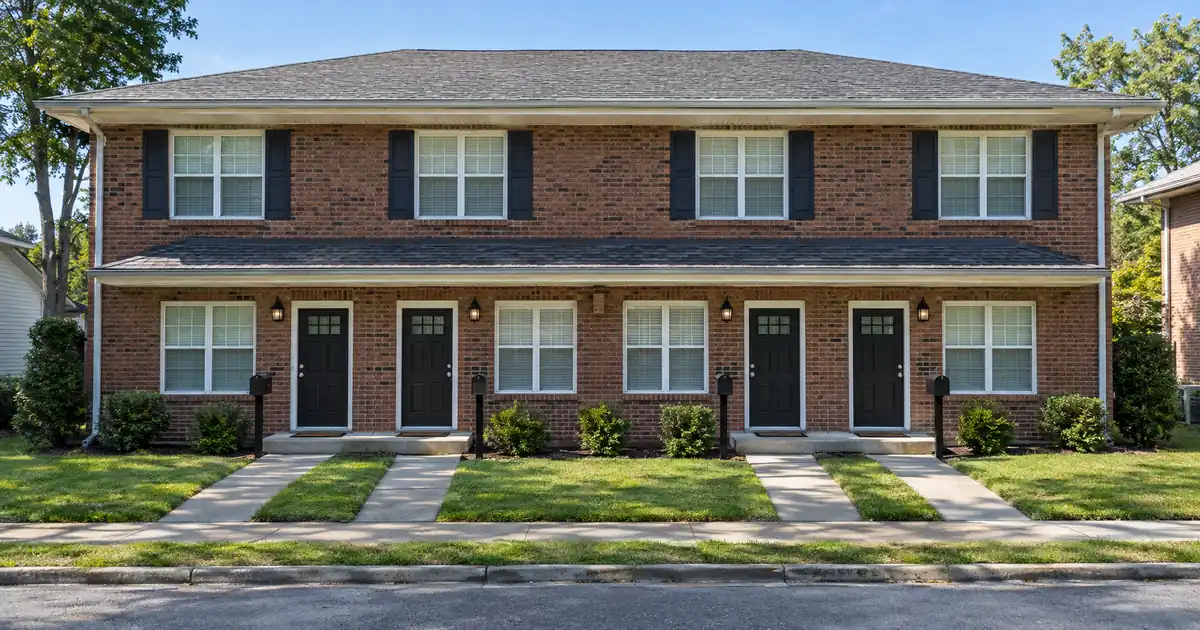
The Quick Read: A jumbo cash-out on a 2-4 unit home you live in and rent out is a primary-residence loan, underwritten on your full file plus a haircut version of the rent from the other units. Leverage on a cash-out sits below purchase leverage, reserves scale with the loan amount, and the appraisal has to support each unit’s rent. Every figure below is subject to lender guidelines and full file review, and nothing here is a commitment to lend.
What “A 2-4 Unit Home You Rent” Actually Means
There are two different loans hiding in that phrase, and the file splits on one fact: where you sleep.
If you live in one unit and rent the others, this is an owner-occupied cash-out. If you live somewhere else and the building is purely a rental, the loan is classed as an investment-property loan with a different rulebook. This article doesn’t cover that lane.
Occupancy decides the leverage. Across the wholesale jumbo programs Lendmire places files with, primary, second-home and investment occupancy each carry their own leverage limits. Declare occupancy wrong and the whole structure changes.
Is the Loan Even Jumbo? (Check Loan Amount, Not Price)
A loan is jumbo when the amount sits one dollar above the conforming limit for the county. The FHFA sets those limits each year, with a higher ceiling in high-cost areas and separate statutory limits in a few territories and states. This article doesn’t quote the dollar limit because it changes every year and varies by county. Look yours up on the FHFA conforming loan limit page.
Two points matter for a multi-unit building:
- The limit is tested against the loan amount, not the purchase price or the value.
- Limits rise with unit count. A cash-out on a fourplex can be conforming at a loan amount that would be jumbo on a single-family house.
So run the check in this order: county, unit count, then the new loan amount you want. If the new loan lands above the limit for your unit count, you are in jumbo territory. If it lands under, conforming rules apply, and that is a different conversation.
Key Terms Defined
Jumbo loan: A mortgage whose amount is above the county’s conforming limit for that unit count.
Cash-out refinance: A new, larger first mortgage that pays off the old one and gives you the difference in cash.
Seasoning: The time you have owned the property or held the current loan before a cash-out is allowed.
Reserves: Liquid assets, counted in months of the full housing payment, that you keep after closing.
CLTV: Combined loan-to-value, which adds every loan on the property together and divides by the value.
Rent schedule: The appraiser’s opinion of market rent for each unit, used to test the lease rents.
How a Jumbo Cash-Out Is Underwritten, Step by Step
Here is the file in the order it gets built.
1. Classify the loan. Primary residence, 2-4 units, cash-out, jumbo amount. Each label changes a limit. Agency guidelines give a useful benchmark here: Fannie Mae’s eligibility matrix allows a lower maximum cash-out LTV on a 2-4 unit primary residence than on a one-unit home. Jumbo lenders set their own limits, but the direction is the same. More units, less leverage. The exact numbers vary by lender and program and follow a full review of property, leverage, and credit.
2. Pick the lane. Wholesale jumbo comes in fixed, adjustable and interest-only structures. In the network Lendmire works with, the headline lane takes a 660 decision score and reaches up to 90% leverage on purchases. Several lanes reach 89.99% CLTV and the rest stop at 80%. Cash-out always sits at lower leverage than purchase, and the largest lanes put a cash cap on top. Loans run to $5,000,000 on the largest lanes. Final terms depend on the lender’s guidelines, the property type, and the borrower’s complete credit picture.
3. Test the ratio. The fixed lanes use a 50% ratio ceiling. The adjustable lanes use 45% and the interest-only lanes use 43%. Interest-only and adjustable structures are tested tighter, which is the trade for the lower early payment.
4. Order the appraisal. A 2-4 unit gets the multi-unit income-property appraisal, which includes the appraiser’s market rent for each unit. Above a lane’s threshold amount, the lender requires two appraisals. Two appraisals mean two sets of comps and two chances for a value gap.
5. Count the rent. Covered in the next section. This is where most 2-4 unit files get their numbers wrong.
6. Size the reserves. Reserves are measured in months of the full payment and rise with the loan amount. Cash-out proceeds usually do not count toward them. A borrower who plans to “use the cash as reserves” will find that the lender doesn’t count it that way.
7. Verify and disclose. The lender verifies income, assets and debts, and you get a Loan Estimate and a Closing Disclosure like any consumer mortgage.
How the Rent Counts (and How It Doesn’t)
Rent from the units you rent out can help you qualify. Rent from the unit you live in cannot. That is the baseline in Fannie Mae’s rental income guidance, which jumbo investors often mirror and may tighten. Fannie Mae reorganized that section of its Selling Guide recently, so check the current text before relying on a section number.
Three mechanics matter in the file.
Only part of the rent counts. Underwriters apply a haircut to gross rent for vacancy and upkeep. The agency benchmark discounts gross monthly rent before it is used. It also offsets the housing payment rather than adding to income in a simple way, so the ratio math differs from a single-family house. Don’t assume 100% of the rent lands in your qualifying income.
The lease needs support. For lease rent to count, the appraiser’s rent schedule has to back it up. Fannie Mae’s rental income announcement says that if the schedule doesn’t support the lease, the file needs proof the rent is actually being paid, at least two months’ worth. Leases below market, leases above market, and personal-income documentation that shows less rent than the leases all force a reconciliation. Expect the underwriter to ask which number is right.
Each unit gets its own line. A rent roll with unit-by-unit rents, lease dates and deposits is the cleanest document. A vacant unit counts only at the appraiser’s market rent, and some lenders won’t count it at all.
Short-term rentals are the soft spot. Agency rental rules are written around long-term leases, and treatment of nightly rentals varies by lender.
Seasoning: The Clock That Catches People
Seasoning is the quiet disqualifier on cash-out. The Fannie Mae cash-out guidelines show the benchmark pattern: the mortgage being paid off must be at least 12 months old, measured note date to note date, and at least one borrower must have been on title for six months. Exceptions exist, including paying off a subordinate lien or buying out a co-owner.
Jumbo lenders set their own seasoning, so treat those as benchmarks. Two practical points:
- A property that was listed for sale usually must come off the market before the new loan funds.
- Seasoning is documented by the settlement statement from your purchase or your last refinance. Keep it handy.
Where the General Rule Breaks
You move out. The day you stop living in the building, “2-4 unit home you rent” becomes an investment-property loan. Moving out after closing is a different problem from declaring the wrong occupancy up front. Be accurate on the application and talk to your loan officer before a planned move.
The building has five units or more. That is commercial territory, not a residential 2-4 unit loan.
One unit with an accessory dwelling unit. Agency rules allow ADU rent as income only for a one-unit primary residence on purchase or limited cash-out, capped at 30% of qualifying income. Fannie Mae’s ADU announcement excludes it on a full cash-out. A house with a backyard unit is not a duplex in underwriting terms.
A condominium unit inside a small building. Two wholesale lanes accept non-warrantable condominiums. Condo documents and the project’s own numbers become part of the file.
Conforming versus jumbo. A smaller cash-out on a fourplex may land under the conforming limit, which changes the program and the leverage rules.
Limited cash-out versus cash-out. If the new loan only pays off the old loan and costs, it is generally treated as limited cash-out, which usually carries less seasoning and higher allowable leverage. If you take real cash, you are in the cash-out lane.
Qualifying Two Ways: Full File Versus Rent Credit
| Factor | Standard jumbo file | What changes with rent |
|---|---|---|
| Income | Your documented income | Plus part of other-unit rent |
| Owner’s unit | Counts as housing expense | Rent from it is excluded |
| Rent support | Not needed | Appraiser’s schedule plus leases |
| Ratio ceiling | 50% fixed, 45% ARM, 43% I/O | Same ceilings apply |
| Risk | Ratio too high | Rent unsupported or haircut |
The ceiling doesn’t move because a building has tenants. Rent changes the numerator, not the limit.
What Shrinks the Cash You Receive
Cash out is the new loan minus the payoff, minus closing costs. Three things pinch that number.
1. The leverage cap. Cash-out sits below purchase leverage, and the largest lanes add a cash cap. The cap can bind before leverage does.
2. The appraisal. A value below your estimate lowers the maximum loan one-for-one. Appraisal reconsideration is a routine step when comps come in light, and a packet with recent sales on similar multi-unit buildings and unit-level condition notes can recover value.
3. Costs and payoffs. Liens, taxes and closing costs come off the top. CFPB notes that closing costs often apply on a cash-out refinance.
Picture an owner with a fourplex who lives in one unit and wants to pull out a large share of the equity. If the lane’s cash cap or the lower cash-out leverage binds first, the borrower can have plenty of equity and still not reach the target. Check both limits before planning the use of the money.
The Real Cost of Taking Cash Out
A cash-out is a new first mortgage. It resets your terms, may lengthen the payoff, and raises the payment. The CFPB’s guide on using home equity says as much. If you use the cash to pay off other debts, you are converting that debt into mortgage debt, which puts the home at risk if payments become unsustainable.
Tax treatment can depend on your situation; borrowers should speak with a qualified tax professional before relying on any deduction or credit.
Why These Files Get Pended or Shrink
- Occupancy stated loosely or inconsistently across documents.
- Rent roll doesn’t match the leases or the borrower’s other income documentation.
- Appraiser’s rent schedule below the lease rents, with no proof of payment.
- Seasoning clock miscounted, usually on a recent purchase or refinance.
- Reserves counted from the cash-out proceeds.
- Appraisal gap on a loan above the two-appraisal threshold.
- Entity or trust vesting that doesn’t fit the lane. Primary-residence loans are generally written to individuals, subject to lender program eligibility.
Documents to Gather Before You Apply
- Government ID, income documentation and asset statements.
- Current leases for each rented unit and a unit-by-unit rent roll.
- Traditional personal-income documentation showing rental history, where the units have been rented.
- Settlement statement from your purchase or last refinance.
- Payoff information on every lien.
- Insurance declarations for the whole building.
- Proof of rent received, if the lease rent runs above market.
You can review the program on Lendmire’s jumbo cash-out refinance program page. If your plan involves a VA loan instead, Lendmire’s piece Can a Veteran Do a VA Cash-Out on a 2-4 Unit Primary Home? covers that lane.
Frequently Asked Questions
Can I do a jumbo cash-out if I rent out the other units?
Often yes, provided you live in one unit and the loan is a primary-residence loan. The rent from the other units may count in part toward qualifying. Eligibility depends on the lane, the appraisal and your full file, subject to lender guidelines.
Does the rent from my own unit count?
No. Agency benchmarks generally exclude rent from the unit you occupy, and jumbo lenders follow that logic or tighten it. Only the other units’ rent can help.
Is the jumbo threshold the same for a duplex and a fourplex?
No. Conforming limits rise with unit count, so the point where a loan becomes jumbo is higher on a fourplex than on a single-family home. The test applies to the loan amount, not the price.
How much leverage can I get on a cash-out?
Less than on a purchase. Across the wholesale lanes, purchase leverage reaches 90% on the headline lane, several lanes reach 89.99% CLTV, and the rest stop at 80%. Cash-out sits lower than those, and the largest lanes add a cash cap. Exact figures are set by the lane and subject to full file review.
What credit score do I need?
The headline lane uses a 660 decision score. Other lanes can set a higher floor. Credit is one input among ratio, reserves and appraisal.
For your own numbers, request a scenario review with Lendmire.
About Lendmire
Lendmire (NMLS# 2371349) is a mortgage brokerage serving homeowners and home buyers in 16 states. FHA, VA, conventional and jumbo purchase and refinance loans are arranged through wholesale lending channels; Lendmire brokers the financing and the lender underwrites each application. Scotsman Guide named Lendmire a Top Mortgage Workplace in both 2025 and 2026.
For the program’s current guidelines, see jumbo loan programs.
Get Started
Ready to find the right loan for you?
In about 30 seconds you can review financing options available for your home or investment property. No commitment required.
Informational only. Not a Loan Estimate, approval, or commitment to lend. Program availability and eligibility are subject to lender guidelines, credit approval, property review, and underwriting.
References
1. FHFA – 2026 conforming loan limit announcement
2. FHFA – conforming loan limit data
3. Fannie Mae – eligibility matrix
4. Fannie Mae’s rental income guidance
5. Fannie Mae’s rental income announcement
6. Fannie Mae Selling Guide – cash-out refinance transactions
7. Fannie Mae’s ADU announcement
8. CFPB – cash-out refinance versus a HELOC
9. CFPB’s guide on using home equity
This article is part of Lendmire’s Jumbo Loans series — every loan program’s qualification details, guidelines, and scenarios live on the loan options page.
Related reading: Jumbo Cash-Out Refinance Requirements for Asset-Based Qualifying · How to Get a Jumbo Cash-Out in Retirement on an Inherited Home · Cash-Out Refinance Requirements When the Loan Turns Jumbo
Brandon Miller
Founder & CEO, Mortgage Loan Originator, Lendmire LLC
- Mortgage Loan Originator · NMLS# 1129696 · Verify on NMLS Consumer Access
- North Carolina Real Estate Broker · License# 343312 · Verify on NCREC
- North Carolina Insurance Producer · License# 19053198 · Property, Casualty, Life, Health · Verify on NAIC SBS
- Lendmire LLC · Firm NMLS# 2371349 · Verify firm licensure
Disclosure information. Lendmire is a state-licensed mortgage brokerage under NMLS# 2371349. Lendmire is not a depository institution, direct lender, or financial advisor — all loans referenced are placed through wholesale lender partners and are subject to each lender's underwriting standards. This article is provided for general informational purposes and is not a commitment to lend, nor does it constitute financial, legal, or tax advice. Loan programs, terms, rates, and qualification standards change without notice and depend on borrower profile, property type, and the state in which the subject property is located. Equal Housing Opportunity provider. NMLS Consumer Access: nmlsconsumeraccess.org.