
How To Finance A Condotel With A P&l-only Loan — The Quick Read: A condotel almost never qualifies for a standard bank or agency mortgage, because the building is legally a condo but runs like a hotel. The fix isn’t a rent schedule — it’s a profit-and-loss statement that shows what the unit actually earned. Lenders in select non-QM and portfolio programs take that P&L, strip it down to real operating income, and size the loan against that number instead of an appraiser’s rent opinion.
That’s the whole shift in one sentence. The rest of this piece walks through why the normal path is closed, how the P&L path actually works step by step, where it breaks down, and who this financing genuinely fits.
Key Takeaways
- Condotels fail agency financing because they’re operated like hotels — a rule baked into Fannie Mae’s Selling Guide, not something any single lender chooses.
- The standard rent-schedule appraisal form used on regular rentals can’t legally be stretched to cover hotel-style condotel income.
- A trailing profit-and-loss statement — from the on-site management company or a CPA — replaces the rent schedule as the income document.
- Underwriting still splits into two separate jobs: the appraisal proves value, the P&L proves cash flow.
- New purchases with no operating history face a materially more conservative path, since there’s no P&L yet to lean on.
What A Condotel Actually Is, And Why The Front Door Is Closed
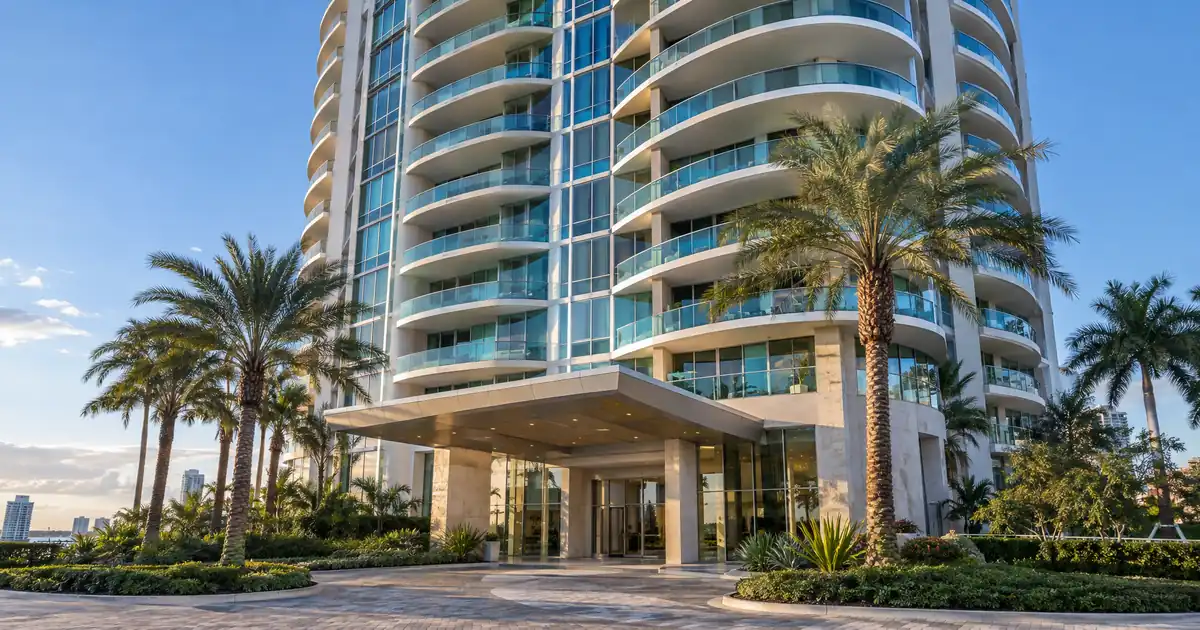
A condotel is a condominium that operates as a hotel. It keeps a front desk, offers short-term rentals through a management company, and usually sits in a resort or major-city high-rise. Owners hold full title to their unit. But the building runs its rental program like a hospitality business, not a residential rental pool.
That operating structure is exactly what disqualifies it from conventional and agency financing. Fannie Mae’s Selling Guide treats a project as ineligible the moment its HOA is licensed as a hotel, motel, or resort entity, or when the legal documents restrict how much of the year an owner can occupy their own unit. Fannie Mae also caps how much of a project can be commercial or mixed-use space at 35% — condotels routinely blow past that number with restaurants, spas, and front-desk operations built for paying guests, not residents.
This is a project-level problem, not a borrower-level one. A buyer with a 780 credit score and six-figure reserves still can’t get a standard mortgage on a unit inside a building that’s classified as a hotel operation. The disqualification sits with the building, and no amount of borrower strength changes that. Every figure here varies by lender and program — guidelines, property type, leverage, and credit profile all apply.
Why The Normal Rent-Schedule Appraisal Can’t Fix It
The standard tool lenders use to document rental income on a regular investment property is a comparable rent schedule — Form 1007 for a single unit, Form 1025 for small multifamily. Both forms ask an appraiser to estimate what a unit would rent for on the open market, based on how similar properties lease in that neighborhood.
That approach breaks down completely for a condotel. Appraisal industry trade press is blunt about it: Form 1007 cannot be used to support short-term rental appraisals. That’s because condotel income isn’t set by how the real estate competes in a rental market — it’s set by operational decisions. Nightly pricing, occupancy strategy, and management-company performance drive the number, not comparable leases.
Fannie Mae’s own senior policy staff have said appraisers must decline an assignment rather than “corrupt or contort” the 1007 to reflect short-term rental income. State regulators back this up directly. The Tennessee Department of Commerce confirms the 1004 and 1025 forms were built to secure loans on real estate collateral only. Using short-term rental comparables on those forms, without isolating the real-estate-only piece, can violate the appraisal industry’s own competency standards. The forms simply weren’t designed for a going-concern hotel operation. Pretending otherwise puts the appraiser’s license at risk.
That gap — a legitimate income stream with no legal form to document it — is what the P&L-only approach exists to fill.
The P&L-Only Path, Step By Step
Here’s how a condotel file actually moves through underwriting once the standard rent-schedule path is off the table.
Step 1: Confirm the property is a true condotel. Warrantability review happens before income even enters the conversation. The file needs the HOA questionnaire, the rental-pool or management agreement, and confirmation of how the building actually operates. Fannie Mae describes exactly this pattern — buildings professionally managed by hotel or resort companies that facilitate short-term rentals on behalf of owners.
Step 2: Swap the rent schedule for a profit-and-loss statement. Instead of an appraiser’s rent opinion, the file uses a trailing operating statement — often a trailing-twelve, or “T-12” — prepared by the on-site management company or a CPA. This is the document that actually reflects hotel-style, nightly income, which neither Form 1007 nor Form 1025 was ever built to capture.
Step 3: Normalize the P&L down to net operating income. Underwriting strips out non-operating line items — mortgage interest, depreciation, one-time charges — to isolate a clean, repeatable operating number. That’s the figure that actually pays a mortgage, and it’s the one lenders want to see.
Step 4: Feed that net operating income into the debt-coverage math. This normalized number stands in for the rent figure a standard appraisal would otherwise supply, and it gets measured against the property’s full monthly obligation — principal, interest, taxes, insurance, and association dues.
Step 5: The appraisal still runs — just for value, not income. A 1004 or condo-specific appraisal establishes what the collateral is worth. State guidance is explicit that the 1004 can support a value opinion where a detailed highest-and-best-use analysis backs it up, but that’s a separate job from documenting income. Value and income are two different questions answered by two different documents.
Step 6: Who prepared the P&L matters. A statement from the management company that actually runs the rental pool — or a CPA-prepared statement — carries more weight than a self-assembled spreadsheet, because it corroborates against an independent third-party record: the management company’s books, owner distribution statements, or a 1099.
Across select portfolio and bank-statement programs in Lendmire’s wholesale network, this general framework applies to loan sizes from $300,000 up to $6,000,000, with a separate twelve-month-statement bank program carrying files as high as $30,000,000 on its own leverage ladder above that. Purchase leverage on condotels typically tops out near 75% loan-to-value on the portfolio side, with cash-out running lower — closer to 65% on that same portfolio program and nearer 50% on the larger bank-statement ladder that handles bigger balances. Every figure above $4,000,000 gets reviewed case by case before it’s even submitted, and none of this is a commitment to lend — it’s a starting framework subject to full underwriting.
Lendmire’s complete DSCR loans guide walks through how property-income-based qualification works more broadly, and its piece on how a P&L loan treats condo and condotel eligibility goes deeper on the property-classification side of this same question.
Key Terms Defined
Condotel — a condominium building that legally exists as separate owned units, but operates and markets itself like a hotel, usually through a management company and a front desk.
Non-warrantable — a condo project that fails one or more agency eligibility rules (reserves, litigation, ownership concentration), independent of whether it’s also a condotel.
Net operating income (NOI) — a property’s income after operating expenses, but before mortgage interest, depreciation, and other non-operating items — the number lenders actually use to size the loan.
DSCR (debt-service coverage ratio) — a measure of whether a property’s income covers its full monthly obligation, expressed as a ratio rather than a dollar figure.
Trailing-twelve (T-12) — an operating statement covering the most recent twelve months of a property’s actual income and expenses, used instead of a forward-looking projection.
What Can Go Wrong: The Edge Cases
A few situations complicate this path considerably, and any investor evaluating a condotel deal should know them before making an offer.
No operating history. A brand-new purchase, or a unit the seller never actually rented out, has no trailing P&L to submit. That file typically has to lean on third-party market-level projections instead of a completed operating statement — a noticeably more conservative underwriting path than one built on real, seasoned income.
HOA disqualifiers stack on top of the condotel problem. Even setting the hotel-operation test aside, a project can independently fail on its own — Fannie Mae disqualifies a project where the HOA pulls more than 10% of its budgeted income from non-incidental business arrangements tied to amenities available to the general public, not just residents. Buildings with on-site restaurants, spas, or retail catering to outside guests get caught by this rule constantly.
Litigation and construction status are hard stops. Active HOA litigation over structural defects, or a building still under developer control without a certificate of occupancy, will sink a file regardless of how clean the P&L looks. The income question never even gets reached.
Mandatory versus optional rental participation changes everything. A building where rental-pool participation is mandatory, and the management company controls occupancy, is a fundamentally different risk profile than a non-warrantable condo where the owner keeps independent control of their own unit. Mandatory-participation buildings are precisely why P&L-based documentation exists in the first place — there’s no lease to point to.
Local STR legality sits entirely outside the P&L. A strong, clean trailing statement from last year doesn’t protect against a city or county changing its short-term rental rules this year. Short-term rental rules can vary by city, county, HOA, and property type, so investors should confirm local rules before relying on projected rental income. A Nevada Real Estate Division memo built on Fannie Mae guidance reinforces a related point worth remembering here too — furniture, fixtures, hotel branding, and the management contract are never part of the real estate’s collateral value, even though they directly drive the P&L’s income line.
Keeping a P&L-only closing on schedule usually comes down to getting these documents lined up early rather than scrambling for them mid-underwriting; Lendmire’s guide on keeping a P&L-only loan closing on schedule covers that sequencing in more detail.
Who This Financing Fits — And Who It Doesn’t
This path fits an investor who already owns, or is buying, a seasoned condotel unit. The unit should have real operating history, and the management company must be willing to give a clean trailing statement. It also fits high-net-worth buyers whose traditional personal-income paperwork generally understates their income. That’s because the same wholesale programs that handle condotel P&Ls typically qualify borrowers using 12 or 24 months of bank deposits instead of traditional personal-income documents. Business account transfers into a personal account count in full. A P&L-based income method is also available, and it’s generally capped around 80% of net income under most program guidelines.
It does not fit a buyer purchasing a condotel with no rental history at all, since there’s nothing yet to normalize into an NOI figure — that buyer is stuck leaning on projections instead. It also doesn’t fit a building carrying active litigation, missing its certificate of occupancy, or tripping the non-incidental-business-income threshold on its HOA budget. In those cases, no amount of clean bookkeeping on the unit’s own income rescues the file, because the disqualifier sits with the building itself, not the borrower.
Credit requirements on these programs typically run a 660 floor across the network, stepping up to roughly 700 above the largest loan sizes, with debt-to-income allowed up to about 50% on most files. Reserve requirements generally scale with loan size — commonly three months of payments on smaller balances, stepping up toward nine months on larger ones — and every one of these figures reflects typical guidelines from select wholesale programs, not a guarantee of approval for any specific file.
This is not legal or tax advice. The specifics of any condotel’s warrantability, P&L documentation, or occupancy structure can shift by state, HOA, and lender. Investors should talk with a qualified attorney or CPA about their own situation before relying on any of the framework described here.
Frequently Asked Questions
Is a condotel the same thing as a non-warrantable condo?
No — they’re related but distinct categories. A non-warrantable condo simply fails one or more agency project-eligibility rules while the owner still independently controls when and how they use the unit. A condotel is specifically disqualified because the building itself is operated like a hotel, which changes what income documentation is even possible.
Does a P&L-only loan mean there’s no documentation at all?
No, the income still has to be documented — it’s just documented through an operating statement or P&L instead of a lease or rent schedule. When a lender treats short-term rental income as business income, the underwriting shifts to business-income guidelines rather than a standard rent comparable.
Can I use a projected rental income if I just bought the unit?
Typically, yes, through third-party market-level projections rather than a completed P&L, but that path is generally more conservative than one built on real operating history. Once the unit has a full trailing period of actual income, the file can usually shift to the P&L-based method.
Does a strong P&L guarantee the loan gets approved?
No. A clean P&L only proves the income side of the file — the building still has to clear its own warrantability review, and any active litigation, missing certificate of occupancy, or HOA business-income issue can stop the file regardless of how the unit itself performs.
How much can I cash out on a condotel I already own?
Cash-out leverage on condotels typically runs lower than purchase leverage, generally in the range of 65% loan-to-value on standard portfolio programs and closer to 50% on the larger bank-statement ladder, subject to lender guidelines and full underwriting.
Are you weighing whether a condotel deal works based on its trailing operating statement versus what a rent schedule would show? Lendmire can help. We compare P&L-only and DSCR options based on the property’s actual income, the building’s warrantability status, and your credit and reserve profile.
For current guidelines and terms, see Lendmire’s super jumbo bank statement loan programs page.
Self-employed borrowers can compare both super jumbo programs on Lendmire’s self-employed mortgages page.
About Lendmire
Lendmire, NMLS# 2371349, is a mortgage brokerage focused on investor financing, arranging DSCR loans in 39 states plus Washington, D.C. — 40 markets total. Qualification is based on the property’s income rather than personal income documentation, subject to lender guidelines, making it a fit for LLC-held rentals and scaling portfolios. Scotsman Guide named Lendmire a Top Mortgage Workplace in both 2025 and 2026.
Get Started
Ready to find the right loan for you?
In about 30 seconds you can review financing options available for your home or investment property. No commitment required.
Informational only. Not a Loan Estimate, approval, or commitment to lend. Program availability and eligibility are subject to lender guidelines, credit approval, property review, and underwriting.
References
1. Fannie Mae Selling Guide – Ineligible Projects
2. Class Valuation – Appraisal Form 1007 and Short-Term Rentals
3. Tennessee Department of Commerce – Short-Term Rental FAQs
Brandon Miller
Founder & CEO, Mortgage Loan Originator, Lendmire LLC
- Mortgage Loan Originator · NMLS# 1129696 · Verify on NMLS Consumer Access
- North Carolina Real Estate Broker · License# 343312 · Verify on NCREC
- North Carolina Insurance Producer · License# 19053198 · Property, Casualty, Life, Health · Verify on NAIC SBS
- Lendmire LLC · Firm NMLS# 2371349 · Verify firm licensure
Compliance and disclosures. Lendmire (NMLS# 2371349) is a licensed mortgage broker and is not a direct lender, depository institution, financial advisor, or tax professional. Content in this article is general market analysis and educational information — not financial, legal, or tax advice for any specific situation. Lendmire does not guarantee loan approval; every transaction is subject to underwriting by the funding lender. Mortgage pricing and loan program guidelines are subject to change at any time without notice and vary by borrower characteristics, property type, and state regulations. Lendmire complies with Equal Housing Opportunity. Licensure verification: NMLS Consumer Access.


