
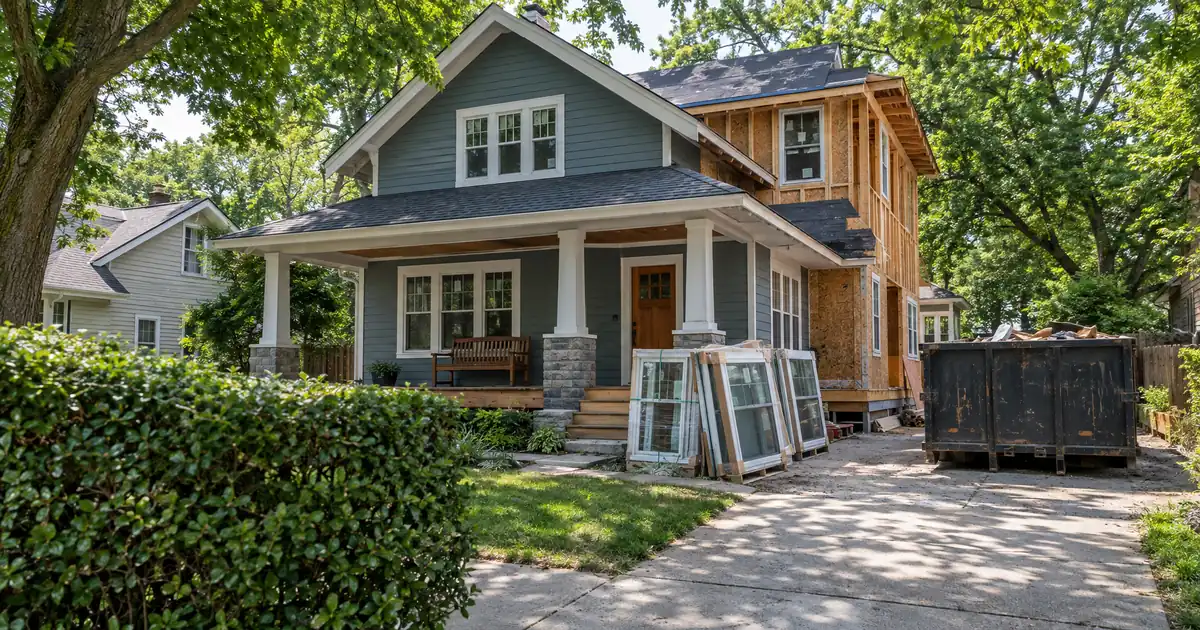
The Quick Read: Running three flips on hard money works when each property passes underwriting on its own numbers, your cash covers three overlapping equity gaps and three rehab floats, and your contractors can physically run three jobs, because lenders cap leverage by project cost and after-repair value rather than by how many flips you hold.
- No lender rule caps the number of flips. Your cash, track record, and crew usually set the limit first.
- Three structures exist: three separate loans, one blanket loan over all three properties, or a repeat-borrower line.
- Leverage is tiered by completed projects, and it varies by lender, property, and experience.
- Rehab money arrives in draws after work is done, so your out-of-pocket cash peaks on all three jobs together.
- Staggering start dates is one of the lowest-cost risk controls you have.
What Hard Money Actually Is
Hard money is short-term financing secured by the property, and the lender looks at the asset more than your paycheck. Corporate Finance Institute describes it the same way: the property is the collateral, terms are short, and borrowing costs run higher than with long-term loans.
What this loan actually costs to carry.
Hard money is sized against the project and priced by time. Enter the deal and see how much the program will lend, the cash required at closing, the carry while you hold it, and what is left at the exit.
Leverage tiers on the current program: 85% with fewer than 2, 90% with 2 or more, 93% with 5 or more completed projects — every tier capped at 75% of after-repair value. Loan amounts up to $5,000,000, larger by exception; terms of 6 to 18 months, interest-only, no prepayment penalty. The rehab portion funds in draws against completed work, not at closing.
Program parameters shown update from Lendmire’s centralized guideline source. Rate, points, and months are editable assumptions, not quoted terms.
Cost cap sets the loan · positive spread
Illustrative estimate only — not a quote, Loan Estimate, approval, or commitment to lend. Rate, points, and months are editable assumptions. Hard money is business-purpose financing for real estate investors, not a consumer mortgage. Leverage on the current program tops out at 93% of project cost for investors with a documented track record, capped at 75% of after-repair value, with rehab funding up to 100% of the documented budget released in draws; actual terms vary by lender, borrower experience, property, and exit. Lendmire is a mortgage broker, not a lender.
The loans Lendmire places for flippers are business-purpose loans on non-owner-occupied residential property, one to four units. Terms typically run 6 to 18 months, interest-only, with no prepayment penalty. Loan sizes go up to $5,000,000 on most files, and smaller balances vary by lender.
Underwriting stays asset-based. The lender still reviews your credit (a 620 minimum score is common, with added conditions below 660), your experience, your liquidity, and your plan. A lender that skips those reviews is not one you want holding three of your projects.
How Lenders Treat Three Flips at Once
Lenders judge each property on its own merits, then judge you as the person holding all of it. The count of open loans matters less than whether you can finish what you started.
Per property, the lender checks three things:
- The purchase price.
- An itemized rehab budget.
- Your exit, meaning a sale or a refinance.
Two caps run at the same time. One is a percentage of project cost, called loan-to-cost. The other is a percentage of ARV. The lower number wins.
On the programs in Lendmire’s wholesale network, fix-and-flip leverage is tiered by documented completed projects:
| Experience | Max loan-to-cost | ARV cap |
|---|---|---|
| Fewer than 2 projects | 85% of project cost | 75% of ARV |
| 2+ completed projects | 90% of project cost | 75% of ARV |
| 5+ completed projects | 93% of project cost | 75% of ARV |
These are typical ceilings and vary by lender, property, and experience. Bridge purchases without rehab run up to 80% of the purchase price. Up to 100% of the rehab budget funds in draws against completed work. That is a rehab figure, not a purchase loan.
No true 100% purchase program exists. You bring the equity gap plus fees on every property. Three flips means three of those checks at the same time.
Borrower-Level Checks That Matter More at Three Deals
Borrower-level review gets heavier as your open-loan count rises. Expect questions in these areas:
- Track record. Completed projects are what move you up the leverage tiers. A borrower with fewer than two sits at the lowest tier, with more cash due at closing.
- Liquidity. Lenders want proof of cash beyond the down payment. The amount varies by lender.
- Personal guarantee. This is your personal promise to repay if the property does not cover the loan. It is common even when you buy through an entity.
- Capacity. A good lender asks who your contractor is and how many jobs that contractor is running for you.
LLC-owned flips are common, subject to lender program eligibility.
What Three Flips Cost You in Cash
Cash is the real ceiling. Each flip needs closing costs, the equity gap, working capital to start the rehab, and reserves on top.
Here is how those pieces stack across three deals, expressed as shares rather than dollars:
| Cash item | One flip | Three at once |
|---|---|---|
| Equity gap | 7%-15% of project cost, by tier | Three gaps, all due at closing |
| Fees and closing costs | One set | Three sets |
| Rehab float | Pay the contractor, then wait for the draw | Three floats peaking together |
| Reserves | One cushion | Cushion sized to the weakest deal |
The rehab float is where new multi-flip investors get surprised. A draw reimburses finished work. It is not an advance. You pay the contractor, the inspector confirms the work, and then the lender releases funds.
With one flip, that gap is manageable. With three jobs starting the same month, three gaps open together. Lenders also commonly limit how many draws a project gets, so fewer draws mean larger gaps between releases.
Reserves are the thin line between a delayed project and a lost one. If you run out of cash and the lender moves to foreclose, you can lose your equity. Many investors hold a cushion beyond the number the spreadsheet shows. The right amount depends on your contractor, your timeline, and your lender.
Separate Loans or One Blanket Loan?
Separate loans keep each flip legally independent, while a blanket loan ties all three properties to one debt. That difference drives your risk more than any other structural choice.
Investopedia defines cross-collateralization as collateral for one loan also securing another. In a blanket loan, several properties back one debt. The risk: a default on one linked loan can affect all of them.
A repeat-borrower line is a third path. Some are true revolving facilities with a borrowing base. Many are really pre-approvals for repeat loans, each underwritten separately, so ask which one you are being offered.
| Factor | Separate loans | Blanket loan |
|---|---|---|
| Structure | One note per property | One note, liens on all three |
| If one flip stalls | Others are not touched, unless cross-default applies | Others are exposed |
| Selling one property | Pay off that loan | Needs a release clause |
| Flexibility | Mix lenders and terms | One set of terms |
| Paperwork | Three files | One larger file |
A batch of separate loans closed together is not cross-collateralized. People confuse the two constantly.
If you consider a blanket structure, put these questions on the term sheet:
- Is there a written release clause?
- How is the release price set? It usually runs above the allocated balance.
- Is there a cap on releases per period?
- What must remain as collateral for the last property?
- Is there a cross-default provision?
- Can you substitute or add properties?
- How does the allocated amount per property change as draws are made?
Lendmire’s piece How to Structure Gap Money Across Two Hard Money Rehabs at Once covers how to fund the equity shortfall when more than one project is open.
Sequencing the Three Deals
Staggering your closings and rehab starts is how a thin-cash investor runs three projects at once. You are trying to keep the three peaks in out-of-pocket cash from landing in the same stretch.
| Flip | Closing | Rehab start | Cash pressure |
|---|---|---|---|
| Flip one | First | Right away | Peaks first |
| Flip two | Mid-way through flip one’s rehab | After flip one’s heavy work | Peaks second |
| Flip three | After flip one is largely done | After flip two’s heavy work | Peaks third |
A staggered plan also lets you check lender behavior before the third deal. You see how the first inspection and release actually go.
Three habits make draws smoother across properties:
- Schedule inspections so they do not all fall on the same day.
- Pay contractors on a rhythm that matches when you expect releases.
- Keep invoices and lien waivers organized per property, since some lenders ask for them.
Some investors use their own cash on early flips and switch to loans as cash runs low, so the money lasts across more projects.
The Stress Test: What If One Flip Stalls?
Picture three flips on three separate loans. Flip one hits a bad foundation surprise and runs well over budget. Flip two is on schedule. Flip three just closed.
Your cash has to cover flip one’s overrun while flip two’s draws and flip three’s float are still going out. The loan terms on each property keep running, and every month of delay adds carrying cost on flip one. The other two loans are not legally affected, but your cash pool is shared.
Now run the same story on a blanket loan with cross-default. Flip one’s trouble can put the lender’s view of all three properties in question. A missed payment on one can become a default across the whole pool. The structure that looked tidy now carries more risk.
The best defense is a plan written before you close. Know your fallback if one flip sells late. Know whether you can bring extra cash or refinance the stalled property out. Know whether your exit still works if the ARV comes in lower than planned.
Brokers who place flip files see the same pattern. Investors rarely fail on the first project. They fail when the second and third overlap with the first one’s delays, and a contractor spread across three sites cannot finish any of them.
Readiness Checklist
Before you apply for three loans, answer these honestly:
- Contractor capacity. Can your contractor run three jobs, or only the first plus a promise?
- Your own bandwidth. Do you have time for three sets of inspections, change orders, and buyer showings?
- Cash. Could you cover all three equity gaps and a stalled project’s carrying costs at once?
- Margins. Does each flip still work if ARV lands lower and the budget runs over?
- Experience tier. Do you have the completed projects to reach the leverage tier your math assumes?
- Documents. Do you have purchase contracts, scope-of-work budgets, bank statements, entity documents, and proof of liquidity ready for each property?
If you answered no to two or more, start with two flips. That is not weakness. Many investors scale to three after finishing a pair.
Where the General Rule Breaks
Hard money lenders do not cap your flip count, but a few situations change the picture.
No track record. First-time investors qualify at the lower leverage tiers, so cash due at closing is higher. Three at once is rarely realistic.
Owner-occupied collateral. The programs described here cover non-owner-occupied property. An owner-occupied project pulls a deal toward consumer-lending rules, and many hard money lenders decline it.
Long rehab timelines. The longer the plan, the more conservative the debt-to-equity should be. The 6 to 18 month term is a hard stop, not a suggestion.
Property types outside the box. Commercial, land, and owner-occupied properties are not on the program sheet.
Cross-collateralizing other assets. Some lenders allow more leverage when other unlevered assets back the loan. That raises your exposure, so weigh it before accepting.
The exit. Every file needs a path to sale or refinance. If a flip does not sell, many investors refinance into long-term financing. A DSCR loan, which compares a property’s rent to its full monthly obligation, qualifies primarily on property-level rental income covering the payment, subject to lender guidelines. Lendmire’s piece Can You Refinance Two Hard Money Loans at Once? explains that handoff. The complete DSCR loans guide covers the longer-term side.
Tax treatment varies; consult a qualified professional before relying on any deduction.
Key Terms Defined
After-repair value (ARV): the estimated value of the property once renovations are complete, supported by comparable sales.
Loan-to-cost: the loan amount as a percentage of the total project cost, meaning purchase plus rehab.
Draw: a release of rehab funds after the lender confirms completed work.
Cross-collateralization: a structure where one property backs more than one loan, or several properties back one loan.
Blanket loan: a single loan secured by liens on multiple properties.
Release clause: the loan term that lets you sell one property out of a pool by paying a set amount.
Cross-default: a clause under which defaulting on one loan counts as defaulting on others.
Personal guarantee: your personal promise to repay the loan if the property does not.
Frequently Asked Questions
Is there a limit on how many hard money loans I can hold at once?
No fixed limit exists across the network. Lenders evaluate each property, then check whether you have the cash, track record, and capacity to finish all of them. A given lender may set its own exposure limits, which vary by lender and program.
Can I use one lender for all three flips?
Often yes, though the structure differs. You can place three separate loans with one lender, or accept a blanket structure that ties the properties together. Spreading loans across lenders reduces concentration risk but adds paperwork. Lendmire, as a broker, compares options across its wholesale network, with qualification subject to lender guidelines.
Do I need experience to finance three at once?
Experience sets your leverage tier. First-time investors qualify at lower tiers, with 85% of project cost the typical ceiling and a 75% ARV cap. That means more cash at closing per deal, so three simultaneous flips is a stretch without a track record.
What if one flip runs long?
Every month of delay adds carrying cost, and your loan has a term of 6 to 18 months. Talk to the lender before the term gets tight. Your options generally include selling at a lower price, bringing cash to extend, or refinancing into longer-term financing. Plan for this before closing.
Can I mix a sale and a refinance exit across the three flips?
Yes. Each property needs its own path out. Some investors sell the best-margin flips and refinance the one that suits renting into a long-term DSCR loan. On a blanket loan, the release clause governs how each property exits.
Getting Started
If you are buying, rehabbing, or refinancing an investment property on a short timeline and want to see how the numbers work, Lendmire can help you compare hard money options based on the project, the exit plan, leverage, and your goals. The brokerage arranges these loans through select lenders in its wholesale network across 41 markets, including Washington, D.C. Programs change, every file is underwritten individually, and nothing here is a commitment to lend. Reach the team at 828-256-2183.
The strongest multi-flip investors are not the ones who run the most projects. They are the ones who size the next deal to the cash and crew left over from the last one.
About Lendmire
Lendmire is a DSCR-focused mortgage brokerage, NMLS# 2371349, placing investor loans across 41 markets, including Washington, D.C. DSCR eligibility is generally reviewed by the lender around a property’s rental income rather than personal income documentation, which fits LLC-held rentals, self-employed investors, and portfolios scaling past conventional financed-property limits. Scotsman Guide named Lendmire a Top Mortgage Workplace in both 2025 and 2026.
Get Started
Ready to find the right loan for you?
In about 30 seconds you can review financing options available for your investment property. No commitment required.
Informational only. Not a Loan Estimate, approval, or commitment to lend. Program availability and eligibility are subject to lender guidelines, credit approval, property review, and underwriting.
References
1. Corporate Finance Institute: Hard Money Loan
2. Investopedia: Cross Collateralization
This article is part of Lendmire’s hard money loan program — full qualification details, guidelines, and scenarios live on the program page.
Related reading: Multiple Hard Money Loan Limits for an Investor With Several Flips · Hard Money vs Private Money for a First Flip With No Experience · Should You Use a Hard Money Loan or an Equity Partner on a Flip?
Brandon Miller
Founder & CEO, Mortgage Loan Originator, Lendmire LLC
- Mortgage Loan Originator · NMLS# 1129696 · Verify on NMLS Consumer Access
- North Carolina Real Estate Broker · License# 343312 · Verify on NCREC
- North Carolina Insurance Producer · License# 19053198 · Property, Casualty, Life, Health · Verify on NAIC SBS
- Lendmire LLC · Firm NMLS# 2371349 · Verify firm licensure
Required disclosures. Lendmire (NMLS# 2371349) operates as a licensed mortgage broker, not a direct lender or depository. The discussion in this article is general in nature and should not be relied upon as financial, legal, or tax advice — every investment scenario is unique and should be reviewed by a qualified professional. Any loan inquiry is subject to lender underwriting, and this article is not a commitment to lend or a guarantee of approval. Mortgage rates, loan terms, and program guidelines vary by borrower, property, and state, and may change without notice. Equal Housing Opportunity. Verify licensure at NMLS Consumer Access.