
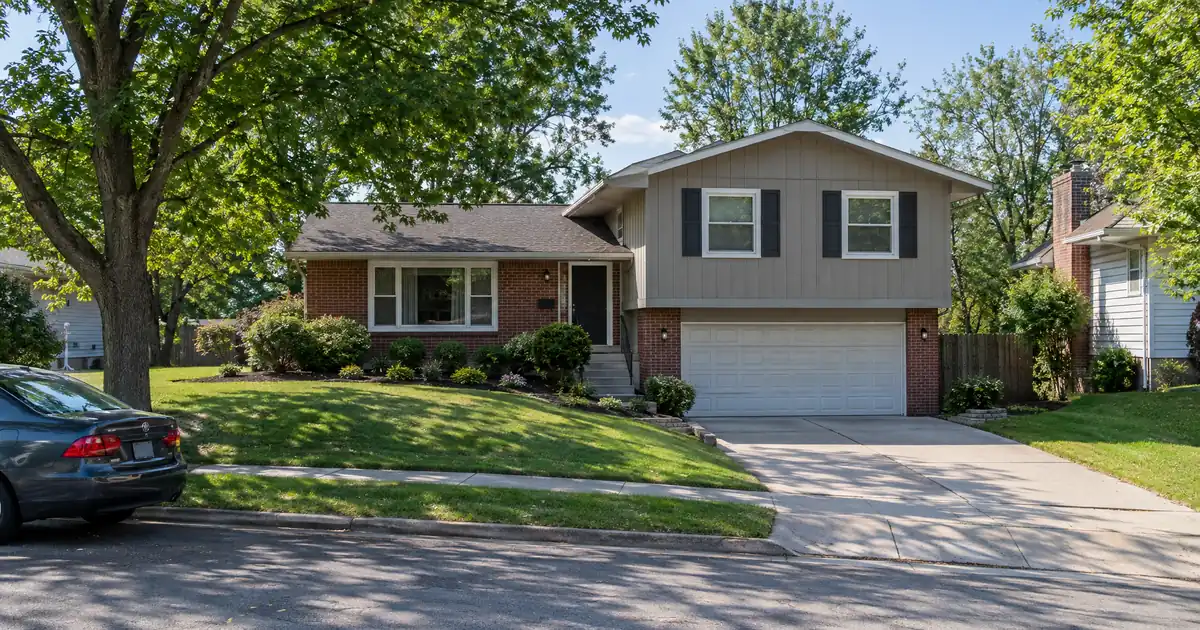
The Quick Read: Usually, because the existing first mortgage is often the most affordable, longest-dated money in the portfolio. A second-lien line taps equity without replacing that loan, while a cash-out refinance reprices the entire balance. The catch is that fewer lenders offer lines on rentals, and the line brings its own limits and risks.
The Idea in Plain Terms
A landlord with a good first mortgage can leave it alone and borrow against equity through a separate loan that sits behind it. That is the whole strategy. The first lender keeps its position and its terms. The new lender takes a second position, and the landlord gets a pool of cash.
How large a line the equity supports in your market.
An equity line is sized by combined loan-to-value, occupancy, and credit — not by rental coverage. Switch the occupancy or the credit band and the ceiling moves with it.
Investment-property lines require a 700 minimum credit score. Second-home tiers reach 640; primary-residence tiers reach 600.
A debt-to-income ratio above 45% requires 680+ credit. Profiles under 640 are limited to single-family homes. At least 75% of the approved line is drawn at closing. Ceilings, floors, and caps update from Lendmire’s centralized guideline source.
Line estimate
Illustrative estimate only — not a quote, Loan Estimate, approval, or commitment to lend. The rate is an editable assumption; equity-line pricing is variable through both the draw and repayment periods and never converts to fixed. Occupancy and credit drive the ceiling together: investment property runs to 70% combined LTV with a 700 credit floor and a $500,000 cap; a second home runs to 90% at a 640 floor with a $500,000 cap; a primary residence reaches up to 90% at a 600 floor, and its $750,000 maximum line applies only at 75% combined LTV or below with 720+ credit and a full appraisal. Lines above $500,000 require a full appraisal. Credit, debt-to-income, property type, and full underwriting review all affect the final line.
Compare that with a cash-out refinance. That loan pays off the old first mortgage and writes a new one. Everything resets: the balance, the term, the pricing, the closing costs. If the old loan was a good deal, you gave up something valuable to get the cash.
Here is the part most explainers skip. “Rental HELOC” means two different things, and mixing them up leads to bad plans. We cover both below, along with what the programs we place files with actually allow on an investment property.
Key Terms Defined
HELOC: A home equity line of credit. It is a credit line secured by property equity that you can draw from, up to a limit.
Second lien: A loan recorded behind the first mortgage. If the property is sold or foreclosed, the first lender is paid first.
CLTV (combined loan-to-value): Every loan against the property, added together, divided by the property’s value. The first mortgage and the new line both count.
Draw period: The stretch when you can borrow from the line, usually with interest-only payments.
Repayment period: The stretch after the draw period when the balance amortizes, meaning each payment pays down principal as well as interest.
DSCR (debt service coverage ratio): Monthly rent divided by the monthly payment on the loan: principal, interest, taxes, insurance, and any HOA dues. Lenders call that payment PITIA.
Why Landlords Defend the First Mortgage
The first mortgage is often the best asset on the balance sheet. A few common landlord profiles show why.
- The converted home. You bought a house to live in, then moved out and kept it as a rental. The loan still carries owner-occupant pricing and structure. A new investor loan would not.
- The long-held rental. You financed it years ago on terms you would not get today. The balance is small and the term is long.
- The investor with a good investor loan. The first mortgage is a DSCR loan whose structure fits the property. Replacing it just to reach equity means paying for a new loan you did not need.
Now the honest tradeoff. A low-cost first mortgage plus a higher-cost second lien can end up costing more, blended together, than a single cash-out refinance on a small old balance. It is a toss-up that depends on three things: how big the old balance is, how much cash you need, and how long you will carry it. NerdWallet notes that cash-out refinances typically cost less per dollar than lines but come with closing costs. So the line often wins on small, staged needs. The refinance often wins on big, one-time needs.
Our broader take on this sits in our piece on why to keep the first mortgage.
Keep and Add vs. Refinance
| Factor | Keep first + add line | Cash-out refinance |
|---|---|---|
| Old first mortgage | Stays as is | Paid off, replaced |
| New money | Second lien on top | Rolled into one new loan |
| Pricing on old balance | Preserved | Reset to new terms |
| Main risk | Floating pricing, repayment step-up | Losing a better old loan |
| Best fit | Staged or modest capital needs | Large lump-sum needs |
Two Kinds of “Rental HELOC”
Version one is a line secured by your primary home, with the money used on a rental. It is the most common route. The risk is plain: your home backs the debt, not the rental.
Version two is a line secured by the rental itself. It exists, but fewer lenders write it. Investor forums describe it as rare, with credit unions and portfolio lenders among the few sources. That is anecdotal, but it matches what we see in practice.
One sequencing point matters for anyone who plans to move out of a home and rent it. Investors commonly open the line while the property is still their primary residence, then convert it to a rental. BiggerPockets describes that approach as typically fine, but read your line’s terms first. Primary-residence lines sit under different eligibility rules than investment lines, as the next section shows.
What the Network Offers on an Investment Line
Across our wholesale network, investment-property equity lines are tighter than primary-home lines. Here is the picture, subject to lender guidelines and full file review.
- Leverage: The ceiling on an investment line is 70% CLTV. Credit above 700 does not raise it. The 720 tier and the 700 tier both stop at 70%.
- Credit: Plan on a 700 minimum for an investment line. There is no tier beneath it.
- Size: Investment lines run from $25,000 up to $500,000. Larger lines exist only on primary residences.
- Structure: A 5-year interest-only draw period, then a 25-year fully amortizing repayment. Pricing floats across both periods and never converts to fixed.
- Draw at closing: At least 75% of the line is drawn at closing. This is not a “borrow only when needed” card. Most of the line becomes a balance on day one, so size it to money you will actually use.
- Later draws: Minimum subsequent draws varies by scenario, with Texas higher.
- Debt-to-income: Maximum 50%, qualified on the interest-only payment at the full draw.
- Valuation: Because investment lines top out at $500,000, they usually run automated valuation, commonly with no traditional appraisal. A borrower can still ask for one.
- Property types: Single-family, 2-4 units, PUDs, townhomes, and condos, including non-warrantable condos. Manufactured homes, co-ops, condotels, log homes, and commercial or mixed-use properties are not offered.
- Title: The individual borrower or a revocable living trust must hold title. LLCs, corporations, and partnerships cannot, subject to program terms.
- Limits: A borrower can hold up to three lines. Someone with more than 15 financed properties is not eligible.
- Where: These lines are available only in Lendmire’s 16 full-service states (AL, CA, CO, FL, GA, IN, MI, MT, NM, NC, OH, PA, TN, TX, VA, WA). That is narrower than the 41-market DSCR footprint, which covers 40 states plus Washington, D.C.
Run the CLTV math in percentages. Say your first mortgage uses 55% of the property’s value. At a 70% ceiling, the line could reach about 15 points of value, before the $500,000 cap and your credit and debt-to-income review. Add the first balance and the line, divide by value, and you have the number the lender checks.
Two details trip people up. Properties listed for sale, or listed within the prior 60 days, are ineligible in several states. And a rental deeded into an LLC cannot carry this line without a vesting change. For LLC-held properties, a DSCR cash-out refinance, rather than a line, is often the cleaner route.
How a Line and a DSCR First Mortgage Fit Together
Nearly everything about this pairing works because the two loans qualify on different things. A DSCR loan is reviewed primarily on property-level rental income covering the payment, subject to lender guidelines. Our complete DSCR loans guide walks through that math. The equity line, by contrast, looks at you: credit, debt-to-income, and the equity behind the property.
That has a practical effect. The rent test on your first mortgage does not change when you add a second lien. But the new line adds a payment to your personal debt picture, and that matters for the next loan you apply for.
Here is a pitfall we see in files. Clearing 1.00 on a DSCR loan does not mean positive cash flow. The ratio compares rent to PITIA only. Repairs, vacancy, management, utilities, and capex sit outside it. So if you add a line on top, the real cushion is thinner than the coverage number suggests. Size the line against actual operating cash flow, not the ratio.
Also read the first mortgage note before you add a second lien. Notes can carry clauses about additional liens and prepayment. Across the programs we place files with, those terms differ. Checking costs nothing. Finding out afterward can be expensive.
When Refinancing Still Wins
The keep-and-add plan is not always right. A cash-out refinance tends to be the better tool when:
- The old first mortgage is not a good loan. If the terms are poor, there is nothing to protect.
- You need more than a $500,000 line allows. Cash-out refinances on rentals across most of the network top out around 75% LTV, with about six months of ownership commonly expected.
- The property sits in an LLC. The line cannot be placed on it.
- The property is outside the 16 states where lines are available.
- You want fixed pricing. This line floats and never converts.
- Your credit sits below 700. The investment line has no tier beneath it.
Honest answer: for a landlord with a large balance of equity, a good old loan, and a single big purchase ahead, it is close. Price both and compare the blended cost.
Risks and How to Plan for Them
The CFPB’s HELOC brochure lays out the mechanics. Payments can be interest-only during the draw period, and variable pricing can move your payment even if you draw nothing more. After the draw period, the lender may set a repayment schedule, or the whole balance may come due at once. The agency’s plain-language HELOC overview gives a 10-year draw period as an example. On the investment lines described here, the draw period is 5 years, followed by a 25-year repayment.
| Risk | What it looks like | Plan |
|---|---|---|
| Floating pricing | Payment rises with no new draw | Stress-test coverage before drawing |
| Repayment step-up | Payments jump when interest-only ends | Build the step-up into the plan on day one |
| Vacancy | Rent stops, both loans still bill | Hold cash reserves separate from the line |
| Second-lien exposure | Both liens sit on the property | Borrow only for projects that add value |
| Collateral | Home-backed line puts the home at risk | Know which property secures the debt |
Do not use the line as your reserve fund. It is borrowed money. Reserves are cash you already own.
What the Line Fits Best
Ranked by how well they fit, with the best matches first:
1. Down payment on the next rental. The equity works on a second purchase.
2. Repairs and renovation. Value-add work you can plan and price.
3. Staged projects. Phased work where costs arrive in pieces.
4. Bridge needs. Short-term gaps with a clear way to repay.
Remember that most of the line is drawn at closing here. A staged project that needs money over time may fit poorly with that structure. In that case, a smaller line sized to the first phase can work better.
Tax treatment can depend on how the funds are used and how the property is held; investors should keep clear records and speak with a qualified tax professional before relying on any deduction.
Should You Keep and Add? A Checklist
- Is your first mortgage worth protecting?
- Do you hold title personally or in a revocable trust, not an LLC?
- Does your credit sit at 700 or better?
- Is your property in one of the 16 states?
- Does your need fit within a $500,000 cap and a 70% CLTV ceiling?
- Can you carry the new payment if pricing floats up and rent dips?
- Have you read your first mortgage note for second-lien clauses?
If you answered no to several, price a cash-out refinance first. If you answered yes to most, the keep-and-add route is worth a real look.
Frequently Asked Questions
Can I get a HELOC directly on a rental property?
Sometimes. Fewer lenders write them on non-owner-occupied property, and they typically lend less than they would against a primary home. Across our network, investment lines are available in 16 states, with a 700 credit minimum, a 70% CLTV ceiling, and a $500,000 maximum, subject to lender guidelines.
Is a HELOC the same as a home equity loan?
No. A home equity loan is a closed-end second mortgage that pays out one lump sum. A line is revolving in concept and lets you draw against a limit. The network lines described here still require at least 75% drawn at closing.
Can my LLC take out the line?
Not on this network. Title must sit with the individual borrower or a revocable living trust. A property already in an LLC needs a vesting change, or a DSCR cash-out refinance instead.
Will adding a line change my DSCR on the first mortgage?
The rent-to-payment ratio on the first loan itself does not change. But the new payment counts toward your personal debt-to-income, which the equity line and future lenders review.
Does a bigger down payment or more equity solve everything?
No. More equity can lower the payment and lift the coverage number on a DSCR loan. It does not erase leverage caps, credit floors, reserve rules, or property eligibility. The strongest files clear both tests: enough equity and enough rental coverage.
Next Step
If you are buying or refinancing a rental property and want to see how the numbers work, Lendmire can help you compare DSCR loan options based on the property income, credit profile, leverage, and investor goals. Call 828-256-2183 to talk through whether to keep your first mortgage or replace it. Lendmire brokers through select wholesale partners and is not a lender, and nothing here is a commitment to lend.
Most landlords who protect a good first mortgage do it for the same reason: the most affordable money they will ever borrow is already on the books.
About Lendmire
Lendmire — NMLS# 2371349 — is a DSCR and non-QM mortgage brokerage with investor loan programs in 41 markets, including Washington, D.C. DSCR eligibility is commonly reviewed by the lender around property-level rent rather than personal income documentation, subject to lender guidelines, and the brokerage helps arrange financing for LLC-owned portfolios beyond conventional financed-property limits. Recognized by Scotsman Guide as a Top Mortgage Workplace in 2025 and 2026.
Lendmire’s Top Mortgage Workplace recognition is documented by Scotsman Guide 2025 Top Mortgage Workplace and Scotsman Guide 2026 Top Mortgage Workplace.
Get Started
Ready to find the right loan for you?
In about 30 seconds you can review financing options available for your home or investment property. No commitment required.
Informational only. Not a Loan Estimate, approval, or commitment to lend. Program availability and eligibility are subject to lender guidelines, credit approval, property review, and underwriting.
References
1. NerdWallet: Can you get a HELOC on an investment property?
2. BiggerPockets: Rookie Reply on converting a home to a rental
4. CFPB: What is a home equity line of credit (HELOC)?
This article is part of Lendmire’s investment property HELOC program — full qualification details, guidelines, and scenarios live on the program page.
Related reading: Home Equity Loan Against Rental Property · Why Homeowners Keep Their First Mortgage and Add a HELOC Instead · Can a Bank Statement HELOC Tap Equity and Keep Your First Mortgage?
Brandon Miller
Founder & CEO, Mortgage Loan Originator, Lendmire LLC
- Mortgage Loan Originator · NMLS# 1129696 · Verify on NMLS Consumer Access
- North Carolina Real Estate Broker · License# 343312 · Verify on NCREC
- North Carolina Insurance Producer · License# 19053198 · Property, Casualty, Life, Health · Verify on NAIC SBS
- Lendmire LLC · Firm NMLS# 2371349 · Verify firm licensure
Compliance and disclosures. Lendmire (NMLS# 2371349) is a licensed mortgage broker and is not a direct lender, depository institution, financial advisor, or tax professional. Content in this article is general market analysis and educational information — not financial, legal, or tax advice for any specific situation. Lendmire does not guarantee loan approval; every transaction is subject to underwriting by the funding lender. Mortgage pricing and loan program guidelines are subject to change at any time without notice and vary by borrower characteristics, property type, and state regulations. Lendmire complies with Equal Housing Opportunity. Licensure verification: NMLS Consumer Access.