
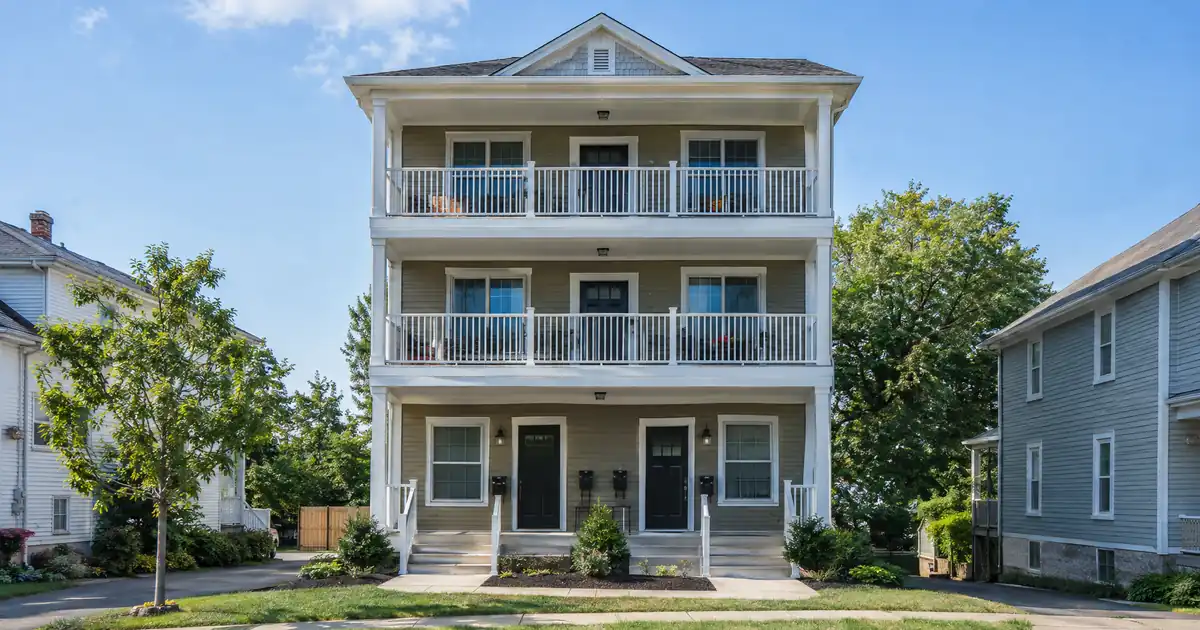
The Quick Read: A jumbo cash-out on a three-unit home you live in is a normal loan with extra paperwork. The lender checks your credit, your debts, your time on title, the appraisal, and how much of the other two units’ rent it will count. Across the wholesale jumbo programs Lendmire places files with, the headline lane starts at a 660 decision score and reaches 90% leverage. Cash-out sits lower than that, and every figure is subject to lender guidelines and full file review.
Key Takeaways
- A jumbo loan starts one dollar above your county’s conforming limit, and a triplex has a higher limit than a single-family home. Your loan may be conforming even when it feels large.
- Cash-out leverage is lower than purchase leverage. The cash you can take out is what remains after the cap, your payoff, and closing costs.
- Only part of the rent from the two units you don’t live in helps you qualify. Your own unit’s rent counts for nothing.
- The full payment on the triplex stays in your housing expense, even when rent is counted as income.
- Time on title, a thin rent history, and a low appraisal can each slow down a first-time file.
What Does “First-Time Equity Borrower” Mean on a Triplex?
A first-time equity borrower is a homeowner who has never pulled cash out of this property. That is the whole definition. Underwriters don’t use the label, but they do care about three situations that sit underneath it.
Jumbo cash-out estimate
Enter the value, the balance, and the cash wanted; choose the occupancy and the structure; the lanes, the payment, and the reserves follow.
Editable benchmark: 7.40% as of October 15, 2026 · Freddie Mac 30-year average via FRED®. A conventional market reference, not a jumbo cash-out refinance quote.
Illustrative starting assumptions: a $2,000,000 home value in the jumbo range, a $1,000,000 current balance, a principal residence on a thirty-year fixed structure at the current Freddie Mac conforming benchmark, and property taxes and insurance estimated at typical national rates. Every field is editable.
Illustrative estimate only — not a Loan Estimate, approval, quote, or commitment to lend. The rate field carries the weekly Freddie Mac thirty-year conforming benchmark, a market reference and not a jumbo cash-out refinance quote; a jumbo loan is priced by the lender at lock. The lanes shown are the wholesale cash-out lanes behind this page as of the snapshot date; the calculator reads each lane’s leverage, loan maximum by occupancy, cash-in-hand cap, and reserves as the lane table states them, and a Lendmire loan officer confirms the lane on the file. The cash available is the loan the lane allows less the balances paid off, before closing costs, which are not included; on most lanes a jumbo cash-out begins one dollar above the conforming limit for the county, and two lanes start at a stated dollar floor instead. The HELOC line is the line program’s combined loan-to-value ceiling applied to the same value and balance. Taxes and insurance are editable estimates. Licensed in sixteen states for consumer mortgages.
You’ve never refinanced. The loan is new, the terms reset, and the lender reviews the file as if you were a new borrower. That is true for every cash-out.
You’ve never been a landlord. You own a triplex and live in one unit, but you haven’t collected rent from the others for a documented stretch. Lenders treat thin rental history more cautiously.
You’ve never held a jumbo loan. Bigger balances bring bigger reserve checks, and sometimes a second appraisal. Both come up below.
You can be one, two, or all three. The sections that follow tell you which requirement each situation touches.
Why a Triplex Is “Jumbo” Differently
A jumbo loan is any mortgage above the county conforming limit, the ceiling on loans Fannie Mae and Freddie Mac can buy. That limit rises with unit count. FHFA’s annual announcement sets the one-unit baseline and a higher ceiling for expensive counties. FHFA’s calculation addendum then publishes separate, higher baselines for two-, three-, and four-unit homes.
The practical point: the triplex limit in your county is the number that matters, not the single-family one. A loan that would be jumbo on a house can still be conforming on a triplex. In expensive counties, a loan can even be what is called “conforming jumbo,” meaning a conforming loan with a higher local limit. Look up your county’s three-unit limit before assuming which side of the line you’re on. The limit changes yearly, so this article doesn’t quote it.
Once your loan crosses that line, it moves into the wholesale jumbo lanes. Lendmire’s jumbo cash-out refinance program is arranged through those lanes. Lendmire is a mortgage broker, and the lenders it works with make the credit decisions.
Jumbo Cash-Out Requirements at a Glance
Across the wholesale programs Lendmire places files with, the envelope looks like this. Every figure is subject to lender guidelines and a full review of your file.
| Factor | What the lanes show | Why it matters |
|---|---|---|
| Decision score | 660 on the headline lane | Other lanes may set higher floors |
| Top leverage | Up to 90% on the best lane | Cash-out sits lower than purchase |
| Leverage on other lanes | Several reach 89.99% CLTV; rest stop at 80% | Lane choice changes your cash |
| Loan size | Up to $5,000,000 on the largest lanes | Bigger loans bring bigger checks |
| Ratio ceiling | 50% fixed; 45% adjustable | Varies by lane, borrower profile, and full review |
| Reserves | Months of full payment, rising with amount | Liquid assets matter |
| Appraisals | Two above a lane’s threshold amount | Value drives your cash |
Two notes on reading that table. First, “CLTV” is combined loan-to-value, which adds any second loan to the first before dividing by the home’s value. Second, a cash cap applies on the two largest lanes, so a high leverage number doesn’t mean unlimited cash.
Occupancy decides leverage. These figures apply to a triplex you live in, and a second home or rental sits on different, lane-specific leverage.
How Is a Jumbo Cash-Out Underwritten, Step by Step?
Here is the order a file usually moves in.
Step 1: Choose the structure. The lanes offer fixed, adjustable, and interest-only options. The ratio ceiling differs by structure, which is why a fixed loan can fit a borrower an interest-only loan won’t.
Step 2: Pull credit and verify the basics. The lender looks at your decision score, your debts, your employment, and your income or assets. The rules for this are broader than any one program. The CFPB’s ability-to-repay guide says a lender must weigh eight factors before making this kind of loan, including income or assets, employment, current debts, and credit history. It doesn’t ban any loan type. So a jumbo triplex cash-out is legal, but the lender has to make a reasonable, documented judgment that you can repay it.
Step 3: Order the appraisal. On a triplex, the appraiser values the building and also completes a rent schedule for the units. Above a lane’s threshold amount, two appraisals are required.
Step 4: Count the rent. This step is the one that makes a triplex different. The next section covers it.
Step 5: Check reserves. Reserves are the savings left after closing, measured in months of your full payment. The count rises with the loan amount.
Step 6: Size the loan. The lender applies the leverage cap to the appraised value, subtracts your payoff and costs, and what remains is your cash.
Step 7: Review and disclosures. You receive a Loan Estimate and, later, a Closing Disclosure. Compare the Loan Estimate line by line against any other offer.
How Does the Rent From the Other Two Units Count?
Only part of it counts, and only from the units you don’t live in. The agency benchmark is spelled out in Fannie Mae’s Selling Guide. For a two- to four-unit principal residence, rent from the subject property can help you qualify. Jumbo lenders set their own overlays, but they tend to borrow this logic.
Here is how it works in practice.
- Your own unit adds nothing. Rent from the unit you occupy generally can’t be used to qualify.
- The lender discounts the rent. It takes a share of gross rent to allow for vacancy and upkeep, not the full amount.
- The appraiser’s rent schedule sets the ceiling. If your leases show more than the market supports, the lender may use the lower figure.
- Documents back it up. Expect leases and, on a refinance, recent traditional personal-income documentation showing rental income if you have a history of it.
- The full payment stays in your housing expense. Net rent is added to your income, but the whole payment on the triplex still counts in your debt ratio. Rent does not remove the payment.
That last point surprises people. A triplex with strong rents still has to clear the same ratio ceiling as any other home. The rent helps the income side of the fraction. It doesn’t remove the payment from the other side.
What if you’ve never been a landlord?
Lenders get cautious when you have no documented rental history. Some limit how much projected rent they will count on a first-time basis. That is a lender-by-lender call, so ask early. If a unit is vacant or month-to-month, say so up front. A lease that doesn’t exist yet is harder to use than one that has run for a while.
If you live in your unit rent-free or are in a transition, tell the loan officer before the application, not after. Occupancy is a core part of the file. A triplex must be your real primary residence to get primary-residence leverage.
How Many Months of Reserves Do You Need?
Reserves scale with the loan amount, and jumbo lanes ask for more than conforming ones. The lanes measure them in months of your full payment on the loan. A larger loan means more months, and the biggest lanes ask for the most.
Cash from this very loan doesn’t count as a cushion on most files. That catches first-timers off guard. Savings, brokerage accounts, and retirement balances are the usual asset types lenders review, each treated at its own value. Ask which assets a specific lane accepts and at what percentage, because treatment varies by lane.
An extra layer applies to agency loans. Fannie Mae’s cash-out section ties a higher debt ratio to a larger reserve requirement. Jumbo lanes follow the same idea in their own way: the stretchier the file, the more cushion they want. These specifics are subject to lender guidelines and a full review of property, leverage, and credit.
Seasoning and Title Timing
Seasoning is the waiting period a lender wants between two events. For cash-out, the question is how long you’ve been on title. Agency cash-out rules look at whether a borrower has held the home for a stretch before the new loan, with exceptions such as inheritance or a court award. Jumbo lenders set their own clocks, some shorter and some longer.
Two situations deserve a call before you apply. If you recently received the home by deed from a family member, the clock may restart, depending on the lender. And if the triplex sits in an LLC or trust, the lender may need title moved into your personal name for a primary-residence loan. Confirm both before you order an appraisal, not after.
Limited Cash-Out vs. Cash-Out
The two loans look alike and are treated differently.
| Feature | Limited cash-out | Cash-out |
|---|---|---|
| Purpose | Payoff plus costs | Pull real equity |
| Cash back | Small amount only | Larger amount |
| Leverage | Higher | Lower |
| Seasoning scrutiny | Lighter | Heavier |
A small amount of cash back can keep you in the higher-leverage category. Take more, and the loan becomes a true cash-out. If you only need a little money, ask your loan officer where that line sits on each lane. Lendmire’s piece Can a First-Time Equity Borrower Get Conventional Cash-Out on a Triplex? shows how the conforming side treats the same building.
Worked Example: Sizing a First Cash-Out on a Triplex
Run the logic with an index instead of dollars. These inputs are modeled assumptions, not market data.
Say the appraisal comes in at 100. The lane you choose caps cash-out at some percentage of value, which we’ll call X%. X is lower than the lane’s purchase leverage.
1. Start with the cap. The loan can be as large as X% of 100.
2. Subtract your payoff. Suppose your current mortgage balance is 50% of value. That comes out first.
3. Subtract closing costs. They are paid from the new loan or from your pocket, depending on how you structure it, and they appear on your Loan Estimate.
4. What’s left is your cash. On the largest lanes, a cash cap may trim it further.
Now change one input. If the appraiser values the building 5% lower, the cap shrinks by 5% of the original number, and your cash shrinks by that whole amount because your payoff and costs didn’t move. That is why a low appraisal hurts so much on a cash-out. Value drives the whole formula.
Then the payment test runs. The lender adds the discounted rent from the two other units to your income, puts the full new payment in your debt ratio, and checks that result against the lane’s ceiling: 50% on the fixed lanes, 45% on the adjustable, 43% on the interest-only. A bigger cash-out raises the balance and the payment. The ratio may become the limit before the leverage cap does. The strongest files check both before applying.
The Federal Rules Behind All This
A short rules note, since it affects your file. The ability-to-repay rule generally applies to closed-end consumer loans secured by a home. The current “General QM” definition dropped the old fixed 43% debt cap, but lenders must still weigh your debt load against your income and verify it. Any specific ratio cap you see, including the 43% to 50% figures above, is a lender or investor policy rather than a federal number.
The practical takeaway: “jumbo” doesn’t mean “no rules.” It means the lender sets the overlays instead of an agency.
Cash-Out vs. a Second Loan
A first-time borrower often weighs a cash-out refinance against keeping the current loan and adding a second one. The cash-out replaces everything with one new loan and resets the terms. The second loan leaves your first loan in place and adds a separate payment. Which is better depends on what your current terms are, how much cash you need, and how the combined leverage lands on the lane. Lendmire’s piece Jumbo Cash-Out Refinance Tiers for a First-Time Equity Borrower helps you compare the options.
Since cash-out replaces your whole loan, it helps to know how other borrowers use it. A CFPB report on cash-out refinance borrowers found that more than half cited paying off bills or debts as their most common reason. The same report found that paying non-mortgage debts with mortgage debt can increase the risk of foreclosure. If that is your plan, weigh the longer payoff period and the higher balance honestly. Tax treatment can depend on your situation; borrowers should speak with a qualified tax professional before relying on any deduction or credit.
Key Terms Defined
Jumbo loan: A mortgage above the county’s conforming loan limit.
Cash-out refinance: A new, larger mortgage that pays off your current one and gives you the difference in cash.
CLTV: Combined loan-to-value, the total of all loans on the home divided by its appraised value.
Reserves: Liquid savings left after closing, counted in months of your full payment.
Seasoning: The waiting period a lender wants, such as time on title before a cash-out.
Decision score: The credit score a lender uses to decide, usually the middle of three bureau scores.
Document Checklist
Gather these before you apply.
- Photo ID and your most recent traditional personal-income documentation
- Proof of income or assets, depending on the lane
- Current leases for the two rented units, or a note on their status
- Your current mortgage statement for the payoff
- Homeowner’s insurance declarations page
- Statements for the accounts you will count as reserves
- Proof you live in the triplex, such as a license or utility bill
Where Files Stall (and How to Fix Them)
The clock surprise. You assumed you’d been on title long enough, then learned a deed transfer restarted it. Fix: confirm the lender’s title timing before you order the appraisal.
The rent shortfall. The appraiser’s market rent comes in below your leases, so the lender uses the lower number. Fix: expect the lower figure and run your ratio on it.
The mismatched paper. Leases, traditional personal-income documentation, and the application show three different rent numbers. Fix: reconcile them before you submit.
The thin cushion. Your reserves are mostly the cash you hoped to pull out. Fix: count only assets that stay after closing.
The low appraisal. Value drives the cap, so a lower value cuts your cash dollar for dollar. Fix: keep improvements and rent records ready for the appraiser.
Next Step
If you are weighing a cash-out refinance against keeping the loan you have, Lendmire can help you compare the programs and the equity each one reaches. Nothing here is a commitment to lend, and every figure depends on lender guidelines and a full review of your file.
Frequently Asked Questions
Can I qualify if I’ve never been a landlord?
Possibly, but expect more scrutiny. Lenders treat thin rental history cautiously, and some limit how much projected rent they count. Jumbo lenders set their own overlays, so the answer depends on the lane. Your credit, reserves, and debt ratio carry more weight when rent history is short.
Is my triplex automatically a jumbo loan if it’s large?
No. The conforming limit for three units is well above the one-unit limit, and it varies by county. Your loan is jumbo only if it exceeds your county’s three-unit limit. Check FHFA’s county lookup for the current figure.
Does the rent from my own unit help me qualify?
No. Rent from the unit you occupy generally can’t be used to qualify. Only the other two units count, and only a discounted share of their rent, backed by leases and the appraiser’s rent schedule.
How much cash can I take out?
It depends on the lane. Cash-out leverage sits below purchase leverage, and a cash cap applies on the two largest lanes. Your cash is the capped loan, minus your payoff and closing costs. A lower appraisal reduces it directly.
Do I need a second appraisal?
Only above a lane’s threshold amount. Below it, one appraisal with a rent schedule is typical for a triplex. Ask which threshold applies to the lane you are considering.
For your own numbers, request a scenario review with Lendmire.
About Lendmire
Lendmire — NMLS# 2371349 — is a mortgage broker that arranges FHA, VA, conventional and jumbo home purchase and refinance financing in 16 states through wholesale lenders. Every option is subject to the lender’s guidelines and full underwriting. Scotsman Guide named Lendmire a Top Mortgage Workplace in both 2025 and 2026.
For the program’s current guidelines, see jumbo loan programs.
Get Started
Ready to find the right loan for you?
In about 30 seconds you can review financing options available for your home or investment property. No commitment required.
Informational only. Not a Loan Estimate, approval, or commitment to lend. Program availability and eligibility are subject to lender guidelines, credit approval, property review, and underwriting.
References
1. FHFA announces conforming loan limit values
2. FHFA conforming loan limit calculation addendum
3. CFPB ability-to-repay and qualified mortgage small entity compliance guide
4. Fannie Mae Selling Guide, rental income from the subject property
5. CFPB: CFPB Report Finds Cash Out Mortgage Refinance Borrowers Improve Credit Scores
This article is part of Lendmire’s jumbo cash-out refinance program — full qualification details, guidelines, and scenarios live on the program page.
Related reading: Jumbo Cash-Out Appraisal Requirements for a Home With Acreage · Jumbo Cash-Out Requirements for a Second Home Condo or Co-Op · Should an Adjustable First Mortgage Become a Jumbo Cash-Out?
Brandon Miller
Founder & CEO, Mortgage Loan Originator, Lendmire LLC
- Mortgage Loan Originator · NMLS# 1129696 · Verify on NMLS Consumer Access
- North Carolina Real Estate Broker · License# 343312 · Verify on NCREC
- North Carolina Insurance Producer · License# 19053198 · Property, Casualty, Life, Health · Verify on NAIC SBS
- Lendmire LLC · Firm NMLS# 2371349 · Verify firm licensure
Important disclosures. Lendmire (NMLS# 2371349) is a licensed mortgage brokerage. Lendmire is not a direct lender, depository institution, or financial advisor. All loan inquiries are subject to lender underwriting; this article does not constitute a commitment to lend. Rates, terms, and program guidelines are subject to change without notice and vary by borrower profile, property type, and state. Information in this article is general in nature and is not financial, legal, or tax advice. Equal Housing Opportunity. NMLS Consumer Access: nmlsconsumeraccess.org.