
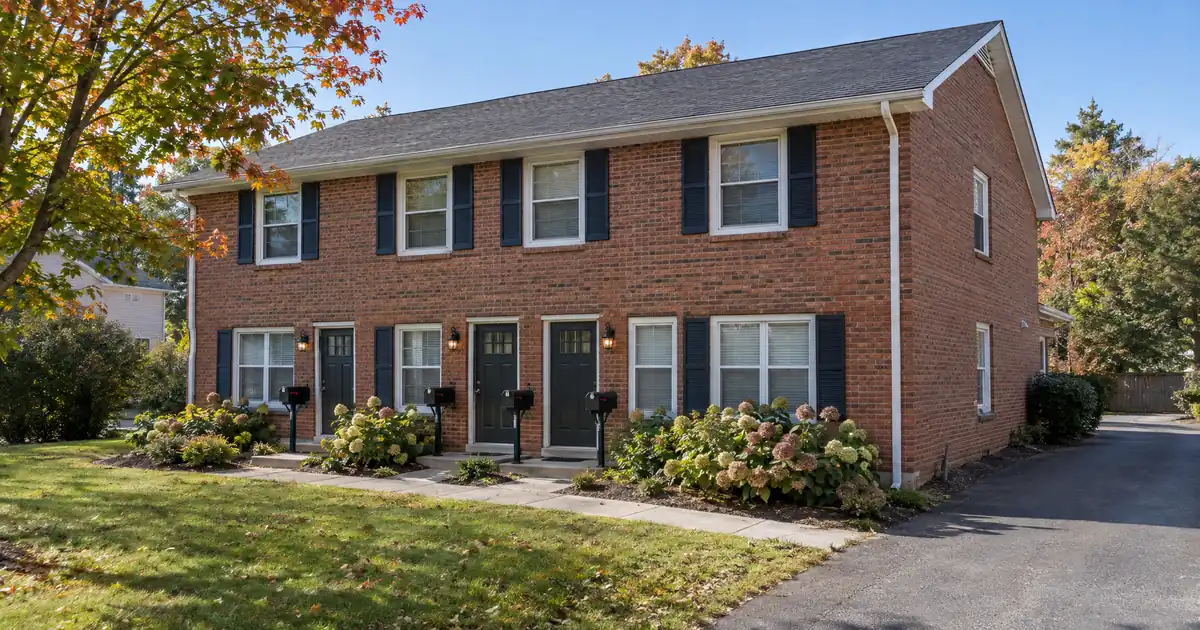
The Quick Read: Yes, a founder can live in one unit of a 2-4 unit building on a super jumbo bank statement loan, as long as the file is written as an owner-occupied primary residence, is reviewed on documented bank-statement deposits instead of the building’s rent, and fits the program’s size and overlay rules, subject to full underwriting. The loan is not a DSCR loan, because DSCR loans are built for non-owner-occupied rentals. Rent from the other units may help, but it depends on the program.
- Occupancy decides the loan type. Live in a unit and it is an owner-occupied bank statement file. Rent out every unit and DSCR becomes the better tool.
- Qualifying income comes from 12 or 24 months of deposits after an expense ratio, not from traditional personal-income documentation.
- Through select wholesale programs, 2-4 unit property types top out at 85% leverage, even where the primary-residence ladder is higher.
- Every file above $4,000,000 is reviewed case by case before submission.
- A founder paid mostly in venture money, equity or sale proceeds may need an asset-based path instead. Each figure is subject to lender guidelines and a complete review of property type, leverage, and credit.
Key Terms Defined
Super jumbo: a loan size above the lender’s own jumbo line. No regulator defines it, so each program draws the line, and the overlays on this page start above $3,500,000 on a primary residence.
Bank statement loan: a mortgage that qualifies the borrower on eligible deposits from personal or business statements rather than traditional personal-income documentation.
Owner-occupied: the borrower signs an occupancy certification and lives in the property as a primary residence.
House hack: buying a 2-4 unit building, living in one unit and renting the rest. BiggerPockets describes it the same way and notes that owner-occupied financing is generally more lenient than a typical investor loan.
Expense ratio: the share of business deposits treated as operating cost before income is calculated.
DSCR: debt service coverage ratio, meaning the property’s rent divided by its monthly debt obligation.
Why Occupancy Decides the Loan
A founder who lives in the building needs an owner-occupied file. That means bank statements, personal debt-to-income and a primary-residence leverage ladder. DSCR is off the table for that property.
A DSCR loan tests the building. Rent has to cover the full monthly obligation, and the borrower’s personal income is not the main test. That design only works for non-owner-occupied property. A bank statement loan tests the borrower’s deposits instead, and it can be written for either occupancy.
Two myths are worth killing here.
An LLC does not fix occupancy. Putting the building in a company’s name does not turn a home into a rental. Owner-occupied files generally need a natural person on title. Entity-held loans belong on the investment side, subject to lender program eligibility.
Buying as a rental and moving in later is a misrepresentation. Occupancy is certified on the application. Stating the wrong intent is the kind of problem that blows up a file, and no program in the network is built around it.
The practical sequence is simple. Use the bank statement loan on the building you live in. Use DSCR financing on the pure rentals that follow. Lendmire’s complete DSCR loans guide covers how that second step works.
How a Founder’s Income Becomes Qualifying Income
Qualifying income is eligible deposits, after an expense ratio, divided by the months reviewed. Across the wholesale network, the file uses 12 or 24 consecutive months of personal or business statements. The bank portfolio program, which carries larger loans, uses 12.
Business statements need at least 25% ownership. Statements must be consecutive, and a transaction history never substitutes for them. Expense ratios work like this:
| Business profile | Expense ratio |
|---|---|
| Service business, no employees | 20% |
| 1-5 employees | 40% |
| 6+ employees or any product business | 50% |
| Accountant-provided ratio | Per the accountant’s letter |
| Profit-and-loss method | Income capped at 80% |
Founders tend to trip on what counts as income.
- Counts: operating revenue deposited to a business account. Transfers from the founder’s own business into a personal account also count in full, so a founder who pays themselves through distributions can often run the file on personal statements.
- Does not count: business funds as personal assets, gifts, unvested stock and cryptocurrency. Capital gains and property-sale proceeds are not business income either.
- Commingled accounts: a founder who mixes business and personal money should expect underwriters to sort the deposits line by line.
A pre-revenue founder, or one paid mostly in equity or a post-exit payout, is usually better served by an asset path. Asset allowance divides liquid assets by 36, 60 or 84 months to create income. Assets-only needs U.S. liquid assets equal to the loan amount plus closing costs. Both apply to primary and second homes only. Retirement accounts count at 70%, or 80% at age 59.5 and over.
Lenders typically want a track record in the line of work, often around two years. A very young company is a real hurdle on the deposit path. The asset path may fit better in that case.
What Happens to Rent From the Other Units?
It depends on the program, and that is the honest answer. A bank statement file qualifies the borrower, so the building’s rent is not the main test. Some programs in the network let the other units’ rent offset the new payment or reduce the founder’s debt load, and others ignore it. It is worth asking early, because it can move debt-to-income at the 50% ceiling.
The appraisal still matters. A 2-4 unit is appraised on the small residential income property form, which reports unit-level rents. The appraiser’s rent schedule documents what the other units can earn. It does not replace the founder’s deposits.
Do not plan around a specific rent credit until the program states it in writing.
Where Unit Count and Loan Size Meet
Size bands are loan amounts, not purchase prices. Work out price times leverage first, then read the band for that loan. Every figure below is a ceiling through select wholesale programs, subject to full underwriting.
On a primary residence, the ladder reads as follows.
- $300,000 to $1,000,000: purchase to 90%, with 680+ credit needed for that top cell.
- $1,000,000 to $2,000,000: purchase 85%, with 700+ needed at $1,000,000-$1,500,000 and 720+ at $1,500,000-$2,000,000.
- $2,000,000 to $3,000,000: purchase 80%, with 720+ needed.
- $3,000,000 to $3,500,000: purchase 75%, with 720+ needed.
- $3,500,000 to $4,000,000: purchase 75%, with 760+ needed, on the portfolio non-QM program, which runs to $6,000,000 and carries the super jumbo overlays.
- $4,000,000 to $5,000,000: purchase 65%, on review, on the bank portfolio program. That program carries twelve-month-statement files to $30,000,000.
Those credit figures are what each band’s top cell needs. They are not floors.
Two property-type rules matter for a founder.
1. 2-4 units cap at 85%. At loan sizes where the primary ladder allows 90%, a 2-4 unit building still stops at 85%.
2. Second homes are one unit only. A founder cannot work around occupancy by calling a duplex a second home.
Above $3,500,000 on a primary residence, overlays apply: a 700 credit floor, 0x30x24 housing history, 48-month seasoning on any credit event, U.S. citizens and permanent residents only, and no rural property. Reserves run 3 months to $500,000, 6 months to $1,500,000 and 9 months above, plus 2 months per additional financed property to a 12-month maximum.
Above $4,000,000, everything is reviewed case by case before submission, including how a multi-unit property is treated. Nothing in the program guidelines promises 2-4 unit eligibility at the very top of the range. Expect that to be a conversation, not a menu item.
The Business-Purpose Wrinkle (3-4 Units)
Unit count can change a loan’s legal category. Federal rules treat credit to buy non-owner-occupied rental property as business purpose regardless of unit count, and the Regulation Z interpretation on coverage also addresses owner occupancy. Compliance Alliance summarizes that commentary this way: an owner-occupied purchase of a property with more than two units is deemed business purpose. So an owner-occupied duplex is generally a consumer loan, while a triplex or fourplex can fall on the business side.
For the borrower, this mostly stays in the background. Lenders still verify income, and fewer units does not automatically mean consumer treatment. It does mean a duplex and a fourplex can follow different paths inside the same program.
Which Loan Fits Your Situation?
| Your situation | Likely fit |
|---|---|
| Live in one unit, income on deposits | Owner-occupied bank statement loan |
| Rent every unit, strong rent | DSCR loan |
| Live in it, thin deposits, large liquid assets | Asset allowance or assets-only path |
| Founder paid mostly in equity or exit proceeds | Asset-based path, case by case |
| Building with a storefront and apartment | Eligibility depends on the commercial share |
| Five or more units | Commercial territory |
The pairing matters. Bank statement fits the building you live in. DSCR fits the rentals. Lendmire’s piece on super jumbo bank statement loans for 2-4 unit property covers the loan-size side, and the guide to a bank statement loan on a 2-4 unit you live in covers the owner-occupied side.
Moving Out Later
Owner-occupied programs expect you to live in the property for a set period. Check that period before signing, because it varies by program. After that, moving out and renting the whole building is a normal path. Some founders keep the original loan. Others refinance into a DSCR loan once the building is fully rented, with leverage and terms set by that program.
Keep the occupancy paper trail clean: the signed certification, a matching mailing address, insurance written for owner occupancy and utilities in your name.
Tax treatment varies; consult a qualified professional.
A Founder Scenario, Start to Finish
Picture a founder with a service company, four employees and two years of history. She wants a fourplex, plans to live in one unit and rent three.
- The loan lands in the $2,000,000-$2,500,000 band. On a primary-residence purchase, the ceiling is 80%, with 720+ credit needed for that top cell. The 85% cap for 2-4 units is not the binding limit here.
- Her business statements carry an expense ratio of 40%, because she has four employees. The rest of the deposits, divided by the months reviewed, set her qualifying income.
- A venture round that landed in the company account is excluded as income. Her regular transfers from the business to her personal account count in full.
- The reserve schedule is an overlay that applies only to loans above $3,500,000 on a primary residence, so it does not apply at her loan size.
- The appraisal reports the rent schedule for the three rental units. Whether that rent helps her debt-to-income depends on the program she is placed with.
She lives in the building on this loan. Her next purchase, a pure rental, would move to DSCR financing.
Frequently Asked Questions
Can my spouse or household count as the occupant?
Usually it is the borrower who must occupy the unit. Household members do not replace the borrower’s own occupancy certification. Underwriters want a signed commitment from the person on the loan.
Can my company or LLC hold title?
Not on an owner-occupied file. Primary residence loans generally need a natural person on title. The entity route belongs to investment property, subject to lender program eligibility.
What if my startup is pre-revenue?
Deposits will not carry the file, since there is little business income to count. An asset-based path may fit: asset allowance divides liquid assets by 36, 60 or 84 months. Assets-only needs liquid assets equal to the loan plus closing costs. Business funds, unvested stock and crypto never count.
What about five or more units?
That is commercial financing, not an owner-occupied residential file. The 2-4 unit rules above do not apply. Mixed-use buildings with a storefront often fall outside standard residential eligibility, depending on the commercial share.
Do I need landlord experience?
Not for the owner-occupied file. Experience matters more on the DSCR loans for the rentals that follow. First-time investors typically carry 12 months of reserves on those files.
Next Step
If you are financing a high-balance property on business or personal bank statements and want to see how the numbers work, Lendmire can help you compare super jumbo bank statement loan options based on your deposits, the property, credit profile, leverage, and your goals.
About Lendmire: Lendmire is a mortgage broker that shops multiple wholesale programs and is not the lender. Consumer mortgage lending is licensed in 16 states: AL, CA, CO, FL, GA, IN, MI, MT, NM, NC, OH, PA, TN, TX, VA and WA. All parameters here are available through select wholesale programs, subject to full underwriting, and are not a commitment to lend.
Lendmire’s self-employed mortgages page presents both super jumbo programs, bank statement and DSCR, side by side.
About Lendmire
As a mortgage broker (NMLS# 2371349), Lendmire helps self-employed and high-net-worth borrowers in 16 states qualify on bank statements, a profit-and-loss statement, 1099s or liquid assets instead of tax returns, through wholesale lenders. Lendmire is never the lender; program terms are set by the lender and its guidelines. Scotsman Guide named Lendmire a Top Mortgage Workplace in both 2025 and 2026.
Get Started
Ready to find the right loan for you?
In about 30 seconds you can review financing options available for your home or investment property. No commitment required.
Informational only. Not a Loan Estimate, approval, or commitment to lend. Program availability and eligibility are subject to lender guidelines, credit approval, property review, and underwriting.
References
1. BiggerPockets – House Hacking
2. CFPB – Regulation Z § 1026.3 and Official Interpretation
3. Compliance Alliance – Regulation Z and “Investment” Properties
This article is part of Lendmire’s super jumbo bank statement loan program — full qualification details, guidelines, and scenarios live on the program page.
Related reading: How to Get a Super Jumbo Bank Statement Loan Without Selling Stock · How to Pick Business Bank Statement Months on a Super Jumbo Loan · How to Qualify for a Super Jumbo Bank Statement Loan Takeout After an SBLOC Bridge
Brandon Miller
Founder & CEO, Mortgage Loan Originator, Lendmire LLC
- Mortgage Loan Originator · NMLS# 1129696 · Verify on NMLS Consumer Access
- North Carolina Real Estate Broker · License# 343312 · Verify on NCREC
- North Carolina Insurance Producer · License# 19053198 · Property, Casualty, Life, Health · Verify on NAIC SBS
- Lendmire LLC · Firm NMLS# 2371349 · Verify firm licensure
Required disclosures. Lendmire (NMLS# 2371349) operates as a licensed mortgage broker, not a direct lender or depository. The discussion in this article is general in nature and should not be relied upon as financial, legal, or tax advice — every investment scenario is unique and should be reviewed by a qualified professional. Any loan inquiry is subject to lender underwriting, and this article is not a commitment to lend or a guarantee of approval. Mortgage rates, loan terms, and program guidelines vary by borrower, property, and state, and may change without notice. Equal Housing Opportunity. Verify licensure at NMLS Consumer Access.