
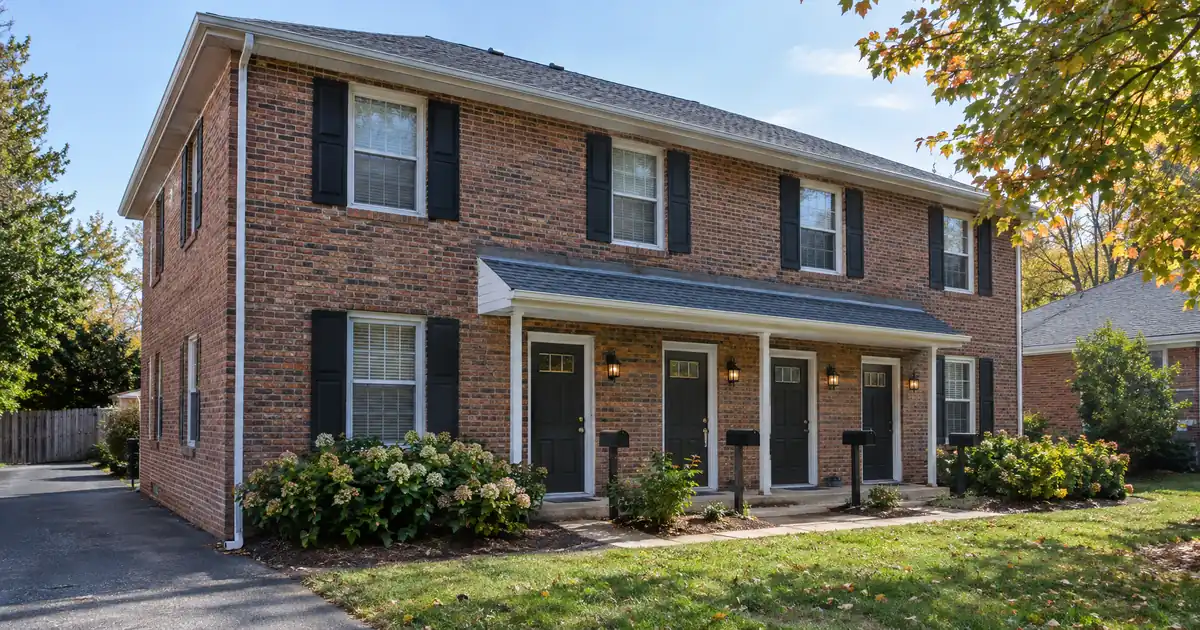
The Quick Read: Yes, in many cases: duplexes, triplexes and fourplexes are an eligible property type on bank statement programs at jumbo and super jumbo balances, through select wholesale programs, subject to full underwriting, as long as your deposits support the payment and you clear the leverage and credit overlays that tighten with size. The loan tests your deposits, not the building’s rent. Occupancy, meaning whether you will live in one unit, is the variable that shapes everything else.
- Four units is the ceiling. Five or more units is a commercial loan, not this product.
- Leverage on a 2-4 unit tops out at 85% through select wholesale programs, even where a single-family primary residence can go higher.
- Rent from the other units does not count as qualifying income on a bank statement file.
- Above $4,000,000, every file is reviewed case by case before submission.
- If the building’s rent is strong and your deposits are lumpy, a DSCR loan may fit better.
Key Terms Defined
Super jumbo is a lender’s label for very large loan balances. There is no official definition, so each lender draws its own line.
Non-QM means the loan sits outside standard qualified-mortgage documentation boxes. It still requires full verification of your repayment-capacity.
Bank statement loan qualifies a self-employed borrower on 12 or 24 months of deposits instead of traditional personal-income documentation.
Expense ratio is the share of business deposits the underwriter assumes went to costs. Only the remainder counts as income.
DTI (debt-to-income ratio) compares your monthly debts to your qualifying monthly income.
House hack means buying a 2-4 unit, living in one unit and renting the rest.
DSCR loan qualifies primarily on property-level rental income covering the payment, subject to lender guidelines. Lendmire’s complete DSCR loans guide covers it in full.
Does Unit Count Change Anything Inside the 2-4 Range?
Mostly no. A duplex and a fourplex run on the same bank statement rules. The cap and the underwriting are the same, and what moves leverage is loan size and occupancy.
Where unit count does matter is the jumbo line itself. The FHFA’s conforming loan limit FAQs explain that limits vary by county and by number of units. Each step up in unit count raises the limit. Calculated Risk, quoting the FHFA announcement, puts the baseline at $832,750 for a one-unit property and $1,601,750 for a four-unit property.
So a fourplex can carry a bigger loan before it is “jumbo” than a house can. A super jumbo 2-4 unit deal needs a much higher price than a super jumbo single-family one. Those limits only mark where jumbo starts. They do not govern bank statement files, which are not agency loans.
Occupancy Decides the File
Live in one unit and the loan is a consumer mortgage on a primary residence. Rent every unit and it is a business-purpose investor loan. Same building, different file. Don’t bend the facts to fit a product. Lenders verify occupancy, and a misstated one is a problem you do not want.
| Factor | Owner-occupied (house hack) | Pure rental |
|---|---|---|
| Loan character | Consumer mortgage | Business-purpose |
| What is tested | Your deposits, credit, DTI | Same, plus entity rules |
| Purchase leverage, small balances | 85% ceiling on 2-4 units | 85% ceiling to $1M |
| Super-jumbo overlays begin | Above $3,500,000 | Above $3,000,000 |
| Vesting | Usually you personally | LLC possible, per program |
An LLC can hold the title on a pure rental, subject to program terms. It is more common on DSCR files than on bank statement files.
Here is the business-purpose point in one paragraph. DSCR loans are designed for non-owner-occupied investment properties. Because they are business-purpose investor loans, they are reviewed differently from a standard owner-occupied mortgage. Business purpose is not a lighter review, though. Credit, assets, debts and the property still get a hard look.
Second homes drop out of this conversation. A second home is a one-unit property on the programs we place files with. A duplex does not qualify as one.
What the Lender Actually Tests: Your Deposits, Not the Rent
This is the confusion that trips up the most investors. A bank statement loan underwrites you. The building’s rent is not the qualifying income.
Here is how the income gets built:
1. The underwriter collects 12 or 24 consecutive months of personal or business statements. The bank portfolio program uses 12.
2. Non-income deposits come out: loan proceeds, one-time windfalls, transfers between your own accounts.
3. Transfers from your own business into your personal account count at 100%, so you are not penalized for moving money.
4. On business statements, an expense ratio comes off. Programs in our network use fixed ratios that vary with the type of business and the number of employees, and the ratio is higher for businesses with more employees or any product business. An accountant-provided ratio or a profit-and-loss method capped at 80% is another route.
5. What remains is divided by the number of months. That is your qualifying income.
Business statements require at least 25% ownership of the business. Transaction histories never substitute for the statements themselves.
Run the numbers on a self-employed owner with a small business and a handful of employees. At the fixed expense ratio, about 60 cents of every eligible business deposit dollar counts as income. Say that income supports the whole payment on a duplex, with room under the DTI ceiling. The file works without a dime of rent entering the math. Flip it: if the income barely covers the primary home, adding a fourplex payment can push DTI past the limit, even if the fourplex rents beautifully.
Every financed property stays in your DTI. Each additional one stacks on top.
How Does Loan Size Change the Leverage?
Size is the biggest lever on your down payment. We place 2-4 unit files with two kinds of wholesale programs. A portfolio non-QM program carries bank statement files to $6,000,000. That bank ladder begins above $4,000,000 and overlaps the portfolio program to $6,000,000.
Here are purchase-leverage ceilings by size, through select wholesale programs, subject to full underwriting. The 2-4 unit cap of 85% applies on top of the size ladder.
| Loan size | Owner-occupied purchase | Investment purchase |
|---|---|---|
| $300K–$1M | 85% | 85% |
| $1M–$2M | 85% | 80% |
| $2M–$2.5M | 80% | 80% |
| $2.5M–$3M | 80% | 75% |
| $3M–$4M | 75% | 60% |
| $4M–$5M | 65%, case by case | 65%, case by case |
Read that table honestly. Owner-occupied files keep more leverage through the middle sizes. Investment files drop sharply past $3,000,000. And everything above $4,000,000 is reviewed case by case before submission, so treat that row as a starting point, not a quote. Pricing and available terms vary by lender, borrower profile, property type, and full underwriting review. The super-jumbo overlays kick in above $3,500,000 on a primary residence and $3,000,000 on an investment property:
- A 700 credit floor.
- A 0x30x24 housing history.
- 48 months of seasoning after any credit event.
- U.S. citizens and permanent residents only.
- No non-occupant co-borrowers, and no rural property.
- Cash-out proceeds cannot count toward reserves.
Credit floors elsewhere run from 660 on the portfolio program to 680 on the bank program, with 700 above the super-jumbo line. Some size bands want more. A primary residence from $3,500,000 to $4,000,000 asks for 760+. Reserves run 3 months to $500,000, 6 months to $1,500,000 and 9 months above that. Add 2 months per additional financed property, up to 12 months. First-time investors carry 12 months.
What the Appraiser Looks At
A 2-4 unit gets appraised on a different form than a house. Fannie Mae’s Selling Guide names the Small Residential Income Property Appraisal Report (Form 1025) for two- to four-unit properties. We cite it only for the form name. Bank statement loans are not agency products.
That report includes rental comparables and an income approach. Even though rent does not qualify you, the lender still wants to know the building’s value and whether its rents are realistic. The catch: comps for 2-4 units are thinner than for single-family homes. At super jumbo prices, a thin comp set can slow an appraisal conversation and shave value. Plan for it.
A condo-style 2-4 unit adds a project review. Warrantable condos run to 85% and non-warrantable to 80% on the same programs.
What Gets Replaced and What Still Gets Verified
Bank statement loans swap one document set for another. They do not skip the paperwork.
| Item | On a bank statement file |
|---|---|
| Traditional personal-income documentation | Replaced by 12–24 months of statements |
| W-2s and pay stubs | Not the income test |
| Credit | Still required, 660 floor and up |
| Reserves | Still required, 3/6/9 months by size |
| Appraisal | Still required |
| DTI | Still tested, up to 50% |
Non-QM does not mean subprime, either. Scotsman Guide’s coverage of Fitch commentary says issuers are holding credit criteria steady, with average loan-to-value near 70% and average credit scores in the mid-700s.
Bank Statements, DSCR or Something Else?
A DSCR loan flips the test. It qualifies primarily on property-level rental income covering the payment, subject to lender guidelines, and generally does not review your personal income. Programs below 1.00 coverage are available through select lenders in the network, but leverage and terms adjust.
Pick by borrower profile:
| Your situation | Likely path | Tradeoff |
|---|---|---|
| Strong, steady deposits, DTI room | Bank statement | Each property stacks on DTI |
| Strong rent, lumpy deposits | DSCR | Property must cover its payment |
| Owner-occupying a fourplex | Bank statement | Rent does not count as income |
| Scaling a portfolio | DSCR | Each building stands alone |
| Big liquid assets, thin income | Asset-based path | Primary and second homes only |
Market data shows both lanes are mainstream. Scotsman Guide, citing Optimal Blue lock data, reports that bank statement loans were about 36% of non-QM locks in one recent record month, with DSCR investor loans just over 32%.
Lendmire’s comparison of DSCR and bank statement loans for investors walks through the choice in more depth. And its piece How to Qualify for a Bank Statement Loan on a 2-4 Unit Property covers the step-by-step.
One honest toss-up: an owner-occupied fourplex buyer with strong deposits usually lands on bank statements, because the house-hack leverage is better. An investor with a pure rental and rent that clearly covers the payment may do better on DSCR, particularly if the deposits are uneven. The asset paths deserve a look too. An asset allowance divides liquid assets by 36, 60 or 84 months. Assets-only needs liquid assets equal to the loan plus closing costs.
How Should You Prepare the File?
Good prep is mostly account hygiene. Gather these:
- Twelve or 24 consecutive statements, every page.
- Business ownership proof showing 25% or more.
- A written explanation for any large unusual deposit.
- Entity documents, if the rental will be vested in an LLC.
- Proof of reserves, with retirement accounts counted at 70% (80% at 59.5 and older).
- A clean split between personal and business money, where you can manage it.
Business funds, gifts, cryptocurrency and unvested stock never count as reserves. Commingled accounts work, but they take more explanation, so label what is what.
What About Cash-Out on a 2-4 Unit?
It is available, with lower ceilings. Through select wholesale programs, a cash-out refinance on a primary residence under $1,000,000 can reach 80%. On an investment property in that band it tops out at 75%. Proceeds are unlimited at or below 60% LTV. Above 60%, the portfolio program caps cash in hand at $1,500,000. Above $4,000,000 the ceilings fall and the file is reviewed case by case. Tax treatment can depend on how the funds are used and how the property is held; investors should keep clear records and speak with a qualified tax professional before relying on any deduction. These specifics are subject to lender guidelines and a full review of property, leverage, and credit.
Frequently Asked Questions
Can I live in one unit and still use a bank statement loan?
Yes. That is the house-hack structure, and it is handled as a primary residence purchase. On a 2-4 unit the leverage ceiling is 85% through select wholesale programs, and the size ladder lowers it further as the balance climbs. Consumer lending is licensed in 16 states: AL, CA, CO, FL, GA, IN, MI, MT, NM, NC, OH, PA, TN, TX, VA and WA.
Does the rent from the other units count as my income?
No. A bank statement loan tests your deposits after the expense ratio. The building’s rent does not qualify you. It still matters to the appraisal, and it matters to your own cash flow, but not to the income calculation.
Is a fourplex still a residential loan?
Yes, up to four units. Five or more units is a commercial appraisal and a commercial loan, which is a different product.
Can I buy a duplex as a second home?
No. Second homes are one-unit properties only on these programs. A duplex is either your primary residence, if you live in a unit, or an investment property.
When does a DSCR loan beat bank statements?
When the building’s rent clearly covers its payment and your deposits are lumpy or declining. A DSCR file does not stack personal DTI property after property, so it scales better. Qualification is subject to lender guidelines, credit approval and property review.
If you are financing a high-balance property on business or personal bank statements and want to see how the numbers work, Lendmire can help you compare super jumbo bank statement loan options based on your deposits, the property, credit profile, leverage, and your goals. Lendmire is a broker that shops multiple wholesale programs. Nothing here is a commitment to lend.
Lendmire’s self-employed mortgages page presents both super jumbo programs, bank statement and DSCR, side by side.
About Lendmire
As a non-QM mortgage broker (NMLS# 2371349), Lendmire facilitates DSCR investor loans across 41 markets, including Washington, D.C. DSCR eligibility is generally reviewed around property-level rental income instead of personal income documentation, subject to lender guidelines, serving LLC-structured portfolios and self-employed borrowers who don’t fit conventional boxes. A two-time Scotsman Guide Top Mortgage Workplace (2025, 2026).
Get Started
Ready to find the right loan for you?
In about 30 seconds you can review financing options available for your home or investment property. No commitment required.
Informational only. Not a Loan Estimate, approval, or commitment to lend. Program availability and eligibility are subject to lender guidelines, credit approval, property review, and underwriting.
References
1. FHFA Conforming Loan Limit FAQs
2. Calculated Risk: FHFA announces baseline conforming loan limits
4. Scotsman Guide: Investors anchor housing market as non-QM loans surge
5. Scotsman Guide: December marks new record for non-QM volumes
This article is part of Lendmire’s super jumbo bank statement loan program — full qualification details, guidelines, and scenarios live on the program page.
Related reading: How to Get a Super Jumbo Bank Statement Loan on Sales or Commission · DSCR vs Bank Statement Loan for a Jumbo Cabin or Rural Property · How to Get a Super Jumbo Bank Statement Loan on a Condotel Unit
Brandon Miller
Founder & CEO, Mortgage Loan Originator, Lendmire LLC
- Mortgage Loan Originator · NMLS# 1129696 · Verify on NMLS Consumer Access
- North Carolina Real Estate Broker · License# 343312 · Verify on NCREC
- North Carolina Insurance Producer · License# 19053198 · Property, Casualty, Life, Health · Verify on NAIC SBS
- Lendmire LLC · Firm NMLS# 2371349 · Verify firm licensure
Compliance and disclosures. Lendmire (NMLS# 2371349) is a licensed mortgage broker and is not a direct lender, depository institution, financial advisor, or tax professional. Content in this article is general market analysis and educational information — not financial, legal, or tax advice for any specific situation. Lendmire does not guarantee loan approval; every transaction is subject to underwriting by the funding lender. Mortgage pricing and loan program guidelines are subject to change at any time without notice and vary by borrower characteristics, property type, and state regulations. Lendmire complies with Equal Housing Opportunity. Licensure verification: NMLS Consumer Access.