
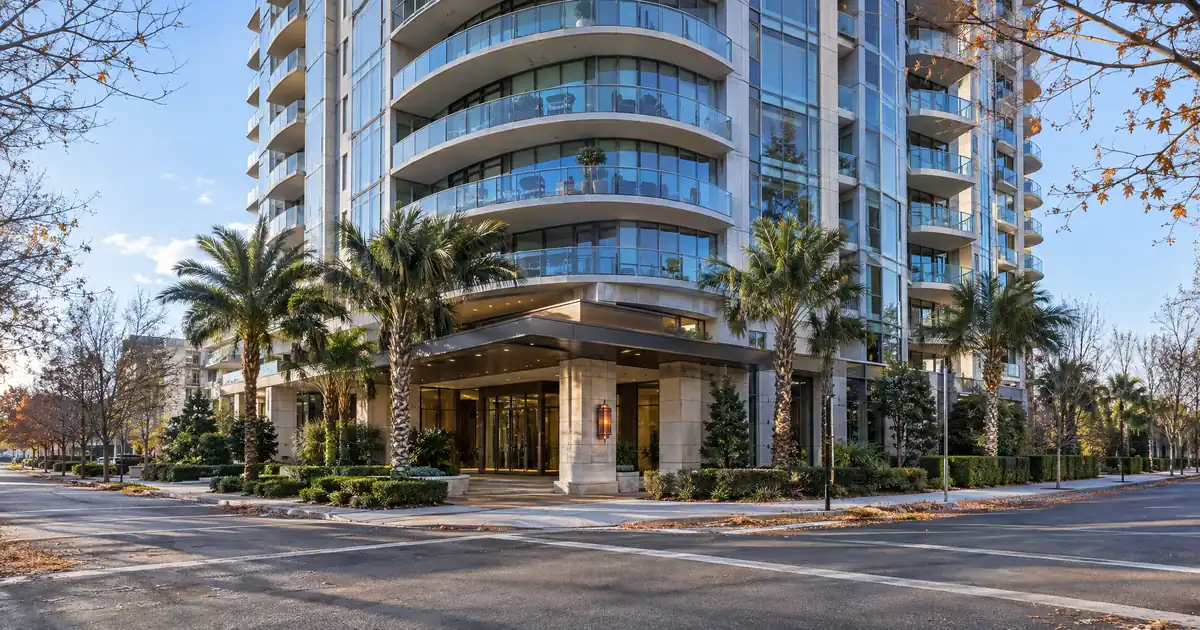
The Quick Read: You qualify on your deposits or assets instead of traditional personal-income documentation, and the building decides how much you can borrow before your income is reviewed. A hotel-style condo carries its own leverage ceiling. Above a certain size, extra overlays stack on top.
- Qualifying income comes from 12 or 24 months of bank deposits after an expense ratio. The condotel unit’s own rent is not what qualifies you.
- Condotels carry a lower ceiling than ordinary condos: 75% on a purchase and 65% on a cash-out on the portfolio program, and 50% on a cash-out on the bank program, through select wholesale programs, subject to full underwriting.
- Past $3,000,000 on a second home or investment property, the super jumbo overlay adds a 700 credit floor, 48-month seasoning after a credit event, and tighter reserve rules.
- Every file above $4,000,000 is reviewed case by case before submission.
- Mandatory rental-pool participation is the single issue that decides whether a given building is workable.
If you are a founder, physician, attorney or investor whose traditional personal-income documentation understates what you earn, this is the path to understand.
Key Terms Defined
Condotel: A condominium building run partly or fully like a hotel, often with a front desk, a rental program, and owners who rent their units out by the night.
Bank statement loan: A mortgage that sets your income from your deposit history instead of traditional personal-income documentation, using 12 or 24 months of statements.
Super jumbo: A loan large enough that a lender adds extra rules. Nobody official draws the line, so each lender sets its own.
Non-QM: A mortgage that falls outside the standard agency rulebook and is underwritten under the lender’s own guidelines.
Warrantable condo: A condo project that meets standard agency project rules. A non-warrantable condo misses at least one. A condotel is usually tighter still.
LTV: Loan-to-value, the loan amount as a percentage of the property’s value or price.
DTI: Debt-to-income, your monthly debts as a percentage of qualifying monthly income.
Reserves: Liquid money left in your accounts after closing, counted in months of the housing payment.
Seasoning: The waiting period required after a credit event, such as a foreclosure, before a lender will consider you again.
Rental pool: An arrangement where the building’s management rents out units and shares the income with owners. It can be optional or mandatory.
Why Agency Loans Skip Condotels, and Why That Matters Here
Standard agency financing excludes hotel-operated projects at the building level, and that is exactly the gap non-QM programs fill. Fannie Mae’s Selling Guide lists projects operating as hotels or motels as ineligible. The traits it names include registration services, daily or short-term rentals, daily cleaning, central key systems and central telephone service.
Notice what that exclusion attaches to. It attaches to the building, not the borrower. A buyer with excellent income and big deposits still cannot use an agency loan on that tower. The wholesale lenders Lendmire works with write these loans on their own guidelines instead, which is why a high-balance condotel buyer ends up in non-QM territory. Lendmire is the broker here, comparing programs and placing the file. It is never the lender.
The Three Layers: Property, Income, Size
Every file answers three separate questions, and they stack. The property type sets a leverage ceiling. The documentation method sets how income is measured. The loan size sets the overlay.
| Layer | Question | What it controls |
|---|---|---|
| Property | Warrantable, non-warrantable, or condotel? | Leverage ceiling |
| Income | Bank statements, P&L, or assets? | Qualifying income |
| Size | Where is the loan on the size ladder? | Credit, reserves, review |
The lower of the property ceiling and the size ladder generally governs. Here is how that plays out. On an investment property between $1,000,000 and $1,500,000, the size ladder allows up to 80% on a purchase. A condotel’s 75% purchase ceiling is lower, so 75% is the working number. Between $3,000,000 and $3,500,000 on an investment property, the size ladder allows 60% on a purchase. That is below the condotel ceiling, so the size ladder governs.
Both figures are ceilings through select wholesale programs, subject to full underwriting. Second homes run about five points lower than the primary-residence ladder at every size. Investment property sits in a similar range, and the exact cell depends on the loan size and transaction type.
Which Condotel Units Qualify at All?
Most condotel files that fail do so on the building or the unit, not the borrower’s income. Lenders screen for hotel-style operation, insurance gaps, litigation and rental-pool participation before income comes up. Screen the building before you write an offer.
| Test | Usually workable | Usually a problem |
|---|---|---|
| Rental pool | Optional participation | Mandatory participation |
| Occupancy control | Owner decides | Management decides |
| Unit layout | Full kitchen | No kitchen |
| Ownership form | Individual deed | Timeshare or fractional |
| Building health | Insured, no litigation | Insurance gaps, litigation |
| Origin | Purpose-built condo | Motel conversion |
The mandatory-pool line is the most important one. A non-warrantable condo, where you control whether to rent or occupy, is a documentation problem. A true condotel with mandatory pool participation puts occupancy under management’s control, and that is a structural problem. Some programs exclude mandatory pooling and some allow it, so ask which applies before you sign anything.
Buildings with no hotel flag can still be treated as condotel-like. If most owners run nightly rentals, expect the lender to ask. Timeshares, fractional ownership, units without kitchens and projects in structural or insurance distress are commonly ineligible.
BiggerPockets members suggest asking three things before contract: is participation mandatory, what is the unit’s vacancy, and how healthy are the building’s finances. Those are sound questions to put to the seller.
How a Jumbo Bank Statement Loan on a Condotel Unit Gets Underwritten
The lender builds your monthly income from deposits, then tests that income against the new obligation and your other debts. Here is the sequence on most files in the wholesale network.
1. Choose the statement set. You submit 12 or 24 consecutive months of personal or business statements. The bank program uses 12 months. Statements must be consecutive, and a transaction history never substitutes.
2. Strip non-income items. The lender removes transfers between your own accounts, loan proceeds and similar items.
3. Apply the expense ratio. Business statements require at least 25% ownership. The lender applies a fixed expense ratio that depends on the type of business: a lower ratio for a service business with no employees, a middle ratio for a business with one to five employees, and the highest ratio for a business with six or more employees or any product business. An accountant-provided ratio can replace the fixed figure, and a profit-and-loss method is capped at a maximum expense ratio.
4. Average the result. Eligible deposits divided by the statement months gives qualifying monthly income.
5. Test DTI. The new housing obligation and your other debts must fit within DTI up to 50%.
Transfers from your own business into a personal account count at 100%. That is why the choice of statements matters. The same economic activity can produce different qualifying income depending on whether it is measured on the business account or the personal one, and the lender reviews which fits how you actually earn.
A quick model shows the spread. Take twelve months of eligible business deposits and divide by twelve. A six-plus-employee business keeps 50% of that average as income. A no-employee service business keeps 80%. Same deposits, a 30-point gap in qualifying income.
Notice what is missing. The condotel unit’s own rental income is not in this calculation. A bank statement file is reviewed on your deposits. The building classification still applies on top, so strong income does not lift the leverage ceiling.
What Changes at Super Jumbo Size
Super jumbo means extra review and tighter rules as the balance rises. In this network, the overlay begins above $3,500,000 on a primary residence and above $3,000,000 on a second home or investment property. A condotel is almost always the second kind.
Past that line, expect these conditions through select wholesale programs, subject to full underwriting:
- A 700 credit floor. The base floors are 660 on the portfolio program and 680 on the bank program.
- A 0x30x24 housing history, meaning no late mortgage payments in 24 months.
- 48 months of seasoning after any credit event.
- U.S. citizens and permanent residents only, with no non-occupant co-borrowers.
- Cash-out proceeds cannot satisfy reserves.
The size ladder for second homes and investment property is tighter than for primary residences. On a second home between $3,000,000 and $4,000,000, purchase leverage tops out at 65% with a 760 credit tier. Between $4,000,000 and $5,000,000, it is reviewed case by case before submission.
Two programs share this territory, so name them clearly. The portfolio program is a non-QM bank-statement program that carries files to $6,000,000. The bank program starts above $4,000,000, overlaps the portfolio program to $6,000,000, and stands alone above that. On the bank program, leverage is 65% to $5,000,000, 60% to $10,000,000 and 55% to $30,000,000, all reviewed case by case before submission.
Reserves scale with size: 3 months to $500,000, 6 months to $1,500,000, and 9 months above that. Add 2 months per additional financed property, up to 12. First-time investors need 12 months. Larger files often add a second appraisal.
The appraisal on a condo unit is typically the Individual Condominium Unit Appraisal Report, Form 1073. Condotel comparable sales should come from other condotel sales, not ordinary condos in the same zip code. Thin comp data is a common reason these valuations take extra work.
Step by Step: From Screening to Closing
1. Screen the building. Ask about rental-pool terms, hotel flag, kitchens, insurance and litigation before you write an offer.
2. Pick the documentation path. Decide between bank statements, profit-and-loss, or assets based on how your income actually shows up.
3. Check the size tier. Find where the loan lands on the ladder and which overlays apply.
4. Compare programs. Different lenders set different expense treatments, reserve rules and condotel ceilings. This is where a broker earns the role.
5. Gather the file. Statements, ownership proof, accountant letter if used, asset statements, and building documents.
6. Order the appraisal. Condotel comps drive the value.
7. Underwrite and close. Each file is underwritten individually. Nothing here is a commitment to lend.
Purchase Versus Cash-Out
Cash-out on a condotel is capped below purchase leverage. On the portfolio program, a condotel cash-out is capped at 65%. On the bank program, it stops at 50%.
Because 65% sits above 60%, the portfolio program’s $1,500,000 cash-in-hand cap applies. At or below 60% LTV, proceeds are not capped. The bank program has no published cap on proceeds. Cash-out proceeds cannot count toward reserves once you are past the overlay line. Exact terms depend on the lender’s guidelines, property type, leverage, and a full review of the borrower’s file.
Investment property cash-out generally lands five to fifteen points below the primary-residence figure. Know that before you plan a cash-out to fund the next purchase. Lendmire’s piece on whether a bank statement loan can finance a condotel covers the base case in more depth.
When Bank Statements Are the Wrong Tool
Bank statements fit when your deposits tell the income story. They do not fit every borrower, and the alternatives matter.
| Path | Best fit | Watch for |
|---|---|---|
| Bank statements | Strong, steady deposits | Expense ratio lowers income |
| P&L method | Accountant-prepared books | Capped at 80% |
| Asset allowance | Large liquid assets | Primary and second homes only |
| Assets-only | Deep U.S. liquidity | Loan plus costs must be covered |
| DSCR | Rent should qualify | Operating history needed |
The asset paths work like this. Asset allowance divides liquid assets by 36, 60 or 84 months, depending on DTI and loan size. It applies to primary and second homes only, with an 80% maximum. Assets-only needs no DTI. Your U.S. liquid assets must equal the loan amount plus closing costs, plus sixty months of any net loss on other residential property. Retirement accounts count at 70%, or 80% at age 59.5 and up. Business funds, gifts, most trusts, unvested stock and cryptocurrency never count.
DSCR loans are designed for non-owner-occupied investment properties. Because they are business-purpose investor loans, they are reviewed differently from a standard owner-occupied mortgage. A DSCR file qualifies primarily on property-level rental income covering the payment, subject to lender guidelines. Condotel leverage caps still bind there.
One trap on that path: appraisers need monthly-leased comparables for the rent schedule. Multiplying a nightly price by thirty is not an accepted method. For the full picture of how that path works, see Lendmire’s complete DSCR loans guide.
The Investor Reality Check
The building matters more than your income, and condotel cash flow is often thinner than the brochure suggests. BiggerPockets members describe hotel-flag profit sharing, restrictive deed rules and hard-to-find financing as recurring problems. Those are anecdotes, not data, but the pattern matches what a broker sees.
Expect a larger down payment, more reserves and an extra review layer compared with a standard rental. This one is a genuine judgment call: if the unit is for your own use a few weeks a year, the structure can make sense. If it is purely a yield play, compare it against a conventional rental first. Tax treatment varies by how the property is held and used; consult a qualified tax professional.
Common Reasons These Files Stall
- Mandatory rental-pool participation that the chosen program excludes.
- Statements with gaps or missing months.
- Business ownership below 25% when business statements are used.
- Credit below the overlay floor once the loan crosses the size line.
- Cash-out proceeds counted toward reserves above the overlay line.
- Condotel comps that do not exist, so the value cannot be supported.
- A borrower who is not a U.S. citizen or permanent resident on an overlay-size file.
Most of these are visible before you make an offer. That is the reason to screen the building first.
Frequently Asked Questions
Can the condotel’s rental income help me qualify on a bank statement loan?
Not directly. A bank statement file is reviewed on your deposits, and the unit’s own rent is a DSCR concept. If the property’s rent should carry the loan, the DSCR path is the better fit, subject to lender guidelines and the condotel leverage ceiling.
How much can I borrow against a condotel on a super jumbo file?
The condotel ceiling is 75% on a purchase and 65% on a cash-out on the portfolio program, and 50% on a cash-out on the bank program. The size ladder can pull that lower, since investment property between $3,000,000 and $3,500,000 tops out at 60% on a purchase. Above $4,000,000, leverage is reviewed case by case. All figures are through select wholesale programs, subject to full underwriting.
What credit score do I need?
The base floor is 660 on the portfolio program and 680 on the bank program. Above the super jumbo line, which is $3,000,000 on a second home or investment property, the floor rises to 700, and the size ladder often asks for more. Credit events need 48 months of seasoning on overlay-size files.
How many months of statements do I need?
Twelve or twenty-four consecutive months of personal or business statements. The bank program uses twelve. A business account requires at least 25% ownership, and a transaction history never substitutes for statements.
Does a mandatory rental pool rule out financing?
It depends on the program. Some exclude mandatory pooling and some allow it, so confirm before contract. The pool’s effect is structural, because management controls occupancy instead of you.
Next Step
For a comparison of how a trust fits into the picture, see Lendmire’s article Can a Trust Finance a Condotel With a Super Jumbo Bank Statement Loan?. Consumer mortgage lending is licensed in AL, CA, CO, FL, GA, IN, MI, MT, NM, NC, OH, PA, TN, TX, VA and WA, and every file is underwritten individually.
For current guidelines and terms, see Lendmire’s super jumbo bank statement loan programs page.
Self-employed borrowers can compare both super jumbo programs on Lendmire’s self-employed mortgages page.
About Lendmire
Lendmire, NMLS# 2371349, is a non-QM mortgage broker serving real estate investors in 41 markets, including Washington, D.C., through DSCR investor loan programs. Qualification on bank statement files is generally reviewed around the borrower’s eligible deposits, not the borrower’s W-2 history — a practical fit for LLC-titled portfolios and self-employed investors. All scenarios remain subject to lender review and program guidelines. Two consecutive Scotsman Guide Top Mortgage Workplace recognitions (2025, 2026).
Get Started
Ready to find the right loan for you?
In about 30 seconds you can review financing options available for your home or investment property. No commitment required.
Informational only. Not a Loan Estimate, approval, or commitment to lend. Program availability and eligibility are subject to lender guidelines, credit approval, property review, and underwriting.
References
1. Fannie Mae Selling Guide, Ineligible Projects (B4-2.1-03)
2. BiggerPockets, Thinking About a Condo-Hotel
3. Realvals, Real Estate Appraisal Forms
4. BiggerPockets, Buy and Hold Condotel Units
This article is part of Lendmire’s super jumbo bank statement loan program — full qualification details, guidelines, and scenarios live on the program page.
Related reading: Bank Statement HELOC vs Super Jumbo Bank Statement Loan for a Creative · SBLOC Delayed Financing on a Super Jumbo Bank Statement Loan on Acreage · How to Get a Super Jumbo Bank Statement Cash-Out as an Entertainer
Brandon Miller
Founder & CEO, Mortgage Loan Originator, Lendmire LLC
- Mortgage Loan Originator · NMLS# 1129696 · Verify on NMLS Consumer Access
- North Carolina Real Estate Broker · License# 343312 · Verify on NCREC
- North Carolina Insurance Producer · License# 19053198 · Property, Casualty, Life, Health · Verify on NAIC SBS
- Lendmire LLC · Firm NMLS# 2371349 · Verify firm licensure
Important disclosures. Lendmire (NMLS# 2371349) is a licensed mortgage brokerage. Lendmire is not a direct lender, depository institution, or financial advisor. All loan inquiries are subject to lender underwriting; this article does not constitute a commitment to lend. Rates, terms, and program guidelines are subject to change without notice and vary by borrower profile, property type, and state. Information in this article is general in nature and is not financial, legal, or tax advice. Equal Housing Opportunity. NMLS Consumer Access: nmlsconsumeraccess.org.