
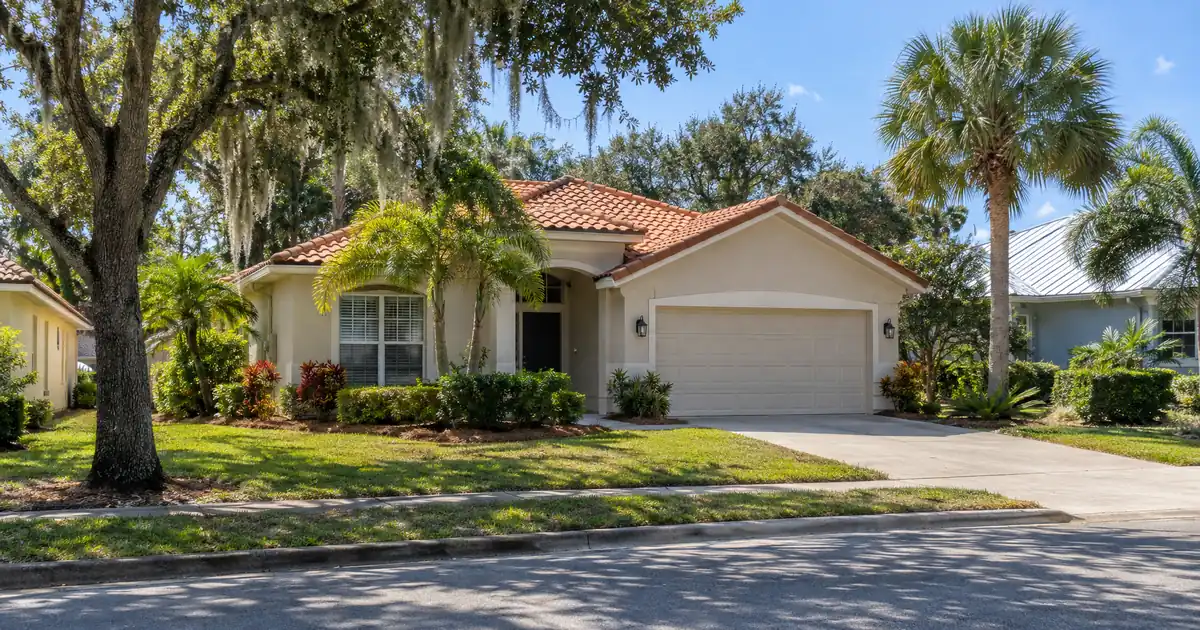
The Quick Read: Yes, in practice: a Florida owner generally pays documentary stamp tax and a one-time intangible tax on the full amount of the line when the lender records the mortgage, because the tax follows the recorded mortgage and note, not the bank statement income method used to approve the borrower. Underwriting decides whether you get the line and how big it is. The size of the line then sets the size of the tax bill. Exact treatment depends on how the loan documents are drafted, so the title agent’s closing figures are the final word.
- Doc stamps run $0.35 per $100, or portion thereof, and the intangible tax is 2 mills (0.2%), for about 0.55% combined on the taxable amount.
- The tax is generally measured on the full secured line as documented, not just what you draw on day one.
- Using bank statements to qualify does not change the taxable event.
- The $2,450 cap applies to notes without a recorded mortgage, so it does not help a secured line.
- Size the line to your real need, because every extra dollar of limit carries tax.
What Does “Full Bank Statement” Actually Mean?
A full bank statement line is a home equity line of credit (HELOC, a revolving credit line secured by your property) where the lender reads a complete run of your account statements to figure out your income. “Full” means every page of every statement in the review period, not a summary. The lender still looks at credit, equity, debt load, and the property itself.
How large a line the equity supports in Florida.
An equity line is sized by combined loan-to-value, occupancy, and credit — not by rental coverage. Switch the occupancy or the credit band and the ceiling moves with it.
Investment-property lines require a 700 minimum credit score; second-home lines start at a 640 minimum and primary-residence lines at 600, and the combined-LTV ceiling steps down as the credit band drops on primary-residence and second-home lines and holds on investment-property lines; the line cap steps down on primary-residence lines and holds at every tier on investment-property and second-home lines.
A debt-to-income ratio above 45% requires 680+ credit. Profiles under 640 are limited to single-family homes. At least 75% of the approved line is drawn at closing. Ceilings, floors, and caps update from Lendmire’s centralized guideline source.
Line estimate
Illustrative estimate only — not a quote, Loan Estimate, approval, or commitment to lend. The rate is an editable assumption; equity-line pricing is variable through both the draw and repayment periods and never converts to fixed. Occupancy and credit drive the ceiling together: an investment property tops out at 70% combined LTV (minimum credit 700, line cap $500,000); a second home tops out at 90% combined LTV (minimum credit 640, line cap $500,000), with the ceiling stepping down as the credit band drops (the cap holds at every tier); a primary residence tops out at 90% combined LTV (minimum credit 600), and its $750,000 maximum line is available only at 75% combined LTV or below with a 700-or-better credit profile (720 on the longer-runway program) and a full appraisal. Lines above $500,000 require a full appraisal. Credit, debt-to-income, property type, and full underwriting review all affect the final line.
People blur three different things under the word “full.” This table separates them.
| Term | What it means | Tax effect in Florida |
|---|---|---|
| Full bank statement line | Income read from deposits | None from the method |
| Full-doc line | Income read from traditional personal-income documentation and pay records | None from the method |
| Rental-income (DSCR) loan | Property rent vs. its payment | Taxed on the recorded instrument |
Notice the last column. The income method does not change the tax. The recorded Florida mortgage and the note behind it trigger it. A loan that qualifies primarily on property-level rental income covering the payment, subject to lender guidelines, is taxed like any other secured loan.
Why Doesn’t the Income Method Change the Tax?
Florida taxes paper, not paperwork. The Florida Department of Revenue’s documentary stamp tax page says the tax applies to written obligations to pay money, such as promissory notes, and to recorded mortgages. Tax is due at 35 cents per $100, or portion thereof, on the amount of the obligation.
Your bank statements never enter that formula. They decide whether a lender approves you and how large the limit is. After that, the signed note and recorded mortgage create the tax.
There is one indirect link. A stronger statement history can support a larger approved line, and a larger line produces a larger tax bill. The method itself is neutral. The size is not.
How Do the Two Florida Taxes Work on a Line of Credit?
Two taxes apply at recording. Doc stamps are the larger one. The nonrecurring intangible tax is the second, and investors often forget it.
| Item | Doc stamp tax | Nonrecurring intangible tax |
|---|---|---|
| Rate | $0.35 per $100 (0.35%) | 2 mills (0.2%) |
| Triggered by | Note and recorded mortgage | Mortgage on Florida real property |
| Paid | At recording | At recording |
| Recurs? | Renewals can retax | One time once the full line is taxed |
On the second tax, the Department of Revenue’s nonrecurring intangible tax page says a line of credit is subject to it to the extent a Florida mortgage secures it. It also says no more is due once tax is paid on the full line amount. The lender is the legal taxpayer for this one, but it may pass the cost to you.
Add the two rates and you get about 0.55% of the taxable amount. That is plain arithmetic from the two published rates.
When both a note and a mortgage exist, the tax is not paid twice. Chapter 201 of the Florida Statutes says the tax is paid on the mortgage at recording, with a notation made on the note. The title or closing agent normally pays the county clerk at recording.
Is the Tax on the Full Line or Only What You Draw?
Generally, the tax runs on the full line as documented. Florida’s own rule on lines of credit says notes drawn on a line are taxable on the face amount, whether or not funds are advanced at delivery. That is in Florida Administrative Code Rule 12B-4.053, hosted by Cornell Law School. An undrawn HELOC balance is contingent debt.
The same rule also says the $2,450 note cap does not apply to a mortgage recorded in Florida. So the cap many people quote does not protect a secured HELOC.
Now the honest wrinkle. Chapter 201 contains older future-advance language for open-end mortgages. For those, tax can be paid on the initial debt at recording and again as each advance is made. DOR’s current guidance and the line-of-credit rule point toward the full documented limit. Which path your closing follows depends on how the lender drafted the documents, such as a stated credit limit versus an open-end mortgage with advances.
This is a genuine gray area. The safe approach is to assume the full limit is taxed up front. Then ask the title agent to confirm in writing how the recording taxes were calculated and whether later draws could add tax.
What Does This Look Like on a Florida Investment Line?
On an investment property, the network Lendmire works with caps the line at 70% combined loan-to-value (CLTV, meaning all liens on the property divided by its value). It requires at least a 700 credit score and tops out at $500,000. These are typical wholesale guidelines, subject to lender review, not a commitment to lend.
Investment lines also run on one structure: a 5-year interest-only draw period, then a 25-year fully amortizing repayment. On lines placed through the network, at least 75% of the limit is drawn at closing. That shrinks the usual worry about paying tax on a large undrawn balance, since most of the limit is in use from day one.
Title is the sharper issue for Florida investors. These lines require title held by you personally or by a revocable living trust. An LLC, corporation, partnership, or land trust cannot hold title. A property already deeded to an LLC needs a vesting change or a different product. A deed transfer is its own taxable event, and DOR’s example taxes a transfer on the mortgage plus the line balance. Plan the title before you plan the line.
Owners weighing entity or trust title can read bank statement vs full-doc rental HELOC for an LLC or trust owner.
One availability note: these home equity lines are arranged in 16 full-service states, and Florida is one of them.
Edge Cases Where the General Answer Gets Nuanced
Several situations shift the answer.
- Maximum-lien mortgages. If the mortgage limits what the lender can recover below the note’s face amount, intangible tax is paid on the maximum lien. A Florida law firm’s refresher on documentary stamp and intangible tax explains this. Doc stamps follow similar logic.
- Signing outside Florida. The same refresher says a note signed elsewhere but secured by a Florida mortgage is still taxed at recording. Where you sign does not avoid the tax.
- Multiple collateral. DOR says that when Florida property and other property secure one debt, the intangible tax may be prorated.
- Renewals and modifications. DOR says each renewal of a note is subject to tax unless an exemption applies. Closing agents may treat restatements differently.
- Unsecured notes. The $2,450 cap exists for notes with no recorded mortgage. It is irrelevant to a secured line.
None of this changes the main point. A Florida mortgage on a Florida property carries recording taxes.
HELOC or DSCR Cash-Out: Which Costs More in Tax?
Both carry Florida recording taxes. The difference is the base. A HELOC is generally taxed on the limit. A cash-out refinance is taxed on the new loan amount, which replaces your existing mortgage.
DSCR, short for debt service coverage ratio, compares a rental’s income to its full monthly obligation (principal, interest, taxes, insurance, and any association dues). It drives lender review primarily on property-level rental income covering the payment, subject to lender guidelines. Clearing the ratio is not the same as positive cash flow, because repairs, vacancy, management, and utilities sit outside the calculation.
| Factor | Investment HELOC | DSCR cash-out refinance |
|---|---|---|
| Max leverage | 70% CLTV on an investment property | Around 75% LTV on a standard rental cash-out |
| Credit | 700 minimum | Most programs want about 660 |
| Who can hold title | Individual or revocable trust | Entity title possible, per program terms |
| Size | Up to $500,000 | Up to $3,000,000 on standard programs |
| Florida tax base | Generally the full limit | New loan amount |
Cash-out refinances usually expect about 6 months of ownership before you pull equity. Coverage of 1.00 is where select programs start, and stronger ratios open better terms and leverage. A separate select-lender path accepts coverage below 1.00, with leverage and terms adjusted.
If you own the rental through an LLC, a cash-out is often the cleaner fit. See Lendmire’s complete DSCR loans guide for how those programs are structured. If you hold title personally and want a draw-as-needed line, the HELOC may suit you, with its taxes sized to the limit.
Common Misconceptions
“I only pay tax on what I draw.” Not generally. The Department of Revenue measures a recorded mortgage on the full indebtedness secured, even when contingent. The older future-advance language is narrower than people assume.
“Bank statements mean different tax treatment.” They do not. The tax follows the instrument, not the income method.
“The $2,450 cap covers me.” It covers unsecured notes only.
“The lender pays, so it’s free to me.” The lender may be the legal taxpayer for the intangible tax, but the cost is commonly passed to the borrower. For doc stamps, every party to the document is liable.
“Florida has an annual intangible tax on this.” Only the one-time 2-mill tax remains on a secured line.
Key Terms Defined
Documentary stamp tax: a Florida tax on notes and recorded mortgages, charged per $100 of the obligation, or portion thereof.
Nonrecurring intangible tax: a one-time 2-mill tax on debt secured by a mortgage on Florida real property.
CLTV: combined loan-to-value, which adds every lien on the property and divides by its value.
Open-end mortgage: a mortgage that secures future advances, which is where the older tax-timing language comes from.
Recording: the act of filing the mortgage with the county clerk, which is when the taxes are paid.
Bank statement underwriting: reading a run of account deposits to estimate income when traditional personal-income documentation understates it.
A Practical Checklist Before You Sign
1. Confirm which title you will hold, personal or revocable trust, before applying.
2. Decide the line size you actually need, not the biggest the lender will offer.
3. Ask the title agent how recording taxes are calculated on this line’s documents.
4. Ask whether the stated credit limit or an open-end structure is used.
5. Ask whether later increases or renewals trigger fresh tax.
6. Compare the HELOC against a DSCR cash-out on total cost, not just the limit.
Tax treatment can depend on how the funds are used and how the property is held. Keep clear records and speak with a qualified tax professional before relying on any deduction.
Frequently Asked Questions
Does the $2,450 doc stamp cap apply to a secured HELOC?
No. The cap applies to notes that no recorded Florida mortgage secures. Rule 12B-4.053 says it does not apply to a mortgage recorded in Florida, so a secured line is taxed on its full amount with no ceiling.
Is the intangible tax charged every year?
No. The annual version was repealed, and only the one-time 2-mill tax at recording remains. Once the full line amount has been taxed, DOR says no more is due.
Can a later draw or limit increase trigger more tax?
Possibly. The older future-advance language says advances above the amount already taxed can bring more tax, and a renewal can be taxed again. Ask the title agent how your documents are drafted before you assume the answer.
Does it matter if my rental is held in an LLC?
Yes, but for title reasons more than tax reasons. Investment home equity lines through the network require title in your name or a revocable trust. An LLC-held property needs a vesting change or a DSCR cash-out, subject to program terms.
Does signing the papers outside Florida avoid the tax?
No. A Florida mortgage is taxed at recording wherever you sign.
Next Step
If you are considering a home equity line and want to see how the numbers work, Lendmire can help you compare HELOC options based on the property, the equity available, credit profile, combined leverage, and your goals. Florida closing costs on a secured line scale with its size, so seeing the comparison before you choose a limit pays off.
About Lendmire
Lendmire — NMLS# 2371349 — is a mortgage broker that arranges home equity lines of credit in its 16 full-service states through wholesale lenders, on primary residences, second homes and investment properties. Every line is subject to the lender’s guidelines and full underwriting. Scotsman Guide named Lendmire a Top Mortgage Workplace in both 2025 and 2026.
Get Started
Ready to find the right loan for you?
In about 30 seconds you can review financing options available for your home or investment property. No commitment required.
Informational only. Not a Loan Estimate, approval, or commitment to lend. Program availability and eligibility are subject to lender guidelines, credit approval, property review, and underwriting.
References
1. Florida Department of Revenue – Documentary Stamp Tax
2. Florida Department of Revenue – Nonrecurring Intangible Tax
3. Florida Statutes, Chapter 201
4. Florida Administrative Code Rule 12B-4.053
5. Starfield & Smith – Florida Documentary Stamp and Nonrecurring Intangible Tax Refresher
This article is part of Lendmire’s bank statement HELOC program — full qualification details, guidelines, and scenarios live on the program page.
Related reading: Do Union Residuals Count for a Super Jumbo Bank Statement Cash-Out? · Bank Statement HELOC vs Business Loan Requirements by Business Age · How Line Size Affects Debt Payoff on a Bank Statement HELOC
Guides: Bank Statement HELOC in Florida
Brandon Miller
Founder & CEO, Mortgage Loan Originator, Lendmire LLC
- Mortgage Loan Originator · NMLS# 1129696 · Verify on NMLS Consumer Access
- North Carolina Real Estate Broker · License# 343312 · Verify on NCREC
- North Carolina Insurance Producer · License# 19053198 · Property, Casualty, Life, Health · Verify on NAIC SBS
- Lendmire LLC · Firm NMLS# 2371349 · Verify firm licensure
Important disclosures. Lendmire (NMLS# 2371349) is a licensed mortgage brokerage. Lendmire is not a direct lender, depository institution, or financial advisor. All loan inquiries are subject to lender underwriting; this article does not constitute a commitment to lend. Rates, terms, and program guidelines are subject to change without notice and vary by borrower profile, property type, and state. Information in this article is general in nature and is not financial, legal, or tax advice. Equal Housing Opportunity. NMLS Consumer Access: nmlsconsumeraccess.org.