
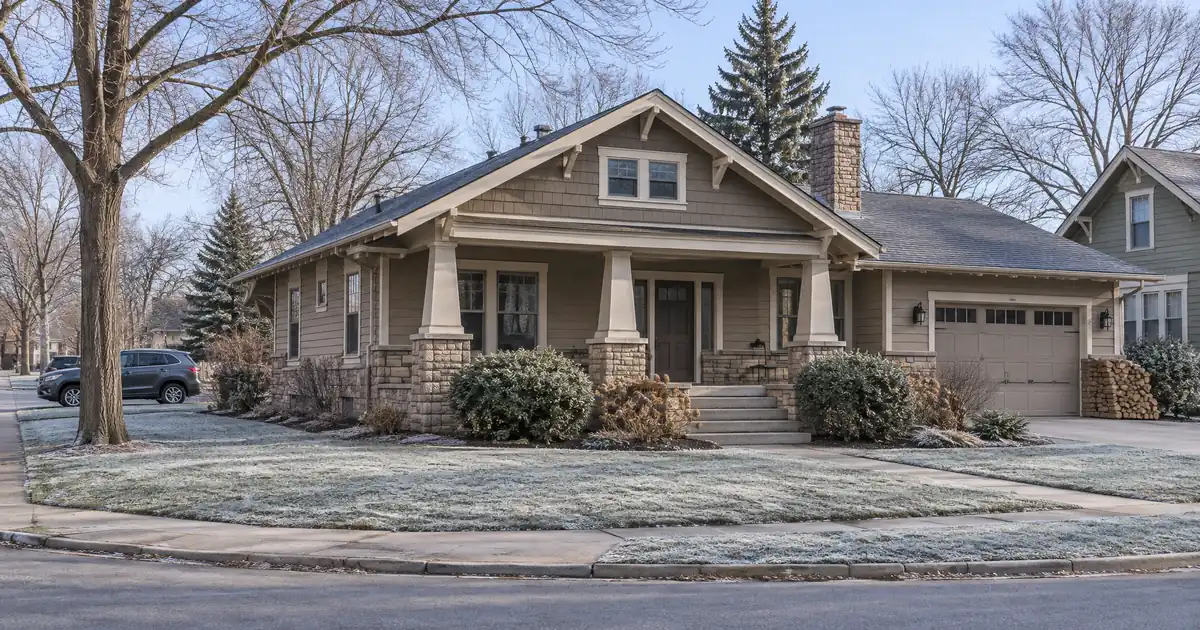
The Quick Read: Yes, a bank statement home equity line of credit (HELOC) can be written on a one-to-four-unit rental, but it carries tighter terms than a line on a primary home, and the program Lendmire places through its wholesale network is currently limited to 16 states that do not include New Jersey.
- An investment-property line in the network tops out at 70% combined loan-to-value (CLTV), with a 700 minimum credit score and a $500,000 maximum line.
- Bank statements replace tax returns as proof of income. Credit, equity, debt-to-income, and the property are still fully reviewed.
- Title must sit with you personally or in a revocable living trust. An LLC cannot hold title on this product.
- For New Jersey rentals, a DSCR cash-out refinance is usually the practical route, because it tests the property’s rent instead of your deposits.
Most of this article is about how the product works, who it fits, and what to do if it does not.
How large a line the equity supports.
An equity line is sized by combined loan-to-value, occupancy, and credit — not by rental coverage. Switch the occupancy or the credit band and the ceiling moves with it.
Investment-property lines require a 700 minimum credit score; second-home lines start at a 640 minimum and primary-residence lines at 600, and the combined-LTV ceiling steps down as the credit band drops on primary-residence and second-home lines and holds on investment-property lines; the line cap steps down on primary-residence lines and holds at every tier on investment-property and second-home lines.
A debt-to-income ratio above 45% requires 680+ credit. Profiles under 640 are limited to single-family homes. At least 75% of the approved line is drawn at closing. Ceilings, floors, and caps update from Lendmire’s centralized guideline source.
Line estimate
Illustrative estimate only — not a quote, Loan Estimate, approval, or commitment to lend. The rate is an editable assumption; equity-line pricing is variable through both the draw and repayment periods and never converts to fixed. Occupancy and credit drive the ceiling together: an investment property tops out at 70% combined LTV (minimum credit 700, line cap $500,000); a second home tops out at 90% combined LTV (minimum credit 640, line cap $500,000), with the ceiling stepping down as the credit band drops (the cap holds at every tier); a primary residence tops out at 90% combined LTV (minimum credit 600), and its $750,000 maximum line is available only at 75% combined LTV or below with a 700-or-better credit profile (720 on the longer-runway program) and a full appraisal. Lines above $500,000 require a full appraisal. Credit, debt-to-income, property type, and full underwriting review all affect the final line.
What Does “Bank Statement” Actually Change?
Only the income proof changes. A bank statement HELOC is a non-QM product, meaning it sits outside the standard rules for conventional mortgages. Instead of tax returns, the lender reviews 12 to 24 consecutive months of deposits and averages them into a monthly income figure.
That is a documentation choice, not a shortcut. The lender still pulls your credit, calculates your debt-to-income ratio (DTI), values the property, and checks title. DTI tops out at 50% in the network, and the qualifying payment is calculated on the interest-only payment at the maximum draw, not the amount you plan to use. A line sized at $500,000 is underwritten as if it were fully drawn.
This product underwrites you, not the building. A tenant’s lease does not enter the calculation. That matters because it separates this line from the loan most investors compare it to, which is covered in a later section.
Why Do Some Investors Prefer Statements Over Tax Returns?
Tax returns often understate what a landlord or self-employed investor actually earns. Depreciation, mileage, home-office costs, and other write-offs shrink the number a return-based lender sees. Deposits tell a different story, and a statement-based test can fit a 1099 earner or business owner whose returns look thin on paper.
The lender strips out transfers between your own accounts and one-time deposits like a vehicle sale. Business accounts typically take an expense factor, which is a percentage deducted from deposits to reflect what it costs to run the business. A CPA letter often supports that percentage. Some programs also accept a profit-and-loss statement alongside the deposits.
The 12-month window is a program choice, not a law, and some programs ask for 24 months. Business bank accounts need a 680 score for the deposit analysis. That is never the binding limit on a rental line, because investment properties already floor at 700.
What Are the Terms on an Investment-Property Line?
The terms are narrower than on a primary home, and the ceiling is the part that surprises people. Across the wholesale network, an investment-property HELOC tops out at 70% CLTV at both the 700 and 720 credit tiers. Credit above 700 buys eligibility, not extra leverage. Below 700, the network does not write an investment line at all.
CLTV is the combined loan-to-value ratio: your first mortgage balance plus the full credit line, divided by the property’s value. The federal consumer-finance regulator’s HELOC booklet describes the basic mechanic. A lender takes a percentage of the home’s value and subtracts what you already owe to set the credit limit.
Here is a worked example using percentages only. Say a rental is valued at 100 units of value and carries a first mortgage equal to 40% of that value. At a 70% CLTV ceiling, the line can be sized to roughly 30% of value, subject to the $500,000 cap. A rental with a first mortgage at 60% of value leaves room for only about 10%.
Other terms to know:
- Line size: $25,000 to $500,000 on an investment property. Lines above $500,000 are for primary residences only.
- Lien position: First or second lien.
- Structure: Investment lines use a 5-year interest-only draw followed by a 25-year fully amortizing repayment. No other structure is offered on a rental.
- Cost behavior: The cost of the line floats across both the draw and repayment periods and never converts to fixed.
- Initial draw: At least 75% of the line is drawn at closing, so this is not a pure standby line that costs nothing until you use it.
- Credit report: One bureau score keyed to the primary wage earner, with the report no more than 90 days old at closing.
The draw-to-repayment step deserves a plan. During the draw you pay interest only. When repayment starts, the line amortizes, and the monthly obligation rises. Investors who model only the draw-period payment are modeling just the most affordable years of the loan.
Do Market Figures Look Different?
Yes, and the gap is worth understanding so you do not anchor to the wrong number. NerdWallet reports that market-wide, investment-property HELOCs commonly ask for a credit score of 720 or higher and a maximum loan-to-value of 80%, though many lenders sit below 70%. Those are market-wide statistics, not what this network offers. In the network, an investment line caps at 70% CLTV with a 700 minimum.
Availability also varies by lender. A BiggerPockets discussion thread shows some lenders declining a HELOC on a rental while offering a similar product under a different name. A line that one lender will not touch may be a standard product at another. That inconsistency is one reason a broker that places files across several wholesale lenders can save you real legwork.
What Property Types and Titles Qualify?
Eligible property types are single-family homes, two-to-four-unit properties, planned unit developments, townhomes, and condominiums, including non-warrantable condos. A non-warrantable condo is one that fails standard project rules, often because of high investor concentration or pending litigation.
Not eligible are manufactured homes, co-ops, condotels, log homes, commercial property, mixed-use property, and agriculturally zoned land. These are not offered on the product.
Title is the real gatekeeper. The borrower must hold title individually or in an inter vivos revocable living trust. LLCs, corporations, partnerships, and irrevocable, blind, or land trusts cannot hold title. If your rental already sits inside an LLC, you have two realistic options: change the vesting or use a DSCR cash-out refinance instead. Moving a property out of an LLC carries title, insurance, and liability consequences, so talk to your attorney before you sign any deed.
Two exposure limits also apply. A borrower is limited to three lines, with combined exposure capped by program. A borrower who owns more than 15 financed properties is not eligible.
How Is the Property Valued?
Because an investment line caps at $500,000, and full appraisals begin only above that size, an investment HELOC usually runs on an automated valuation model with no traditional appraisal. A higher CLTV may trigger a secondary valuation, and you may request a full appraisal in any case.
Automated valuations work from recorded sales and public data. They cannot see a recent rehab, a new kitchen, or an added unit. If you have just invested heavily in the property, ask for the full appraisal so the value reflects the work. An improvement may support a higher appraised value, depending on comps and underwriter review.
Credit Events and Waiting Periods
A bankruptcy needs 4 years of seasoning from discharge or dismissal. On investment files, a foreclosure follows a 7-year path. A deed-in-lieu, pre-foreclosure sale, or short sale follows a 4-year path. These are separate from the statement window and from how long you have owned the property, and a recent purchase can trip one test while the others pass.
Bank Statement HELOC, DSCR Cash-Out, or a Line on Your Home?
The three options solve different problems. The table compares the structure of each, with network figures where the loan is a Lendmire-placed product.
| Factor | Bank Statement HELOC | DSCR Cash-Out | HELOC on Your Home |
|---|---|---|---|
| What it tests | Your deposits | Property rent vs. payment | Your income and equity |
| Collateral | The rental | The rental | Your primary home |
| Title | Individual or revocable trust | LLC possible, subject to program terms | Individual or trust |
| Payment style | Interest-only draw, then amortizing | Term-based | Varies by lender |
| Leverage | 70% CLTV on a rental | Around 75% LTV on a standard rental | Higher on primary homes |
The debt service coverage ratio (DSCR) is monthly rent divided by the full monthly obligation: principal, interest, taxes, insurance, and any association dues. DSCR loans qualify primarily on property-level rental income covering the payment, subject to lender guidelines. For a cash-out refinance on a standard rental, the network generally tops out around 75% loan-to-value (LTV), with about 6 months of seasoning as the common expectation. Credit expectations differ from the HELOC: a 620 floor exists in parts of the network, most programs want around 660, and 700 or higher opens the strongest leverage tiers.
Coverage of 1.00 is where select DSCR programs start. A separate select-lender path takes coverage below 1.00 with leverage and terms adjusted. Clearing 1.00 does not mean the property produces positive cash flow, because repairs, vacancy, management, utilities, and capital expenses sit outside the calculation.
A DSCR cash-out fits when one of these is true:
- The rental is held in an LLC and you want to keep it there, subject to program terms.
- You want a lump sum with a term structure instead of a revolving, floating-cost line.
- Your tax returns show little income but the rent is strong.
- You need more leverage than 70% CLTV allows.
The trade-off is that a DSCR cash-out refinances the whole first mortgage. A bank statement HELOC leaves your existing first lien alone and adds a second one behind it. If your first mortgage is a low-cost one you want to keep, that is the genuine advantage of the line. Loan sizes on DSCR run up to $3,000,000 on standard programs (smaller balances available through select lenders), and above $2,500,000 the network generally holds to 30-year fixed structures. Extended terms such as 40-year and interest-only periods are available through select lenders.
The right program for your situation depends on your credit profile, the equity available, how the property is titled, and what you plan to do with the money. Some investors find that the line wins on flexibility and the cash-out wins on structure.
Using a Line on Your Own Home to Fund a Rental
The collateral does not have to be the rental. Many investors borrow against their primary home and use the funds as a down payment or rehab budget. Primary-residence lines carry looser terms than investment-property lines. A primary residence tops out at 90% CLTV, reached with a credit profile of 720 or better, and the minimum credit profile is 600. That is a different occupancy tier from an investment line, and the two should not be confused.
Using this route, your rental’s income does not matter to the line. The risk lands on your own home. A missed payment on funds you used for a rental puts your residence at stake, so size the draw with a cushion for vacancy and repairs.
Also read the terms of any line on a primary home before you lean on it for rental purposes. Lenders can restrict how the property is used, and renting out the collateral itself is a different matter from spending the funds elsewhere.
What Does the Process Look Like?
Preparation is most of the work. Start with these documents:
1. Bank statements: 12 to 24 consecutive months, personal or business, with transfers identifiable.
2. Expense documentation: A CPA letter or P&L if business accounts supply the income.
3. Mortgage statements: For the first lien on the property you are pledging.
4. Insurance declaration page: For the collateral property.
5. Entity or trust paperwork: To confirm how title is held.
6. ID and credit authorization: The lender pulls one bureau report keyed to the primary wage earner.
Then the sequence runs like this. A broker compares your scenario against what each wholesale lender will write: credit, CLTV, property type, vesting, and income documentation. The lender orders the valuation, reviews your deposits, and underwrites the full file. If the file clears, the line is set up as a standalone line behind or ahead of your existing mortgage.
The complete DSCR loans guide covers the rent-based alternative end to end.
What About New Jersey Specifically?
New Jersey does not change the underlying mechanics: deposits, CLTV, title, and property type work the same way in every state. The practical issue is availability. The wholesale HELOC program Lendmire places is offered in 16 full-service states: AL, CA, CO, FL, GA, IN, MI, MT, NM, NC, OH, PA, TN, TX, VA, and WA. New Jersey is not on that list, so a New Jersey rental cannot be placed on this line through the network at present.
That narrows the NJ landlord’s options to a few realistic paths. One is a line from a local credit union or regional bank that writes non-owner-occupied lines. Another is a closed-end second mortgage. The third is a DSCR cash-out refinance, which sits on a wider footprint: DSCR financing covers 41 markets, including Washington, D.C. Lendmire’s page on bank statement HELOC requirements for New Jersey landlords goes deeper on that angle.
This is a genuine toss-up for some owners. A low-cost first mortgage argues for keeping it and adding a second lien somewhere. A rent-heavy, LLC-held rental argues for a DSCR cash-out. The numbers on your specific property decide it.
The Risks Worth Pricing In
- Second-lien stacking. A line behind an existing mortgage means two liens on one asset, and a drop in value can erase equity quickly.
- Floating cost. The payment moves with the line’s pricing and your outstanding balance.
- Payment step. Interest-only years end, and amortization begins.
- Selling the property. If you sell the rental, you generally need to pay off the line in full.
- Rent gaps. The line does not care about your tenant. If rent stops, you still owe the payment.
The CFPB describes a HELOC as an open-end line of credit that lets you borrow repeatedly against your equity. It also explains that the draw period lets you spend up to your limit, then repayment begins. That revolving flexibility is the product’s strength, and the step to repayment is its main trap for investors who treat the draw period as the permanent payment.
Key Terms Defined
Bank statement income: Income calculated from the average of deposits over 12 to 24 consecutive months, used in place of tax returns.
CLTV (combined loan-to-value): All loans secured by the property, including the full credit line, divided by the property’s value.
Draw period: The early stage of the line when you can borrow and pay interest only.
Expense factor: A percentage deducted from business deposits to reflect the cost of running the business.
Non-warrantable condo: A condominium project that fails standard financing rules, often because of owner-occupancy mix or litigation.
Revocable living trust: A trust you can change or cancel, which the network treats as acceptable vesting alongside individual ownership.
Frequently Asked Questions
Can an LLC-owned rental get a bank statement HELOC?
Not in this network. Some lenders do write lines to entities. If your property sits in an LLC, a DSCR cash-out refinance is usually the cleaner route, subject to program terms.
What credit score do I need for an investment-property line?
The network minimum is 700, and there is no tier beneath it. Primary-residence and second-home lines have lower floors.
Does a HELOC on my rental count against me on a DSCR loan?
It can matter. A second lien on a rental adds to the debt on that property, which affects the combined leverage a DSCR lender sees if you later refinance it. Mention every lien up front so the lender can structure around it.
Do I need an appraisal?
Usually not on an investment line. Because the maximum is $500,000, the line typically runs on an automated valuation, though a higher CLTV may require a secondary valuation. You can request a full appraisal in any case, which makes sense after a major rehab.
Is a bank statement HELOC the same as a no-doc loan?
No. You document income through deposits, and the lender still reviews credit, CLTV, DTI, title, and the property. The loan is reviewed on documented income under the applicable program, subject to lender guidelines.
Next Steps
If you are considering a home equity line and want to see how the numbers work, Lendmire can help you compare HELOC options based on the property, the equity available, credit profile, combined leverage, and your goals. Call 828-256-2183 or request a quote to talk through a New Jersey rental. All figures here are program guidance subject to lender guidelines and full file review, not a commitment to lend.
For a New Jersey landlord with equity in an older rental, the deciding question is rarely whether the line exists. It is whether you want a second lien stacked behind a first mortgage you like, or a refinance that resets the whole structure.
About Lendmire
Lendmire is a mortgage brokerage (NMLS# 2371349) arranging home equity lines of credit — primary-residence, second-home and investment-property lines — through a wholesale lending network in its 16 full-service states. Eligibility is determined by the lender on each file. Scotsman Guide named Lendmire a Top Mortgage Workplace in both 2025 and 2026.
Get Started
Ready to find the right loan for you?
See your offer in seconds. No credit pull, no obligation.
Informational only. Not a Loan Estimate, approval, or commitment to lend. Program availability and eligibility are subject to lender guidelines, credit approval, property review, and underwriting.
References
1. CFPB – What You Should Know About Home Equity Lines of Credit (booklet)
2. NerdWallet
3. BiggerPockets – HELOC for investment property discussion
4. CFPB
This article is part of Lendmire’s bank statement HELOC program — full qualification details, guidelines, and scenarios live on the program page.
Related reading: Can You Get a Bank Statement HELOC With the Most Flexible Loan Options? · Bank Statement HELOC Requirements for Property Investors Who Can’t Show Salary · Bank Statement HELOC Requirements When You’re Not on the Mortgage
Brandon Miller
Founder & CEO, Mortgage Loan Originator, Lendmire LLC
- Mortgage Loan Originator · NMLS# 1129696 · Verify on NMLS Consumer Access
- North Carolina Real Estate Broker · License# 343312 · Verify on NCREC
- North Carolina Insurance Producer · License# 19053198 · Property, Casualty, Life, Health · Verify on NAIC SBS
- Lendmire LLC · Firm NMLS# 2371349 · Verify firm licensure
Legal disclosures. Lendmire (NMLS# 2371349) is a state-licensed mortgage brokerage that arranges financing through wholesale lender relationships. Lendmire is not a direct lender, depository institution, or registered financial advisor. The discussion above is general informational content about real estate financing — it is not financial, legal, or tax advice, and readers should consult licensed professionals for guidance on their individual circumstances. Loan inquiries are subject to lender underwriting; this article does not represent a commitment to lend. Loan terms, rates, and qualification standards vary by borrower, property, and state, and are subject to change at any time. Equal Housing Opportunity. NMLS Consumer Access: nmlsconsumeraccess.org.