
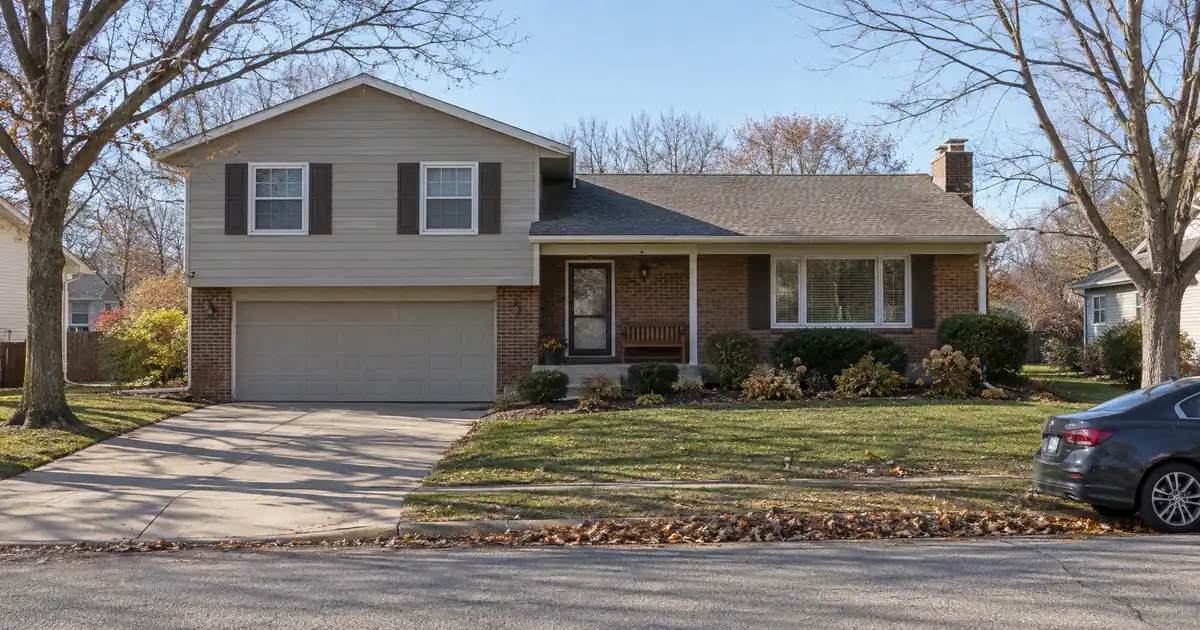
The Quick Read: Usually yes. An owner who is on title but not on the loan can generally stay off the note, because the line qualifies primarily on the rental’s income covering the payment, subject to lender guidelines. That owner still signs the security instrument that pledges the property. The title holder is not a borrower, so their income and credit stay out of the file. Their ownership interest is still on the line if the borrower defaults.
- The non-borrowing owner signs the lien paperwork and a non-borrowing owner acknowledgment, not the promissory note.
- The rent qualifies the line at a minimum 1.10x coverage, so the title holder’s income never helps or hurts.
- If that person will not sign, the loan stops, and the fix is to change title, change the property, or change the product.
- An LLC can hold title, and its members sign as guarantors, through select programs.
- The program is offered in 15 of Lendmire’s 16 licensed states, every licensed state except Tennessee, and every file is subject to underwriting.
What “DSCR HELOC” Actually Means
A DSCR HELOC is a revolving line of credit on a non-owner-occupied rental, qualified on the property’s rent instead of the owner’s personal income. Investors use the label loosely, and that creates confusion about who has to sign. Here is how the three products people mean by it differ.
| Factor | DSCR HELOC | Personal-income HELOC on a rental | DSCR cash-out refinance |
|---|---|---|---|
| Reviewed on | Property rent | Borrower’s income and DTI | Property rent |
| Lien position | Standalone second or first | Usually second | Replaces the first |
| Touches existing first mortgage | No | No | Yes, it is paid off |
| Entity title | LLC allowed | Often refused | Common |
The line described here is a standalone second lien behind the first mortgage the owner keeps. It can also be a standalone first lien on a paid-off rental. It is never closed with a purchase and never placed on the owner’s own home. Lendmire is the broker. The line is placed through a wholesale lender in its network, and the lender underwrites and approves it.
The difference matters for this question. A cash-out refinance replaces the whole first mortgage, so every owner is dealing with one new loan. A standalone line sits beside a first mortgage that already has its own signers. Adding a second lien means the title company reviews who owns the property again, even if nobody on the first mortgage changes.
Who Has to Be on Title and Who Has to Be on the Loan?
The borrower must qualify, but every owner on title must be able to pledge the property. Title records who owns the property. The note records who owes the money. Those are two different documents, and a line of credit needs both.
A borrower signs the note, which is the promise to repay. Every owner on title signs the security instrument, which gives the lender a claim on the property if the note goes unpaid. A title holder who is not a borrower signs the second document and skips the first.
Across our wholesale network, this is the normal pattern. The borrowers on the line need not be the borrowers on the first mortgage. They do need to be the people whose credit and rent coverage the lender reviews. Everyone else on the vesting deed becomes a lien signer.
Think of three roles:
- Borrower: signs the note and is personally liable.
- Lien signer: signs the security instrument and risks the ownership interest.
- Guarantor: when an LLC owns the rental, its members sign a personal guaranty.
One person can hold two roles. A spouse who owns half the rental and does not borrow holds only the lien-signer role.
Does the Title Holder’s Income or Credit Count?
No. The line is rent-qualified. The lender looks at gross monthly rent divided by a stress payment on the entire credit limit. The minimum coverage is 1.10x. Rent counts at the lesser of the appraiser’s market rent schedule or the lease in place, and a lease is required. The lender’s own coverage calculation governs, and the figures here are illustrative.
Because rent drives lender review, adding a non-borrowing owner does not change the coverage number. It also does not add income to the file. The borrower still needs a 720 credit score or better on a second lien, or 700 or better on a first lien, from the lender’s own credit report. The non-borrower’s credit is not pulled just because they signed the lien. Every figure here varies by lender and program, and guidelines, property type, leverage, and credit profile all apply.
Two cases are the exception. If a borrower tries to count a spouse’s income to qualify, that person usually has to become a borrower. And if a state’s property law treats the spouse as having an interest in the property, the title company may still ask for their signature or consent. Neither case arises often on rent-qualified files, since the rent is the qualifying income.
What the Law Lets a Lender Require
A lender cannot make a creditworthy applicant bring in a spouse or another person as a co-borrower, but it can require signatures that make the collateral reachable. Federal fair-lending rules draw that line. Regulation B, section 1002.7 says a creditor may not require the signature of an applicant’s spouse or another person, other than a joint applicant, on any credit instrument when the applicant qualifies alone.
The same rule carves out secured credit. Under the codified text of 12 CFR 1002.7, a creditor may require a signature on any instrument that is needed, or reasonably believed needed, under state law to make the property available on default. Examples include instruments that create a valid lien, pass clear title, or waive inchoate rights.
In plain words, the lender can require the title holder to sign the lien. It cannot make that person a borrower on the note. The same rule also protects the spouse of a guarantor, which matters when an LLC’s member guarantees the line.
Those rules were written with consumers and owner-occupied homes in mind. How they apply to a business-purpose rental line can differ, and the title company’s reading of state law decides what signatures are needed.
The Title-Holder Role Matrix
The answer changes with who the title holder is, so here is the pattern that usually shows up on rental files.
| Title holder | Signs note? | Signs lien? | Income counted? |
|---|---|---|---|
| Spouse, on deed only | No | Yes | No |
| Unmarried co-owner | No | Yes | No |
| Sibling or parent | No | Yes | No |
| Business partner | No | Yes | No |
| LLC member, LLC on title | Guaranty | Per program | No |
| Ex-spouse, still on deed | No | Yes, until removed | No |
Treat this as the usual result, not a promise. Each line depends on the title report, the state, and the lender’s review.
An ex-spouse who is still on the deed is the case that stalls the most files. That person has to sign, and they may not be cooperative.
Community-Property States and Homestead Rules
State property law can add signatures that the lender would not require on its own. In community-property states, a spouse who is not on title may still be asked to sign or consent. Homestead rules work the same way in some states. The NAFCU compliance blog summarizes the secured-credit and community-property carve-outs for lenders.
A rental that was never the marital home often avoids homestead rights, but a title company may still ask for a marital-status or non-homestead affidavit. This varies by state. The title company, not the broker, applies state law, so ask it early what it will want for the specific deed.
The program is offered in 15 of Lendmire’s 16 licensed states, every licensed state except Tennessee: Alabama, California, Colorado, Florida, Georgia, Indiana, Michigan, Montana, New Mexico, North Carolina, Ohio, Pennsylvania, Texas, Virginia, and Washington. Several of those states have their own spousal-signature habits, and the title company will know them.
When an LLC or a Trust Holds Title
An LLC can hold title to the rental on this line, subject to lender program eligibility. The LLC is the owner, so the individuals behind it are not title holders in the personal sense. They are members, and they sign as guarantors. If a member does not want to guarantee, the file generally cannot move forward in that form.
The mismatch case is where trouble starts. Suppose title sits in an entity and the person applying is an individual who does not own the property personally. The borrower and the owner have to line up, either by making the LLC the borrower or by moving title. Recording a new deed before the application, so the vesting matches the file, is cleaner than trying to fix it afterward.
Land trusts are outside this program. Other trust structures are program-specific, so confirm vesting before ordering anything.
Three Scenarios Without the Dollar Signs
A spouse on the deed of a paid-off rental. One spouse applies for a standalone first lien. The other spouse is on the vesting deed and does not borrow. Rent coverage clears the 1.10x minimum on the stress payment. The borrower’s credit is at least 700. The non-borrowing spouse signs the security instrument and the non-borrowing owner acknowledgment. Their income and credit stay out of the file.
Two siblings who co-own. One sibling wants a line on a rental with a first mortgage in place. The leverage cap on a second lien is 70% combined loan-to-value. The other sibling is not interested in borrowing. They can stay off the note, but they sign the lien and carry foreclosure risk on their share. That should be an explicit family conversation before the application, because a refusal at closing stops everything.
A rental in the borrower’s LLC. The LLC borrows. The two members sign as guarantors. If one member’s spouse is on neither the LLC nor the guaranty, the lender generally cannot require that spouse’s signature under the same fair-lending rule above. The title company still decides what state law requires.
What If the Title Holder Will Not Sign?
If a title holder refuses, the lien cannot be validly created and the loan stops. There are four ways forward:
1. Re-title with consent. The owner who will not sign deeds their interest away voluntarily, and the new vesting is recorded before the application.
2. Use a different property. Borrow against a rental where the title is clean and every owner agrees.
3. Restructure ownership first. Resolve the title issue, for example through a buyout or a recorded agreement among the owners, so the property can be financed later. Any new lien still needs every owner’s cooperation.
4. Wait. If the problem is an unresolved dispute, a rushed workaround usually makes it worse.
Pressure on a reluctant owner rarely helps. The better approach is to explain that signing the lien does not make them liable on the note. It does leave their ownership interest exposed if the borrower defaults, and a reasonable person may want to think about that.
How the First Mortgage Shapes the Decision
A second-lien line sits behind the first mortgage the owner keeps. The line’s maximum is 70% combined loan-to-value, meaning the first mortgage balance plus the new line, divided by value. That ceiling holds at 720 or better, on lines from $50,000 to $500,000.
The first lender’s own documents may restrict additional liens, so read the existing mortgage. A deed change on a property with an existing first lien can also raise due-on-sale or title-insurance questions. Whether the first-mortgage payment joins the qualifying payment on a second lien is a lender-level calculation, so confirm it in writing before assuming the coverage works.
If the rental has no mortgage, a first-lien line is possible. Loan-to-value runs up to 75% at 740 or better on lines to $500,000, and 70% between 700 and 739. Lines above $500,000, up to $1,000,000, are capped at 65% loan-to-value. All figures are through select programs and subject to underwriting.
The File and the Sequence
Order matters more than any single document. This is the sequence that keeps a title-holder file clean.
1. Pull the title report and read the vesting deed. 2. Fix any deed problems and record the new deed first. A signed but unrecorded deed does not change vesting. 3. Confirm who the borrowers are and who will sign only the lien. 4. Confirm the rental is eligible. Rural property, condotels, row homes, leaseholds, and land trusts are outside this lane. 5. Confirm six months of ownership. A rental bought or refinanced in the last six months is not eligible, counting note date to note date. 6. Gather the lease, the rent schedule, and the credit report. 7. For lines to $400,000, expect an automated valuation with a property inspection report, or a full interior appraisal. Larger lines take a full interior appraisal. Appraisal waivers are not accepted.
No reserves or cash to close are required. The exposure limit is five loans or $2,500,000 per borrower with the program. Borrowers must be U.S. citizens, permanent residents, or non-permanent residents with a Social Security number. Foreign nationals and ITIN borrowers are not eligible here.
Mistakes That Stall Files
- Assuming a non-borrower can simply skip the closing. Their signature on the lien is almost always needed.
- Telling a co-owner they are “off the loan” without explaining the lien. That causes surprise at the signing table.
- Applying before the deed change is recorded. Vesting has to match the application.
- Forgetting the guarantor structure when an LLC owns the rental.
- Borrowing on a rental held for less than six months.
- Assuming every lender treats the product the same way. Across the network, the strictest overlays differ from the more flexible ones on title questions, and a few lenders will review unusual vesting that others decline.
Honestly, most failures are communication problems, not credit problems. The borrower qualifies, but the co-owner finds out about the lien on closing day.
Why This Product Is Hard to Find
Investment-property equity lines are scarcer than primary-home lines. NerdWallet’s explainer on HELOCs for investment property says they are not offered by every lender and carry strict requirements, because lenders see higher default risk. That scarcity is one reason investors lean toward rent-qualified lines or cash-out refinances.
Pick the line when you want to keep a first mortgage you are happy with and reach the equity without opening your personal income file. Pick a cash-out refinance when you are happy to replace the first mortgage and want a fixed structure. Lendmire’s complete DSCR loans guide covers the broader tradeoffs.
Key Terms Defined
Title holder: a person or entity named on the deed as an owner of the property.
Borrower: the person who qualifies for the line and signs the promissory note.
Non-borrowing owner: an owner on title who signs the lien paperwork but not the note.
Security instrument: the mortgage or deed of trust that pledges the property as collateral.
Guarantor: a person who signs a personal guaranty when an LLC borrows.
Combined loan-to-value (CLTV): the first mortgage balance plus the new line, divided by the property’s value.
Frequently Asked Questions
Does a non-borrowing title holder have to be at the closing?
Usually the title holder has to sign the security instrument and the non-borrowing owner acknowledgment, so yes, in some form. Mobile notaries and signing agents are common for owners who live elsewhere. The title company tells you what format it will accept.
Does signing the lien make the title holder responsible for the debt?
Not on the note. The person is not a borrower, so they do not promise to repay. Their ownership interest, however, can be foreclosed if the borrower defaults, which is why they should understand the document before they sign.
Will the line show up on a non-borrowing spouse’s credit?
The lender reviews the borrower’s credit, not the lien signer’s. A non-borrower who only signs the lien is generally not part of the credit file. Confirm the specifics with the lender’s disclosures.
What if the title holder is not a spouse?
The same logic applies to a sibling, parent, or partner. They are an owner, so the lien covers their interest, and they sign it. They cannot be forced onto the note if the borrower qualifies alone, but without their signature the loan does not proceed.
Can I remove someone from title to make this simpler?
Yes, with their consent, and the deed has to be recorded before the application. Removing a name from the deed does not remove them from any existing debt, because the deed and the note are separate documents.
Next Steps
If you are considering a home equity line on a rental property and want to see how the numbers work, Lendmire can help you compare DSCR HELOC options based on the property, the rent, the equity available, credit profile, combined leverage, and your goals. Reach the team at 828-256-2183 or through the mortgage quote form. Program terms change, and every file is reviewed individually by the lender; this is not a commitment to lend. Tax treatment varies; consult a qualified professional before relying on any deduction.
The deciding variable in most of these files is not the rent. It is whether every person on the deed understands what they are signing and agrees to sign it.
About Lendmire
As a mortgage broker (NMLS# 2371349), Lendmire helps homeowners and real estate investors open home equity lines of credit arranged through wholesale lenders. It holds consumer mortgage licenses in 16 states, and the DSCR HELOC is offered in 15 of them, every licensed state except Tennessee. Lendmire is never the lender; line amounts, ceilings and terms are set by the lender under its guidelines. Scotsman Guide named Lendmire a Top Mortgage Workplace in both 2025 and 2026.
Get Started
Ready to find the right loan for you?
See your offer in seconds. No credit pull, no obligation.
Informational only. Not a Loan Estimate, approval, or commitment to lend. Program availability and eligibility are subject to lender guidelines, credit approval, property review, and underwriting.
References
1. CFPB – Regulation B, section 1002.7
3. NAFCU Compliance Blog – Regulation B and Extending Credit to Spouses
4. NerdWallet – Can You Get a HELOC on an Investment Property
This article is part of Lendmire’s DSCR HELOC program — full qualification details, guidelines, and scenarios live on the program page.
Related reading: DSCR HELOC Requirements With 30% Equity in the Property · How to Qualify for a DSCR HELOC on One Income Without a Spouse Signing · DSCR HELOC vs DSCR Cash-Out Refinance for Owners Deciding on a Bridge Loan
Brandon Miller
Founder & CEO, Mortgage Loan Originator, Lendmire LLC
- Mortgage Loan Originator · NMLS# 1129696 · Verify on NMLS Consumer Access
- North Carolina Real Estate Broker · License# 343312 · Verify on NCREC
- North Carolina Insurance Producer · License# 19053198 · Property, Casualty, Life, Health · Verify on NAIC SBS
- Lendmire LLC · Firm NMLS# 2371349 · Verify firm licensure
Disclosures. The information presented in this article is general market commentary, not financial, legal, or tax advice. Lendmire is a mortgage brokerage (NMLS# 2371349) — not a direct lender or depository institution — and loan placement is subject to lender underwriting. Nothing in this content represents a commitment to lend. Loan terms, pricing, and program availability vary based on borrower qualifications, property characteristics, and state of subject property, and are subject to change at any time. Lendmire complies with Equal Housing Opportunity requirements. Consumer access: nmlsconsumeraccess.org.