
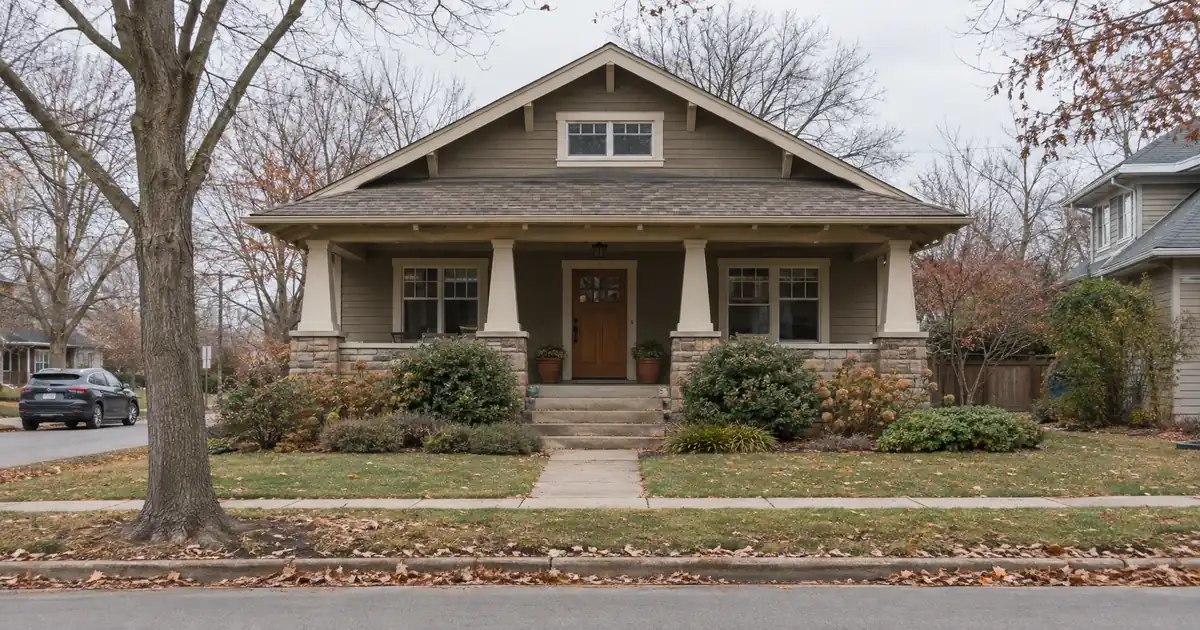
The Quick Read: Usually, yes, when the panels are owned outright or leased with no lien on the property, but not when the property carries a solar lien. On the DSCR HELOC offered through Lendmire’s network, a property with a solar lien is outside the program, subject to underwriting. Rooftop panels alone are not the issue; what the solar company recorded against the property is.
- Owned, paid-off panels: nothing sits on title, so the rental is reviewed like any other.
- Leased or PPA panels: a recorded fixture filing may need to be cleared or subordinated before a new lien records.
- Solar loan secured by a mortgage or deed of trust: a true junior lien that counts in combined leverage and blocks this lane.
- PACE assessments: a tax lien that outranks mortgages, and the hardest case.
- Cash-out refinance: often the better route when the rental itself carries solar debt.
Most landlords asking this question already hold a rental with panels and want its equity without touching the first mortgage. The answer depends on the paper behind the panels, not the panels themselves. The complete DSCR loans guide covers the core loan family; this piece covers one narrow question inside it.
What Is a DSCR HELOC, Exactly?
A DSCR HELOC is a revolving line of credit on a non-owner-occupied one-to-four-unit rental, qualified on the property’s rent instead of the owner’s personal income. It is written as a standalone second lien behind the first mortgage the owner keeps, or as a standalone first lien on a rental with no mortgage.
Across the wholesale network, this is a narrow product. Most equity access on a rental runs through a first-lien DSCR cash-out refinance, and few lenders write a revolving line on investment property at all. The program discussed here is offered through select programs in 16 states under Lendmire’s consumer licensing, and every figure below is subject to underwriting.
Qualification runs on rent covering the payment, subject to lender guidelines. The minimum coverage is 1.10x, measured against a stress payment on the entire credit limit, and the lender’s own calculation governs. Rent is the lesser of the appraiser’s market rent or the lease, and a lease in place is required. The LLC can stay on title, with members signing as guarantors.
Do Solar Panels Block the Line?
Panels do not block it. A recorded lien on the property does. That is the rule that sorts every solar situation on a rental.
On this program, a property with a solar lien is not eligible. That matters because a line sits behind or in place of the first mortgage, and the lender wants a clean claim on the collateral. Owned panels with no lien, and leased panels where nothing is recorded against the property, are reviewed like any other roof.
Match the Solar Setup to the Effect
The table below shows how each ownership structure usually plays on a rental equity file. Treatment varies by lender and program.
| Solar setup | What is recorded | Effect on a DSCR HELOC |
|---|---|---|
| Owned outright | Nothing | Neutral; reviewed as a normal rental |
| Leased or PPA | Often a UCC-1 fixture filing | Filing must be cleared or subordinated |
| Solar loan, UCC-1 only | Equipment filing | Treatment varies; title and lender decide |
| Solar loan, mortgage or deed of trust | Junior lien | Counts in combined leverage; blocks this lane |
| PACE | Tax assessment | Outranks mortgages; hardest case |
Owned panels
Owned and paid off is the cleanest case. The panels add nothing to the rent used for coverage, and they add no payment. They may support value if comparable sales justify it, depending on appraisal review. A federal lab study, Berkeley Lab’s work on solar price premiums, found buyers paid more for homes with owner-owned systems, and that the premium shrinks as systems age. That research is dated, so treat it as direction, not an appraisal promise.
Leased and PPA panels
A lease or power purchase agreement usually comes with a UCC-1 fixture filing. That filing is a public notice that the solar company owns equipment attached to the property. It is not a mortgage, a point a subscription-solar education page makes plainly. Still, a title company will want it handled before a new lien records. The usual paths are a payoff followed by a filed and confirmed UCC-3 termination, a buyout of the system, or a subordination or consent from the system owner.
A lease balance does not count in combined leverage, because there is no balance to count. The payment can still complicate the file. On a DSCR file, the lease payment matters only if the program counts it, so confirm that with the lender before anything else.
Solar loans
A solar loan that records a mortgage or deed of trust is a real junior lien. It counts in combined leverage and, on this program, takes the property out of eligibility. A solar loan that files only a UCC-1 on the equipment sits in between. Some lenders treat the filing balance like a recorded mortgage, while others accept title confirmation that coverage is equipment-only. Expect variation across the network.
PACE: The Exception to “Solar Is Fine”
PACE is the hard case because it is a property tax assessment, not a private lien. The Federal Register notice on PACE programs describes PACE obligations as taking priority over a first mortgage at a tax sale or foreclosure sale, and notes they are recorded in tax records rather than local land records. That is why a land-records search can miss one.
For a rental owner, that means two things. Pull the tax records, not only the title report. And expect the assessment to reduce available equity and, when it is billed with property taxes, to push the tax line of the payment higher, which pulls coverage down. Treatment of PACE across non-agency programs is program-specific, so describe it to the lender before applying. This program excludes properties with a solar lien, and a PACE assessment on the property is something to raise with the lender at the first conversation.
Does Solar Change Rent or Coverage?
Solar does not raise the rent used for lender review by itself. On this program, rent is the lesser of the appraiser’s market rent or the lease. A tenant’s lower utility bill does not count as income.
Run the coverage logic this way. Coverage is gross monthly rent divided by the qualifying payment. Owned panels leave that payment untouched. A lease payment, if the program counts it, adds to the obligation side. A PACE installment billed with taxes flows into the tax portion of the payment. Picture a rental that clears 1.10x with no solar. Add a lease payment the lender counts, and coverage can slip below that floor. Sub-1.00 programs exist through select lenders in the network, but leverage and terms adjust when coverage is that thin.
There is also a mismatch to watch. If the tenant pays utilities while the owner pays the solar lease, the owner carries the cost and gets none of the savings. That hurts cash flow even where the file qualifies.
The Roof Itself
Roof age is a collateral question. Panels have to come off when the roof is replaced, and removal and reinstallation is a real cost that lands on the owner. Tell the insurance agent about panels and any battery storage before the file goes in, so the hazard insurance policy can be set up to cover both.
Appraisal treatment depends on ownership. Owned panels may be reflected in value. Leased and PPA panels are generally treated as the solar company’s property, and a separate Berkeley Lab report, on third-party-owned solar homes, found no clear evidence that buyers pay more or less for those systems. Valuation on this program is an automated valuation with a property inspection report on lines to $400,000, or a full interior appraisal; larger lines take a full interior appraisal. Appraisal waivers are not accepted.
Clearing a Solar Filing Before the Line
Sequence matters more than speed. This is the order that keeps these files clean:
1. Identify the instrument. Confirm whether the system is owned, loan-financed, leased, under a PPA, or tied to PACE. Gather the solar contract, the lease or PPA, and any fixture addendum.
2. Pull a title report and the tax records. Look for UCC filings, a recorded solar mortgage or deed of trust, and PACE assessments. A standard state-level UCC-1 may not appear in a county title search, but a fixture filing will.
3. Ask the system owner for a payoff, buyout, or subordination quote. A UCC-3 termination has to be filed and confirmed. Paying the solar company does not remove the filing on its own.
4. Bring rent evidence. A signed lease, rent receipts where the lease runs above market, and a clear rent roll on a two-to-four-unit property.
5. Confirm the entity paper. If the LLC holds title, have the operating agreement and guarantor details ready.
Lease assumption or subordination can add weeks on the solar company’s side, and that delay is outside the lender’s control.
DSCR vs. conventional financing
There are two common ways to finance an investment property, and they qualify you differently — here’s how investors weigh them.
Why investors choose it
- Qualifies on the property’s rental income — no personal tax returns, W-2s, or pay stubs needed to document income.
- No personal debt-to-income ceiling to clear, so existing mortgages and obligations don’t cap your borrowing the same way.
- Can be closed in an LLC, keeping the property inside a business entity.
- Built for scaling — not held to the limit on number of financed properties that conventional financing applies.
- Underwriting centers on the deal: generally qualifies when the rent covers the payment, a 1.00x coverage ratio being a common baseline (confirmed in underwriting).
- Designed specifically for investment property, including long-term and, where the program allows, short-term rentals.
Where it’s strong
- Often the lowest ongoing financing cost for a buyer who fully qualifies on personal income — a fit for a first property or a cost-first purchase.
Trade-offs for investors
- Requires full personal income documentation and must fit within a debt-to-income limit — salary, existing debts, and other mortgages all count.
- Typically held in your personal name rather than a business entity.
- Caps how many financed properties you can carry, which can become a ceiling as a portfolio grows.
- Evaluates you as a borrower as much as the property, which usually means more paperwork.
How investors usually choose: a first or single property often optimizes for the lowest financing cost; portfolio builders often optimize for leverage, vesting in an LLC, and scaling past conventional caps. The right answer depends on your goals, the property, and current guidelines — both paths run through select lenders in Lendmire’s wholesale network, with eligibility and terms confirmed in underwriting.
Line or Cash-Out Refinance?
When the rental itself carries a solar lien, a first-lien DSCR cash-out refinance is usually the more available route, because the solar filing can be paid off or resolved inside the refinance. A standalone line is the better fit when the rental is clean on title and the owner wants to keep the existing first mortgage.
| Factor | DSCR HELOC (this program) | Cash-out refinance |
|---|---|---|
| Lien | Standalone second or first | Replaces the first mortgage |
| Solar lien | Property with a solar lien is outside the program | Often resolvable in the refinance |
| Existing first mortgage | Stays in place | Paid off |
| Access | Revolving, draws after closing | One lump sum |
On the leverage side, a second lien runs to 70% combined loan-to-value at a 720 credit score or better, on lines of $50,000 to $500,000. A first lien on a rental with no mortgage reaches 75% loan-to-value at 740 or better and 70% from 700 to 739, with a 65% ceiling on lines above $500,000. Those are ceilings, subject to underwriting. Other program details: a 5-year interest-only draw, a 25-year repayment period, a variable rate, at least 80% of the line drawn at closing, and 6 months of seasoning on a purchase or refinance. No reserves are required. Exact terms depend on the lender’s guidelines, property type, leverage, and a full review of the borrower’s file.
When to Wait or Choose Differently
Skip the line and talk to the lender about a refinance if the solar company holds a recorded mortgage or deed of trust. Wait if a lease filing is in dispute or a UCC-3 is not yet confirmed. Rethink the purchase if a seller will not disclose PACE. And ask for solar and PACE disclosures before making an offer on any rental with panels, because a PACE assessment can cut the equity a lender will count.
Borrower and property limits apply as well. The program is for U.S. citizens, permanent residents, and non-permanent residents with a Social Security number. Rural property, condotels, row homes, and leaseholds are outside it.
Key Terms Defined
UCC-1 fixture filing: A public notice that a third party has a security interest in equipment attached to the property.
UCC-3 termination: The filing that ends a UCC-1, which must be filed and confirmed.
PACE: A clean-energy financing structure repaid through the property tax bill, with priority over mortgages.
Combined loan-to-value (CLTV): The first mortgage balance plus the new line, divided by property value.
PPA: A power purchase agreement, where a solar company owns the system and sells the owner the power.
Frequently Asked Questions
Does a solar lease stop a DSCR HELOC?
Not by itself. A lease carries no balance for combined leverage, but the fixture filing usually needs to be cleared or subordinated, and the lender decides whether the lease payment counts. Call the solar company early and bring the title result with the application, subject to underwriting.
Is a UCC-1 filing the same as a mortgage?
No. It is a notice of the solar company’s interest in the equipment. It still shows up on title, and many lenders and title companies want it resolved. Treatment varies, so ask how the lender reads it.
Can I use the line to pay off the solar loan?
It depends on the lien type and the program. A property with a solar lien is outside this lane, so the usual answer is to resolve the lien first or use a cash-out refinance that pays it off.
Do owned panels raise my rent for coverage?
No. Rent is the lesser of the appraiser’s market rent or the lease, and panels do not raise it. Paid-off panels are neutral to the ratio and may support value, depending on comparable sales and underwriter review.
Is the line available in every state?
No. It is offered only in certain states through select programs under Lendmire’s consumer licensing, so availability depends on the property’s location. Property type, borrower status, and seasoning rules also apply.
If you are considering a home equity line on a rental property and want to see how the numbers work, Lendmire can help you compare DSCR HELOC options based on the property, the rent, the equity available, credit profile, combined leverage, and your goals.
About Lendmire
Lendmire (NMLS# 2371349) is a mortgage brokerage serving homeowners and real estate investors in its 16 full-service states. Home equity lines of credit are arranged through wholesale lending channels; Lendmire brokers the line and the lender underwrites each application under its occupancy-based guidelines. Scotsman Guide named Lendmire a Top Mortgage Workplace in both 2025 and 2026.
Investors who want the broader program framework can review how DSCR loans work.
Get Started
Ready to find the right loan for you?
See your offer in seconds. No credit pull, no obligation.
Informational only. Not a Loan Estimate, approval, or commitment to lend. Program availability and eligibility are subject to lender guidelines, credit approval, property review, and underwriting.
References
1. Berkeley Lab, solar price premiums
2. Subscription Solar, solar lien explainer
3. Federal Register, FHFA PACE Request for Input
This article is part of Lendmire’s DSCR HELOC program — full qualification details, guidelines, and scenarios live on the program page.
Related reading: DSCR HELOC Requirements for 1099 Contractors Who Own Rentals · DSCR HELOC Requirements for Business Owners With Rentals · DSCR HELOC for 1099 Contractors and How Much You Can Borrow
Brandon Miller
Founder & CEO, Mortgage Loan Originator, Lendmire LLC
- Mortgage Loan Originator · NMLS# 1129696 · Verify on NMLS Consumer Access
- North Carolina Real Estate Broker · License# 343312 · Verify on NCREC
- North Carolina Insurance Producer · License# 19053198 · Property, Casualty, Life, Health · Verify on NAIC SBS
- Lendmire LLC · Firm NMLS# 2371349 · Verify firm licensure
Important disclosures. Lendmire (NMLS# 2371349) is a licensed mortgage brokerage. Lendmire is not a direct lender, depository institution, or financial advisor. All loan inquiries are subject to lender underwriting; this article does not constitute a commitment to lend. Rates, terms, and program guidelines are subject to change without notice and vary by borrower profile, property type, and state. Information in this article is general in nature and is not financial, legal, or tax advice. Equal Housing Opportunity. NMLS Consumer Access: nmlsconsumeraccess.org.