
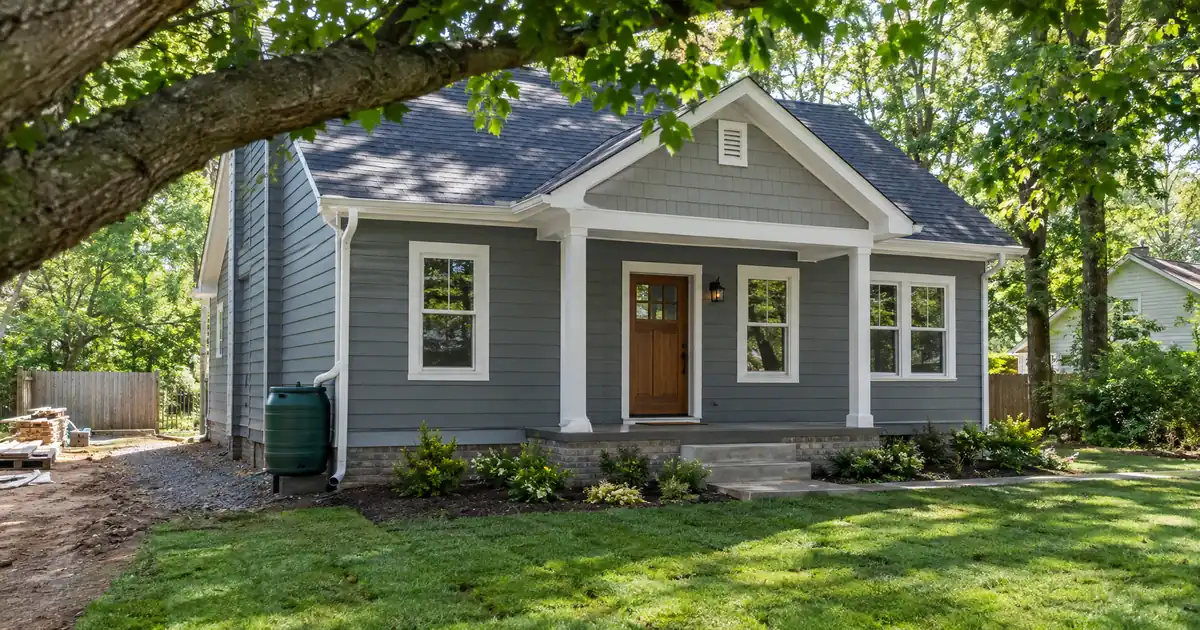
The Quick Read: A first-time flipper can obtain hard money financing because lenders underwrite the property, the budget, and the exit plan, so a missing track record mostly changes leverage and scrutiny instead of deciding eligibility, provided the file shows real cash, a credible scope, and a clear sale or refinance plan. Across the wholesale network Lendmire works with, first deals are reviewed on those three things.
- Experience moves you between leverage tiers. It is not a pass/fail gate.
- On a first flip, loan-to-cost typically sits at the lowest tier, and every tier is capped against after-repair value (ARV).
- There is no true 100% purchase program. Rehab money is released in draws.
- Cash, credit, a real scope of work, and an exit plan do the work a résumé would.
- Terms and leverage vary by lender, property, and experience, and nothing here is a commitment to lend.
What Does “No Track Record” Mean to a Hard Money Lender?
It means the lender has no completed projects to point to, so it prices the risk through lower leverage and closer review. It does not mean automatic denial. Most programs in the network will look at a first deal on its merits.
What this loan actually costs to carry.
Hard money is sized against the project and priced by time. Enter the deal and see how much the program will lend, the cash required at closing, the carry while you hold it, and what is left at the exit.
Leverage tiers on the current program: 85% with fewer than 2, 90% with 2 or more, 93% with 5 or more completed projects — every tier capped at 75% of after-repair value. Loan amounts up to $5,000,000, larger by exception; terms of 6 to 18 months, interest-only, no prepayment penalty. The rehab portion funds in draws against completed work, not at closing.
Program parameters shown update from Lendmire’s centralized guideline source. Rate, points, and months are editable assumptions, not quoted terms.
Cost cap sets the loan · positive spread
Illustrative estimate only — not a quote, Loan Estimate, approval, or commitment to lend. Rate, points, and months are editable assumptions. Hard money is business-purpose financing for real estate investors, not a consumer mortgage. Leverage on the current program tops out at 93% of project cost for investors with a documented track record, capped at 75% of after-repair value, with rehab funding up to 100% of the documented budget released in draws; actual terms vary by lender, borrower experience, property, and exit. Lendmire is a mortgage broker, not a lender.
Hard money is asset-based lending. The lender sizes the loan against the property and the finished value, not against your traditional personal-income documentation. That gap between loan and value is the cushion that lets a lender skip the income-documentation process a bank requires. Hard money loans are business-purpose loans on non-owner-occupied property, so they are reviewed differently from an owner-occupied mortgage.
Track record still matters in one specific way. Completed projects move a borrower up the leverage ladder. On the current program parameters, loan-to-cost on a fix-and-flip is typically 85% of project cost with fewer than two completed projects, 90% at two or more, and 93% at five or more. Every tier is capped at 75% of ARV. The top tier is reserved for experienced investors. Exact figures vary by lender, property, and experience.
How Underwriting Treats a First Flip, Step by Step
Underwriting a first flip runs through seven stages, and each one is a place where a thin file stalls. Here is how a clean file moves through them.
1. Pre-qualify the borrower. The lender pulls credit and asks about cash and liquidity. A 620 minimum score exists in parts of the network, with added conditions below 660. Most first-timers sit at the lower leverage tiers.
2. Package the property and the plan. This is the purchase contract, the scope of work, the rehab budget, photos, comparable sales supporting the ARV, and the exit plan. A first-timer’s package should be more detailed than an experienced investor’s, not less.
3. Size the loan on ARV and cost. The lender orders its own valuation and caps exposure against the finished value. If your ARV and the lender’s disagree, the lender’s number controls.
4. Review the term sheet. It sets leverage, the reserve expectation, and the draw schedule. Terms run 6-18 months, interest-only, with no prepayment penalty on the current program.
5. Close in an entity. Educators who work with beginners note that the borrower needs a business entity, and that the LLC can be formed before closing. Closing in an LLC is common, subject to lender program eligibility.
6. Draw the rehab funds. Up to 100% of the rehab budget can fund in draws against completed work. That is a rehab-budget figure, never a purchase leverage figure. The lender or its inspector verifies progress before each release.
7. Exit. You sell, or you refinance into long-term financing.
What a First Flip Costs in Cash
Cash is where most first-timers get caught. The loan covers a percentage of project cost, not the whole project, and the draws arrive after the work is done.
| Cash item | When it hits | Who funds it |
|---|---|---|
| Down payment (cost not financed) | At closing | You |
| Closing costs and fees | At closing | You |
| Contractor costs between draws | During rehab | You (float) |
| Carry: insurance, utilities, taxes | Until exit | You |
| Reserves the lender requires | Held through the loan | You |
Run a modeled example in percentages. Say the purchase price is 70% of ARV and the rehab budget is 15% of ARV. Project cost is 85% of ARV. At the 85% loan-to-cost tier, the loan is about 72% of ARV, under the 75% cap. Your cash in is about 13% of ARV before closing costs, carry, and reserves.
Now change the deal. If project cost is 90% of ARV, the 85% tier would imply a loan near 76.5% of ARV. The 75% cap binds, and you bring more cash than the tier suggests. That cap is why a thin-margin first deal can cost more cash than the headline leverage implies.
Bridge purchases without rehab run up to 80% of the purchase price. Loan amounts go up to $5,000,000, with smaller balances varying by lender.
Why the Margin Math Matters Before You Apply
Financing cost and discipline decide whether a flip pays. ATTOM’s first-quarter flipping report counted 64,348 flips, 8% of sales, with a 25.4% typical gross return, and HousingWire’s coverage of the same data shows homes bought between $100,000 and $200,000 returned 32%. The following quarter, WRE News reports a 21.5% typical gross return, $60,526 in gross profit, and experienced flippers estimating rehab, financing, taxes, insurance, and transaction costs at 20% to 33% of ARV.
Gross return is not profit. Tax treatment varies; consult a qualified professional.
Build the Experience Substitute File
When you have no completed projects, the file has to prove the project is executable. These are the pieces a lender reviewing a first deal wants to see.
| Lender concern | What you put in the file |
|---|---|
| Can the work be done? | Contractor bids, license, references |
| Is the budget real? | Line-item scope plus a contingency line |
| Is the ARV real? | Recent comparable sales, photos |
| Can you carry it? | Proof of funds and reserves |
| What if it doesn’t sell? | A written fallback exit |
Team. A contractor with a construction or trade background, a licensed agent, or an experienced partner can offset your lack of history. Real estate skills elsewhere in your life help, but a license alone is not a track record. Lenders still look at the plan.
Scope. Pick a first deal with cosmetic or light-to-moderate work. Permit-heavy and structural projects raise budget risk and make the lender’s inspector’s job harder.
Cash. Show more liquidity than the minimum. A lender weighing a first-timer reads extra reserves as a sign you can absorb a delay.
Where the General Rule Breaks
The rule that experience changes terms but not eligibility has real exceptions.
- Credit below 660. A 620 minimum score exists, but added conditions apply below 660. Scores near the floor narrow the choice of lenders.
- No true 100% purchase financing. Marketing that suggests otherwise is usually describing 100% of the rehab budget funded through draws, not the purchase. Cost-based leverage for first-timers sits at the lowest tier.
- Ineligible collateral. The program covers non-owner-occupied residential property, 1-4 units. Commercial, land, hospitality, and owner-occupied properties are not offered.
- Lender-specific limits. Some lenders set scope caps or experience minimums for first deals. Terms vary widely, so a thin quote from one lender is not the market.
- Recent credit events. Bankruptcy, foreclosure, judgments, or open collections can require a stronger partner or push a borrower toward a different lender.
- Personal guarantee. Closing in an entity does not remove the borrower’s personal exposure.
Do You Apply Now or Fix Something First?
Apply if the contract, scope, comps, funds, and team are in hand. Wait if any of these are true:
- Your budget is a single total with no line items.
- Your ARV rests on one comp or on listings, not sales.
- Your cash covers the down payment but not carry and a draw gap.
- Your fallback exit is “lower the price” with no number behind it.
Median flip duration in ATTOM’s state-level flipping data is 165 days, and the program term is 6-18 months. Budget carry for a longer hold than your plan assumes.
Planning the Exit
You exit by selling or by refinancing. If you plan to hold the property, many investors refinance out of hard money into long-term DSCR financing once the property is stabilized, and Lendmire brokers that path. DSCR compares rent to the full monthly obligation (principal, interest, taxes, insurance), so clearing it is not the same as positive cash flow. Repairs, vacancy, and management sit outside the ratio. The complete DSCR loans guide covers the loan itself.
Key Terms Defined
After-repair value (ARV): The estimated market value of the property once the planned work is finished.
Loan-to-cost: The loan as a percentage of purchase price plus rehab budget, rather than of value.
Draw: A staged release of rehab funds after completed work is verified.
Reserves: Liquid cash the lender expects you to hold beyond the down payment.
Exit strategy: The plan to repay the loan, by sale or by refinance.
Personal guarantee: The borrower’s personal commitment to the loan, even when title sits in an LLC.
Frequently Asked Questions
Do I need flipping experience to get a hard money loan?
Usually not to be reviewed, but experience sets your leverage tier. With fewer than two completed projects, loan-to-cost typically sits at 85% of project cost, capped at 75% of ARV. Terms vary by lender, property, and experience.
How much cash does a first flip take?
Expect the unfinanced share of project cost, closing costs, carry, and the lender’s reserves, plus money to float contractors between draws. The share of project cost you bring depends on the tier and on whether the ARV cap binds.
Can I close in my own name instead of an LLC?
Some lenders allow it, but most beginners close in an entity, and the LLC can be formed before closing. Eligibility varies by lender and program.
What if the flip doesn’t sell on schedule?
The loan term runs 6-18 months with no prepayment penalty, so you can sell or refinance whenever you are ready. Build a fallback exit into the file before you close, such as a price reduction trigger or a hold-and-rent plan.
Does credit still matter with hard money?
Yes. A 620 minimum exists in parts of the network, with additional conditions below 660. Underwriting stays asset-based, but score and recent credit events still shape which lenders will take the file.
Next Step
If you are buying, rehabbing or refinancing an investment property on a short timeline and want to see how the numbers work, Lendmire can help you compare hard money options based on the project, the exit plan, leverage, and your goals. Lendmire arranges these loans through select lenders in its wholesale network, across 41 markets, including Washington, D.C. Nothing here is a commitment to lend, and every file is underwritten individually.
For current guidelines and terms, see Lendmire’s DSCR loan programs page.
About Lendmire
Lendmire, NMLS# 2371349, is a mortgage brokerage focused on investor financing, arranging DSCR loans in 40 states plus Washington, D.C. — 41 markets total. Qualification is based on the property’s income rather than personal income documentation, subject to lender guidelines, making it a fit for LLC-held rentals and scaling portfolios. Scotsman Guide named Lendmire a Top Mortgage Workplace in both 2025 and 2026.
Get Started
Ready to find the right loan for you?
In about 30 seconds you can review financing options available for your investment property. No commitment required.
Informational only. Not a Loan Estimate, approval, or commitment to lend. Program availability and eligibility are subject to lender guidelines, credit approval, property review, and underwriting.
References
1. Real Estate Skills: hard money lenders for beginners
2. attomdata.com: Q1 Home Flipping Report
3. HousingWire coverage of ATTOM flipping data
4. WRE News coverage of ATTOM flipping returns
5. ATTOM home flipping trends by state
This article is part of Lendmire’s hard money loan program — full qualification details, guidelines, and scenarios live on the program page.
Related reading: Can You Borrow Enough on a Hard Money Loan to Flip a Condo? · Does a Hard Money Fix-and-Flip Loan Need Full Documentation? · Hard Money Loan Terms and Extension Rules for a Fix-and-Flip
Brandon Miller
Founder & CEO, Mortgage Loan Originator, Lendmire LLC
- Mortgage Loan Originator · NMLS# 1129696 · Verify on NMLS Consumer Access
- North Carolina Real Estate Broker · License# 343312 · Verify on NCREC
- North Carolina Insurance Producer · License# 19053198 · Property, Casualty, Life, Health · Verify on NAIC SBS
- Lendmire LLC · Firm NMLS# 2371349 · Verify firm licensure
Required disclosures. Lendmire (NMLS# 2371349) operates as a licensed mortgage broker, not a direct lender or depository. The discussion in this article is general in nature and should not be relied upon as financial, legal, or tax advice — every investment scenario is unique and should be reviewed by a qualified professional. Any loan inquiry is subject to lender underwriting, and this article is not a commitment to lend or a guarantee of approval. Mortgage rates, loan terms, and program guidelines vary by borrower, property, and state, and may change without notice. Equal Housing Opportunity. Verify licensure at NMLS Consumer Access.