
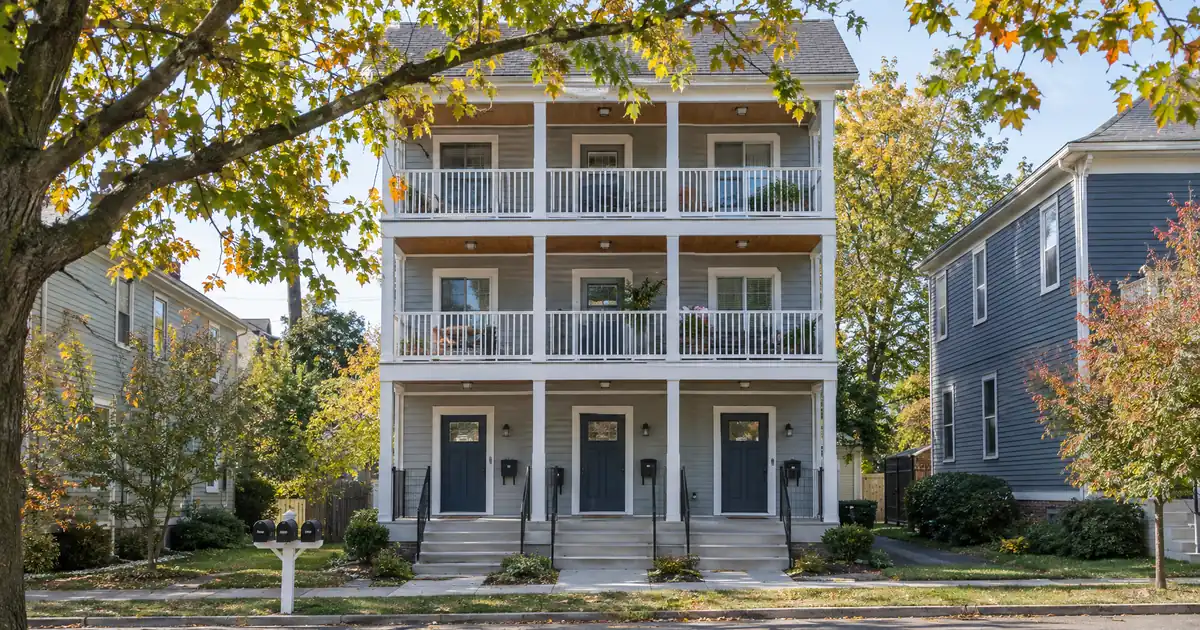
The Quick Read: Yes, a triplex is an eligible property for hard money fix-and-flip financing, because lenders treat one to four units as residential collateral and underwrite the loan on the property, the rehab plan, and the exit rather than mainly on personal income, though the property must be non-owner-occupied and leverage varies by lender, property, and experience.
- Collateral is non-owner-occupied residential property of one to four units, so a triplex fits.
- Fix-and-flip leverage is tiered by completed projects: 85% of project cost with fewer than two, 90% with two or more, and 93% with five or more. Every tier is capped at 75% of after-repair value.
- Up to 100% of the rehab budget funds in draws against completed work. That is a rehab figure, not a purchase loan-to-value.
- Terms run 6 to 18 months, interest-only, with no prepayment penalty.
- The triplex-specific risk is valuation. Few comparable sales can make the after-repair value harder to support.
Why Does a Triplex Qualify for Hard Money?
A triplex qualifies because financing treats two to four units as residential property. Five or more units move into commercial lending. A three-unit building sits on the residential side of that line, so the same hard money programs that fund a single-family flip can fund a triplex.
What this loan actually costs to carry.
Hard money is sized against the project and priced by time. Enter the deal and see how much the program will lend, the cash required at closing, the carry while you hold it, and what is left at the exit.
Leverage tiers on the current program: 85% with fewer than 2, 90% with 2 or more, 93% with 5 or more completed projects — every tier capped at 75% of after-repair value. Loan amounts up to $5,000,000, larger by exception; terms of 6 to 18 months, interest-only, no prepayment penalty. The rehab portion funds in draws against completed work, not at closing.
Program parameters shown update from Lendmire’s centralized guideline source. Rate, points, and months are editable assumptions, not quoted terms.
Cost cap sets the loan · positive spread
Illustrative estimate only — not a quote, Loan Estimate, approval, or commitment to lend. Rate, points, and months are editable assumptions. Hard money is business-purpose financing for real estate investors, not a consumer mortgage. Leverage on the current program tops out at 93% of project cost for investors with a documented track record, capped at 75% of after-repair value, with rehab funding up to 100% of the documented budget released in draws; actual terms vary by lender, borrower experience, property, and exit. Lendmire is a mortgage broker, not a lender.
Across the wholesale network Lendmire works with, the eligible collateral for short-term flip loans is non-owner-occupied residential property, one to four units. Commercial, industrial, land, hospitality, and owner-occupied properties are not on the sheet. A triplex flip is a normal file, not an exception.
Hard money is also asset-based. The lender looks hard at the property, the scope of work, and how the borrower gets out. Credit and experience still matter. The minimum score is 620, with added conditions below 660, and first-time investors qualify at the lower leverage tiers. All of that varies by lender, property, and experience, and nothing here is a commitment to lend.
How Much Can You Borrow on a Triplex Flip?
Leverage on a triplex flip follows the same tiers as any other flip, and it is measured against project cost, then capped against after-repair value. The cap often decides the loan, so read both numbers before you assume the top tier.
| Loan type | Typical leverage | Applies to |
|---|---|---|
| Fix-and-flip, fewer than 2 projects | 85% of project cost | Purchase plus rehab |
| Fix-and-flip, 2+ projects | 90% of project cost | Purchase plus rehab |
| Fix-and-flip, 5+ projects | 93% of project cost | Purchase plus rehab |
| All flip tiers | 75% of after-repair value | Hard cap |
| Bridge, no rehab | Up to 80% of purchase price | Purchase |
| Refinance | Up to 65% of value | Cash-out or rate/term |
These are typical ranges, and the top tier is reserved for experienced investors. There is no true 100% purchase program. When someone says a loan covers 100%, they mean the rehab budget, which funds in draws as completed work is verified. The purchase side still needs cash down, and so do closing costs and the gap before the first draw.
Loan amounts reach up to $5,000,000, with larger loans by exception, and smaller balances vary by lender.
A Quick Example of the Cap
Picture a triplex where purchase plus rehab comes to 85% of the projected after-repair value. A borrower in the 90% of project cost tier would be asking for 76.5% of that value. The 75% cap trims the loan, and the borrower covers the difference in cash. The same math in a deep-discount deal with a small rehab leaves the cost-based tier in control.
Run both tests on every triplex before you make an offer. The cap is the one investors forget.
How Is a Triplex Valued Differently Than a Single-Family Home?
A triplex is valued mostly on comparable sales, the same way a single-family home is, and that is where flip files get tight. Triplex sales are rarer than house sales in most neighborhoods, so the comps are thinner and the adjustments get larger.
For a two-to-four unit property, appraisers commonly use a small residential income property report, known as the 1025 form. It pairs sales comparisons with a rent schedule. Some hard money lenders use their own valuation or a broker opinion instead. The result is the after-repair value, and the loan is built on it.
When comps are scarce, expect these moves:
- The search radius widens, and the appraiser adjusts for distance and condition.
- Single-family or duplex sales may be used as reference points, with adjustments, and practitioners disagree on how far that should go.
- The income approach comes in as support, since a triplex produces rent, but it is rarely the main method for one to four units.
A stretched value is the quiet killer of flip budgets. If the after-repair value comes in low, the 75% cap shrinks the loan, and the borrower funds the shortfall. Pull sales for similar multi-unit buildings before you commit, and keep a cushion in the plan.
Triplex vs. Single-Family Flip: What Changes?
Rehab scope, buyer pool, and valuation all change on a triplex. Leverage tiers and terms stay the same, but the project around them gets more complicated.
| Factor | Single-family flip | Triplex flip |
|---|---|---|
| Valuation | Plentiful sales comps | Thinner comps, bigger adjustments |
| Rehab scope | One kitchen, one set of baths | Three units plus shared systems |
| Buyer pool | Mostly owner-occupants | Investors and owner-occupants |
| Draw schedule | One unit to inspect | Several units to verify |
| Exit | Retail sale | Sale or rental refinance |
The buyer pool deserves a second look. A finished triplex can sell to an investor who prices in the rents, or to a buyer who plans to live in one unit. Each buyer finances differently, which can affect how a sale unfolds. A single-family house does not give you that second path.
Planning the Rehab Across Three Units
Budget each unit on its own line, then add a line for shared systems. Three units mean three kitchens, three baths, and often separate utilities and a shared roof, entry, and mechanicals. Scope creep shows up in the shared parts first.
Draws release after inspection or verification of completed work. The contractor works, the investor pays, and the lender reimburses against the verified progress. That creates a cash gap between the work and the reimbursement. On a triplex the gap repeats, because there is more work to verify at each stage.
Three habits keep the draw schedule clean:
1. Write the scope unit by unit, with shared systems listed separately.
2. Carry a contingency line for items found after demolition, since mid-project discoveries are what push draws short.
3. Hold cash after closing for interest-only payments and for the work before the first draw.
Lenders want to see that liquidity. A thin cash position is a more common reason for a stalled file than a weak property.
What About Tenants and Occupied Units?
An occupied triplex can help carry the property during the hold, but it adds a lender question. Rent from units you leave occupied can offset the carrying cost while the other unit gets rehabbed. A single-family flip sits empty and earns nothing.
Some programs, however, require vacancy or restrict tenancy during the rehab. Disclose the occupancy up front and ask how the program treats it. A surprise lease on a title or inspection report costs more than the question does.
Confirm legality as well. A building listed as a triplex should be a legal three-unit property, and a mismatch between what is on the ground and what the records show can undercut the appraisal and the exit.
How Does the Business-Purpose Side Work?
DSCR and hard money loans are designed for non-owner-occupied investment properties. Because they are business-purpose investor loans, they are reviewed differently from a standard owner-occupied mortgage.
The CFPB’s Truth in Lending summary explains that credit extended to acquire or improve non-owner-occupied rental property counts as business-purpose credit, and that credit to someone other than a natural person is also exempt from the rule. That is why many programs lend to an LLC. The LLC is a lender requirement, not a legal one, and it varies by program guidelines.
Exempt does not mean unregulated. A Hunton Andrews Kurth publication on business-purpose loans warns that state and other laws can still apply. Keep the business-purpose documentation clean and have counsel review the entity setup.
Key Terms Defined
After-repair value (ARV): The projected market value of the triplex once the rehab is finished, which caps the loan at 75%.
Loan-to-cost: The loan as a share of the purchase price plus the rehab budget.
Draw: A release of rehab funds after the lender verifies that work is complete.
Interest-only: A payment structure where the borrower pays interest during the term and repays principal at sale or refinance.
Exit strategy: The plan to repay the loan, by selling the property or refinancing it into long-term financing.
What Are the Exits on a Triplex Flip?
The two exits are a sale or a refinance into long-term financing, and a triplex is better suited to the second than most flips. A three-unit building produces rent, so a flip that stalls can become a rental.
Hard money is not long-term debt. With terms of 6 to 18 months and no multi-year options, an investor who wants a longer runway has to refinance. Many investors refinance out of hard money into long-term DSCR investor loans once the property is stabilized, and Lendmire brokers that path. Plan it before you buy, so the rent supports it.
DSCR compares rent to the full monthly obligation, including principal, interest, taxes, and insurance. A ratio above the program’s floor is not the same as positive cash flow. Repairs, vacancy, management, and utilities sit outside the calculation. For a deeper look at how coverage works, see Lendmire’s complete DSCR loans guide.
Tax treatment varies; consult a qualified professional.
Can a First-Time Flipper Do This?
A first-time investor can qualify at the lower leverage tiers, but a triplex is a demanding first project. The 85% of project cost tier applies to borrowers with fewer than two completed projects, so more cash goes in at the start. Everything varies by lender, property, and experience.
A single-family house is usually the gentler first flip, because comps are plentiful and the scope is smaller. If you still want the triplex, bring a detailed unit-by-unit budget, a contractor with multi-unit experience, and extra liquidity.
When Is This a Bad Idea?
A triplex flip is a poor fit when the numbers only work in the best case. These are the red flags:
- The after-repair value rests on one or two distant comps.
- The budget has no contingency line.
- The investor has no cash left after the down payment and closing costs.
- The exit depends on one buyer type.
- The unit count or zoning is unclear.
Hard money costs more than long-term financing, so the exit matters more than anything else on the file.
Frequently Asked Questions
Does hard money lend on a triplex the same way it does on a house?
Yes, the leverage tiers, terms, and draw process are the same. The difference is in valuation and rehab scope. Thinner comps make the after-repair value harder to support, and three units mean more work to verify at each draw. Terms vary by lender, property, and experience.
Can I live in one unit of the triplex while I flip it?
Not through these programs. The collateral is non-owner-occupied residential property, so an owner-occupied triplex is not offered. Investors who plan to live in one unit generally look at owner-occupant financing instead.
How much cash do I need to bring?
It depends on the tier and the cap. At 85% of project cost, the borrower funds the remaining 15% of purchase plus rehab, plus closing costs and reserves for interest-only payments. The 75% of after-repair value cap can raise that figure. Use the calculator on this site for an illustrative estimate.
What happens if the triplex does not sell?
You can extend by negotiation where the lender allows it, or you can refinance into long-term rental financing. Hard money terms run 6 to 18 months, so the refinance plan should exist before the purchase. A DSCR loan is a common takeout for a stabilized triplex, subject to lender guidelines.
Can I use an LLC?
Many programs prefer or require it, subject to program terms. The entity documents, such as the operating agreement and ownership details, should be ready before the file goes in.
Next Step
If you are buying, rehabbing, or refinancing an investment property on a short timeline and want to see how the numbers work, Lendmire can help you compare hard money options based on the project, the exit plan, leverage, and your goals. Lendmire is a broker that arranges financing through select lenders in its wholesale network across 41 markets, including Washington, D.C. Call 828-256-2183 or request a quote.
A triplex rewards the investor who treats the exit as part of the purchase, because the same three units that complicate the rehab also give the building a second life as a rental.
About Lendmire
Lendmire (NMLS# 2371349) is a mortgage brokerage built around DSCR investor lending, with programs available in 41 markets, including Washington, D.C. DSCR lenders commonly evaluate rental-income coverage instead of personal income paperwork — a practical fit for LLC-owned and multi-property investors. Terms vary by lender, property, leverage, and program. Scotsman Guide named Lendmire a Top Mortgage Workplace in both 2025 and 2026.
Get Started
Ready to find the right loan for you?
In about 30 seconds you can review financing options available for your investment property. No commitment required.
Informational only. Not a Loan Estimate, approval, or commitment to lend. Program availability and eligibility are subject to lender guidelines, credit approval, property review, and underwriting.
References
1. CFPB Truth in Lending Act summary
2. Hunton Andrews Kurth: Beware of “Business Purpose”
This article is part of Lendmire’s hard money loan program — full qualification details, guidelines, and scenarios live on the program page.
Related reading: Can You Use One Super Jumbo DSCR Loan for 20 or More Rentals? · Hard Money Loan Requirements to Buy Out a Land Contract · Hard Money Rehab Draw Inspections for a Full-Gut Rehab
Brandon Miller
Founder & CEO, Mortgage Loan Originator, Lendmire LLC
- Mortgage Loan Originator · NMLS# 1129696 · Verify on NMLS Consumer Access
- North Carolina Real Estate Broker · License# 343312 · Verify on NCREC
- North Carolina Insurance Producer · License# 19053198 · Property, Casualty, Life, Health · Verify on NAIC SBS
- Lendmire LLC · Firm NMLS# 2371349 · Verify firm licensure
Legal disclosures. Lendmire (NMLS# 2371349) is a state-licensed mortgage brokerage that arranges financing through wholesale lender relationships. Lendmire is not a direct lender, depository institution, or registered financial advisor. The discussion above is general informational content about real estate financing — it is not financial, legal, or tax advice, and readers should consult licensed professionals for guidance on their individual circumstances. Loan inquiries are subject to lender underwriting; this article does not represent a commitment to lend. Loan terms, rates, and qualification standards vary by borrower, property, and state, and are subject to change at any time. Equal Housing Opportunity. NMLS Consumer Access: nmlsconsumeraccess.org.