
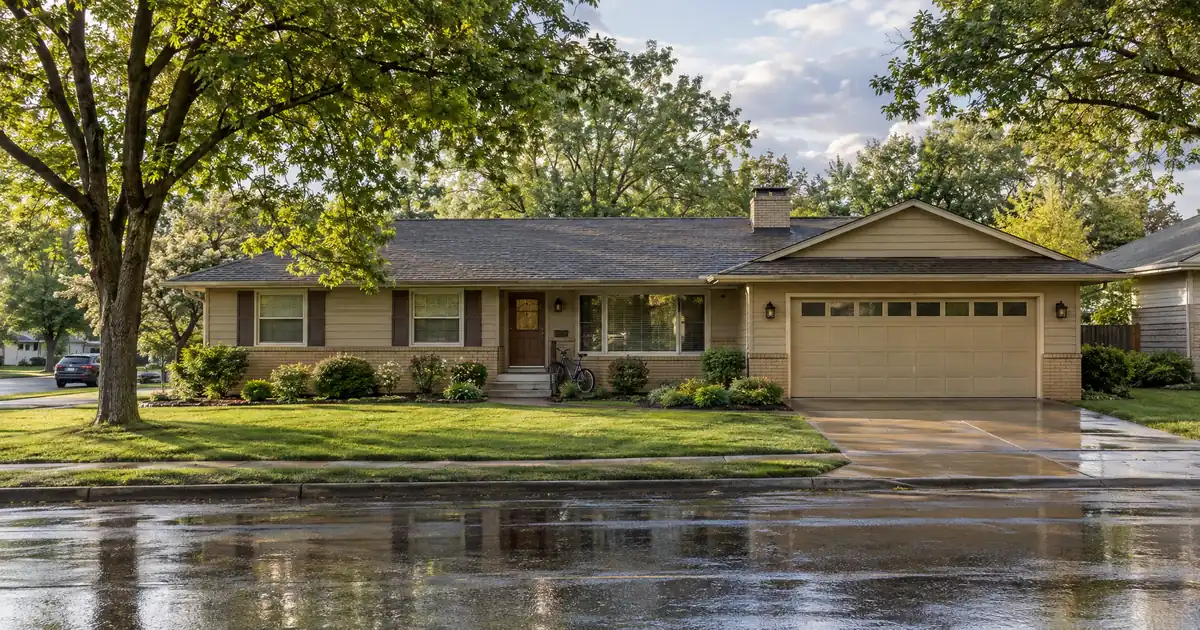
The Quick Read: Yes, a tenant with time left on the lease does not stop a home equity line on a rental, and the lease often works in your favor, but the real hurdles are whether a lender offers an investment-property line at all, whether the property sits in your own name, and how much equity remains after the combined loan-to-value cap. A lease is supporting evidence, not the thing being approved. Credit, debt-to-income, title and equity decide the file.
- Across Lendmire’s wholesale network, an investment-property line tops out at 70% combined loan-to-value (CLTV), with a 700 minimum credit score and a $500,000 maximum line, subject to lender guidelines.
- The property must be titled to you personally or to a revocable living trust. LLC-owned rentals are not eligible for this kind of line.
- Lines at or below $500,000 ordinarily run on an automated valuation, so your tenant is usually not involved in the process.
- A vacant unit, a lease about to lapse or a thin rent history weakens the file more than a healthy lease does.
- If the rental sits in an LLC or you want property-rent-based lender review, a DSCR cash-out refinance is the usual alternative.
Does a Tenant Mid-Lease Help, Hurt, or Not Matter?
A tenant mid-lease mostly helps, and in some steps it simply does not matter. Lenders that offer investment-property lines treat a rented unit as the normal case. They want to see that the income is real and the property is easy to keep occupied.
How large a line the equity supports.
An equity line is sized by combined loan-to-value, occupancy, and credit — not by rental coverage. Switch the occupancy or the credit band and the ceiling moves with it.
Investment-property lines require a 700 minimum credit score; second-home lines start at a 640 minimum and primary-residence lines at 600, and the combined-LTV ceiling steps down as the credit band drops on primary-residence and second-home lines and holds on investment-property lines; the line cap steps down on primary-residence lines and holds at every tier on investment-property and second-home lines.
A debt-to-income ratio above 45% requires 680+ credit. Profiles under 640 are limited to single-family homes. At least 75% of the approved line is drawn at closing. Ceilings, floors, and caps update from Lendmire’s centralized guideline source.
Line estimate
Illustrative estimate only — not a quote, Loan Estimate, approval, or commitment to lend. The rate is an editable assumption; equity-line pricing is variable through both the draw and repayment periods and never converts to fixed. Occupancy and credit drive the ceiling together: an investment property tops out at 70% combined LTV (minimum credit 700, line cap $500,000); a second home tops out at 90% combined LTV (minimum credit 640, line cap $500,000), with the ceiling stepping down as the credit band drops (the cap holds at every tier); a primary residence tops out at 90% combined LTV (minimum credit 600), and its $750,000 maximum line is available only at 75% combined LTV or below with a 700-or-better credit profile (720 on the longer-runway program) and a full appraisal. Lines above $500,000 require a full appraisal. Credit, debt-to-income, property type, and full underwriting review all affect the final line.
NerdWallet notes that an investment-property HELOC is not offered by all lenders, and that lenders see higher default risk than on a primary home. Its requirements list includes proof of long-term tenants for rental properties. A tenant in place is therefore part of the evidence, not an obstacle.
Here is how the lease touches each part of the file:
- Income: The lease and rent history support any rental income a lender may count, subject to its guidelines.
- Risk: A stable tenant lowers the odds that the line payment goes unpaid.
- Valuation: Most lines in this size range skip the in-person visit, so the tenant seldom comes into it.
- Title: The lease has no effect here, and this is where many files stall.
The tenant is rarely the reason a file fails. Credit, equity and ownership structure are.
What Does the Network’s Investment-Property Line Look Like?
Across the select wholesale lenders Lendmire works with, an investment-property line is a personal-credit product, not a rent-based one. It is reviewed against credit profile and debt-to-income, with the property as collateral. These are the figures for that occupancy type, and each is subject to lender guidelines and full file review.
| Feature | Investment property |
|---|---|
| Max CLTV | 70% |
| Minimum credit score | 700 |
| Maximum line | $500,000 |
| Draw / repayment | 5-year draw, 25-year repayment |
| Max DTI | 50% |
| Lien position | First or second |
At least 75% of the line is drawn at closing. Pricing floats during both the draw and repayment periods and never converts to a fixed structure. Qualification uses the interest-only payment calculated on the maximum draw, which is stricter than many borrowers expect.
Market surveys report that some lenders allow up to 80% LTV on an investment-property line, though many sit below 70% (NerdWallet). That is a market-wide statistic. On this network, investment lines stop at 70% CLTV. Exact terms depend on the lender’s guidelines, property type, leverage, and a full review of the borrower’s file.
Eligible property types include single-family homes, 2-4 unit buildings, PUDs, townhomes and condominiums, including non-warrantable condos. Manufactured homes, co-ops, condotels, log homes, commercial, mixed-use and agricultural-zoned properties are not eligible. A borrower can hold up to three lines, and anyone with more than 15 financed properties is not eligible.
These lines are available only in Lendmire’s 16 full-service states. That is narrower than its 41-market DSCR footprint, so confirm your state before planning around one.
Lease Status Scenarios: How a Lender Reads Each One
Each lease situation reads differently in a file. The table below reflects how brokered files typically look across lenders, not a guarantee. Treatment varies by lender, so treat it as a preparation guide.
| Tenancy situation | How a lender may read it | What to have ready |
|---|---|---|
| Mid-lease, months remaining | Strongest case | Signed lease, rent payment history |
| Lease expiring soon | Fine if renewal is likely | Renewal or extension, if signed |
| Holdover (lease ended, tenant stays) | Treated like month-to-month | Proof rent is still paid on time |
| Month-to-month | Acceptable with a clean history | Months of payment records |
| No written lease | Weaker, harder to document | Bank deposits, a written agreement |
| Vacant | Weakest for a rental file | Plan to re-rent, reserves |
The pattern is simple. Documented, consistent rent in your bank account beats a signed lease that nobody can show was ever paid. A long-tenured tenant on a month-to-month arrangement can read stronger than a brand-new tenant on a twelve-month lease.
Where the Tenant Touches the Process
The tenant touches the process at one point only: valuation. Lines at or below $500,000 ordinarily run on an automated valuation, with no traditional appraisal and no one entering the unit. A higher CLTV may call for a secondary valuation, and a borrower can request a full appraisal at any time.
If someone does need to see the unit, the plan is ordinary landlord practice. Give the tenant written notice, offer a few time windows and keep the visit short. Most leases already give the landlord a right of entry with notice, though terms vary by lease and local rules.
The tenant does not sign loan documents. The lease is a document in your file, not a party to the loan. For anything touching tenant notice or consent, local landlord-tenant counsel is the right call.
In practice, title and vesting hold up files far more often than the tenant. Lease prep is the easy part. Ownership structure is the part that cannot be fixed with a phone call.
What Goes in the File?
Gather the documents that prove ownership, equity and rent before you apply. Lenders differ, but a strong rental file commonly includes the following:
- A signed lease for each unit, or rent payment history where there is none.
- A rent roll for multi-unit buildings, which is a simple schedule of each unit, tenant, rent and lease end date.
- Bank statements showing rent deposits, so the lease and the cash match.
- Current mortgage statements for every lien on the property.
- Proof of insurance and the vesting deed.
- A record of any security deposit, kept separate from rent income.
Make sure the name on the lease lines up with the property owner. A lease signed by an LLC while the deed is in your name is the kind of mismatch that slows a file. Clean that up before you apply, not during.
Should You Renew a Month-to-Month Tenant First?
Renew first if the tenant has paid reliably and you plan to keep them. A fresh twelve-month lease tidies the file and removes a question mark. It costs little and may help.
Skip it if a new lease would force a rent change, a new tenant screening or a conversation you would rather not have. A long, clean payment history already tells the lender what it needs. Renewal makes the most sense when the lease is within a few months of ending or has already lapsed, and when the tenant is likely to sign.
A short written extension also works for the same purpose. The goal is a clear, current record of who lives there and what they pay.
What If the Tenant Leaves?
If the tenant leaves, your line payment is still due. Vacancy is the largest risk of borrowing against a rental, and it is yours alone. Plan for it before you draw.
Before closing, a departure turns the file into a vacant-rental file. Many lenders pause or decline until a new tenant is in place. After closing, you carry the payment from reserves until the unit re-rents.
The Consumer Financial Protection Bureau’s HELOC booklet adds three points. Equity lines generally allow the lender to freeze or reduce your line if the home’s value falls. Selling the home generally requires paying the line off in full. And if you already have a line on the property, its terms may prohibit renting the home out. Read that agreement before you put a tenant in.
One more point is easy to overlook. A new lien does not cancel the lease. Under the federal Protecting Tenants at Foreclosure Act, a tenant with a bona fide lease can generally stay through the lease term after a foreclosure, with at least 90 days of notice, per Nolo’s legal reference. The lease neither blocks the lien nor gets you out of it.
The vacant case has one common workaround. Some investors take the line while the home is still their primary residence and rent it out afterward. The BiggerPockets Rookie episode discusses that sequence. Check your line’s terms first, because the occupancy you disclose at closing matters.
Title and Ownership: The Bigger Trap Than the Tenant
Title decides more outcomes than any lease. On this network, fee simple or leasehold must be held by the individual borrower or by a revocable living trust. LLCs, corporations, partnerships and irrevocable, blind or land trusts cannot hold title.
That is the sharpest structural difference from a DSCR loan. If your rental is already deeded to an LLC, you have two choices. You can change the vesting, which may raise its own questions with your existing lender and insurer. Or you can use a DSCR cash-out refinance instead, subject to lender program eligibility.
Retitling is not a casual step. Talk to your attorney and your current lender before you move a deed.
HELOC or DSCR Cash-Out: Which Fits Your Situation?
A HELOC fits an investor with strong personal credit, one or two rentals held personally and a need for flexible, draw-as-you-go access. A DSCR cash-out refinance fits LLC-owned rentals, larger portfolios and investors who want the property’s rent, not their personal income, to carry the file. Lendmire’s complete DSCR loans guide covers how those programs work in full.
| Factor | Investment-property line | DSCR cash-out |
|---|---|---|
| Reviewed on | Personal credit and DTI | Property rent vs. payment |
| Max leverage | 70% CLTV | Around 75% LTV, standard rentals |
| Title | Individual or revocable trust | LLC eligible, per program terms |
| Structure | Variable draw line | Fixed loan, 30-year spine |
| Lease role | Supports rent evidence | Central to the coverage test |
For a standard rental, DSCR cash-out tops out around 75% LTV across most of the network, with about six months of seasoning commonly expected. Coverage of 1.00 is where select programs start. A separate select-lender path takes coverage below 1.00, with leverage and terms adjusted. Stronger coverage opens better pricing and leverage. Most programs want a score near 660, and 700 or higher unlocks the strongest tiers.
Clearing 1.00 does not mean positive cash flow. The ratio compares rent to the payment on principal, interest, taxes and insurance only. Repairs, vacancy, management and capital costs sit outside the calculation.
In files like these, the lease matters differently depending on the product. For a personal-credit line, it supports the rental income a lender may count. For a rent-based loan, it is central to the coverage math.
Working out which product fits the equity you hold and the title you have is the main step. The tenant usually settles itself.
Key Terms Defined
HELOC: A home equity line of credit is a revolving line secured by property, with a draw period followed by repayment.
CLTV: Combined loan-to-value adds every loan on the property together and divides by the property’s value.
Second lien: A loan that sits behind your existing mortgage and is paid second if the property is sold or foreclosed.
Rent roll: A schedule listing each unit, tenant, rent amount and lease end date.
Holdover: A tenant who stays after the lease term ends, usually paying the same rent without a new lease.
Frequently Asked Questions
Does a month-to-month tenant disqualify a rental from a home equity line?
No, but a month-to-month arrangement is read as less certain than a lease with time left. A clean payment history carries real weight. Bank statements showing steady rent deposits are often the best evidence you can offer. A short written lease extension can remove the question entirely.
What if my lease is about to end?
An expiring lease is manageable when renewal is likely. Get an extension signed before you apply if the tenant is staying. If the tenant is leaving and the unit will sit empty, expect the file to read as a vacant rental, which is the hardest position.
Does my tenant have to let an appraiser in?
Usually not, because lines at or below $500,000 ordinarily run on an automated valuation. A secondary valuation or a full appraisal is possible, particularly at higher leverage or on request. If one is needed, give written notice and flexible time windows as your lease allows.
Do I have to tell my tenant I am taking out a line?
Nothing in this program makes the tenant a party to the loan, so tenant consent is not part of the file. Notice rules are set by your lease and local landlord-tenant law. Ask a local attorney before you assume anything in either direction.
Can I use this line if my rental is in an LLC?
No, this network’s equity line cannot be written on a property titled to an LLC. Your options are to change the vesting, which carries its own tradeoffs, or to use a DSCR cash-out refinance, subject to program terms. The right choice depends on your other properties, your credit profile and how much equity you hold.
Next Step
If you are considering a home equity line and want to see how the numbers work, Lendmire can help you compare HELOC options based on the property, the equity available, credit profile, combined leverage, and your goals. Reach the team at 828-256-2183 or request a quote. Every figure here is subject to lender guidelines and full file review, and nothing here is a commitment to lend.
For current guidelines and terms, see Lendmire’s investment-property HELOC programs page.
About Lendmire
Lendmire (NMLS# 2371349) is a mortgage broker. Home equity lines of credit — on a primary residence, a second home or an investment property — are arranged through wholesale lenders in Lendmire’s 16 full-service states, and every line is underwritten by the lender under its program guidelines. Scotsman Guide named Lendmire a Top Mortgage Workplace in both 2025 and 2026.
Get Started
Ready to find the right loan for you?
See your offer in seconds. No credit pull, no obligation.
Informational only. Not a Loan Estimate, approval, or commitment to lend. Program availability and eligibility are subject to lender guidelines, credit approval, property review, and underwriting.
References
1. NerdWallet — HELOC on an investment property
2. Consumer Financial Protection Bureau — HELOC booklet
3. Nolo — Protections for tenants after a landlord’s foreclosure
4. BiggerPockets Rookie episode on converting a home to a rental
This article is part of Lendmire’s investment property HELOC program — full qualification details, guidelines, and scenarios live on the program page.
Related reading: DSCR HELOC Rules When the Home Is Still in the Estate · How to Qualify for an Investment Property HELOC Before Your Return Is Filed · How to Qualify for a DSCR HELOC as a Co-Owner Who Is on the Deed
Brandon Miller
Founder & CEO, Mortgage Loan Originator, Lendmire LLC
- Mortgage Loan Originator · NMLS# 1129696 · Verify on NMLS Consumer Access
- North Carolina Real Estate Broker · License# 343312 · Verify on NCREC
- North Carolina Insurance Producer · License# 19053198 · Property, Casualty, Life, Health · Verify on NAIC SBS
- Lendmire LLC · Firm NMLS# 2371349 · Verify firm licensure
Legal disclosures. Lendmire (NMLS# 2371349) is a state-licensed mortgage brokerage that arranges financing through wholesale lender relationships. Lendmire is not a direct lender, depository institution, or registered financial advisor. The discussion above is general informational content about real estate financing — it is not financial, legal, or tax advice, and readers should consult licensed professionals for guidance on their individual circumstances. Loan inquiries are subject to lender underwriting; this article does not represent a commitment to lend. Loan terms, rates, and qualification standards vary by borrower, property, and state, and are subject to change at any time. Equal Housing Opportunity. NMLS Consumer Access: nmlsconsumeraccess.org.