
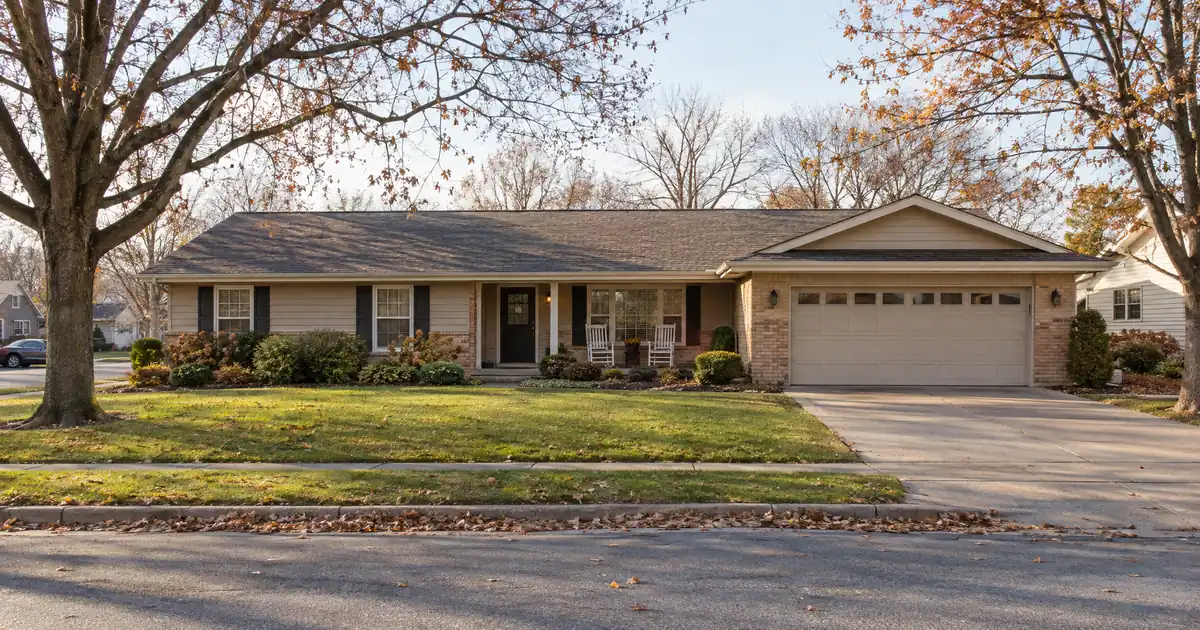
The Quick Read: It depends on what you are buying: for an owner-occupied home, under a year in business is usually a hard barrier on conventional loans and a narrow one on bank statement programs, but for a rental property, a DSCR loan is reviewed for the property’s rent rather than your business history, so business age rarely decides the file. Everything below explains why, and which route fits which borrower.
- Owner-occupied homes: conventional loans usually need a tax-return track record, so a brand-new business is a real obstacle.
- Bank statement programs: these typically ask for 12 months of statements, so a business younger than that may fall short unless personal statements fill the gap.
- Rental properties: DSCR loans qualify primarily on property-level rental income covering the payment, subject to lender guidelines.
- Other bridges: a co-borrower, asset-based qualifying, or simply waiting for the first full tax return.
- Occupancy decides the path. Where you will live changes the loan type, the documents, and the disclosures.
Why Do Lenders Want a Track Record?
Lenders want proof that your income will keep arriving. A paycheck gives them that in one pay stub. Self-employment does not, because revenue swings, expenses shift, and new businesses fail more often than old ones.
What your deposits qualify you for.
Alt-doc programs read 12 months of business or personal bank deposits instead of tax returns. Enter your average monthly deposits and see the income a lender would credit you.
The expense factor is set by the lender from your business type and profit-and-loss statement; it is not a number you choose. This widget quotes no rate and no payment.
Program parameters shown update from Lendmire’s centralized guideline source.
Estimate
Illustrative estimate only — not a quote, Loan Estimate, approval, or commitment to lend. Deposit average, expense factor, and housing ratio are editable assumptions; the expense factor a lender applies is set from your business type and documentation. No interest rate or monthly payment is quoted here. Purchase capacity is a simplified illustration and does not account for taxes, insurance, HOA dues, or other debts. Alt-doc income documentation is available on consumer mortgages in the states where Lendmire is licensed for consumer lending; actual terms vary by lender, borrower, and property.
So lenders look backward. They want to see income that has already happened, in documents they can trust. For most conventional loans, that means traditional personal-income documentation. For alternative-documentation loans, it means bank statements.
Neither tool works well on a business that is a few months old. There is little to average and little to compare. That is the real reason the question matters.
Under a Year vs. Under Two Years
Two different problems hide inside this question. They are not the same.
Under two years is common and often workable. Many lenders accept a shorter history when you have prior work in the same field and a full year of self-employment income on a tax return.
Under one year is harder. You may have no complete tax return from the business at all. A partial first-year return usually does not count as a full year, and an LLC formation date alone does not prove history.
Lenders also disagree on when the clock starts. It might be the formation date, the first revenue, or the day you left your last job. Ask each lender how it measures it before you assume anything.
Five Realistic Routes When the Business Is New
Across the wholesale network Lendmire works with, five paths come up again and again for borrowers in their first year. Each one trades something away.
| Route | Best fit | What you document | Main trade-off |
|---|---|---|---|
| Qualify without the new income | Spouse or partner with steady pay | Their W-2s and returns | Your business adds nothing |
| Co-borrower | Family or partner with strong income | Their income and credit | Shared liability |
| Bank statement loan | Business with about 12 months of deposits | Business or personal statements | Needs a deposit history |
| Asset-based qualifying | Borrower with large liquid savings | Account statements | Ties up capital |
| DSCR loan | Buyer of a rental property | Lease or rent schedule, credit, reserves | Rental use only, not a home |
Qualify without the new business income
If a spouse or partner earns steady wages, the file can run on their income alone. Your new business simply stays out of the math. This is the plainest route, and it works whenever the household income is enough.
Add a co-borrower
A co-borrower with strong income can carry the application. The lender looks at both people, so their credit and debts count too. Shared liability is the cost.
Bank statement loans
A bank statement loan is a non-QM product. NerdWallet’s non-QM overview lists bank statements, asset qualifiers, and 1099s among the alternative documents these loans accept.
On most files in the network, the file is reviewed on documented income under the applicable program, subject to lender guidelines. The lender reads 12 months of business or personal statements and averages the deposits. Each lender then applies its own expense factor, so the number you earn on paper can differ a lot from one program to the next. Never expect a universal formula.
Under a year, the question is whether you have 12 months of usable deposits. Some programs accept personal statements, which can cover a stretch that includes the months before the business launched. Others want deposits clearly tied to the business. Overlays differ, and a few lenders will simply say no.
When a file does fit, select lenders go up to 90% LTV on a primary-residence purchase or rate-and-term refinance. Stronger credit, reserves, and cleaner deposits earn the top of that range. Typical loan sizes run from $125,000 to $3,500,000, with reserves commonly around six months of the housing payment.
Asset-based qualifying
Asset depletion is reviewed against liquid savings instead of income. On a primary residence, select lenders go up to about 80% LTV with this approach. It suits someone with a large account balance and a thin income history. The price is that the money has to stay put. Every figure here varies by lender and program: guidelines, property type, leverage, and credit profile all apply.
DSCR for rental purchases
A DSCR loan skips the business-age question entirely, because the property is the borrower for underwriting purposes. The next sections cover it in full.
How to Get a Self-Employed Mortgage With Under a Year in Business
Match your situation to a route. The deciding variables are occupancy, months in business, and who else brings income or assets.
| Your situation | Likely first route |
|---|---|
| Buying a home to live in, spouse earns steady wages | Qualify on the spouse’s income |
| Buying a home, 12 months of deposits, same-field background | Bank statement loan |
| Buying a home, large savings, thin income | Asset-based qualifying |
| Buying a home, weak income, strong relative | Co-borrower |
| Buying a rental property | DSCR loan |
| Under about six months, owner-occupied | Wait, and build the record |
The last row matters. Waiting is a legitimate plan, not a failure. A few more months can turn a hard file into an ordinary one.
What the Conventional Rulebook Says
Conventional lending is the baseline most people compare against. Freddie Mac’s guide on self-employed borrowers with less than two years asks the seller to document that income is stable. It also looks for a combined two-year history that counts the current business plus a prior job in the same or a similar field.
The same section says the borrower’s traditional personal-income documentation must show at least one year of self-employment income. With under a full year in business, that path is closed.
This is a brief contrast, nothing more. Bank statement and DSCR files do not follow that rulebook. Their parameters come from individual lender program sheets.
Why Rental Loans Play by Different Rules
DSCR loans are designed for non-owner-occupied investment properties. Because they are business-purpose investor loans, they are reviewed differently from a standard owner-occupied mortgage. The CFPB’s Regulation Z exempt-transactions rule is where that distinction lives for credit extended primarily for a business purpose.
Occupancy therefore decides the whole disclosure regime. An owner-occupied bank statement file, whether a primary residence or a second home, is a consumer mortgage, and TRID disclosures apply. A bank statement loan on a non-owner-occupied rental, including a short-term rental, is business-purpose and exempt from TRID. Keep the two apart in your head, because the paperwork and the questions you will be asked differ.
Misclassifying a loan’s purpose is not a gray area to explore. If you plan to live in the property, say so, and the file will be treated as a consumer loan.
What a Rental Buyer Gets From DSCR
The coverage ratio is monthly rent divided by the full monthly housing payment: principal, interest, taxes, insurance, and any association dues. Most standard programs are built around a 1.00x benchmark, because rent covers the payment at that level. Programs below 1.00 coverage are available through select lenders in the network, though LTV and terms adjust.
A DSCR file qualifies primarily on property-level rental income covering the payment, subject to lender guidelines. It still has documents. Expect a credit check, a lease or an appraisal rent schedule, bank statements for the down payment and reserves, ID, and the purchase contract. Entity paperwork gets added if the borrower buys through an LLC, subject to lender program eligibility.
Credit, down payment, and reserves still matter a great deal. The lender is not ignoring risk. It is measuring a different thing.
For a new self-employed investor, the practical gains are clear:
- No two-year tax-return wait.
- Heavy business write-offs do not shrink the coverage figure, because the lender is not reading your return.
- Personal debt-to-income does not cap how many rentals you can add.
The trade-offs are real too. DSCR pricing and fees often run higher than conventional terms, and prepayment penalties are common. Short-term rental income is usually treated as less stable than long-term rent, so lenders may haircut it. For a longer walkthrough, see the complete DSCR loans guide.
Investment-property purchase leverage on bank statement documentation varies by lender. For rentals, the DSCR side usually offers the clearer guidance. On an investment-property cash-out, loans from select lenders top out around 75% LTV.
The First Year, Month by Month
Think of the first year as file-building. Each stage has one job.
Months 0 to 3. Open a separate business account and run every dollar through it. Stop mixing personal and business spending. Collect contracts and invoices.
Months 3 to 6. Keep deposits steady. Pay down revolving debt and avoid new credit. Gather proof of your prior same-field work, such as old pay stubs and an employer letter.
Months 6 to 9. A bank statement file starts to look possible if personal statements can cover the gap. Ask a broker to review your deposits. If you plan to buy a rental, you can start shopping now.
Months 9 to 12. Twelve months of statements come into view. Your first full-year tax return becomes usable after filing, which opens the conventional door for some borrowers.
A rental buyer does not have to follow this schedule. The DSCR route works at any point, once credit, cash, and reserves are in place.
Four Scenarios
These are illustrative profiles, not real files.
The same-field switcher. A salaried engineer starts consulting in the same field. She wants a primary residence. She has prior W-2 history, strong credit, and about eight months of business deposits. A bank statement program using personal statements is her best test. Her prior employment helps the story, but the lender decides whether it fills the gap.
The career changer. A teacher opens a landscaping company. He has no same-field history and six months of deposits. The honest answer for an owner-occupied purchase is to wait or add a co-borrower. For a duplex rental, a DSCR loan is open to him now, assuming credit and reserves hold up.
The household with one steady income. A new bakery owner is married to a nurse. The bakery earns little on paper yet. Qualifying on the nurse’s income alone may be the simplest file, and the business stays out of it.
The asset-rich new owner. A founder sold a prior company and holds significant liquid savings. Asset-based qualifying on a primary residence, up to about 80% LTV, fits better than waiting for traditional personal-income documentation. Final terms depend on lender guidelines, property type, leverage, and the borrower’s complete credit picture.
Documents to Gather
Preparation shortens arguments with underwriters. Start with the list for your route.
- Twelve months of bank statements, business or personal, with deposits you can explain.
- An accountant-prepared profit and loss statement, if you have one.
- Proof of prior work: pay stubs, W-2s, an employer letter, or an old contract.
- Business registration, a license, and client contracts.
- Credit authorization and a clean list of debts.
- For a rental: the lease or an appraisal rent schedule, plus the purchase contract.
To prove same-field work, show that your prior role and your current business share skills and customers. A lender wants to see a story that makes sense, not a perfect match.
How Your Income Gets Counted (and the Write-Off Trap)
On a tax-return loan, every deduction lowers your qualifying income. A new owner who writes off everything may look nearly broke on paper. That is the trap in year one.
Bank statement programs count deposits instead, then subtract an expense factor set by each lender. That is why a lender using statements can see a higher figure than your return shows. It is also why messy accounts hurt: unexplained transfers and personal deposits get questioned or excluded.
Tax treatment can depend on how the funds are used and how the property is held; borrowers should keep clear records and speak with a qualified tax professional before relying on any deduction.
Mistakes That Sink New-Business Applications
1. Assuming an LLC date equals a year in business. Lenders look at income and deposits, not the formation certificate.
2. Mixing accounts. Personal and business money in one account makes the average hard to read.
3. Applying everywhere at once. Overlays differ, and repeated credit pulls add noise.
4. Reading “no personal income documentation” as “no documents.” On a DSCR file, qualification runs on the property’s income, but credit, assets, and the property are all still checked.
5. Treating DSCR as a home loan. It is for rentals. Move in, and the file belongs in a different program.
6. Stretching on reserves. Reserves, commonly around six months of the housing payment on alt-doc files, are part of how lenders judge risk.
Should You Apply Now or Wait?
Apply now if you are buying a rental, have strong credit and reserves, and the numbers cover the payment. The business age will not stop you.
Apply now for a home if you have a same-field background, a co-borrower, steady household income, or real liquid assets. Test the file before ruling it out.
Wait if you are buying a home to live in, your deposits are thin or irregular, and no bridge exists. Waiting a few months to reach 12 months of statements, or a first full tax return, often turns a hard file into a standard one. This is a toss-up for borrowers right at the edge. A broker’s pre-review costs little and shows where you stand.
Key Terms Defined
Bank statement loan: a non-QM mortgage that estimates your income from the deposits in your bank statements instead of your traditional income documentation.
Asset depletion: a way to qualify by converting your liquid savings into a notional monthly income figure.
DSCR (debt service coverage ratio): monthly rent divided by the full monthly housing payment, used to judge a rental property’s ability to carry its own loan.
Non-QM: a mortgage that falls outside standard conventional guidelines, usually because the borrower’s income is documented in a nontraditional way.
Owner-occupied: a property you will live in, such as a primary residence or second home, which makes the loan a consumer mortgage.
Business-purpose loan: a loan for a non-owner-occupied rental, treated as an investor financing rather than a consumer one.
Your Next Step
If you are self-employed and want to see how the numbers work, Lendmire can help you compare bank statement loan options based on your deposits, the property, credit profile, leverage, and your goals. Lendmire is a mortgage broker that arranges financing through select lenders in its wholesale network. Its owner-occupied bank statement lending covers 16 states, while its DSCR investor programs for rentals span 41 markets, including Washington, D.C. Eligibility, terms, and approval remain subject to lender guidelines, and nothing here is a commitment to lend.
Frequently Asked Questions
Can I get a mortgage with less than one year of self-employment?
For a rental property, often yes through a DSCR loan, because the property’s rent is the qualifying basis. For a home you will live in, it is difficult. Conventional loans want a tax-return record, and bank statement programs typically want about 12 months of deposits. A co-borrower, a spouse’s income, or asset-based qualifying can still make a file work.
Does a partial first-year tax return count?
Usually not as a full year. Lenders generally want a complete year of self-employment income on a filed return before they treat it as a track record. A partial year can still support a bank statement file when the deposits are clean and consistent.
Can prior W-2 work in the same field help?
Yes, it can strengthen a shorter-history file. Lenders like to see that your skills and income carry over from the old job to the new business. Bring pay stubs, W-2s, and an employer letter. The help is not automatic, and each lender decides how much weight it earns.
Do bank statement loans work for a brand-new business?
Sometimes, but the fit is narrow. Programs typically ask for 12 months of business or personal statements, so a very young business may fall short. Some lenders accept personal statements to fill the gap, while others do not. A broker who sees several lenders’ sheets can tell you which overlays apply.
Should I wait before applying?
Wait if you are buying a primary residence and your deposits are thin, with no co-borrower or assets to lean on. Do not wait just because you are buying a rental. The DSCR route does not hinge on business age, only on the property, credit, cash, and reserves.
For current guidelines and terms, see Lendmire’s self-employed mortgage programs page.
About Lendmire
Lendmire (NMLS# 2371349) is a mortgage broker licensed for consumer lending in 16 states. Bank statement, P&L-only, 1099-only and asset-based mortgages for self-employed and high-net-worth borrowers are arranged through wholesale lenders on primary residences, second homes and investment properties; every file is underwritten by the lender under its program guidelines. Scotsman Guide named Lendmire a Top Mortgage Workplace in both 2025 and 2026.
Get Started
Ready to find the right loan for you?
In about 30 seconds you can review financing options available for your home or investment property. No commitment required.
Informational only. Not a Loan Estimate, approval, or commitment to lend. Program availability and eligibility are subject to lender guidelines, credit approval, property review, and underwriting.
References
1. NerdWallet: What Are Non-QM Loans?
2. Freddie Mac Guide Section 5304.1: Self-Employed Borrowers
3. CFPB Regulation Z, Section 1026.3: Exempt Transactions
This article is part of Lendmire’s bank statement loan program — full qualification details, guidelines, and scenarios live on the program page.
Related reading: Can a New Business Owner Get a Self-Employed Mortgage? · Can You Get a Self-Employed Mortgage With a W-2 Job Too? · Can You Get a Self-Employed Mortgage With Less Than a Year in Business?
Brandon Miller
Founder & CEO, Mortgage Loan Originator, Lendmire LLC
- Mortgage Loan Originator · NMLS# 1129696 · Verify on NMLS Consumer Access
- North Carolina Real Estate Broker · License# 343312 · Verify on NCREC
- North Carolina Insurance Producer · License# 19053198 · Property, Casualty, Life, Health · Verify on NAIC SBS
- Lendmire LLC · Firm NMLS# 2371349 · Verify firm licensure
Compliance and disclosures. Lendmire (NMLS# 2371349) is a licensed mortgage broker and is not a direct lender, depository institution, financial advisor, or tax professional. Content in this article is general market analysis and educational information — not financial, legal, or tax advice for any specific situation. Lendmire does not guarantee loan approval; every transaction is subject to underwriting by the funding lender. Mortgage pricing and loan program guidelines are subject to change at any time without notice and vary by borrower characteristics, property type, and state regulations. Lendmire complies with Equal Housing Opportunity. Licensure verification: NMLS Consumer Access.