
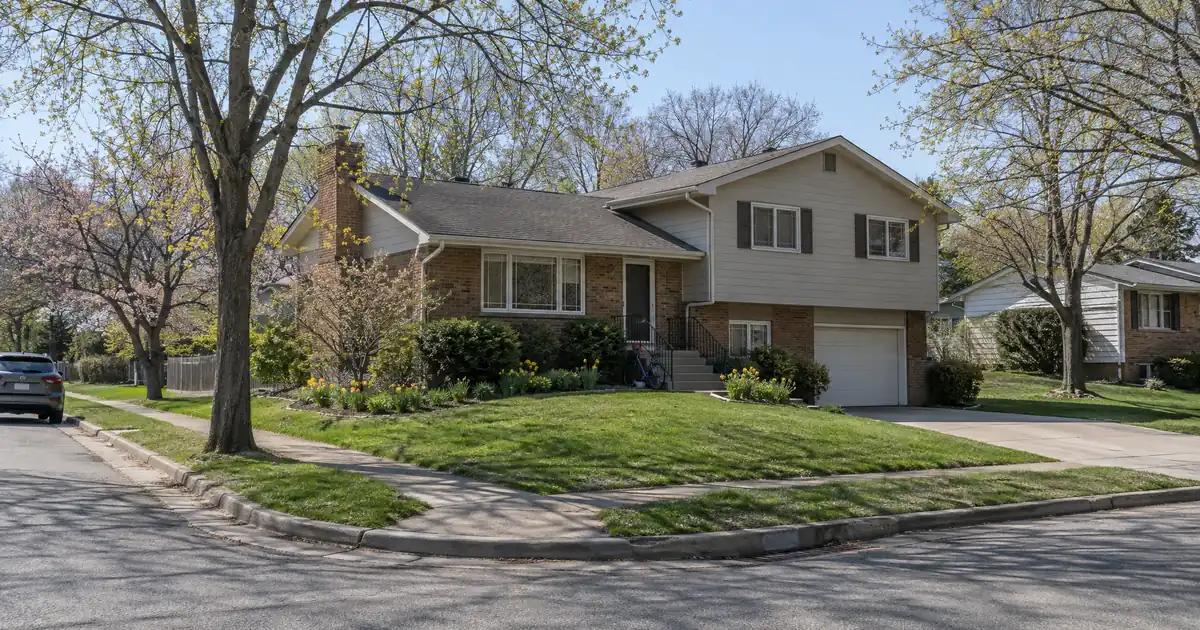
The Quick Read: It depends: a first-mortgage modification does not automatically bar an investment-property HELOC, but it makes approval harder because the lender reviews your personal credit, your debt-to-income ratio, and the combined loan-to-value on the rental, and a modification can touch all three through credit reporting, a higher balance, and the payment history on the loan the line sits behind.
- Credit is the first gate. The investment-property line on Lendmire’s network has a 700 minimum score, with no tier below it.
- Equity is the second gate. The ceiling on an investment-property line is 70% CLTV, with lines from $25,000 to $500,000.
- Title matters. The rental must be held by you personally or by a revocable living trust, not an LLC.
- The fallback is a DSCR cash-out refinance. It tops out around 75% LTV on a standard rental and qualifies primarily on property-level rental income covering the payment, subject to lender guidelines.
A HELOC, short for home equity line of credit, is a revolving credit line secured by a property you already own. On a rental, the lender underwrites you, not the rent. That is why a modification on the first mortgage matters so much.
How large a line the equity supports.
An equity line is sized by combined loan-to-value, occupancy, and credit — not by rental coverage. Switch the occupancy or the credit band and the ceiling moves with it.
Investment-property lines require a 700 minimum credit score; second-home lines start at a 640 minimum and primary-residence lines at 600, and the combined-LTV ceiling steps down as the credit band drops on primary-residence and second-home lines and holds on investment-property lines; the line cap steps down on primary-residence lines and holds at every tier on investment-property and second-home lines.
A debt-to-income ratio above 45% requires 680+ credit. Profiles under 640 are limited to single-family homes. At least 75% of the approved line is drawn at closing. Ceilings, floors, and caps update from Lendmire’s centralized guideline source.
Line estimate
Illustrative estimate only — not a quote, Loan Estimate, approval, or commitment to lend. The rate is an editable assumption; equity-line pricing is variable through both the draw and repayment periods and never converts to fixed. Occupancy and credit drive the ceiling together: an investment property tops out at 70% combined LTV (minimum credit 700, line cap $500,000); a second home tops out at 90% combined LTV (minimum credit 640, line cap $500,000), with the ceiling stepping down as the credit band drops (the cap holds at every tier); a primary residence tops out at 90% combined LTV (minimum credit 600), and its $750,000 maximum line is available only at 75% combined LTV or below with a 700-or-better credit profile (720 on the longer-runway program) and a full appraisal. Lines above $500,000 require a full appraisal. Credit, debt-to-income, property type, and full underwriting review all affect the final line.
What Does a Modification Change, and What Doesn’t It?
A modification rewrites the terms of your existing first mortgage. It can extend the term, adjust the payment, or fold missed amounts into the balance. It does not give you cash, and it does not create new equity.
Some owners confuse the two. A modification is a repair to the first loan. A HELOC is a new loan against what you own. The second one depends on how clean the first one looks afterward.
Three things in your file can change after a modification:
- Your credit report. Servicers can report a modification in different ways. A modification reported as paid as agreed does little damage. One reported as not paid as agreed can pull scores down, though usually less than a foreclosure would.
- Your balance. If missed payments were capitalized, meaning added to the principal, the balance goes up. That shrinks the equity you have available.
- Your payment history. The first mortgage stays in place when a HELOC sits behind it. Its history is the main evidence a second-lien lender has.
Negative marks can stay on a credit report for years. How long they hurt depends on the item, the reporting, and what you have done since.
How Does a HELOC Lender Read a Modified First Mortgage?
A second-lien lender gets paid after the first mortgage if something goes wrong. That makes the first loan’s behavior its biggest risk signal. A modification tells the lender that the first loan was under strain at some point.
Underwriting follows a predictable order. Lendmire’s network starts with the loan documents and the latest mortgage statement, then moves to four checks.
1. Combined loan-to-value (CLTV). Every recorded lien counts. Add the first-mortgage balance, including any capitalized arrears, to the new line. Divide by the appraised value.
2. Credit. The lender reviews your credit report, including the modification notation and any late payments before it. On an investment-property line, the floor is 700.
3. Debt-to-income (DTI). Your modified payment is the payment that counts. The network allows up to 50% DTI, and the new line is qualified on its interest-only payment calculated on the maximum draw.
4. Title and vesting. The borrower on title must be an individual or a revocable living trust.
Each of these is reviewed on every file, subject to lender guidelines. The modification is not a separate checkbox. It shows up inside the credit, balance, and payment history that those four checks read.
The Modification Scenarios, Side by Side
Which loan was modified changes the answer. This table covers the common cases.
| Scenario | How lenders tend to view it | Your likely next move |
|---|---|---|
| Modified loan is on the rental itself | Highest scrutiny of payment history and balance | Build a clean record, then apply |
| Modified loan is on your home; rental is elsewhere | Credit and DTI hit, but the rental’s first lien is untouched | Check score and DTI before applying |
| Loan was modified, then refinanced | The old loan is gone, but the credit mark remains | Apply on current credit and CLTV |
| Forbearance only, no modification | Still a housing event, often read similarly | Ask the lender how it is treated |
None of these is a rule. Lenders weigh the same factors differently, and the table shows tendencies, not outcomes.
Does Timing Matter After a Modification?
Yes. Lenders generally prefer a finished modification with a record of on-time payments since. A trial period, where you prove you can make the new payment, usually does not count as finished.
The network does not set one universal waiting period for modifications. Programs treat modifications alongside other housing or credit events, and the treatment varies by lender and by type of modification. A rate-only or term change reads differently from one that capitalized missed payments.
Some credit events do have stated seasoning on an investment file. A bankruptcy needs 4 years from discharge or dismissal. A foreclosure follows a 7-year path, and a deed-in-lieu, pre-foreclosure, or short sale follows a 4-year path. Those apply if the modification followed one of those events.
Seasoning is the waiting period a lender wants between an event and a new loan. Ask the broker about it before applying. That way you avoid a hard credit pull on a file that a lender would decline on timing alone.
Worked Example: What Modification Does to CLTV
Here is a hypothetical rental, expressed in percentages of its appraised value. These are modeled inputs, not market data.
- Before the modification: the first mortgage balance is 58% of value.
- After the modification: capitalized arrears add 4 points, so the balance is 62% of value.
- Requested line: 8% of value.
- Resulting CLTV: 70%, which sits exactly at the investment-property ceiling.
Change one input and the picture shifts. If the balance had grown to 66% of value, the same request would land at 74% CLTV, which is over the ceiling. The investor would have to request a smaller line, wait for the balance to fall, or wait for value to rise.
Leverage on a rental is also tighter than on a home. NerdWallet’s explainer on HELOCs for investment properties also says not every lender offers them and that qualification is strict. On Lendmire’s network, the investment-property ceiling is 70% CLTV, with a $500,000 maximum line.
A higher score does not buy more leverage here. Both the 720 and 700 tiers reach the same 70% CLTV, so credit above 700 buys eligibility, not extra room.
What Makes Investment-Property Lines Harder to Find
Few lenders write HELOCs on rentals. Investors in a BiggerPockets discussion of rental-property HELOCs describe struggling to find a lender and landing on closed-end second mortgages instead. Another BiggerPockets thread describes a lender that stopped offering the product. Lender lists go stale, so ask a broker for current availability.
Lendmire arranges investment-property lines through select wholesale partners. This product is available in 16 full-service states, which is narrower than the 41-market DSCR footprint, including Washington, D.C. A few structural points matter here:
- Structure. The line is a standalone first- or second-lien product. Investment lines run a 5-year interest-only draw followed by a 25-year repayment period. At least 75% of the line is drawn at closing. Pricing floats and never converts to a fixed structure.
- Valuation. An investment line tops out at $500,000, and full appraisals begin above that. So these lines usually run on an automated valuation, though a borrower can request a full appraisal.
- Property types. Single-family, 2-4 units, PUDs, townhomes, and condominiums, including non-warrantable condos, are eligible. Manufactured homes, co-ops, condotels, log homes, commercial, mixed-use, and agricultural-zoned properties are not offered.
- Exposure limits. A borrower is limited to three lines. An owner with more than 15 financed properties is not eligible.
- Listed properties. A property listed for sale, or listed within the past 60 days, is ineligible in several states.
Entity title is the sharpest limit for investors. LLCs, corporations, partnerships, and irrevocable, blind, or land trusts cannot hold title on a HELOC. If your rental sits in an LLC, you need a vesting change first, or a DSCR product instead.
The Practitioner View: Where Modified Files Stall
On modified files, the credit score is usually where the file stalls, not the equity. A score that slipped under 700 ends the HELOC conversation, no matter how much equity the rental has. The strongest modified files show a clean payment record since the modification, a balance that did not grow much, and a short written explanation of what happened.
Document the recovery before you apply. A plain hardship letter helps the lender understand why the first loan was modified and what has changed.
Your Document Packet for a Modified File
Gather these before any lender pulls your credit:
- The signed modification agreement and the servicer’s confirmation that it is permanent.
- Mortgage statements showing every payment since the modification.
- A short hardship letter covering the cause, the fix, and the current stability.
- Documented income under the applicable program, subject to lender guidelines.
- Proof of how the property is titled.
- Insurance and mortgage statements for every financed property you own.
Keep the letter factual. A lender wants to see that the problem was specific and has been resolved.
If You Are Not Ready Yet: A DSCR Cash-Out Is the Usual Bridge
If credit, CLTV, or DTI blocks the line, the common fallback is a DSCR cash-out refinance. DSCR stands for debt service coverage ratio. It compares the property’s monthly rent to the full monthly obligation: principal, interest, taxes, insurance, and any association dues, together called PITIA.
A DSCR loan is a business-purpose loan for non-owner-occupied investment property. It qualifies primarily on property-level rental income covering the payment, subject to lender guidelines. Lendmire’s complete DSCR loans guide covers the mechanics in full.
Here is how the typical ranges compare across the network:
| Factor | Investment HELOC | DSCR cash-out |
|---|---|---|
| Reviewed on | Personal credit and DTI | Rent versus PITIA |
| Max leverage | 70% CLTV, investment line | About 75% LTV, standard rental |
| Credit floor | 700 | 620 in parts of the network |
| Existing first lien | Stays in place | Replaced |
| Seasoning | Per lender on events | About 6 months on the property |
Most DSCR programs want closer to a 660 score. A score of 700 or higher opens the strongest leverage tiers. For coverage, 1.00 is where many select programs start. A separate select-lender path goes below 1.00, with leverage and terms adjusted.
Reserves vary by lender, leverage, loan size, and transaction type. They commonly run around 6 months of PITIA, and larger loans can step up. Clearing 1.00 on coverage is not the same as positive cash flow, because repairs, vacancy, management, and capital expenses sit outside the calculation.
The trade-off is the first lien. A DSCR cash-out replaces the modified first loan. If that modification gave you a lower payment, replacing it means giving that up. A HELOC leaves it alone. A DSCR cash-out to an LLC is possible, subject to lender program eligibility, and credit events may still carry their own seasoning.
Mistakes That Cause Denials
- Applying inside the lender’s waiting window. Ask first, then apply.
- Shopping many lenders at once. Each hard pull is another inquiry on a file that already has a mark.
- Skipping the explanation. A modification with no story reads worse than one with a clear letter.
- Ignoring title. An LLC deed ends a HELOC application before credit is reviewed.
- Assuming equity is enough. Credit, DTI, and CLTV are all tested together.
- Borrowing near the ceiling. A line is secured by the property, so a missed payment on either loan puts the collateral at risk.
Owner-occupants run into a similar set of issues, and Lendmire’s piece Can a W-2 Homeowner Get a HELOC After a First Mortgage Modification? covers that side.
Key Terms Defined
- Mortgage modification: a permanent change to the terms of your existing loan, such as the term, the payment, or the balance.
- Forbearance: a temporary pause or reduction in payments, after which the loan is usually modified, repaid, or reinstated.
- CLTV: combined loan-to-value, the total of all liens on a property divided by its value.
- DTI: debt-to-income ratio, your monthly debt obligations divided by your monthly income.
- Junior lien: a loan that sits behind the first mortgage and is repaid after it.
- Seasoning: the waiting period a lender wants after an event or purchase before approving a new loan.
Frequently Asked Questions
How long do I have to wait after a modification?
No single waiting period applies across lenders. Most want the modification completed, a clean payment record since, and a credit score that meets the line’s floor. On Lendmire’s network, an investment-property line has a 700 minimum score. The reviewing lender confirms the exact treatment of the modification at file review.
Do I have to disclose the modification?
Yes. The lender reads the first mortgage’s statements and your credit report, and both show it. Explaining it up front in a short letter helps the file more than leaving the lender to find it.
Can I borrow against a different rental’s equity?
Yes, if that property meets the program’s own tests. The modification still shows on your credit report, which the lender reviews. The first mortgage on the collateral property is the one its payment history is read from.
What if the HELOC is declined?
A DSCR cash-out refinance is the usual alternative. It qualifies primarily on the property’s rent against its payment, subject to lender guidelines, and it replaces the existing first loan. It also has its own seasoning and credit-event rules.
Does forbearance count the same as a modification?
Often it is read similarly, because both are housing events on the file. Treatment varies by lender and by what happened afterward. Ask before applying, because each hard pull adds an inquiry.
Where to Go From Here
If you are considering a home equity line and want to see how the numbers work, Lendmire can help you compare HELOC options based on the property, the equity available, credit profile, combined leverage, and your goals. The brokerage arranges these loans through select lenders, and every figure is subject to lender guidelines and full file review. It is not a commitment to lend.
Modification files hinge on timing, so a rental with a clean payment record and a balance that has stopped growing is the strongest case you can bring.
About Lendmire
Lendmire — NMLS# 2371349 — is a mortgage broker that arranges home equity lines of credit in its 16 full-service states through wholesale lenders, on primary residences, second homes and investment properties. Every line is subject to the lender’s guidelines and full underwriting. Scotsman Guide named Lendmire a Top Mortgage Workplace in both 2025 and 2026.
Get Started
Ready to find the right loan for you?
See your offer in seconds. No credit pull, no obligation.
Informational only. Not a Loan Estimate, approval, or commitment to lend. Program availability and eligibility are subject to lender guidelines, credit approval, property review, and underwriting.
References
1. NerdWallet – HELOC on an Investment Property
2. BiggerPockets – HELOC on Rental Properties
3. BiggerPockets – HELOCs for Investment Property
This article is part of Lendmire’s investment property HELOC program — full qualification details, guidelines, and scenarios live on the program page.
Related reading: Investment Property HELOC Requirements Without Being on the Mortgage · How Much Can You Borrow on an Investment Property HELOC Without Being on the Mortgage? · Investment Property HELOC Requirements on a Home With No Mortgage · Investment Property HELOC Requirements After a First Mortgage Modification · Investment Property HELOC Requirements After a Deferred Balance Modification
Brandon Miller
Founder & CEO, Mortgage Loan Originator, Lendmire LLC
- Mortgage Loan Originator · NMLS# 1129696 · Verify on NMLS Consumer Access
- North Carolina Real Estate Broker · License# 343312 · Verify on NCREC
- North Carolina Insurance Producer · License# 19053198 · Property, Casualty, Life, Health · Verify on NAIC SBS
- Lendmire LLC · Firm NMLS# 2371349 · Verify firm licensure
Disclosures. The information presented in this article is general market commentary, not financial, legal, or tax advice. Lendmire is a mortgage brokerage (NMLS# 2371349) — not a direct lender or depository institution — and loan placement is subject to lender underwriting. Nothing in this content represents a commitment to lend. Loan terms, pricing, and program availability vary based on borrower qualifications, property characteristics, and state of subject property, and are subject to change at any time. Lendmire complies with Equal Housing Opportunity requirements. Consumer access: nmlsconsumeraccess.org.