
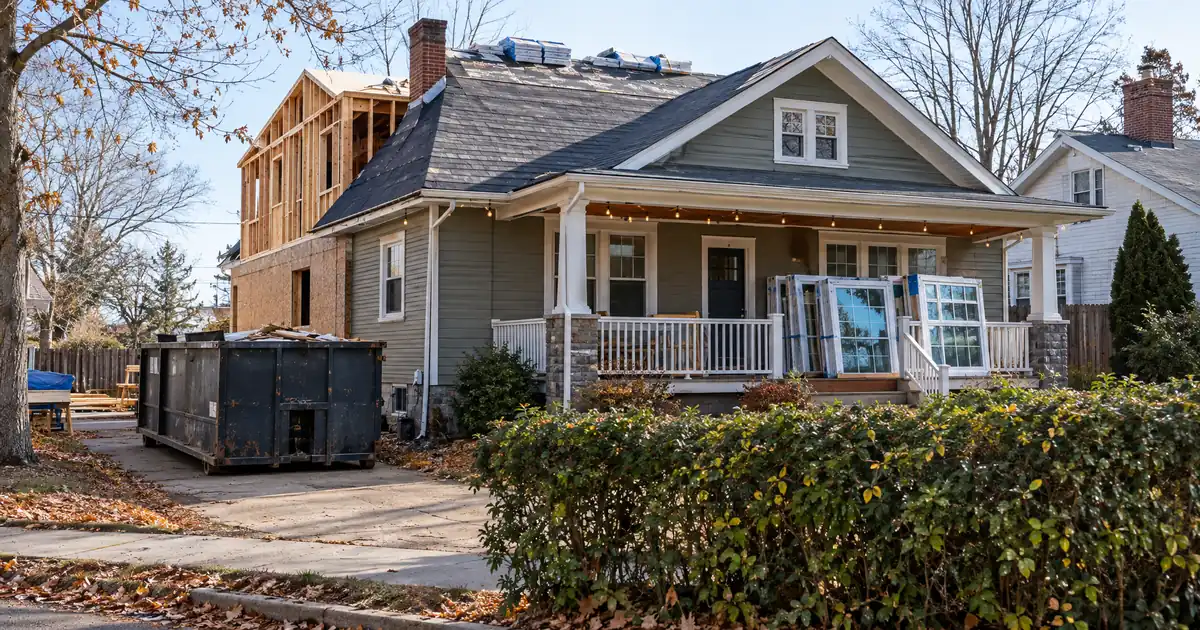
The Quick Read: Yes, but only when the deal’s margin can carry the financing cost, you hold real cash beyond the down payment, and you have a defined exit before the loan term ends. Hard money reviews the property’s rental income, the rehab plan, and the exit more than it underwrites you. That makes it workable for a first-timer, though never cheap or forgiving.
- First-time investors typically land in the lower leverage tiers, so expect to bring more cash than a veteran flipper would.
- Rehab money arrives in draws against completed work, not at closing, so you front each phase first.
- Terms are short and interest-only, so a slow project costs you every month it runs.
- The exit is either a sale or a refinance into long-term rental financing, and you should test it before you sign.
Flipping is common, but the margins are thin. ATTOM’s first-quarter flipping report counted 64,348 flips, or 8.0% of home sales, with a 25.4% gross return and a median hold of 165 days. That return is gross, before rehab, carrying costs, and financing. Your profit is what remains after those three eat into it.
What this loan actually costs to carry.
Hard money is sized against the project and priced by time. Enter the deal and see how much the program will lend, the cash required at closing, the carry while you hold it, and what is left at the exit.
Leverage tiers on the current program: 85% with fewer than 2, 90% with 2 or more, 93% with 5 or more completed projects — every tier capped at 75% of after-repair value. Loan amounts up to $5,000,000, larger by exception; terms of 6 to 18 months, interest-only, no prepayment penalty. The rehab portion funds in draws against completed work, not at closing.
Program parameters shown update from Lendmire’s centralized guideline source. Rate, points, and months are editable assumptions, not quoted terms.
Cost cap sets the loan · positive spread
Illustrative estimate only — not a quote, Loan Estimate, approval, or commitment to lend. Rate, points, and months are editable assumptions. Hard money is business-purpose financing for real estate investors, not a consumer mortgage. Leverage on the current program tops out at 93% of project cost for investors with a documented track record, capped at 75% of after-repair value, with rehab funding up to 100% of the documented budget released in draws; actual terms vary by lender, borrower experience, property, and exit. Lendmire is a mortgage broker, not a lender.
What Is Hard Money, and How Is It Different From a Mortgage?
Hard money is short-term, interest-only, asset-based lending from a private or specialty lender. The loan agreement controls the terms. This is business-purpose lending on an investment property, so it works differently from a standard owner-occupied mortgage.
A mortgage looks hard at your income, your debts, and your credit history. Hard money looks first at the property, the purchase price, the repair budget, and what the finished house should be worth. Your credit still matters, and so does your plan. But the deal does most of the talking.
Terminology varies by lender. Some use “hard money” and “fix-and-flip loan” interchangeably. Others use the second term for a program that leans harder on the borrower and funds purchase plus rehab. Ask any lender what it means by the label before you compare quotes.
Why Is Hard Money the Default for First Flips?
Banks generally don’t want a house that needs a new roof, a gutted kitchen, and a permit trail. Hard money lenders do, because they price the risk into the loan and size it against the finished value. That is why most beginners end up here.
Across the wholesale network where Lendmire places files, the borrower’s flip count sets leverage, not eligibility. Experience moves you between tiers. It doesn’t open or close the door.
Here is the leverage structure on the program Lendmire brokers, expressed as loan-to-cost (the loan as a share of purchase price plus rehab budget):
| Experience | Leverage on fix-and-flip |
|---|---|
| Fewer than 2 completed projects | 85% of project cost |
| 2+ completed projects | 90% of project cost |
| 5+ completed projects | 93% of project cost |
Every tier is capped at 75% of after-repair value, or ARV (what the house should be worth once the work is done). Up to 100% of the rehab budget funds in draws against completed work. That is a rehab-budget figure, not a purchase loan-to-value. There is no true 100% purchase program. Figures vary by lender, property, and experience, and nothing here is a commitment to lend.
Credit matters too. A 620 minimum score applies, with additional conditions below 660. First-time investors qualify at the lower leverage tiers. Underwriting stays asset-based, meaning the property, the plan, and the exit.
How Does a First-Flip Hard Money Loan Work, Step by Step?
You assemble the deal package, the lender sizes the loan on cost and ARV, you prove your cash, the loan closes, rehab money releases in draws, and you exit by sale or refinance. Each step has a catch for first-timers, and the draw process is where most of them get surprised.
1. Gather the deal documents. You need the purchase contract, an itemized rehab budget, comparable sales that support your ARV, and the property address. Business-purpose loans usually close in an LLC, so have your operating agreement and EIN ready, subject to lender program eligibility.
2. The lender sizes the loan. It looks at loan-to-cost on purchase plus rehab, then caps the total against ARV. The common 70% rule screens a deal: maximum purchase price is 70% of ARV minus repairs. The leftover 30% has to absorb financing, closing costs, holding costs, and your profit.
3. You verify your cash. That covers the down payment, closing costs, lender fees, and a reserve for interest while the work runs.
4. The loan closes. It is interest-only, with a balloon due at sale or refinance. Terms run 6 to 18 months, with no prepayment penalty. The rehab money is held back and not wired to you.
5. You work in draws. You pay for a phase, document it, and the lender inspects and reimburses. Draw packages typically include invoices, lien waivers, and a progress overview. First-timers often don’t get advanced draws.
6. You exit. You sell and pay off the note, or refinance into a long-term loan before the term ends.
Here is the catch on draws. Say your rehab budget is large and the first phase is demolition and framing. You pay the crew from your own account, submit the paperwork, and wait for the inspection and reimbursement. If you have no cushion, a delayed draw stalls the contractor, and a stalled contractor stretches the schedule you are paying interest on.
What Cash Do You Still Need as a First-Timer?
You need more than the down payment. Plan for the down payment, closing costs, lender fees, interest reserves, and enough cash to front early rehab phases before reimbursement. Hard money is not a resource if you have absolutely no money, because lenders typically make you cover portions of the rehab first.
That is one forum opinion, not a standard, but it shows the shape of the checklist.
A “100% financing” pitch deserves a skeptical read. It generally means 100% of the rehab on draws, not 100% of the purchase price. Nobody on the program Lendmire brokers funds the full purchase, and you should be wary of anyone who says otherwise.
Cash needs also depend on your tier. At 85% of project cost, you carry 15% of the project yourself before any reserves. A thin-cash borrower with a tight deal is the file that gets into trouble, because there is no room for a late draw, a change order, or an extra month.
Carry contingency on top of all this. Investor guidance commonly recommends 5-10% or more of the rehab budget, so treat that as a floor for a first project, not a ceiling.
What Does Hard Money Really Cost?
The cost is interest, lender fees, draw or inspection fees, and extension fees if you run long. Nearly all of it is time-based, so slow projects hurt most. Lendmire doesn’t quote pricing in articles, and pricing varies by lender, property, and experience.
Think about it as a clock. ATTOM’s median flip takes 165 days to complete, and terms on this kind of loan run 6 to 18 months. Those two numbers fit together when the project goes to plan. They stop fitting when permits stall or a contractor disappears.
Run the numbers on a deal this way, using modeled assumptions rather than market data. Start with ARV from solid comps. Subtract the purchase price, rehab budget with contingency, closing costs on both ends, and interest for the full time you expect to hold it. Then add a slow case where the project takes several months longer. If the profit survives the slow case, the deal is carrying its financing. If it only works on the perfect timeline, it isn’t.
The ATTOM margin figure deserves the same caution. HousingWire’s summary of the ATTOM year-end data counted 297,045 flips, and the 25.5% gross return was the weakest since 2008. Gross return is not what lands in your account.
When Does Hard Money Fit a First Flip, and When Doesn’t It?
It fits when the numbers work on a conservative ARV and a slow timeline, you have cash reserves, and you know how you’ll exit. It doesn’t fit when profit depends on a best-case sale price, when you have almost no liquidity, or when you have no refinance or sale plan.
| Hard money fits when… | Hard money is a bad idea when… |
|---|---|
| Margin survives a slow case | Margin only works at peak ARV |
| You hold reserves beyond the down payment | You are counting on 100% financing |
| Scope is clear and a contractor is lined up | Scope is vague and permits are uncertain |
| Exit is a sale or a tested refinance | You are hoping the exit sorts itself out |
The thin-margin trap is real. Lenders underwrite heavily to ARV and timeline, and investor advice is to be conservative on both. Overstate ARV and financing fees eat the profit fast. You may also find the lender’s appraisal or valuation lands below your comps, which cuts the loan size and raises the cash you need.
The low-cash scenario is worse. If that is your position, partnering with someone who has capital is usually a better first move than forcing a loan.
This is a genuine toss-up for borrowers with moderate cash. Hard money can work, but the stronger play for some is a smaller, simpler first project, where one surprise doesn’t consume the whole reserve.
How Does Hard Money Compare to the Alternatives?
Hard money wins on fit for a needs-work property and on funding the rehab. It loses on cost and on how little room it leaves for mistakes. Cash, partner money, and private lenders each trade differently on the same criteria.
| Option | Strength | Weakness |
|---|---|---|
| Hard money | Funds purchase and rehab | Short term, draws, cost of time |
| Cash | No lender, no clock | Ties up capital, caps deal size |
| Private or partner money | Flexible terms | Depends on the relationship |
| Lender first-time flipper program | Built for beginners | Often leans harder on the borrower |
Some practitioners also point out that you don’t have to borrow the maximum. Taking a lower leverage tier than you qualify for keeps interest down and gives you a larger buffer. It is a reasonable choice for a first deal.
Cash flipping is also common. Financed flippers carry exit risk that cash buyers don’t, so factor that into the comparison honestly.
Is Your Exit Ready? (The Part Most First-Timers Skip)
Test the exit before you take the loan. If the appraised value or the rent comes in short, you can’t pay off the note. A short term makes that mistake expensive, and extension fees run every month the project does.
The sale exit is straightforward. You list, sell, and pay off the note. The refinance exit is a bridge to a rental. Many investors refinance out of hard money into long-term DSCR investor loans once the property is stabilized, and Lendmire brokers that path. DSCR means debt service coverage ratio: monthly rent divided by the full monthly housing payment, covering principal, interest, taxes, insurance, and any HOA dues.
Here is how that refinance typically reads across the network. Coverage of 1.00 is where many select programs start. A separate select-lender path goes below 1.00, with leverage and terms adjusted. Clearing 1.00 does not mean the property cash flows, since repairs, vacancy, management, utilities, and capex sit outside the calculation.
Cash-out and rate-term refinance out of hard money run up to 65% of value on the hard money side, and the long-term refinance has its own leverage rules, so plan which one applies to you. Hard money lenders and rental lenders also differ on how long they want you to hold a property before refinancing. Ask both about timing before you buy. One investor reported being unable to refinance as soon as wanted, which can get expensive.
Lendmire’s guide How to Support Your ARV on a First Flip With Hard Money covers the valuation side of this in detail. For the long-term loan that often comes after, the complete DSCR loans guide explains the coverage test, leverage tiers, and reserves.
First-Flip Readiness Checklist
Run through this before you apply. Any “no” is a reason to slow down.
- Does the deal still profit on a conservative ARV and a timeline several months longer than planned?
- Do you hold cash beyond the down payment for closing costs, interest reserves, and early rehab phases?
- Is the rehab scope itemized, with a contractor who understands draw-based payment?
- Is contingency built into the budget at 5-10% or more?
- Is your LLC and entity paperwork in order, subject to lender program eligibility?
- Do you know whether you will sell or refinance, and have you tested that exit?
What Do Lenders Look For in a First-Timer?
They look at the deal first: contract, scope, comps, and exit. Then they look at your cash, your credit, and your ability to execute. Some lenders credit a real estate license or contractor background as experience, which can move you toward a better tier.
Present the file cleanly. Include a line-item budget, comps that match the house in size and condition, and a plain exit plan. A messy package with a rosy ARV tells the lender you haven’t done the homework.
Vet the lender too. Ask how draws are inspected and how long reimbursement takes, what extension fees look like, whether prepayment penalties apply, and who services the loan. Programs change and every file is underwritten individually. Lender guidelines, property review, and credit approval all apply.
Common Misconceptions
- “Hard money needs a track record.” Experience changes leverage, not eligibility.
- “It’s zero money down.” It isn’t. You bring a down payment, fees, reserves, and early rehab cash.
- “Credit doesn’t matter.” Lenders set credit floors and price by credit.
- “The rehab money arrives at closing.” Draws reimburse completed work.
- “The ATTOM return is my profit.” It is gross, before rehab, carry, and financing.
- “It’s regulated like a mortgage.” Business-purpose private loans follow the contract, not consumer-style draw or leverage rules.
Frequently Asked Questions
Can I get hard money with no flipping experience?
Usually, yes. Experience sets your leverage tier, not your eligibility. On the program Lendmire brokers, fewer than two completed projects means 85% of project cost, capped at 75% of ARV. Terms vary by lender, property, and experience.
What credit score do I need?
A 620 minimum applies, with additional conditions below 660. Underwriting stays asset-based, so the property, the plan, and the exit carry the file. A stronger score can help the overall picture, subject to lender guidelines.
Can I borrow the full amount and put nothing down?
No. There is no true 100% purchase program. Up to 100% of the rehab budget funds in draws against completed work, but you still bring a down payment, closing costs, and reserves. Your cash is what keeps the project moving between draws.
What happens if my flip doesn’t sell before the term ends?
Terms run 6 to 18 months, interest-only. You can sell at a lower price, ask the lender about an extension (which carries fees), or refinance into long-term rental financing if the property rents well. Plan this before closing, not after.
Does the property have to be a certain type?
It must be non-owner-occupied residential, 1-4 units, with ground-up construction allowed up to 10 units. Commercial, land, and owner-occupied properties are not offered. Hard money is available in 41 markets, including Washington, D.C., though not in every location.
Your Next Step
If you are buying, rehabbing or refinancing an investment property on a short timeline and want to see how the numbers work, Lendmire can help you compare hard money options based on the project, the exit plan, leverage, and your goals. Lendmire is a broker that arranges financing through select lenders in its wholesale network.
First flips tend to succeed or fail on the schedule, not the purchase price, and the buyer who plans for the slow case is the one still standing when the work runs long.
About Lendmire
Lendmire (NMLS# 2371349), a non-QM mortgage broker serving investors in 41 markets including Washington, D.C., helps structure DSCR scenarios commonly evaluated around a property’s rental income rather than personal income paperwork, subject to lender guidelines. A Scotsman Guide Top Mortgage Workplace in 2025 and 2026, Lendmire places loans through wholesale investor lenders and is not a direct lender.
Get Started
Ready to find the right loan for you?
In about 30 seconds you can review financing options available for your investment property. No commitment required.
Informational only. Not a Loan Estimate, approval, or commitment to lend. Program availability and eligibility are subject to lender guidelines, credit approval, property review, and underwriting.
References
1. ATTOM Home Flipping Trends (Q1 2026)
2. HousingWire’s summary of the ATTOM year-end data
This article is part of Lendmire’s hard money loan program — full qualification details, guidelines, and scenarios live on the program page.
Related reading: How to Fund a Rental Remodel With a HELOC and Refinance to DSCR · Can a DSCR Refinance Close Before Hard Money Maturity on a Long Rehab? · Seasoning Rules for a Two-Step DSCR Cash-Out After Hard Money
Brandon Miller
Founder & CEO, Mortgage Loan Originator, Lendmire LLC
- Mortgage Loan Originator · NMLS# 1129696 · Verify on NMLS Consumer Access
- North Carolina Real Estate Broker · License# 343312 · Verify on NCREC
- North Carolina Insurance Producer · License# 19053198 · Property, Casualty, Life, Health · Verify on NAIC SBS
- Lendmire LLC · Firm NMLS# 2371349 · Verify firm licensure
Legal disclosures. Lendmire (NMLS# 2371349) is a state-licensed mortgage brokerage that arranges financing through wholesale lender relationships. Lendmire is not a direct lender, depository institution, or registered financial advisor. The discussion above is general informational content about real estate financing — it is not financial, legal, or tax advice, and readers should consult licensed professionals for guidance on their individual circumstances. Loan inquiries are subject to lender underwriting; this article does not represent a commitment to lend. Loan terms, rates, and qualification standards vary by borrower, property, and state, and are subject to change at any time. Equal Housing Opportunity. NMLS Consumer Access: nmlsconsumeraccess.org.