
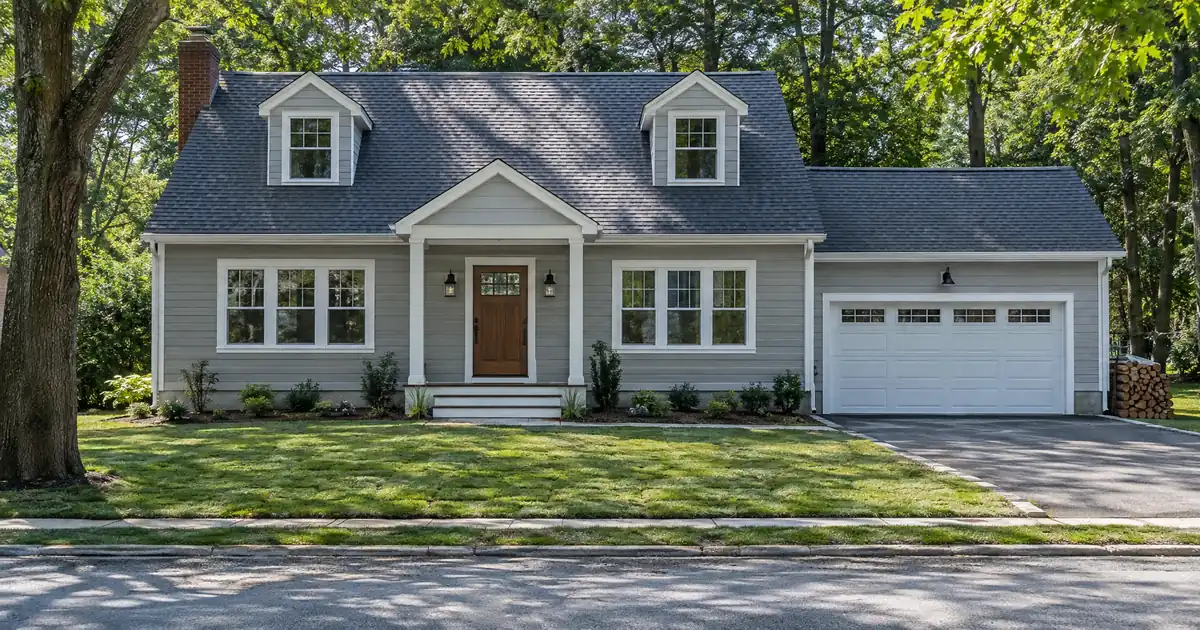
The Quick Read: A hard money bridge lender tests four things: the property, the borrower, the entity that will own it, and the exit plan. The exit carries the most weight, because a bridge is short-term debt that has to be repaid by a sale or a refinance.
- Property: a non-owner-occupied residential property of 1-4 units, so a single-family rental fits.
- Borrower: a 620 minimum score on the network’s hard money sheet, with added conditions below 660. Experience sets your leverage tier.
- Leverage: bridge purchases without rehab run up to 80% of purchase price, and refinances up to 65% of value.
- Terms: 6-18 months, interest-only, no prepayment penalty. All of this varies by lender, property, and experience.
- Exit: most buy-and-hold investors refinance into a DSCR loan, so the rent has to work before the bridge closes.
What Is a Hard Money Bridge Loan on a Rental?
A hard money bridge loan is short-term, asset-based debt secured by the property itself. It lets you buy or hold a rental until you can replace it with long-term financing. The lender cares most about what the property is worth and how you will pay the loan off.
What this loan actually costs to carry.
Hard money is sized against the project and priced by time. Enter the deal and see how much the program will lend, the cash required at closing, the carry while you hold it, and what is left at the exit.
Leverage tiers on the current program: 85% with fewer than 2, 90% with 2 or more, 93% with 5 or more completed projects — every tier capped at 75% of after-repair value. Loan amounts up to $5,000,000, larger by exception; terms of 6 to 18 months, interest-only, no prepayment penalty. The rehab portion funds in draws against completed work, not at closing.
Program parameters shown update from Lendmire’s centralized guideline source. Rate, points, and months are editable assumptions, not quoted terms.
Cost cap sets the loan · positive spread
Illustrative estimate only — not a quote, Loan Estimate, approval, or commitment to lend. Rate, points, and months are editable assumptions. Hard money is business-purpose financing for real estate investors, not a consumer mortgage. Leverage on the current program tops out at 93% of project cost for investors with a documented track record, capped at 75% of after-repair value, with rehab funding up to 100% of the documented budget released in draws; actual terms vary by lender, borrower experience, property, and exit. Lendmire is a mortgage broker, not a lender.
The two words in the name do different jobs. “Hard money” describes where the money comes from, usually a private lender. “Bridge” describes what the loan does, which is span the gap to a permanent loan or a sale. In practice the terms overlap, and most lenders use them interchangeably.
For a single-family rental, the typical story is simple. You find a house that is vacant, dated, or otherwise unfinanceable by a bank today. The bridge buys it and funds repairs. Then you lease it and refinance into long-term rental debt.
Here is how the two loans in that story differ:
| Factor | Hard Money Bridge | DSCR Takeout Loan |
|---|---|---|
| Job | Acquire, repair, hold briefly | Long-term hold financing |
| Term | 6-18 months | Long, amortizing terms |
| Payment | Interest-only | Principal and interest |
| Main test | Asset, plan, and exit | Rent versus full payment |
DSCR stands for debt service coverage ratio. It compares the property’s monthly rent to its monthly housing payment. The complete DSCR loans guide covers that test in full.
Requirements at a Glance
Every requirement falls into one of four buckets, plus the paperwork that proves them. This table is the short version of the sections that follow.
| Bucket | What the lender tests | What to prepare |
|---|---|---|
| Property | Type, units, condition, occupancy | Contract, photos, scope of work |
| Borrower | Score, experience, liquidity | Financial statement, track record |
| Entity | Who owns and guarantees | LLC documents, operating agreement |
| Exit | Sale or refinance path | Rent evidence, takeout plan |
Treat the specifics as ranges. They vary by lender, property, and experience, and nothing here is a commitment to lend.
Property Requirements
The property has to be a non-owner-occupied residential building with 1-4 units. A single-family home sits squarely inside that range. Commercial, industrial, land, hospitality, and owner-occupied properties are not on the network’s hard money sheet.
Condition is where bridge lending differs most from a bank. A bank wants a livable, appraisable house. A bridge lender will fund a house with a bad roof, no kitchen, or no tenants. That tolerance is the whole point of the product.
Occupancy is the other gate. The property must be an investment, and the loan proceeds must go to business use. If you plan to live in it, this is the wrong product.
Condos, rural homes, and unusual construction get treated lender by lender. Check eligibility before you sign a contract, not after.
Borrower Requirements
Underwriting is asset-based, but the borrower still matters. Asset-based means the lender leans on the property, the plan, and the exit more than on your income. It does not mean the lender ignores you.
Here is what the network’s lenders typically look at:
- Credit: a 620 minimum score on the hard money sheet, with additional conditions below 660. A stronger score does not erase the other tests.
- Experience: documented completed projects. This sets your leverage tier, as the leverage section explains.
- Liquidity: proof you can fund your share of the deal, the interest carry, and any gap if costs rise.
- Financial picture: a personal financial statement. Some lenders also ask for bank statements.
First-time investors can qualify, generally at the lower leverage tiers. The top tier is reserved for experienced investors. That is a fair trade, because a lender who has not seen you finish a project takes on more risk.
Entity and Vesting Requirements
Most investors close in an LLC, and lenders usually want to see how that entity is set up. Lending to an LLC is subject to lender program eligibility, so confirm that before you form anything.
Expect to provide formation documents, the operating agreement, and a good standing certificate. Lenders also commonly ask for a personal guarantee from the person behind the entity. Set up the entity and its bank account before the contract date. Tenant deposits and rent should flow through that account from day one.
How Leverage and Valuation Work
The lender sizes the loan on cost or value, whichever produces the lower number. Three terms matter here. As-is value is what the house is worth today. After-repair value, or ARV, is what it should be worth once you finish the work. Loan-to-cost compares the loan to what you will actually spend on the project.
On the network’s current hard money sheet, the leverage ranges look like this, always varying by lender, property, and experience:
- Bridge purchase without rehab: up to 80% of purchase price.
- Fix-and-flip purchase with rehab: 93% of project cost at 5+ completed projects, 90% of project cost at 2+, and 85% with fewer than 2. Every tier is capped at 75% of after-repair value.
- Cash-out or rate-and-term refinance: up to 65% of value.
- Rehab funds: up to 100% of the rehab budget, released in draws against completed work.
That last line trips people up. The rehab figure is a share of the repair budget, not a share of the purchase. There is no true 100% purchase program. You will bring cash to the deal. Loans run up to $5,000,000, and larger by exception.
A draw is a payout of repair money after the lender confirms the work is done. Plan your contractor payments around that rhythm.
The Exit: Where Most Bridge Deals Succeed or Fail
The exit is the real gate. A bridge lender wants to know how you will repay principal, because the loan is interest-only and the full balance comes due at maturity. Terms run 6-18 months with no prepayment penalty on the network’s program. Check any other lender’s terms carefully, since minimum-interest clauses can erase the savings from paying off early.
There is no multi-year option on this program. If you need a longer runway, you refinance into long-term rental financing. Many investors do exactly that, refinancing into a DSCR loan once the property is stabilized, and Lendmire brokers that path.
The takeout lender does not use your numbers. It orders its own appraisal and uses its own rent figure. Your projected value and your hoped-for rent are inputs to your plan, not to their loan.
Here is how that test works, step by step:
1. The takeout lender establishes value from its own appraisal.
2. It establishes market or lease rent from its own schedule or the lease.
3. It adds up the full housing payment: principal, interest, taxes, insurance, and any HOA dues. That sum is called PITIA when insurance and association dues are both counted.
4. It divides rent by that payment. The result is the coverage ratio.
Coverage thresholds vary by program. Many select programs start at 1.00. A separate select-lender path goes below 1.00, with leverage and terms adjusted. Stronger ratios generally open better leverage and pricing.
Clearing 1.00 does not mean the house cash flows. The ratio compares rent to PITIA only. Repairs, vacancy, management, utilities, and capital expenses sit outside it. Underwrite those yourself.
Seasoning is the waiting period a lender wants between buying a property and refinancing it. It is lender policy, not law, and it varies by program. The usual pattern is that loan sizing follows your cost basis before the seasoning point and appraised value after it. A payoff-only refinance, where the new loan just retires the bridge, behaves like a rate-and-term loan. Ask the exit lender for its exact seasoning rule in writing before the bridge closes.
Worked Example: On Schedule Versus Slipped
Run the numbers on two versions of the same rental. Both start as a vacant single-family house bought on a bridge with a rehab budget. These are modeled assumptions, not market data.
Version one, on schedule. The repairs finish and a tenant signs a lease. The takeout appraisal supports your value, and the rent covers the full payment with room to spare, say around 1.25x. The takeout loan pays off the bridge. You keep the property.
Version two, slipped. A contractor delay pushes the lease past your plan. The appraisal lands below your ARV estimate. Rent is thinner than you assumed, so coverage sits near break-even. The takeout lender sizes a smaller loan, and you cover the difference in cash. Meanwhile the bridge clock keeps running.
Both versions started with the same property. They ended differently because the first investor tested the exit before closing the bridge. That is the lesson. If the slipped version would sink you, build in cash reserves or pick a smaller deal.
If the bridge does pass maturity, the usual options are a payoff-only refinance, an extension that adds interest and possibly fees, bringing cash to the table, or selling.
What Documents Do You Need?
A clean file moves through underwriting with fewer questions. Here is the full list, grouped by who or what it proves.
Borrower file
- Government ID and a personal financial statement
- Track record of completed projects, with addresses and outcomes
- Bank statements, if the lender asks
Entity file
- Formation documents and operating agreement
- Good standing certificate and tax ID
- Guarantor information
Property file
- Purchase contract and photos
- Insurance quote
- Appraisal or valuation, ordered by the lender
Renovation file
- Scope of work and line-item budget
- Contractor bids and schedule
- Draw plan
Once a tenant pays, keep lender-grade records from the first day. That means the lease, proof of the security deposit and first month’s rent, bank deposits into the entity account, rehab draw records, insurance, and a payoff request. The takeout lender will want all of it.
What Does the Application Sequence Look Like?
Order matters more than anything else on this list, so here is the sequence without timing promises:
1. Pick the exit lender and confirm seasoning and leverage rules in writing.
2. Form the entity and open its bank account.
3. Assemble the borrower, entity, and renovation files.
4. Submit the contract and file for review.
5. The lender orders valuation and title work.
6. You bind insurance and the loan documents are signed.
7. Draws are released as work is completed and inspected.
8. You lease the property and gather rental records.
9. You refinance or sell to retire the bridge.
Where the Rules Break
The general rule is that a single-family rental with a solid exit works. These edge cases are where it stops working.
Vacant or unleased property. A DSCR loan needs rent to measure. A vacant house has to be leased or have rent documented before the takeout.
Ineligible property types. Manufactured homes (single- and double-wide), log homes, and barndominiums are not offered on DSCR programs. They cannot be your takeout, so a bridge on one has no planned exit.
Owner occupancy. If you will live in the property, the business-purpose treatment is not automatic.
Replacing an exempt loan. If a business-purpose loan is paid off and replaced by a new loan secured by real property, the new loan is not automatically exempt. Check how the replacement is classified.
Prepayment terms. The network’s hard money program carries no prepayment penalty, but lenders may charge minimum interest. Confirm this before you sign.
Short-term rentals. Short-term rental rules can vary by city, county, HOA, and property type, so investors should confirm local rules before relying on projected rental income.
Takeout shortfall. If the appraisal or rent comes in short, the loan shrinks. Coverage below 1.00 is available through select lenders in the network, with leverage and terms adjusted. That is a different path from standard programs, and it is not a fallback to plan around.
The Business-Purpose Line
Hard money bridge loans on a rental are designed for non-owner-occupied investment properties. Because they are business-purpose investor loans, they are reviewed differently from a standard owner-occupied mortgage. The CFPB’s summary of the Truth in Lending Act treats credit to acquire or improve a non-owner-occupied rental as business-purpose credit. Owner-occupied rentals are different. Compliance Alliance explains that an owner-occupied rental counts as business-purpose for acquisition only above 2 units, and for improvement only above 4 units.
Common Mistakes and Denial Reasons
Mistakes tend to fall into a few repeating patterns:
- Skipping the exit test. You close the bridge before checking whether the rent covers a long-term payment.
- Trusting your own ARV. The takeout appraiser decides value, not you.
- Assuming leverage tiers are flat. Experience changes your tier, and a first project gets the lower one.
- Thin liquidity. The deal works on paper but leaves no cushion for overruns or the interest carry.
- Late entity setup. Deposits land in a personal account and cannot be documented later.
- Picking an ineligible property. A manufactured or log home has no DSCR takeout.
- Treating 1.00 as cash flow. Coverage does not include repairs, vacancy, or management.
Key Terms Defined
As-is value: what the property is worth today, before any repairs.
After-repair value (ARV): the estimated value once the planned work is finished.
Takeout: the long-term loan that pays off the bridge.
Seasoning: the waiting period between buying a property and refinancing it, set by each lender’s own policy.
Carry: the interest and holding costs you pay while the bridge is outstanding.
Draw: a release of rehab funds after completed work is verified.
Loan-to-cost: the loan amount compared to what you spend on the project.
Business-purpose loan: a loan for investment or business use rather than a home you live in.
Frequently Asked Questions
Does the property have to be rented to get a hard money bridge loan?
No. Bridge lenders routinely fund vacant or mid-rehab houses, which is a main reason investors use them. The rent matters later, when the takeout lender measures coverage. Plan to lease the property before that refinance.
Is income documentation required?
Underwriting is asset-based, so the property, plan, and exit carry the file. You should still expect to provide a financial statement, entity documents, and sometimes bank statements. Qualification runs on the asset rather than on personal income documentation, subject to lender guidelines.
Can I borrow in my own name instead of an LLC?
It depends on the lender. Many investors use an LLC, but entity requirements and eligibility vary by lender. Ask before you form one or sign a contract, and plan for a possible personal guarantee either way.
What if my credit is imperfect?
A 620 minimum score applies on the network’s hard money sheet, with additional conditions below 660. Higher leverage tiers lean on experience and a stronger profile. Below the minimum, this program is generally not available.
How do hard money and bridge loans differ?
Hard money names the source of funds, usually a private lender. Bridge names the function, which is spanning the gap to a sale or a long-term loan. Most rental bridge loans are both.
Next Steps
If you are buying, rehabbing, or refinancing an investment property and want to see how the numbers work, Lendmire can help you compare hard money options based on the project, the exit plan, leverage, and your goals. The brokerage arranges financing through select lenders in its wholesale network, across 41 markets, including Washington, D.C.
About Lendmire
Lendmire (NMLS# 2371349) is a mortgage brokerage built around DSCR investor lending, with programs available in 41 markets, including Washington, D.C. DSCR lenders commonly evaluate rental-income coverage instead of personal income paperwork — a practical fit for LLC-owned and multi-property investors. Terms vary by lender, property, leverage, and program. Scotsman Guide named Lendmire a Top Mortgage Workplace in both 2025 and 2026.
Get Started
Ready to find the right loan for you?
In about 30 seconds you can review financing options available for your investment property. No commitment required.
Informational only. Not a Loan Estimate, approval, or commitment to lend. Program availability and eligibility are subject to lender guidelines, credit approval, property review, and underwriting.
References
1. CFPB – Truth in Lending Act summary (PDF)
2. Compliance Alliance – Regulation Z and investment properties
This article is part of Lendmire’s hard money loan program — full qualification details, guidelines, and scenarios live on the program page.
Related reading: Can You Get an Interest-Only Hard Money Loan for a Fix and Flip? · Can a Self-Employed Borrower Qualify for a Hard Money Bridge Loan? · Can a 1099 Contractor Get a Hard Money Loan to Flip a House?
Brandon Miller
Founder & CEO, Mortgage Loan Originator, Lendmire LLC
- Mortgage Loan Originator · NMLS# 1129696 · Verify on NMLS Consumer Access
- North Carolina Real Estate Broker · License# 343312 · Verify on NCREC
- North Carolina Insurance Producer · License# 19053198 · Property, Casualty, Life, Health · Verify on NAIC SBS
- Lendmire LLC · Firm NMLS# 2371349 · Verify firm licensure
Compliance and disclosures. Lendmire (NMLS# 2371349) is a licensed mortgage broker and is not a direct lender, depository institution, financial advisor, or tax professional. Content in this article is general market analysis and educational information — not financial, legal, or tax advice for any specific situation. Lendmire does not guarantee loan approval; every transaction is subject to underwriting by the funding lender. Mortgage pricing and loan program guidelines are subject to change at any time without notice and vary by borrower characteristics, property type, and state regulations. Lendmire complies with Equal Housing Opportunity. Licensure verification: NMLS Consumer Access.