
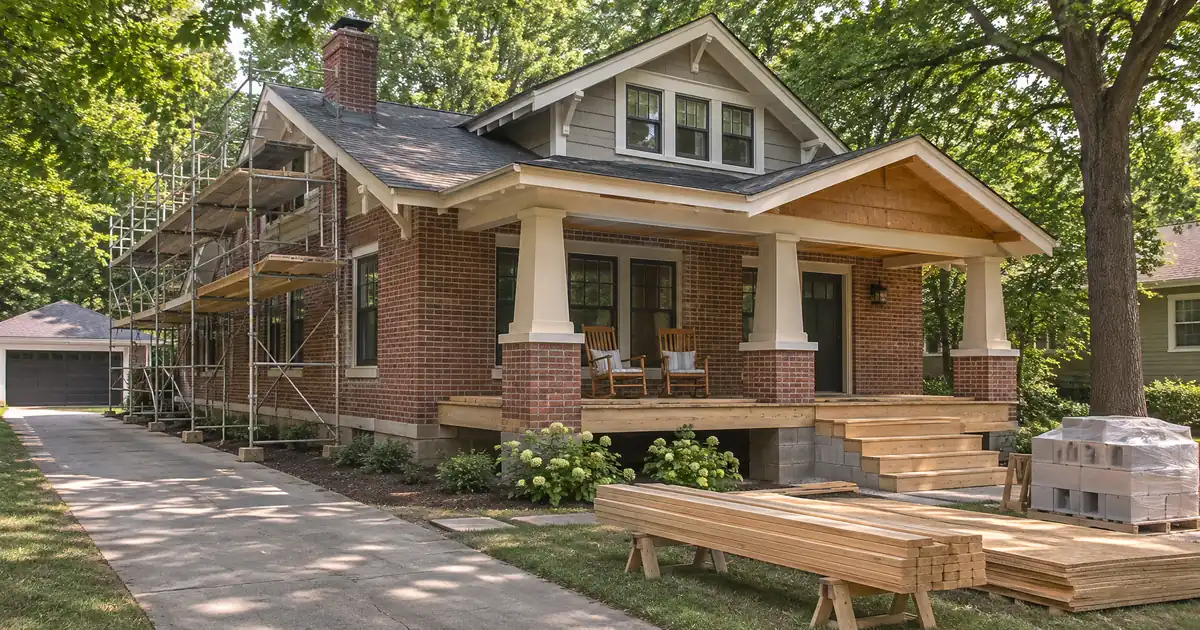
The Quick Read: A hard money cash-out refinance pays off your current loan and returns equity as cash. The lender qualifies the file mainly on the property, the equity and your exit plan rather than personal income documents, subject to lender guidelines and the specific program. Lighter paperwork does not mean no paperwork. Title, appraisal, entity and insurance documents still decide the file.
- In Lendmire’s network, hard money cash-out and rate/term refinances run up to 65% of value, and the figure varies by lender, property, and experience.
- Terms run 6-18 months, interest-only, with no prepayment penalty. The current program has no multi-year options, so the plan has to include a payoff or refinance before maturity.
- Credit still counts. A 620 minimum score applies, with added conditions below 660.
- Investors who need a longer runway can refinance into long-term DSCR financing, which Lendmire brokers once the property is stabilized.
- The right program for your situation depends on the property, the plan, your credit and your leverage need.
What Is a Hard Money Cash-Out Refinance, Really?
People use this phrase for two different loans. Separating them makes every later step easier.
The first is a short-term, asset-based loan. A hard money lender sizes it against the property and the plan for repaying it. Your tax returns and pay stubs carry little weight. The second is a long-term investor loan, usually a DSCR loan, that pays off the short-term note and may return cash.
DSCR stands for debt service coverage ratio. It is the property’s monthly rent divided by its monthly PITIA. PITIA is principal, interest, taxes, insurance and any association dues. A ratio of 1.00 means the rent just covers that payment.
The cash equals the new loan minus the payoff, minus closing costs. A payoff with no cash back is the simpler version. Cash beyond payoff and costs brings the cash-out label and the extra limits that come with it.
How Low Is “Low Documentation”?
Low documentation is a spectrum, not a switch. Where a loan sits depends on what the lender leans on in place of your personal income.
| Path | What the lender leans on | Fits |
|---|---|---|
| Hard money | Property value, plan, exit | Short holds, rehab, bridge |
| DSCR loan | Rent versus the payment | Stabilized rentals |
| Alt-doc program | Documented income, program rules | Self-employed borrowers |
| Conventional | Full income and debt review | Borrowers with standard traditional employment income |
Hard money sits at the light end for personal income. A DSCR loan is reviewed primarily on property-level rental income covering the payment, subject to lender guidelines. Both are built for non-owner-occupied investment property. Neither skips underwriting. They move it from your paycheck to the asset.
What You Still Have to Provide
“No personal income documentation” does not mean an empty folder. Expect a checklist like this one. Exact items vary by lender, property, and experience.
Borrower items
- Government ID and the identity checks lenders run on every borrower
- A credit report. A 620 score is the minimum in our hard money program.
- Proof of where closing funds came from, where the program asks for it
- Evidence of prior projects, because experience drives the leverage tier
Entity items
- Operating agreement, formation papers and good-standing proof if an LLC holds title, subject to program terms
- Guarantor details for the person behind the entity
Property items
- The current payoff statement for the loan being retired
- A hazard insurance binder
- An appraisal or valuation
- Rehab receipts, draw records and permits when work was done
- Leases or rent evidence if the property is rented
Title items
- A title search showing recording dates and any liens
- The settlement statement from your purchase
How Underwriting Treats the File, Step by Step
Here is the sequence lenders in the network follow, in plain order.
1. Identify what is being paid off. A hard money or bridge payoff that returns cash is a cash-out refinance. A payoff with no cash back is a rate-and-term refinance, which usually carries easier limits.
2. Establish the value basis. Inside the seasoning window, some lenders size on the lower of your cost basis (price plus documented rehab) or the appraisal. Seasoning is the waiting period between buying a property and refinancing it with cash out. After seasoning, lenders size on appraised value.
3. Prove rent or the plan, not your paycheck. A hard money lender reviews the scope of work and the exit. A DSCR lender wants a lease or the appraisal’s market-rent schedule. Appraisers use Form 1007 for single-family rent and Form 1025 for small income properties.
4. Run the coverage test. This applies to the DSCR side. Rent divided by PITIA gives the ratio.
5. Verify title and the source of funds. The recording date on your deed starts the seasoning clock. A documented cash purchase may qualify for delayed financing, which waives only the waiting period.
6. Check the maturity date. A short-term loan can expire before the cash-out window opens. Plan the refinance well ahead of maturity.
The factors that decide the outcome are the title date, the value basis, the appraisal, rent coverage, the property type and how you hold title.
The Hard Money Program Itself
Across Lendmire’s wholesale network, the hard money program follows the ranges below. Every figure varies by lender, property, and experience, and none is a commitment to lend.
- Cash-out and rate/term refinance: up to 65% of value.
- Loan size: up to $5,000,000, with larger loans by exception. Smaller balances vary by lender.
- Term: 6-18 months, interest-only, no prepayment penalty. There are no multi-year options on the current program.
- Credit: 620 minimum, with added conditions below 660. First-time investors qualify at the lower leverage tiers.
- Collateral: non-owner-occupied residential property of 1-4 units.
- Footprint: 41 markets, including Washington, D.C.
Refinance leverage is sized differently from purchase and rehab leverage. Hard money purchase and rehab loans are sized on project cost, tiered by completed projects. Cash-out refinances are sized on value, and the cap is tighter. Underwriting stays asset-based. It looks at the property, the plan and the exit.
Picture a rental you bought with a short-term loan and finished renovating. The refinance ceiling is 65% of the appraised value. The payoff comes out of that first. Whatever remains, after costs, is your cash. A thin equity cushion means little or no cash back. A thick one leaves real proceeds.
The Handoff: Moving From Hard Money to Long-Term Financing
A short term is meant to end. Investors who need a longer runway can refinance out of hard money into long-term DSCR financing once the property is stabilized. Lendmire brokers that path. Lendmire’s piece How Lenders Underwrite a Super Jumbo DSCR Cash-Out Refinance to Pay Off a Hard Money Loan covers the larger-balance version.
Here is how the long-term DSCR side looks across the network. These are typical ranges, subject to lender guidelines, and they differ from the hard money program’s own limits.
- Cash-out leverage: around 75% LTV on standard rentals. Short-term-rental collateral is lower, at 70% on a cash-out.
- Seasoning: about 6 months is the common expectation.
- Coverage: 1.00 is where many select programs start. A separate path through select lenders in the network accepts coverage below 1.00, with leverage and terms adjusted.
- Credit: a 620 floor exists in parts of the network. Most programs want around 660, and 700+ unlocks the strongest leverage.
- Long-term DSCR loan size: up to $3,000,000 on standard programs (smaller balances available through select lenders). Above $2,500,000 the network generally holds to 30-year fixed structures. The hard money program’s separate size range is covered earlier.
- Reserves: commonly around 6 months of PITIA, though they vary by lender, leverage, loan size and transaction type.
One caution matters here. Clearing 1.00 does not mean positive cash flow. The ratio compares rent to PITIA only. Repairs, vacancy, management, utilities and capital expenses sit outside it.
Extra equity helps but does not fix everything. A larger down payment or lower leverage can lift the ratio. It never removes credit floors, reserve rules or property eligibility. The strongest files clear both tests: enough equity and enough rental coverage. For a wider view of how these loans fit together, see the complete DSCR loans guide.
Why Low Documentation Is Allowed Here
DSCR loans are designed for non-owner-occupied investment properties. Because they are business-purpose investor loans, they are reviewed differently from a standard owner-occupied mortgage. The Federal Register notice for the CFPB’s ability-to-repay rule explains that business-purpose loans fall outside those requirements, and investment loans count as business-purpose. A law-firm analysis from Hunton Andrews Kurth adds a warning: business purpose does not mean exempt from every compliance duty. Plans to live in the property can also undercut the classification, so these programs stay non-owner-occupied.
Where the General Rule Breaks
Delayed financing for cash buyers. It waives only the seasoning wait. The lender still applies its appraisal, reserve and credit rules, and proceeds are generally limited to your cost.
A hard money purchase still inside the seasoning window. A common route is a rate-and-term payoff now and a cash-out later. Lenders differ on how they count the window, so ask before you plan around it.
Unrented or unstabilized property. Cash-out DSCR files can use the appraisal’s market-rent schedule instead of a lease. Coverage below 1.00 is available through select lenders in the network, with leverage and terms adjusted.
Short-term rentals. These use different income treatment and lower cash-out leverage than standard rentals. Local short-term rental rules can vary by city, county, HOA, and property type, so investors should confirm local rules before relying on projected rental income.
Maturity before seasoning. A note that comes due before the cash-out window opens can force a payoff with no cash back. Because the current hard money program has no multi-year options, this timing gap is a risk to plan around before you borrow.
Property types. DSCR programs in the network do not offer manufactured homes, log homes or barndominiums.
When Is This the Wrong Tool?
It works when you have equity, a clear plan and a defined exit. It is a poor fit when you want to hold the property for years with no sale or refinance in sight. Interest-only terms of 6-18 months leave no room to drift.
| Your situation | Likely better fit |
|---|---|
| Rehab underway, exit within months | Hard money |
| Stabilized, leased rental | DSCR cash-out |
| Self-employed, strong documented income | Alt-doc program |
| Wants long hold, stable payment | DSCR refinance |
How to Find the Right Fit Through a Broker
Lendmire is a broker. It does not lend, and it does not rank or name lenders. It works with a network of wholesale lenders and matches your scenario to the program that suits it. The program that fits you best depends on your property type, credit profile, leverage need, documents and plan. The lenders that write a given file depend on the same things.
Whoever you work with, ask these questions:
- What value does the lender size the loan on, cost or appraisal?
- Is there a prepayment penalty, and what are the extension terms?
- What happens if the loan matures before my refinance is ready?
- What fees are due before the appraisal and title work are done?
- Which documents are needed from me, and which come from third parties?
Watch for red flags. Treat upfront fees with no written scope, promises of approval before reviewing the property, and a refusal to explain extension terms as reasons to walk away.
Key Terms Defined
Cash-out refinance: A new loan that pays off the old one and returns the extra equity to you as cash.
Seasoning: The waiting period a lender wants between buying a property and refinancing it with cash out.
DSCR: Debt service coverage ratio, meaning monthly rent divided by the monthly PITIA.
PITIA: Principal, interest, taxes, insurance and any association dues, the full monthly obligation on the property.
Loan-to-value (LTV): The loan amount as a percentage of the property’s value.
Loan-to-cost: The loan amount as a percentage of what the project costs, used on hard money purchase and rehab loans.
Business-purpose loan: A loan made primarily for investment or commercial use rather than as a home for the borrower.
Delayed financing: A lender-dependent exception that lets a documented cash buyer borrow against the property without the full seasoning wait.
Frequently Asked Questions
Do hard money lenders require income documents for a cash-out refinance?
Typically not personal income documents. Qualification runs on the property’s value, your equity and your exit plan. You still provide ID, title, insurance, entity papers and a payoff statement, and credit still counts.
How much cash can I take out?
In Lendmire’s network, hard money cash-out refinances go up to 65% of value, and the figure varies by lender, property, and experience. The payoff and closing costs come out first. Long-term DSCR cash-out goes to around 75% LTV on standard rentals.
Can I cash out right after buying with hard money?
Sometimes, but seasoning rules differ by lender. On the long-term DSCR side, about 6 months is the common expectation. Inside that window, many lenders size on cost basis rather than the after-repair appraisal.
What is the difference between hard money cash-out and DSCR cash-out?
Hard money is short-term, interest-only and sized on the asset and plan. DSCR cash-out is a long-term loan that qualifies primarily on rental income covering the payment. Many investors use the first to acquire and renovate, then move to the second.
Does low documentation mean my credit does not matter?
No. The hard money program requires a 620 minimum score, with added conditions below 660. Higher scores open better leverage on both hard money and DSCR files.
Next Step
If you are buying, rehabbing or refinancing an investment property on a short timeline and want to see how the numbers work, Lendmire can help you compare hard money options based on the project, the exit plan, leverage, and your goals. You can reach the team at 828-256-2183 or request a quote.
About Lendmire
Lendmire (NMLS# 2371349) is a mortgage broker that arranges investor financing, including hard money and DSCR loans, through select lenders in its wholesale network. Its investor programs cover 41 markets, including Washington, D.C. All programs are subject to lender guidelines and are not a commitment to lend. Scotsman Guide named Lendmire a Top Mortgage Workplace in both 2025 and 2026.
Get Started
Ready to find the right loan for you?
See your offer in seconds. No credit pull, no obligation.
Informational only. Not a Loan Estimate, approval, or commitment to lend. Program availability and eligibility are subject to lender guidelines, credit approval, property review, and underwriting.
References
1. Federal Register: Ability-to-Repay and Qualified Mortgage Standards Under the Truth in Lending Act
2. Hunton Andrews Kurth: Beware of Business Purpose
This article is part of Lendmire’s hard money loan program — full qualification details, guidelines, and scenarios live on the program page.
Related reading: Portfolio DSCR Cash-Out Refinance Requirements When Deciding Whether to Refinance a Rental · 5 DSCR Cash-Out Refinance Options When the Hard Money Loan on a Rental Needs a Refinance · Portfolio DSCR Cash-Out Refinance Requirements When Closing in an LLC
Brandon Miller
Founder & CEO, Mortgage Loan Originator, Lendmire LLC
- Mortgage Loan Originator · NMLS# 1129696 · Verify on NMLS Consumer Access
- North Carolina Real Estate Broker · License# 343312 · Verify on NCREC
- North Carolina Insurance Producer · License# 19053198 · Property, Casualty, Life, Health · Verify on NAIC SBS
- Lendmire LLC · Firm NMLS# 2371349 · Verify firm licensure
Compliance and disclosures. Lendmire (NMLS# 2371349) is a licensed mortgage broker and is not a direct lender, depository institution, financial advisor, or tax professional. Content in this article is general market analysis and educational information — not financial, legal, or tax advice for any specific situation. Lendmire does not guarantee loan approval; every transaction is subject to underwriting by the funding lender. Mortgage pricing and loan program guidelines are subject to change at any time without notice and vary by borrower characteristics, property type, and state regulations. Lendmire complies with Equal Housing Opportunity. Licensure verification: NMLS Consumer Access.