
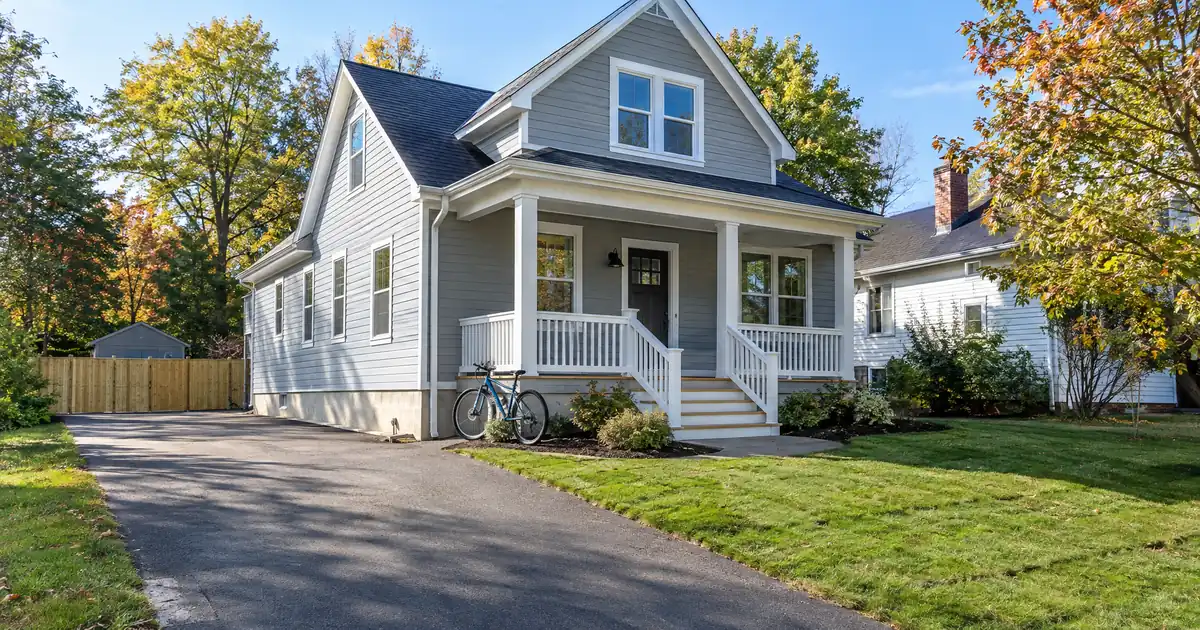
The Quick Read: A private lender sizes this loan mainly on the property’s value and your equity, while a bank sizes it on your income, credit history, and debt load, so the requirements shift from your paperwork to the collateral, the equity, and your plan for paying the short-term loan off.
- Leverage is value-based. On a cash-out refinance of a non-owner-occupied rental, hard money programs typically lend up to 65% of value, varying by lender, property, and experience.
- Credit still gets checked. A 620 score is the typical minimum, with extra conditions below 660.
- The loan is short: 6-18 months, interest-only, with no prepayment penalty on the current programs.
- Collateral must be non-owner-occupied residential property with 1-4 units.
- You need an exit plan before closing, because the loan matures in months, not decades.
What Is a Hard Money Cash-Out Refinance?
It is a new short-term private loan that pays off your existing loan and sends the difference to you as cash. Say you own a rental worth far more than its payoff balance. The new loan clears the old lien through title, and the leftover equity lands in your account.
The lender’s main question is simple: if this borrower walks away, is the property worth enough to cover the loan? That is why the file centers on appraised value, equity, condition, and your plan for getting out.
Compare that with a bank. A bank wants to know whether you can repay from your personal income. A private lender wants to know whether the collateral protects the loan. Different question, different file.
Who Is Asking? Requirements by Category
Requirements fall into four buckets: borrower, property, loan, and entity. Sorting them this way keeps you from mixing up what the lender checks about you and what it checks about the asset. Everything below varies by lender, property, and experience, and nothing here is a commitment to lend.
Borrower requirements
Expect a credit review. A 620 minimum score is typical, with additional conditions below 660. Private lenders do not lean on the score the way a bank does, but they do pull it. Experience also moves the file. Investors with completed projects tend to see better leverage tiers than first-timers, though first-time investors can qualify at the lower tiers.
Personal income documentation is usually not the center of the file. Underwriting stays asset-based: the property, the plan, and the exit.
Property requirements
The collateral must be non-owner-occupied residential property with one to four units. Owner-occupied homes, land, and commercial buildings are not offered. The lender also looks at condition and occupancy. A rent-ready, leased rental is an easier file than a half-finished one.
Loan requirements
Here is how the loan itself usually looks:
- Leverage: up to 65% of value on a cash-out or rate-and-term refinance.
- Loan size: up to $5,000,000, larger by exception, with smaller balances varying by lender.
- Term: 6-18 months, interest-only.
- Prepayment: no prepayment penalty on the current programs.
Notice that 65% is lower than the leverage you may see on a purchase. Cost-based tiers apply to buying and rehabbing a property. A cash-out refinance sizes on value only. Lenders hold leverage down here because you are taking cash out, which leaves them less cushion.
Entity requirements
Many investors hold rentals in an LLC. Holding title in an entity is common for these loans, subject to lender program eligibility. Expect to provide entity documents and a personal guarantee. The guarantee keeps a person accountable even when a company holds title.
How Does a Private Lender Handle Seasoning?
Seasoning is the time you have owned the property. It is lender policy, not law. Some private lenders have no waiting period. Others want months on title before they lend against new, higher value.
Inside that window, many lenders cap value at your purchase price plus documented improvements. So if you bought a rundown house, fixed it up, and want to borrow against the finished value right away, you may get less than you expected. Ask each lender how it sizes value in the first months of ownership. The answer changes the cash you walk away with.
A bank usually asks for more time on title for a cash-out, and it adds its own rules on top. The seasoning gap is one reason investors go to private lenders.
Documents to Gather
Gather these before you apply. The reason beside each item is what the lender is thinking.
- Proof of ownership (deed or title report): confirms you control the collateral.
- Payoff statement for the existing loan: sets how much of the new loan goes to the old lien.
- Credit report authorization: the lender confirms the score and checks recent history.
- Valuation support (appraisal or broker opinion): this sets the number the loan is based on.
- Leases and rent roll, if the property is leased: show occupancy and condition.
- Insurance declaration page: protects the collateral.
- Entity documents, if an LLC holds title: show who signs and who guarantees.
- Proof of experience: a short list of past projects helps if you are seeking a higher tier.
- Business-purpose declaration: confirms the loan is for investment, not personal living.
Private Lender vs. Bank: Same Rows, Different Answers
| Factor | Private Lender | Bank |
|---|---|---|
| What drives approval | Value and equity | Income, credit, debt load |
| Income documents | Not the center of the file | W-2s, tax returns |
| Credit | Pulled; 620 typical minimum | Heavily weighted |
| Term | 6-18 months, interest-only | Long-term, amortizing |
| Leverage on cash-out | Up to 65% of value | Varies by program |
| Property focus | Non-owner-occupied, 1-4 units | Wide range, income rules apply |
| Exit needed | Yes, soon | No |
A private lender asks less about you and more about the property. In exchange, you accept a short clock and lower leverage.
Why a Private Lender Can Skip the Bank Rulebook
Hard money cash-out loans are business-purpose investor loans, so they are reviewed differently from a standard owner-occupied mortgage. Federal lending rules treat credit for acquiring or improving non-owner-occupied rental property as business-purpose credit, as the Federal Reserve’s background on business-purpose credit explains. That same document warns that a checked box alone may not prove the purpose. Lenders look at the full picture.
This is why borrower paperwork is lighter. Keep the loan strictly to investment use.
Where the General Rule Breaks
Owner-occupied property. If you plan to live in the property more than 14 days in the coming year, consumer-credit treatment can apply, with an exception for properties of more than two units, per Doss Law.
Entity versus individual. America’s Credit Unions notes the business-purpose exemption covers loans to non-natural persons such as LLCs, while a consumer-purpose loan to a trust can still be treated differently. Title structure matters, so settle it before you apply.
Cash-out versus rate-and-term. If you only want to replace an existing hard money loan and pull little or no cash, the lender may treat it as a rate-and-term refinance. Those files often face lighter seasoning than a cash-out. The line between the two is lender policy, so ask where it falls.
Unfinished work. A property with open renovation, missing systems, or vacancy issues is harder to refinance on value. The lender sizes the loan on what it can see and appraise today.
Walking Through a Hypothetical File
Run the numbers on this scenario. These figures are illustrative assumptions, not program terms. Say a rental has an appraised value and a payoff balance equal to about 40% of that value. A private lender offering up to 65% of value can fund a new loan sized to that 65%. The old lender is paid first. The gap, roughly 25% of value, is the cash-out before closing costs and fees.
Now compare it to a lender that caps value at your cost basis because you are inside its seasoning window. If your basis is well below appraised value, the same 65% applies to a smaller number. Less cash comes out. Same property, different lender policy, very different result.
Fees and closing costs reduce what you net, and the loan is interest-only. Your monthly carry stays modest because you pay interest, not principal. But the whole balance comes due at maturity. That is the part to plan around. Net proceeds are rarely the headline number, so ask for a full cost breakdown before signing.
How the Process Runs, Step by Step
1. Confirm purpose and occupancy. You sign a business-purpose declaration, and the lender confirms the property is non-owner-occupied.
2. Submit the file. Send the document checklist above.
3. Valuation. The lender orders an appraisal or other valuation to set current value.
4. Sizing. The loan is capped by leverage, up to 65% of value, and by seasoning rules.
5. Term sheet. Review the term, fees, extension options, and maturity.
6. Title and payoff. Title pays off the old lien. Only money coming back to you counts as cash-out.
7. Plan the exit. Start the takeout loan search early, not near maturity.
Stage lengths depend on the lender, the property, and how complete your file is.
What Is the Exit Plan?
The exit is the loan that replaces this one. A short-term loan has to end somehow. Your main options are an extension, a sale, or a longer-term refinance.
Refinancing one hard money loan into another can be difficult, and extensions usually cost extra. For stabilized rentals, many investors refinance into long-term DSCR financing, and Lendmire brokers that path. A DSCR loan is a business-purpose loan that qualifies primarily on property-level rental income covering the payment, subject to lender guidelines.
Here is what the exit loan typically looks like across Lendmire’s wholesale network of select lenders:
- Leverage on a cash-out refinance: tops out around 75% LTV on standard rentals.
- Seasoning: about 6 months is the common expectation.
- Coverage: 1.00 is where many select programs start. A separate select-lender path takes coverage below 1.00, with leverage and terms adjusted.
- Credit: most programs want around 660, a 620 floor exists in parts of the network, and 700+ unlocks the strongest tiers.
- Reserves: commonly around 6 months of PITIA, though it varies by lender, leverage, and loan size.
PITIA is principal, interest, taxes, insurance, and association dues. Coverage clearing 1.00 does not mean positive cash flow, because repairs, vacancy, and management sit outside the calculation. For the full picture, read the complete DSCR loans guide.
A property can have strong value and still fall short on rent coverage. Check that math before you take the short-term loan, not after. If your starting point is a hard money loan you need to retire, Lendmire’s piece on paying off a hard money loan with a bank statement cash-out refinance covers another route.
Is It the Right Move? A Decision Checklist
Good fit:
- You own the property outright or carry a modest balance.
- The property is stabilized or close to it.
- You have a clear takeout loan in mind.
- You need flexibility that a bank file cannot give you.
Poor fit:
- You have no exit plan.
- The rent barely covers a long-term payment, so a DSCR exit would be thin.
- You want long-term financing at a lower cost. Private loans are for short runways.
- The property is your home.
Tax treatment can depend on how the funds are used and how the property is held. Investors should keep clear records and speak with a qualified tax professional before relying on any deduction.
Questions to Ask Any Private Lender
- How do you size value inside the first months of ownership?
- Is there a seasoning requirement for cash-out?
- What is the full list of fees and costs at closing?
- What are the extension terms and costs?
- How do you treat rate-and-term versus cash-out?
- Is a personal guarantee required when an LLC holds title?
- What do you need from me to confirm experience?
Key Terms Defined
Cash-out refinance: A new loan that pays off the old one and sends the extra to you as cash.
Seasoning: The time you have owned the property before a lender will lend against new value.
Rate-and-term refinance: A refinance that changes the loan’s terms without returning meaningful cash.
LTV (loan-to-value): The loan amount divided by the property’s value.
Non-owner-occupied: A property you do not live in, which is how investment rentals are classified.
Exit strategy: The plan for paying off a short-term loan, usually by selling or refinancing.
Frequently Asked Questions
Can I do a cash-out refinance with a hard money loan?
Yes, if the property is a non-owner-occupied rental with one to four units and enough equity. Programs typically lend up to 65% of value on a cash-out, varying by lender, property, and experience. The lender reviews value, condition, credit, and your exit plan.
How much equity do I need?
Enough that the new loan, at up to 65% of value, covers your existing payoff and leaves cash to you. A property with a small balance leaves more room. A heavily leveraged one may not produce meaningful cash-out under these programs.
Is my income verified?
Personal income is not the center of the file. Underwriting stays asset-based, focused on the property, the plan, and the exit. The lender still reviews credit, with a 620 typical minimum and extra conditions below 660.
What if I already have a hard money loan?
You can often replace it, depending on the lender, how long you have held the property, and whether you take cash out. A refinance with little or no cash returned may be treated as rate-and-term. Many investors then plan a move into long-term rental financing.
Does an LLC change the requirements?
Title in an LLC is common, subject to lender program eligibility. Expect entity documents and a personal guarantee. The property requirements stay the same.
If you are buying, rehabbing, or refinancing an investment property on a short timeline and want to see how the numbers work, Lendmire can help you compare hard money options based on the project, the exit plan, leverage, and your goals. As a broker with a network of wholesale lenders, it arranges these loans across 41 markets, including Washington, D.C., and the best program for your situation depends on your property, credit, and plan.
About Lendmire
Lendmire (NMLS# 2371349) is a DSCR-focused mortgage broker that helps arrange investor financing across 41 markets, including Washington, D.C., through wholesale and investor-lending channels. DSCR eligibility is generally reviewed by the lender around the property’s rental income rather than personal income documentation, subject to lender guidelines, which works for self-employed investors, LLC operators, and portfolios above four financed properties. Scotsman Guide named Lendmire a Top Mortgage Workplace in both 2025 and 2026.
Get Started
Ready to find the right loan for you?
See your offer in seconds. No credit pull, no obligation.
Informational only. Not a Loan Estimate, approval, or commitment to lend. Program availability and eligibility are subject to lender guidelines, credit approval, property review, and underwriting.
References
1. Federal Reserve, Regulation Z background on business-purpose credit
2. Doss Law, business-purpose exemption simplified
3. America’s Credit Unions, regulations and business loans
This article is part of Lendmire’s hard money loan program — full qualification details, guidelines, and scenarios live on the program page.
Related reading: Best Investment Property HELOC Program for BRRRR Investors Recycling Equity · Best HELOC Program for Buying Out a Spouse · Top HELOC Providers for Retirees Needing Extra Monthly Cash Flow
Brandon Miller
Founder & CEO, Mortgage Loan Originator, Lendmire LLC
- Mortgage Loan Originator · NMLS# 1129696 · Verify on NMLS Consumer Access
- North Carolina Real Estate Broker · License# 343312 · Verify on NCREC
- North Carolina Insurance Producer · License# 19053198 · Property, Casualty, Life, Health · Verify on NAIC SBS
- Lendmire LLC · Firm NMLS# 2371349 · Verify firm licensure
Legal disclosures. Lendmire (NMLS# 2371349) is a state-licensed mortgage brokerage that arranges financing through wholesale lender relationships. Lendmire is not a direct lender, depository institution, or registered financial advisor. The discussion above is general informational content about real estate financing — it is not financial, legal, or tax advice, and readers should consult licensed professionals for guidance on their individual circumstances. Loan inquiries are subject to lender underwriting; this article does not represent a commitment to lend. Loan terms, rates, and qualification standards vary by borrower, property, and state, and are subject to change at any time. Equal Housing Opportunity. NMLS Consumer Access: nmlsconsumeraccess.org.